Planning a kitchen remodel involves many critical decisions, including choosing suitable tiles. This choice can considerably impact your kitchen’s aesthetics, durability, and cost.
Marble and porcelain are two popular kitchen tile options, each boasting distinct advantages and drawbacks. These unique properties of both materials play a significant role in their suitability to different homeowner preferences and lifestyles.
Choosing between these two can be daunting, given that both offer different qualities that are equally appealing. This comprehensive guide aims to simplify this complex decision by highlighting the critical differences between marble and porcelain tiles, helping you determine the ideal option for your kitchen remodel.
Keep reading to learn the differences between marble and porcelain tiles and discover which option is best for your kitchen remodel.
Key Takeaways for Marble vs. Porcelain Tile in Kitchen Remodeling
1. Marble and Porcelain tiles each have distinctive traits that influence their durability, maintenance, and aesthetic value in kitchen remodels. 2. Marble, a natural stone, offers a timeless beauty featuring exclusive veining patterns, making each piece one of a kind. 3. On the other hand, porcelain is a flexible, man-made material that can mimic various looks, including natural stone patterns. 4. Porcelain tiles exhibit more durability than marble tiles, making them more suitable forhigh-traffic areas. 5. In terms of maintenance, porcelain tiles are more straightforward and less demanding as they do not absorb stains or liquids. 6. Given their porous nature, Marble tiles need regular sealing to maintain their beauty and prevent staining. 7. When contemplating between Marble and Porcelain tiles, homeowners need to contemplate their preferences, living patterns, and financial plan to make the most
suitable choice. 8. A major consideration is cost-effectiveness, with porcelain tiles generally being more affordable in comparison to genuine marble. 9. Lastly, understanding and considering the unique benefits and drawbacks of marble and porcelain tiles will help homeowners make an informed choice, resulting in a successful kitchen remodel.
[ez-toc]
Understanding the Basics of Marble and Porcelain Tiles
When considering marble or porcelain tile for a kitchen remodel, it’s essential to understand the key characteristics and differences between these popular materials. Marble and porcelain tiles each have unique properties that affect their durability, maintenance requirements, and overall appearance.
Marble tile is a natural stone material sourced from quarries around the world. It is composed primarily of calcite or dolomite, forms of calcium carbonate. The unique veining and color variations in marble occur due to mineral impurities during the stone’s formation.
Marble tiles are known for their elegance and timeless beauty, making them a popular choice for kitchen countertops, backsplashes, and flooring. Each piece of marble is unique, showcasing the natural patterns and hues created by the earth over millions of years.
What Defines Porcelain Tile?
Porcelain tile is a manufactured ceramic material crafted from clay, sand, and other natural elements. These ingredients are fired at extremely high temperatures, resulting in a dense, durable, and non-porous tile resistant to staining, scratching, and moisture absorption.
Porcelain tiles are available in a wide range of colors, patterns, and finishes, including options that mimic the look of natural stone, wood, or concrete. This versatility makes porcelain an excellent choice for homeowners seeking durability and style in their kitchen remodel.
Porcelain tile is a manufactured ceramic material.
It is crafted from a mixture of clay, sand, and other natural elements.
Porcelain tiles are fired at extremely high temperatures.
This results in a dense, durable, and non-porous tile
Porcelain is resistant to staining, scratching, and moisture absorption.
It is available in various colors, patterns, and finishes.
Porcelain can mimic the look of natural stone, wood, or concrete.
Key Differences in Composition
Here are the two paragraphs on the topic of Key Differences in Composition between marble and porcelain tiles:
The primary difference in Composition between marble and porcelain tile lies in their origins. Marble is a natural stone formed by the metamorphosis of limestone or dolomite. At the same time, porcelain is a manufactured ceramic material crafted from clay, sand, and other natural elements fired at high temperatures.
Another critical distinction is porosity. Marble is a porous material that can absorb liquids and stains more quickly, requiring regular sealing to maintain its appearance. In contrast, porcelain tile is non-porous and highly resistant to staining, moisture absorption, and scratching without additional sealing.
Aesthetic Appeal: Marble vs. Porcelain
When selecting the perfect tile for your kitchen remodel, marble and porcelain offer distinct aesthetic advantages. Marble’s natural beauty, with its unique veining and color variations, is unparalleled, while porcelain provides incredible versatility in design options.
Ultimately, choosing these two materials will depend on your style preferences and the overall look you want to achieve in your kitchen.
The Natural Beauty of Marble
Marble’s natural beauty is unmatched, with each piece displaying unique veining patterns and color variations. These distinctive markings are created by mineral impurities present during the stone’s formation, resulting in a one-of-a-kind appearance that adds character and elegance to any kitchen.
Marble’s timeless appeal has made it a sought-after material for centuries, gracing the floors and walls of palaces, sculptures, and modern kitchens. Its luminous surface and soft, organic feel contribute to a sense of luxury and sophistication that elevates the overall aesthetic of the space:
Marble displays unique veining patterns and color variations.
Mineral impurities create distinctive markings during stone formation.
Each piece of marble is one-of-a-kind.
Marble adds character and elegance to any kitchen.
It has been a sought-after material for centuries.
Marble graces floors and walls of palaces, sculptures, and modern kitchens
Its luminous surface and soft, organic feel contribute to a sense of luxury and sophistication.
The Versatility of Porcelain Designs
Porcelain tile offers unmatched versatility in design options, allowing homeowners to achieve virtually any desired aesthetic in their kitchen remodel. From classic and contemporary styles to rustic and industrial looks, porcelain tiles can be manufactured to mimic the appearance of natural stone, wood, concrete, or metal.
The advanced digital printing technology used in porcelain tile production enables manufacturers to create stunningly realistic patterns and textures nearly indistinguishable from their natural counterparts. This versatility empowers homeowners to select a tile that perfectly complements their kitchen’s color scheme, cabinetry, and overall design vision.
Matching Tiles to Your Kitchen Style
When selecting marble or porcelain tiles for a kitchen remodel, consider the overall style and design of the space. For traditional and classic kitchens, marble tiles with subtle veining and neutral colors can provide an elegant and timeless look. In contrast, modern and contemporary kitchens may benefit from the sleek and uniform appearance of porcelain tiles in bold colors or large-format sizes.
Homeowners can mix and match marble and porcelain tiles to create a unique and personalized kitchen design. For example, using marble tiles for a backsplash and porcelain tiles for the flooring can provide a balance of natural beauty and durability. Ultimately, the key to successfully matching tiles to your kitchen style is to consider the tiles’ color palette, texture, and pattern for the other design elements in the space.
Durability and Maintenance: What to Expect
When considering marble or porcelain tile for a kitchen remodel, it’s crucial to understand the differences in durability and maintenance requirements between these two popular materials.
Marble’s porous nature makes it more susceptible to staining and etching, while porcelain’s dense Composition provides superior resistance to wear and tear.
Additionally, the ease of cleaning and maintaining each material varies, impacting your kitchen’s long-term appearance and functionality.
Marble’s Porosity and Staining Potential
Here are the two paragraphs on the topic of Marble’s Porosity and Staining Potential: Marble is a porous natural stone that can absorb liquids, oils, and other substances that may lead to staining. Without proper sealing and maintenance, spills from acidic substances like wine, citrus juice, or tomato sauce can etch the surface of the marble, leaving permanent marks or dullness.
To minimize the risk of staining and etching, marble tiles require regular sealing with a high-quality stone sealer. Homeowners should be prepared to reseal their marble tiles every few months to a year, depending on the use and exposure to potential staining agents in the kitchen.
Porcelain’s Resistance to Wear and Tear
Porcelain tile offers superior durability and resistance to wear and tear compared to marble. Its dense, non-porous Composition makes it highly resistant to scratches, chips, and stains, ensuring a long-lasting and beautiful kitchen surface.
Porcelain tiles are also less likely to crack or break under heavy foot traffic or impacts from dropped objects. This durability makes porcelain ideal for high-traffic kitchens or homes with children and pets.
Ease of Cleaning Marble vs. Porcelain
Cleaning marble tiles requires more effort and caution than cleaning porcelain tiles. Due to marble’s porous nature, it is essential to use pH-neutral cleaners specifically designed for natural stone to avoid etching or damaging the surface. Acidic or abrasive cleaners can quickly dull the finish of marble tiles, requiring professional restoration.
In contrast, porcelain tiles are much easier to clean and maintain. Their non-porous surface resists staining and can be cleaned with a wide range of common household cleaners without the risk of damage. Porcelain’s low-maintenance properties make it an attractive choice for homeowners who prefer a hassle-free cleaning routine in their kitchen.
Cost Comparison for Your Remodel Budget
When planning a kitchen remodel, budgeting is critical in determining the best tile choice for your project. Both marble and porcelain tiles come with different price points and long-term value considerations.
Understanding the upfront costs and potential long-term expenses associated with each material can help homeowners make an informed decision that aligns with their remodeling budgetand overall goals.
Upfront Cost of Marble Tiles
Marble tiles tend to have a higher upfront cost compared to porcelain tiles. The marble price can vary significantly depending on the stone’s type, color, and rarity, with some high-end options costing several times more per square foot than budget-friendly porcelain alternatives.
In addition to the tiles’ cost, homeowners should factor in the expense of professional installation, as marble requires skilled craftsmanship to ensure a proper and long-lasting fit. The cost of sealing materials and ongoing maintenance should also be considered when budgeting for a marble tile installation.
Upfront Cost of Porcelain Tiles
Porcelain tiles generally have a lower upfront cost than marble tiles, making them a more budget-friendly option for kitchen remodels. Homeowners can find various porcelain tile styles and designs at different prices, allowing them to achieve their desired aesthetic without breaking the bank.
While high-end porcelain tiles that mimic natural stone may have a higher price tag, they are still typically less expensive than genuine marble. The cost-effectiveness of porcelain tiles, combined with their durability and low-maintenance properties, makes them an attractive choice for homeowners working with a limited remodeling budget:
Porcelain tiles have a lower upfront cost compared to marble.
Porcelain tiles come in various styles and designs at different price points.
Homeowners can achieve their desired aesthetic without breaking the bank.
High-end porcelain tiles that mimic natural stone may have a higher price tag.
However, they are still typically less expensive than genuine marble.
Porcelain tiles are cost-effective, durable, and low maintenance.
Long-Term Value Assessment
Factors such as durability, maintenance costs, and potential resale value should be considered when assessing the long-term value of marble and porcelain tiles. While marble may have a higher upfront cost, its timeless beauty and luxurious appeal can increase home value and marketability.
Conversely, porcelain tiles offer excellent long-term value due to their durability and low maintenance requirements. The cost savings associated with less frequent repairs, replacements, and professional upkeep can add up over time, making porcelain an intelligent investment for budget-conscious homeowners.
Installation Considerations for Homeowners
When planning a kitchen remodel with marble or porcelain tiles, homeowners must consider the unique installation requirements for each material. Marble’s distinctive veining patterns and porcelain’s flexibility in installation methods can significantly impact the overall look and feel of the finished project.
Marble’s unique veining patterns require careful consideration during the installation process. To create a cohesive and visually appealing design, it is essential to lay out the marble tiles and assess the flow of the veins before installing them.
Working with a skilled and experienced installer can ensure that the marble tiles are cut and placed to maximize the beauty of the natural patterns. Additionally, book-matching or vein-matching techniques can be employed to create a stunning, mirrored effect across adjacent tiles:
Lay out marble tiles and assess the flow of veins before installation.
Work with a skilled installer to ensure proper cutting and placement.
Utilize book-matching or vein-matching techniques for a mirrored effect.
Porcelain’s Flexibility in Installation Methods
Porcelain tiles offer greater flexibility in installation methods than marble. They can be installed using a variety of patterns, such as straight lay, diagonal, herringbone, or modular designs, allowing homeowners to create unique and personalized looks in their kitchens.
Porcelain tiles offer various installation options, allowing homeowners to create unique and personalized layouts in their kitchen remodels. From traditional straight-lay patterns to more intricate designs like herringbone or modular arrangements, porcelain’s versatility enables a customized look that complements any style preference.
In addition to pattern flexibility, porcelain tiles come in various sizes, from small mosaic tiles to large-format options. This variety opens up endless possibilities for creating visually striking and functional kitchen designs:
Porcelain tiles offer a wide range of installation options.
Homeowners can create unique and personalized layouts.
Installation patterns include straight lay, herringbone, and modular designs.
Porcelain’s versatility enables a customized look to complement any style.
Tiles come in various sizes, from small mosaics to large-format options.
The variety of sizes allows for visually striking and functional kitchen designs.
Which Tiles Are Better for Various Kitchen Areas?
When selecting marble or porcelain tiles for a kitchen remodel, it’s essential to consider the specific areas where the tiles will be installed.
Different parts of the kitchen require different requirements in terms of durability, resistance to moisture, and overall aesthetics.
Understanding the unique needs of high-traffic floors, backsplashes, and countertops can help homeowners decide which tile material best suits each application.
Choosing Tiles for High Traffic Floors
When selecting tiles for high-traffic kitchen floors, porcelain is often the superior choice due to its exceptional durability and resistance to wear and tear. Its dense, non-porous Composition makes it highly resistant to scratches, chips, and stains, ensuring a long-lasting and beautiful kitchen floor that can withstand the demands of daily use.
In contrast, while visually stunning, there may be better options than marble tiles for high-traffic kitchen floors. Marble’s porous nature makes it more susceptible to staining, etching, and scratching, which can detract from its appearance over time:
Porcelain is often the superior choice for high-traffic kitchen floors.
Its dense, non-porous Composition makes it highly durable.
Porcelain is resistant to scratches, chips, and stains.
It ensures a long-lasting and beautiful floor that can withstand daily use.
There may be better options than marble tiles for high-traffic floors.
Marble’s porous nature makes it more susceptible to staining, etching, and scratching.
This can detract from marble’s appearance over time.
Backsplash and Countertop Considerations
Regarding kitchen backsplashes and countertops, marble and porcelain tiles can be excellent choices, depending on the homeowner’s style preferences and maintenance expectations. Marble’s timeless beauty and unique veining patterns can create a stunning focal point in the kitchen, elevating the overall design aesthetic.
However, porcelain tiles that mimic the look of marble offer a more practical alternative for homeowners who desire the elegance of marble without the high maintenance requirements. Porcelain’s non-porous surface is highly resistant to staining and etching, making it an ideal choice for kitchen backsplashes and countertops where spills and splatters occur daily.
Environmental Impact and Sustainability
As homeowners become increasingly conscious of their environmental impact, considering the sustainability of building materials is an essential aspect of any kitchen remodel. Both marble and porcelain tiles have unique ecological considerations that can influence the decision-making process for eco-minded individuals.
By understanding these materials’ sourcing, production, and lifecycle, homeowners can make informed choices that align with their values and contribute to a more sustainable future.
Marble’s Natural Sourcing and Longevity
Marble is a natural stone quarried from the earth, making it a finite resource. However, its longevity and durability can contribute to its overall sustainability. When properly maintained, marble tiles can last for decades, reducing the need for frequent replacements and minimizing waste.
Additionally, marble’s timeless appeal ensures that it remains a desirable material for years to come, further extending its lifecycle and reducing the likelihood of trendy updates contributing to unnecessary waste.
Porcelain’s Eco-Friendly Manufacturing
Porcelain tiles use natural materials, including clay, sand, and feldspar. Many porcelain tile manufacturers have adopted eco-friendly practices, such as recycling water and waste materials during production, to minimize their environmental impact.
Furthermore, porcelain’s durability and long lifespan contribute to its sustainability by reducing the need for frequent replacements. When a porcelain tile reaches the end of its useful life, it can often be recycled or repurposed, minimizing its environmental footprint.
Conclusion: Making the Best Choice for Your Kitchen
In conclusion, marble and porcelain tiles offer unique benefits and drawbacks for kitchen remodels. By carefully considering aesthetics, durability, maintenance, cost, and environmental impact, homeowners can decide which best suits their needs and preferences.
Whether you choose marble’s timeless elegance or porcelain’s versatility and durability, working with an experienced and reputable company like Elegant Kitchen and Bath can ensure a successful and stunning kitchen transformation.
Best Options for Backsplashes and Countertops
Both marble and porcelain tiles offer unique advantages for kitchen backsplashes and countertops. Marble’s timeless beauty and distinctive veining patterns can create a stunning focal point, elevating the overall design aesthetic of the kitchen. However, porcelain tiles that mimic the look of marble provide a more practical alternative for homeowners who desire the elegance of marble without the high maintenance requirements.
Porcelain’s non-porous surface is highly resistant to staining and etching, making it an ideal choice for areas where spills and splatters occur daily. This durability ensures that the backsplash and countertop remain beautiful and functional for years, with minimal upkeep required.
The Role of Slip Resistance in Your Kitchen
When selecting the perfect tile for your kitchen remodel, it’s crucial to consider the role of slip resistance in creating a safe and functional space. Both marble and porcelain tiles offer unique safety features that can help prevent slips and falls, ensuring a secure environment for you and your family.
By understanding the slip-resistant properties of each material, you can make an informed decision that prioritizes both style and safety in your kitchen design.
Safety Features of Marble
Marble tiles offer a natural slip resistance due to their slightly textured surface. This inherent texture provides added traction, reducing the risk of slips and falls in the kitchen, even when the surface is wet.
Also, honed or tumbled marble finishes can enhance slip resistance, creating a more matte and less slippery surface than polished marble. These finishes are particularly beneficial for kitchen floors, where safety is a top priority:
Marble tiles have a slightly textured surface that provides natural slip resistance.
The inherent texture reduces the risk of slips and falls, even when wet.
Honed or tumbled marble finishes enhance slip resistance further.
These finishes create a more matte and less slippery surface than polished marble.
Honed or tumbled finishes are particularly beneficial for kitchen floors, where safety is crucial.
Porcelain’s Slip-Resistant Options
Porcelain tiles are available in various finishes with varying degrees of slip resistance. Textured or matte-finished porcelain tiles provide excellent traction for kitchen floors, minimizing the risk of slips and falls in high-traffic areas.
Some porcelain tiles are designed explicitly with slip-resistant properties, featuring slightly raised patterns or a gritty surface that enhances friction. These specialized tiles are ideal for kitchen spaces prone to moisture, such as areas near the sink or dishwasher, ensuring a safer environment for all users.
Incorporating Marble and Porcelain in Your Kitchen Design
For example, you can use durable porcelain tiles on your kitchen floor for high-traffic areas and elegant marble tiles for your backsplash or countertop to create a stunning focal point. This combination allows you to enjoy the best of both worlds: porcelain’s practicality and marble’s timeless beauty.
Mixing and Matching Tiles for a Unique Look
Feel free to mix and match marble and porcelain tiles to create a one-of-a-kind kitchen design. Combining different colors, patterns, and textures allows you to craft a space that reflects your style and complements your home’s overall aesthetic.
When mixing tiles, consider using marble for accent pieces, such as a herringbone-patterned backsplash or a waterfall-edge island countertop, while using porcelain tiles for most of your flooring and wall surfaces. This approach allows you to showcase the natural beauty of marble while maintaining the durability and low-maintenance benefits of porcelain in high-use areas.
Safety Features of Porcelain
Porcelain tiles offer a range of slip-resistant options, making them an excellent choice for kitchen floors and other moisture-prone areas. Many porcelain tiles with textured or matte finishes increase traction, reducing the risk of slips and falls in high-traffic areas.
Some porcelain tiles are explicitly engineered with slip-resistant properties, such as slightly raised patterns or gritty surfaces that enhance friction. These specialized tiles are particularly useful in kitchen spaceswhere spills occur every day, such as near the sink or dishwasher:
Porcelain tiles are available with textured or matte finishes for increased traction.
Slip-resistant porcelain tiles reduce the risk of slips and falls in high-traffic areas.
Some porcelain tiles are engineered with raised patterns or gritty surfaces for enhanced friction.
Specialized slip-resistant tiles are ideal for moisture-prone areas, such as near sinks or dishwashers.
Making Your Decision: Marble or Porcelain?
When selecting the perfect tile for your kitchen remodel, deciding between marble and porcelain ultimately depends on your priorities and lifestyle.
By weighing the aesthetic appeal of each material against its practical considerations, such as durability, maintenance, and cost, you can determine which option best aligns with your needs and preferences.
Weighing Aesthetics Against Practicality
When deciding between marble and porcelain tiles for your kitchen remodel, it is essential to balance aesthetic preferences with practical considerations. While marble’s timeless beauty and unique veining patterns may be the perfect fit for your design vision, its porous nature, and higher maintenance requirements should also be considered.
On the other hand, porcelain tiles offer a wide range of styles and designs that can closely mimic the look of marble while providing superior durability and ease of maintenance. Homeowners should carefully evaluate their lifestyle, budget, and long-term expectations when weighing the aesthetic appeal of each material against its practical benefits.
When to Choose Marble
Homeowners should consider choosing marble tiles for their kitchen remodel when they prioritize the unique beauty and timeless elegance that only natural stone can provide. Marble’s distinctive veining patterns and luxurious appearance can elevate the kitchen’s overall aesthetic, creating a stunning focal point showcasing the homeowner’s style.
Marble tiles are an excellent choice for those who appreciate natural stone’s inherent value and prestige. They are particularly well-suited for homeowners who are willing to invest the time and effort required to maintain the surface properly, ensuring its enduring beauty for years to come:
Prioritize the unique beauty and timeless elegance of natural stone.
Elevate the overall aesthetic of the kitchen with marble’s distinctive veining.
Create a stunning focal point that showcases personal style.
Appreciate the inherent value and prestige of natural stone.
Willing to invest time and effort in proper maintenance
When to Choose Porcelain
Porcelain tiles are ideal for homeowners who prioritize durability, low maintenance, and versatility in their kitchen remodels. The non-porous nature of porcelain makes it highly resistant to stains, scratches, and moisture, ensuring a long-lasting and beautiful surface that can withstand the demands of a busy kitchen.
Homeowners should consider porcelain tiles when they desire the look of natural stone, wood, or concrete without the associated upkeep and maintenance requirements. Porcelain’s vast array of styles, colors, and patterns allows endless design possibilities. It is an excellent option for creating a personalized and functional kitchen space that seamlessly integrates with their lifestyle and budget.
Our skilled designers and artisans will work closely with you to understand your unique needs and help you select the perfect tile materials for your space. With our expertise and commitment to quality, you can trust that your kitchen remodel will be executed flawlessly, resulting in a beautiful, functional, and long-lasting space that you and your family will enjoy for years.
FAQs for Marble vs. Porcelain Tiles in Kitchen Remodeling
What size tiles make a kitchen look bigger?
Larger tiles with fewer grout lines can create the illusion of a more spacious kitchen. Smaller tiles with more grout lines make a space look busier and more cluttered. Here are some tips:
Use large format tiles (12×24 inches or larger) on floors and walls to minimize grout lines.
Opt for rectangular tiles in a horizontal pattern to make the room appear wider.
Choose tiles with a glossy or polished finish to reflect light and make the space feel more open.
Use the same tile from floor to wall for a seamless, continuous look.
What is the best material for kitchen tile?
Porcelain tile is considered the best overall material for kitchen tile floors and walls. Its key advantages include:
Extremely durable and resistant to scratches, cracks, and moisture
Various colors, patterns, and finishes are available to mimic natural stone.
Low maintenance and easy-to-clean
It does not require regular sealing like natural stone.
Porcelain – Its non-porous, glazed surface resists stains, spills, and odors. It just needs occasional mopping.
Glass – Glass tiles have a non-porous, impervious surface that prevents dirt and grime from penetrating. Wipe clean with a damp cloth.
Large Format – Larger tiles mean fewer grout lines to clean and maintain compared to smaller mosaic tiles.
Polished/Glazed – Tiles with a polished or glazed finish have a smoother, non-porous surface that is easier to wipe clean.
The grout used is also essential – epoxy grout is more stain-resistant than cement-based grout in kitchens.
Is porcelain or marble better for kitchen floors?
Porcelain is generally better for kitchen floors due to its durability, resistance to scratches and stains, and ease of maintenance. Marble, while beautiful, is softer and more porous and requires regular sealing and maintenance to prevent damage from spills and scratches.
What tile material is best for the kitchen?
Porcelain tile is often considered the best material for kitchen floors. It is highly durable, non-porous, and resistant to stains and scratches, making it ideal for high-traffic and spill-prone areas like kitchens. Additionally, porcelain tiles come in various designs, including those that mimic the look of natural stone like marble, providing both aesthetic appeal and practicality.
Which is more expensive, marble or porcelain tile?
Marble is significantly more expensive than porcelain tile. It can cost around $40 per square foot or more, while porcelain tiles are generally much cheaper. Additionally, the installation costs for marble are higher due to its fragility and the specialized skills required for handling and setting it.
Can you tell the difference between marble and porcelain tile?
It can be challenging to distinguish between high-quality porcelain tiles and natural marble. Porcelain tiles can be manufactured to mimic the appearance of marble, fooling most people closely. However, marble has a unique natural veining and a more relaxed touch, while porcelain is more uniform and smoother to the touch.
What are the benefits of porcelain over marble?
Porcelain tiles offer several benefits over marble:
Durability: Porcelain is more resistant to scratches, stains, and wear.
Maintenance: Porcelain requires less maintenance and does not need regular sealing.
Cost: Porcelain is more cost-effective both in terms of material and installation.
Resistance to Extreme Temperatures: Porcelain can withstand extreme temperatures without damage.
Customizable Designs: Porcelain tiles come in a wide range of designs, including those that mimic natural stones like marble, allowing for aesthetic flexibility.
Hear From Our Delighted Clients About Marble vs. Porcelain Tile for Kitchen Remodels
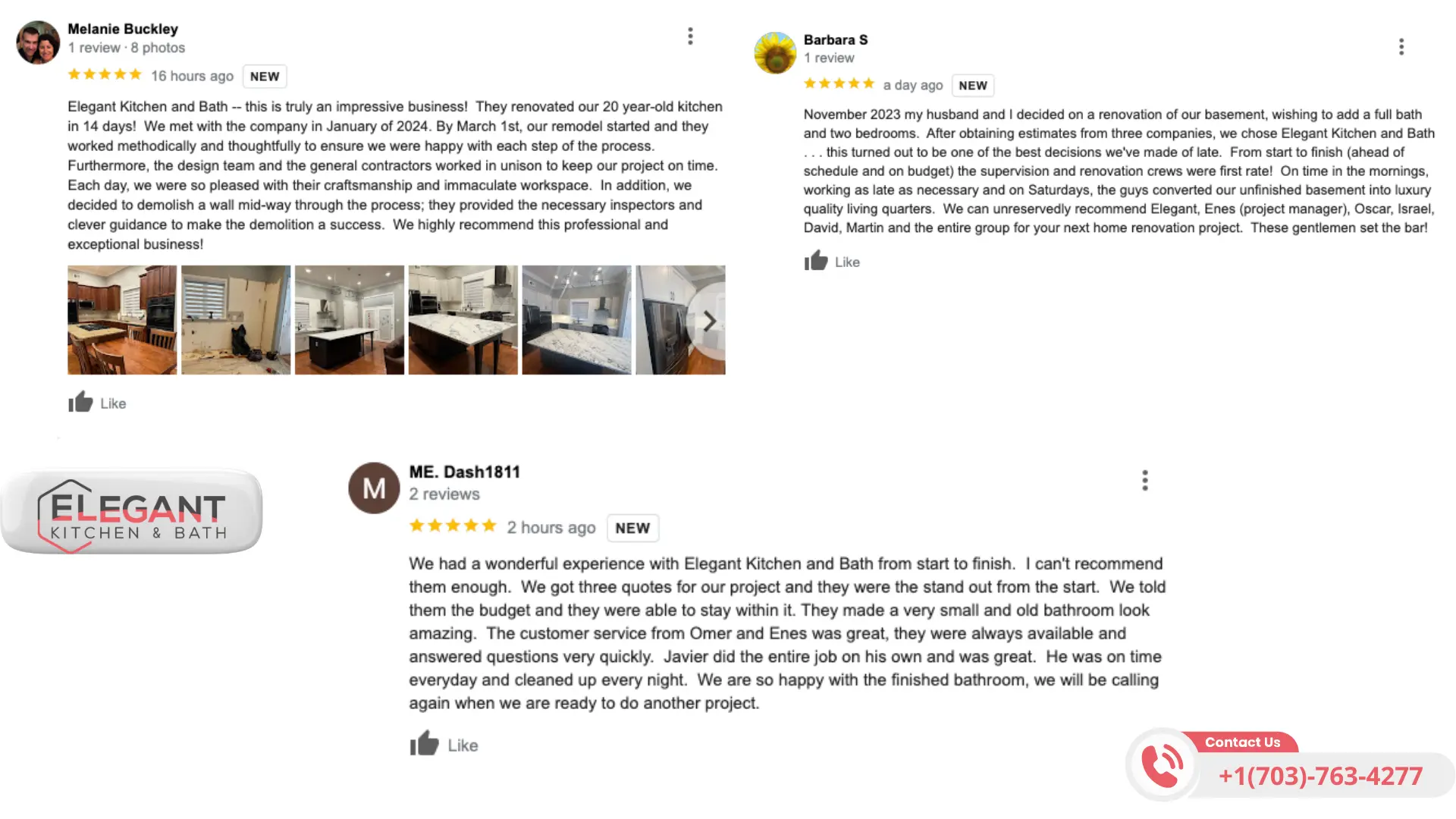
Kevin Stout recently had his kitchen remodeled by Elegant Kitchen & Bath and was thoroughly impressed with the entire process. From the initial design phase, where Omer provided detailed visual renderings, to the final touches, every step exceeded Kevin’s expectations. The project was completed ahead of schedule, thanks to the meticulous planning and frequent communication from Enes, the project manager. Kevin appreciated the team’s ability to address unforeseen issues, such as relocating electrical and gas lines to optimize kitchen space. The accent lighting added a beautiful touch to the finished kitchen. Kevin highly recommends Elegant Kitchen & Bath for their exceptional craftsmanship and professionalism.
Kifah Tlaib had a fantastic experience with Tayfun and his team during a recent kitchen remodel. Tayfun’s commitment to excellent service and honesty stood out, making the entire process smooth and efficient. The team’s strong work ethic and attention to detail ensured a beautifully remodeled kitchen. Kifah highly recommends Elegant Kitchen & Bath for anyone looking to transform their kitchen space with precision and care.
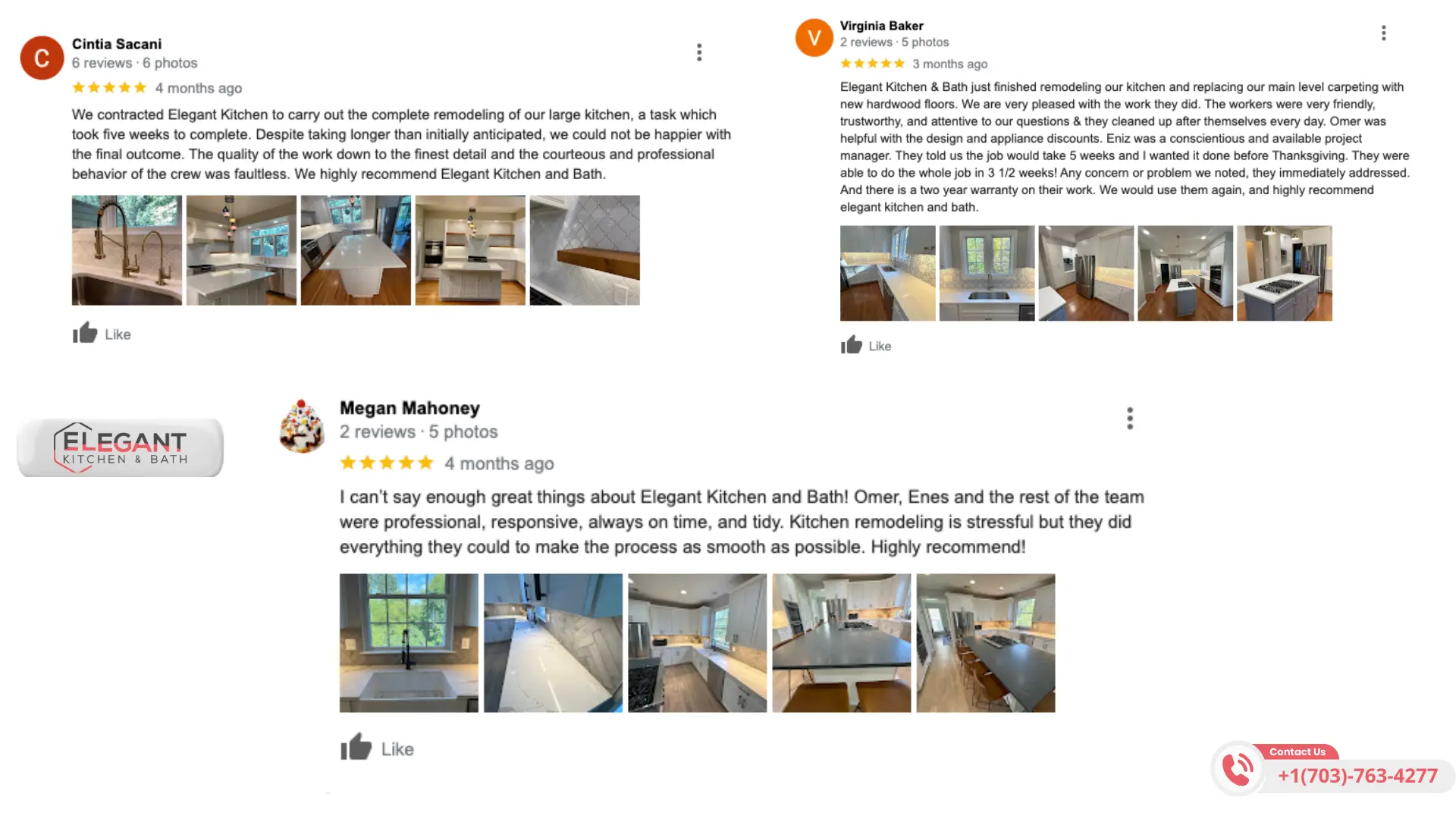
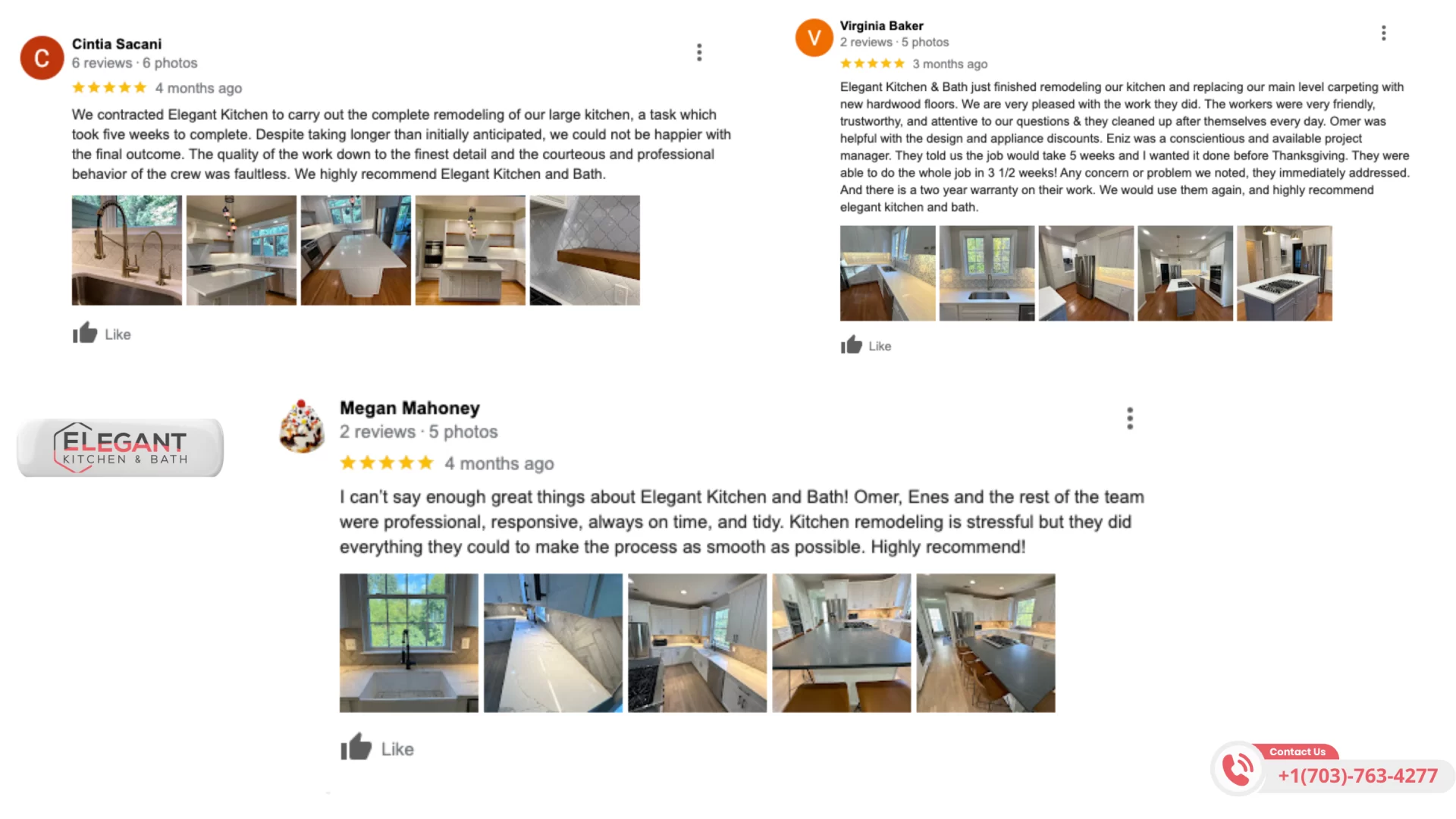
Megan Mahoney cannot praise Elegant Kitchen & Bath enough for their outstanding work on her kitchen remodel. Omer, Enes, and the rest of the team were professional, responsive, punctual, and maintained a tidy workspace throughout the project. Despite the inherent stress of kitchen remodeling, the team made the process as seamless as possible. Megan highly recommends Elegant Kitchen & Bath for their dedication to delivering high-quality results and exceptional customer service.
Elevate Your Kitchen with Marble or Porcelain Tile
Experience the same level of satisfaction as Kevin, Kifah, and Megan by choosing Elegant Kitchen & Bath for your next kitchen remodel. Whether you prefer the timeless elegance of marble or the durability and versatility of porcelain tile, our team is dedicated to delivering exceptional results that exceed your expectations. Our expertise in materials, patterns, and trends ensures personalized recommendations that bring your dream kitchen to life. Join our satisfied clients in experiencing the transformative power of a beautifully remodeled kitchentailored to your unique needs.
Conclusion
Deciding between marble and porcelain tiles for a kitchen remodel is a significant decision that requires careful consideration of factors such as aesthetics, durability, maintenance, cost, and environmental impact.
Marble offers timeless elegance and unique veining patterns that elevate the kitchen’s overall design, while porcelain provides versatility, durability, and low maintenance requirements. Homeowners should weigh their priorities, lifestyle, and budget when choosing these popular tile options.
Partnering with a reputable company like usElegant Kitchen and Bath ensures a successful kitchen renovation project, regardless of the tile material chosen.
A stunning white kitchen backsplash can elevate the look of any modern home, creating a clean, fresh, and timeless aesthetic. With countless design options available, from classic subway tiles to elegant marble and intricate patterns, there’s a perfect white backsplash solution for every style and budget.
Whether you’re looking to create a bright and airy atmosphere or add a touch of sophistication to your cooking space, a well-chosen white backsplash can make all the difference.
Versatility: White backsplashes complement various design styles, from minimalist to farmhouse chic, making them suitable for any modern kitchen.
Material Options: Homeowners can choose from a variety of materials for white backsplashes, including classic subway tiles, elegant marble, and textured white stone. Each offers durability and ease of maintenance.
Patterns and Layouts: Unique patterns such as herringbone, chevron, or basketweave can add depth and interest to a white backsplash, enhancing its simplicity without detracting from its elegance.
Lighting: Proper lighting, such as under-cabinet or pendant lights, can highlight the texture and sheen of white backsplash tiles, creating a warm and inviting atmosphere.
Small-Scale Tiles: Small-scale tiles like mosaics or penny rounds add intricate detail and character to white kitchens, with options to use contrasting grout colors for added definition.
Marble Backsplashes: Marble backsplashes, such as Calacatta, Carrara, or Statuario, add luxury and sophistication with their unique veining and subtle color variations, though they require regular maintenance.
Chevron and Herringbone Patterns: A white chevron or herringbone backsplash adds a modern and dynamic look, creating visual interest and texture in the kitchen.
Bright and Warm White Kitchens: Bright white kitchens use high-gloss cabinetry and reflective materials to create an open and airy feel. In contrast, warm white kitchens incorporate cream or ivory tones for a cozy and inviting atmosphere.
Timeless Appeal: White subway tile backsplashes are a timeless choice that remains popular due to their clean, structured look and ability to blend seamlessly with various kitchen styles.
[ez-toc]
Timeless White Backsplash
A timeless white backsplash serves as the perfect backdrop for any modern kitchen. Its clean and crisp appearance effortlessly complements various design styles, from minimalist to farmhouse chic. The versatility of a white backsplash allows homeowners to experiment with other elements in the kitchen, such as colorful appliances or bold countertops, without overwhelming the space.
When selecting materials for a white backsplash, homeowners have many options. Classic subway tiles, elegant marble, or even textured white stone can create a stunning and timeless look. These materials offer visual appeal and provide durability and ease of maintenance, ensuring that the backsplash remains beautiful for years to come.
The simplicity of a white backsplash can be elevated through the use of unique patterns or layouts. Herringbone, chevron, or basketweave patterns add depth and interest to the space without detracting from the overall elegance. Alternatively, incorporating varying shades of white or introducing subtle texture through handcrafted tiles can create a more dynamic and visually engaging backsplash.
Lighting plays a crucial role in showcasing the beauty of a white backsplash. Under-cabinet lighting or strategically placed pendant lights can highlight the texture and sheen of the tiles, creating a warm and inviting atmosphere in the kitchen. The white backsplash’s reflective nature also helps bounce light around the room, making the space feel brighter and more spacious.
Small-Scale Backsplash Tile
Small-scale backsplash tiles offer a delicate and intricate look that can add depth and character to a white kitchen. These petite tiles, such as mosaic or penny rounds, create a visually stunning backdrop that draws the eye without overwhelming the space. The smaller size of the tiles allows for creative patterns and designs that can be tailored to suit any homeowner’s style.
When incorporating small-scale tiles into a white kitchen backsplash, consider using a contrasting grout color to emphasize the pattern and add definition. A darker grout against white tiles creates a striking visual effect, while a lighter grout can provide a more subtle and seamless appearance. Experimenting with grout colors allows homeowners to customize their backsplash and create a unique look that complements their kitchen’s overall design.
Small-scale backsplash tiles are not limited to traditional materials like ceramic or porcelain. Glass, natural stone, and even metal tiles can create a luxurious and eye-catching backsplash. These materials offer a range of textures and finishes that can elevate the sophistication of a white kitchen while still maintaining the timeless elegance of a neutral palette.
To make a small-scale tile backsplash the focal point of a white kitchen, consider extending the tiles to the ceiling or creating a feature wall behind the stove or sink. This design choice adds visual interest to the space and protects the walls from splashes and stains, ensuring that the kitchen remains beautiful and functional for years to come.
Classic White Kitchen
A classic white kitchen is a timeless choice that exudes elegance and sophistication. It creates a clean, fresh, bright, inviting, and functional atmosphere. White kitchens offer a blank canvas, allowing homeowners to showcase their style through accessories, artwork, and other design elements.
When designing a classic white kitchen, consider the following elements to create a cohesive and stylish space:
Cabinetry: Choose simple, streamlined cabinets in a crisp white finish for a timeless look.
Countertops: Opt for neutral countertops, such as white marble or quartz, to complement the white cabinetry.
Backsplash: To tie the space together, select a white backsplash material, such as subway tiles or mosaics.
Lighting: Incorporate a mix of task and ambient lighting to create a warm and inviting atmosphere.
Hardware: Add a touch of elegance with classic hardware finishes, such as polished nickel or brushed gold.
To prevent a classic white kitchen from feeling sterile or monotonous, incorporate various textures and subtle patterns throughout the space. Textured tiles, woven accessories, or a patterned Roman shade can achieve this.
A classic white kitchen is a versatile choice that can be easily updated with new accessories, artwork, or paint colors. Its timeless appeal and adaptability make it popular among homeowners and designers.
Gorgeous Marble Backsplash
A gorgeous marble backsplash adds a touch of luxury and sophistication to any white kitchen. The natural veining and subtle variations in color create a stunning visual interest that elevates the space’s overall design. Marble backsplashes come in various styles, from classic subway tiles to intricate mosaics, allowing homeowners to customize their kitchen to suit their tastes.
When incorporating a marble backsplash into a white kitchen, consider the following options:
Calacatta marble: Known for its bold, dramatic veining and crisp white background.
Carrara marble: Features softer, more subtle veining, and a slightly warmer white tone.
Statuario marble: Offers a striking contrast between its bright white background and dark, bold veining.
To showcase the beauty of a marble backsplash, pair it with simple, streamlined cabinets and neutral countertops. This change allows the natural character of the marble to take center stage and become the focal point of the kitchen. Incorporating under-cabinet lighting or pendant lights can further highlight the stunning texture and veining of the marble, creating a warm and inviting atmosphere.
While marble is a timeless and durable choice for kitchen backsplashes, it does require regular maintenance to keep it looking its best. Sealing the marble helps to protect it from stains and etching, ensuring that the backsplash remains a beautiful and functional element of the white kitchen for years to come.
White Chevron Backsplash
A white chevron backsplash adds a modern and dynamic touch to any kitchen. The zigzag pattern creates a sense of movement and energy, while the crisp white color maintains a clean and timeless aesthetic. This eye-catching design is perfect for homeowners looking to add a touch of contemporary flair to their space.
When incorporating a white chevron backsplash, consider the following options:
Elongated white subway tiles installed in a herringbone pattern
To balance the bold pattern of a white chevron backsplash, pair it with simple, streamlined cabinets and countertops in complementary colors. This pairing makes the backsplash a striking focal point without overwhelming the space. Incorporate modern hardware and lighting fixtures to complete the contemporary look.
A white chevron backsplash is a versatile choice that can be adapted to suit various kitchen styles, from sleek and minimalist to warm and industrial. Its timeless appeal and ability to add visual interest make it popular among homeowners and designers seeking to create a modern and sophisticated white kitchen.
Glam White Kitchen Backsplash
A glam white kitchen backsplash adds a touch of luxury and sophistication to any modern home. It creates a stunning focal point that elevates the overall design, making it feel elegant and inviting.
When incorporating a glam white backsplash, consider the following options:
Mother-of-pearl tiles that shimmer and reflect light
High-gloss ceramic tiles with a mirrored finish
White glass tiles with a metallic accent, such as gold or silver
Carrara marble tiles with a polished, reflective surface
To enhance the glamorous look of a white kitchen backsplash, pair it with sleek, modern cabinets and high-end appliances in complementary finishes, such as stainless steel or brushed gold. Incorporate statement lighting fixtures, such as a crystal chandelier or pendant lights, to add a touch of elegance and sophistication to the space.
A glam white kitchen backsplash is perfect for homeowners who want to create a luxurious and stylish kitchen that feels both modern and timeless. Its ability to reflect light and add visual interest makes it a stunning addition to any home.
Bright White Kitchen
A bright white kitchen creates a fresh, clean, modern, inviting, and timeless atmosphere. The crisp white cabinetry, countertops, and backsplash work together to reflect light, making the space feel open and airy. This bright and luminous aesthetic is perfect for homeowners who want to create a contemporary, sophisticated kitchen that feels welcoming and functional.
Opt for high-gloss white cabinetry and a sleek white quartz or marble countertop to achieve a bright white kitchen. The backsplash should be a focal point, featuring a range of white materials such as glossy subway tiles, mirrored glass tiles, or a clean, white-painted surface. These reflective materials will bounce light around the room, enhancing the bright and spacious feel of the kitchen.
Incorporate modern lighting fixtures, such as recessed lights or slim, linear pendants, to further illuminate the space and highlight the beauty of the white surfaces. Pair the bright white elements with stainless steel appliances and minimalist hardware to complete the contemporary look. To add a touch of warmth and texture, consider incorporating natural wood accents through floating shelves, barstools, or a butcher block kitchen island.
A bright white kitchen is a versatile choice that can be adapted to suit various design styles, from sleek and minimalist to coastal and Scandinavian-inspired. Its ability to create a fresh and luminous atmosphere makes it a popular choice among homeowners and designers alike, ensuring that the kitchen remains a beautiful and functional heart of the home for years to come.
Warm White Kitchen Backsplash
A warm white kitchen backsplash creates a soft, inviting atmosphere that exudes comfort and sophistication. This timeless choice perfectly balances a crisp, modern aesthetic and a cozy, welcoming feel. Homeowners can create an elegant and approachable kitchen by incorporating warm white tones, such as cream or ivory.
When selecting materials for a warm white kitchen backsplash, consider the following options:
Handmade ceramic tiles with a subtle texture and warm undertones
Honed Calacatta marble with soft, creamy veining
Travertine tiles in a warm, ivory shade
Painted brick or shiplap for a rustic, farmhouse-inspired look
To enhance its inviting feel:
Pair a warm white backsplash with natural wood elements, such as open shelving or a reclaimed wood island.
Incorporate soft, warm lighting through pendant or under-cabinet lighting to create a cozy ambiance.
Complete the look with warm metal accents, such as brushed gold or copper hardware, to add a touch of elegance and depth to the space.
A warm white kitchen backsplash is a versatile choice that complements a wide range of design styles, from traditional to contemporary. Its ability to create a welcoming and sophisticated atmosphere makes it a popular choice for homeowners seeking to create a timeless and inviting kitchen that will be enjoyed for years.
Contemporary White Backsplash
A contemporary white backsplash is perfect for homeowners creating a sleek and modern kitchen. This minimalist design features clean lines, simple patterns, and a crisp white palette that exudes sophistication and elegance. The backsplash is a stunning focal point, drawing the eye and setting the tone for the entire space.
When selecting materials for a contemporary white backsplash, opt for tiles with a smooth, glossy finish, such as large-format porcelain or glass. These materials reflect light, making the kitchen feel bright and spacious. For a more textured look, consider incorporating a subtle pattern, such as a hexagon or chevron, using matte or satin-finish tiles.
To complement the contemporary white backsplash:
Pair it with sleek, minimalist cabinetry in a matching white or contrasting color, such as dark gray or black.
To maintain the streamlined aesthetic, incorporate modern hardware, such as slim, stainless steel pulls or integrated handles.
Complete the look with a waterfall-edge quartz countertop and modern, geometric light fixtures.
A contemporary white backsplash is a timeless choice that adapts seamlessly to evolving design trends. Its clean, minimalist appearance creates a versatile backdrop that allows homeowners to experiment with bolder elements, such as colorful appliances or statement lighting, without overwhelming the space. This elegant and sophisticated design choice ensures that the kitchen remains a beautiful and functional heart of the home for years to come.
White Subway Tile Backsplash
A white subway tile backsplash is a timeless and versatile choice for any modern kitchen. This classic design features rectangular tiles arranged in a brick-like pattern, creating a clean and structured look. The crisp white color of the tiles reflects light, making the kitchen feel bright, spacious, and inviting.
When incorporating a white subway tile backsplash, homeowners have several options to customize the look:
Choose between traditional glossy or contemporary matte finishes
Experiment with different grout colors for a subtle or bold contrast
Arrange tiles in a classic horizontal pattern or a modern vertical layout
Opt for larger or smaller tile sizes to create a unique visual interest
To enhance the timeless appeal of a white subway tile backsplash, pair it with complementary elements such as white or light-colored cabinetry, neutral countertops, and modern hardware. Incorporate open shelving or glass-front cabinets to break up the expanse of tiles and add visual depth to the space.
A white subway tile backsplash seamlessly blends with various design styles, from traditional to contemporary, making it a popular choice for homeowners seeking a versatile and enduring kitchen design. Its ability to adapt to evolving trends ensures the kitchen remains a beautiful and functional space for years.
Sophisticated Shine
A sophisticated, shiny white kitchen backsplash adds a touch of glamour and elegance to any modern home. Glossy white tiles, such as high-gloss ceramic or glass, reflect light beautifully, creating a bright and spacious atmosphere. This polished look works well in contemporary kitchens with sleek cabinetry and modern appliances.
To achieve a sophisticated, shiny white backsplash, consider the following options:
Large-format, high-gloss porcelain tiles for a seamless, mirror-like effect
White glass subway tiles with a reflective finish for a classic yet modern look
Mother-of-pearl mosaic tiles that shimmer and catch the light
Polished Carrara marble tiles for a luxurious and timeless appearance
When paired with modern lighting fixtures, such as pendant lights or under-cabinet lighting, a sophisticated, shiny white backsplash becomes a stunning focal point in the kitchen. The reflective surface bounces light around the room, creating a bright, inviting, stylish, and functional atmosphere.
Pair the shiny white backsplash with complementary elements, such as stainless steel appliances, chrome or polished nickel hardware, and a crisp white or light-colored countertop to complete the look. This cohesive design approach results in a sophisticated and modern kitchen that will impress.
Marble Backsplash Makeover
A marble backsplash makeover transforms a white kitchen into a luxurious and sophisticated space. Marble’s natural beauty, with its unique veining and color variations, adds depth and character to the room. When paired with crisp white cabinetry and countertops, a marble backsplash becomes a stunning focal point that elevates the overall design.
Homeowners have several options when incorporating a marble backsplash into their white kitchen:
Classic subway tiles in Carrara or Calacatta marble for a timeless look
Hexagon or penny round marble mosaic tiles for added texture and visual interest
Large-format marble slabs for a seamless and modern appearance
Honed or polished finishes to customize the level of shine and sophistication
To highlight the beauty of a marble backsplash, consider installing under-cabinet lighting or pendant lights that illuminate the stone’s natural texture and veining. The marble’s reflective quality will help bounce light around the room, creating a bright and inviting atmosphere in the kitchen.
While marble is a stunning choice for a white kitchen backsplash, it is essential to note that it does require regular maintenance to keep it looking its best. Sealing the marble helps to protect it from stains and etching, ensuring that the backsplash remains a beautiful and functional element of the space for years to come.
Moroccan-Style White Kitchen Backsplash
A Moroccan-style white kitchen backsplash introduces an exotic and elegant touch to a modern home. Moroccan tiles’ intricate patterns and textures create a captivating focal point that complements the crisp white cabinetry and countertops. This fusion of traditional and contemporary elements creates a unique and sophisticated kitchen design.
Homeowners can choose from various Moroccan tile patterns, such as arabesque, quatrefoil, or star and cross, to create a stunning white backsplash. These tiles often feature a matte or slightly glossy finish, adding depth and dimension to the kitchen walls. The subtle variations in shade and texture within the white tiles contribute to the overall visual interest of the space.
To enhance the Moroccan-inspired look, consider incorporating decorative elements such as carved wood shelving, a mosaic tile border, or a patterned Roman shade. These accessories can pick up on the colors and motifs found in the backsplash, creating a cohesive and stylish design. Adding warm metallic accents, such as brass or copper, can further emphasize the exotic charm of the Moroccan-style white kitchen backsplash.
A Moroccan-style white kitchen backsplash is perfect for homeowners seeking to infuse their modern kitchen with global inspiration. The timeless beauty of white, combined with Moroccan tiles’ intricate patterns and textures, creates a stunning, sophisticated, functional, and visually appealing space.
Modern Black-and-White Kitchen Backsplash
A modern black-and-white kitchen backsplash creates a bold and sophisticated statement in any contemporary home. The high-contrast color palette is timeless and trendy, providing a striking backdrop for sleek white cabinetry and modern appliances. This monochromatic design adds visual interest and depth to the kitchen while maintaining a clean and minimalist aesthetic.
Homeowners can achieve this look by incorporating black and white tiles in various patterns and materials. Glossy black subway tiles paired with crisp white grout create a sleek and polished appearance, while matte black and white mosaic tiles offer a more textured and dimensional look.
To balance the bold contrast of a black-and-white backsplash, incorporate modern lighting fixtures, such as pendant lights or recessed lighting, to illuminate the space and highlight the stunning tile work. Pair the backsplash with black and white accents throughout the kitchen, such as black hardware against whitecabinetry or a white quartz countertop with subtle black veining, to create a cohesive and sophisticated look.
A modern black-and-white kitchen backsplash is a daring and stylish choice for homeowners seeking to create a contemporary and visually striking kitchen design. The timeless elegance of this color combination ensures that the backsplash will remain a beautiful and functional element of the space for years to come while also allowing for flexibility in updating other design elements as trends evolve.
Sleek Marble White Kitchen Backsplash
A sleek white marble kitchen backsplash epitomizes sophistication and luxury in a modern home. The natural beauty of marble, with its unique veining patterns and subtle color variations, creates a stunning focal point that elevates the kitchen design. The marble backsplash adds depth, texture, and a touch of elegance to the space when paired with crisp white cabinetry and countertops.
Homeowners can choose from various marble options to achieve their desired aesthetic. Carrara marble, known for its soft gray veining against a white background, offers a classic and timeless look. In contrast, Calacatta marble, with its bolder and more dramatic veining, creates a luxurious and eye-catching statement.
To enhance the sleek appearance of a marble white kitchen backsplash, consider installing large-format tiles or slabs to minimize grout lines and create a seamless, modern look. Pair the backsplash with contemporary lighting fixtures, such as recessed or pendant lights, to highlight the natural beauty of the marble and create a bright and inviting atmosphere in the kitchen.
While a sleek white marble kitchen backsplash is undeniably beautiful, it must be noted that marble requires regular maintenance to keep it looking its best. Sealing the marble helps protect it from stains and etching, ensuring that the backsplash remains a stunning and functional kitchen element for years to come.
White Kitchen Backsplash With Colorful Cabinets
A white kitchen backsplash paired with colorful cabinets creates a stunning and dynamic design in a modern home. The crisp, neutral backdrop of the white backsplash allows the vibrant hues of the cabinetry to take center stage, making a bold and playful statement. This unexpected combination of a classic white backsplash and eye-catching, colorful cabinets results in a stylish and memorable kitchen.
When choosing a white backsplash to complement colorful cabinets, consider the following options:
Glossy white subway tiles for a sleek and timeless look
Textured white mosaic tiles to add depth and visual interest
Large-format white porcelain tiles for a modern, seamless appearance
Matte white hexagon tiles for a subtle, geometric touch
To balance the boldness of the colorful cabinets, incorporate modern lighting fixtures, such as pendant lights or under-cabinet lighting, to highlight the white backsplash and create a bright and inviting atmosphere. Pair the white backsplash and colorful cabinets with neutral countertops, such as white quartz or light-colored wood, to maintain a sense of cohesion and balance in the kitchen.
A white kitchen backsplash with colorful cabinets is perfect for homeowners who want to infuse their modern kitchen with personality and whimsy. This unique combination of classic and contemporary elements creates a functional and visually striking space, ensuring that the kitchen remains a beautiful and enjoyable heart of the home for years to come.
Herringbone Tile Inset
A herringbone tile inset is a stunning way to add visual interest and texture to a white kitchen backsplash. This classic pattern, featuring rectangular tiles arranged in a zigzag formation, creates a sense of movement and depth that draws the eye and elevates the overall design.
When incorporating a herringbone tile inset into a white kitchen backsplash, consider the following options:
Choose a contrasting grout color to emphasize the pattern and add definition
Opt for a smaller tile size to create a more intricate and detailed look
Experiment with different materials, such as marble, porcelain, or glass, to achieve the desired aesthetic
To showcase the beauty of a herringbone tile inset, consider placing it in a prominent location, such as behind the stove or sink. This strategic placement allows the intricate pattern to serve as a focal point in the white kitchen, drawing the eye and adding a touch of sophistication to the space.
A herringbone tile inset is a timeless choice that complements a wide range of kitchen styles, from traditional to contemporary. Its ability to add visual interest and texture to a white backsplash makes it a popular choice among homeowners and designers seeking to create a stunning and elegant kitchen that will be admired for years.
FAQs for White Kitchen Backsplash for Modern Homes
What kitchen backsplash won’t go out of style?
Classic white subway tiles are a timeless choice for a kitchen backsplash that won’t go out of style. They pair well with various kitchen cabinet colors and styles, from traditional to modern. For a fresh twist, consider using larger-format subway tiles (like 4×8 or 4×12 inches) in a staggered pattern. These subway tiles create a clean, streamlined look that complements your kitchen cabinets without appearing too trendy.
What style of backsplash is it in?
Currently, textured and natural-looking tiles like zellige are popular for kitchen backsplashes. These handcrafted clay tiles come in soft, earthy tones that add warmth and character to a white kitchen. Another trendy option is a brick backsplash kitchen, which brings a cozy, rustic charm. A marble backsplash kitchen is always in style for a more refined look, especially when paired with white cabinets.
What size tile is the kitchen backsplash?
The most common sizes for kitchen backsplash tiles are 3×6 inches (classic subway tile) and 4×4 inches (square). However, larger format tiles like 4×8, 4×12, or even 6×12 inches are gaining popularity for a less busy, more contemporary look. The size you choose depends on your style and the overall design of your kitchen. Remember that larger tiles can make a small kitchen feel more spacious, while smaller tiles add texture and visual interest.
What kind of backsplash makes a kitchen look bigger?
To make a kitchen look bigger, opt for a light-colored backsplash that reflects light and creates a sense of openness. White or pale-colored tiles are an excellent choice, blending seamlessly with white kitchen cabinets and making the space feel brighter. A glossy finish can also help bounce light around the room, making it appear larger. For a cohesive look, consider extending the backsplash to the ceiling, which draws the eye upward and gives the illusion of higher ceilings. Finally, choose a simple pattern or larger tiles to minimize visual clutter and maintain a spacious feel.
What color backsplash works best with an all-white kitchen?
A classic white subway tile backsplash in an all-white kitchen with white cabinets is a timeless choice that will never go out of style. Consider a white marble or mother-of-pearl tile backsplash for a more luxurious look, adding subtle texture and shine. If you want to add a touch of color, consider a pale blue, green, or gray backsplash that will complement the white kitchen cabinets without overwhelming the space.
What are the backsplash trends for 2024?
In 2024, we expect to see a mix of classic and modern kitchen backsplash trends. Timeless materials like marble and subway tile will remain popular but with a twist. Look for marble mosaic backsplash designs, chevron backsplash patterns, and small-scale backsplash tiles in hexagonal or penny-round shapes. Contemporary backsplash trends will include large-format tiles, slab backsplashes, and metallic accents for a sleek, minimalist look.
What is the most timeless kitchen backsplash?
Subway tile backsplashes are considered the most timeless kitchen backsplash option. They have been popular for decades and are favorites among homeowners and designers. A classic white subway tile backsplash works well with various kitchen styles, from traditional to modern, and complements any color of kitchen cabinets. Consider a marble herringbone backsplash or a calacatta gold backsplash for a timeless yet elegant look.
What kind of backsplash makes a kitchen look bigger?
Choose a backsplash that reflects light and creates a sense of openness to make a kitchen appear more prominent. White or light-colored backsplashes, such as a classic white subway tile or a pale-colored geometric backsplash, will help brighten the space and make it feel more expansive. Glass tiles and glossy finishes can also help bounce light around the room. For a seamless look, consider extending the backsplash to the ceiling, which draws the eye upward and gives the illusion of higher ceilings.
Should the backsplash be lighter or darker than the countertop?
The backsplash can be either lighter or darker than the countertop, depending on the overall look you want to achieve. A lighter backsplash will help brighten the space and make it feel more open, while a darker backsplash can add depth and contrast. The key is to choose colors and materials that complement each other and create a cohesive look. If you have dark countertops, a light backsplash can provide balance, while a dark backsplash can make a dramatic, sophisticated look when paired with light countertops.
What is the rule of thumb for backsplash design?
One important rule of thumb for backsplash design is to consider the style of your kitchen cabinets and countertops. The backsplash should complement these elements without overwhelming them. Another guideline is to choose a backsplash that is timeless rather than trendy so it will look great for years to come. Finally, ensure the backsplash is functional and beautiful – it should be easy to clean and resistant to stains and moisture.
What color backsplash with a white kitchen?
An all-white kitchen provides a blank canvas for your backsplash! While you can’t go wrong with white, don’t be afraid to introduce color and personality. Here are a few ideas:
Warm it up: A creamy ivory, beige, or light greige backsplash can add subtle warmth and dimension to your white kitchen cabinets.
Go bold: Inject personality with a vibrant color like blue, green, or even a pop of yellow. Consider picking up a hue from your artwork or décor.
Embrace texture: A white backsplash doesn’t have to be boring! Explore textured tiles like a white marble herringbone backsplash for visual interest.
What is the trend in backsplash in 2024?
2024 is all about embracing natural elements and personalized style. Here are a few trending backsplash ideas:
Nature-inspired: Think earthy tones, organic textures, and materials like stone and wood. A rock backsplash can bring a touch of the outdoors in.
Statement slabs: Large-format slabs, especially in natural stone like a white marble backsplash, are famous for their luxurious and seamless look.
Geometric patterns: Geometric backsplash designs add a modern edge to kitchen cabinets, particularly in a Chevron backsplash pattern.
What is the most timeless kitchen backsplash?
For a kitchen backsplash that will stand the test of time, consider these classic options:
Subway tile: A Subway tile backsplash in a classic white or cream color offers a clean, versatile look that complements any kitchen cabinets.
Marble: Timelessly elegant, a marble backsplash, especially in a classic calacatta gold backsplash design, adds sophistication and value to your kitchen.
Neutral Stone: Stone backsplashes in shades of beige, gray, or taupe provide a neutral backdrop that won’t feel dated.
What is the current trend for backsplash?
Current backsplash trends are moving towards bolder statements and personalized touches:
Colorful grout: Don’t underestimate the power of grout! Using a contrasting or colorful grout with your backsplash can completely transform the look.
Metallic accents: To add a touch of glam, incorporate metallic backsplash tiles, like a Glam kitchen backsplash, into your design.
Mixed materials: Combining different materials, like wood, tile, metal, and glass, creates a unique and personalized focal point.
What backsplash will not go out of style?
Some backsplash choices have enduring appeal:
Classic White: A classic white backsplash is always a good choice. It’s clean and bright and complements any style of kitchen cabinet.
Natural Stone: Like slate backsplash, natural stone backsplashes have a timeless beauty that adds character and value to your kitchen.
Simple Patterns: Subtle patterns, like a herringbone or chevron design, add visual interest without feeling trendy or overwhelming.
Should the backsplash be lighter or darker?
The best approach depends on your desired effect:
Lighter backsplash: A lighter backsplash can make your kitchen feel larger and brighter, especially when paired with white cabinets.
Darker backsplash: A darker backsplash can create a moodier, more dramatic look. It can also help to disguise stains and splatters better.
What is the rule of thumb for backsplash?
While there are no hard and fast rules, here are some guidelines:
Height: A standard backsplash height is 18 inches, but you can go higher or lower depending on your preference and ceiling height.
Coverage: Extend your backsplash behind your range or cooktop for easier cleaning and a cohesive look.
Balance: Consider the overall balance of your kitchen. If you have busy countertops, opt for a more straightforward backsplash, and vice versa.
Should the backsplash match the countertop or cabinets?
Your backsplash doesn’t have to match either perfectly, but it should complement them:
Matching countertops: Matching your backsplash to your countertops can create a seamless and cohesive look.
Matching cabinets: Matching your backsplash to your kitchen cabinets can help unify the space, especially if you have many different finishes.
Complementary contrast: Choosing a backsplash that complements but contrasts with your countertops and cabinets can add visual interest.
What kind of backsplash makes a kitchen look bigger?
To create the illusion of more space:
Reflective surfaces: Choose glossy tiles or a mother-of-pearl tile backsplash that reflects light, making the space feel larger.
Light colors: Light-colored backsplashes, especially in white or cream, help brighten the kitchen and make it feel more open.
Small-scale tiles: Small-scale backsplash tile, like a marble mosaic backsplash, can trick the eye into thinking the space is larger than it is.
Continuous backsplash: Running your backsplash to the ceiling can create a sense of height and grandeur.
Remember, these are just a few ideas to get you started. The best white kitchen backsplash for your modern home will depend on your style and the overall design of your space! For more personalized advice and design inspiration, contact the experts at Elegant Kitchen and Bath. We’re here to help you create the kitchen of your dreams!
Hear From Our Delighted Clients About Elegant White Kitchen Backsplash Ideas
Pam and her wife recently completed an amazing kitchen renovation with Elegant Kitchen and Bath. After meeting with several companies, they chose EKB for their professionalism and ability to bring their vision to life. Arif expertly translated their ideas into a perfect kitchen design, while Tayfun, the Project Manager, ensured the project was managed with patience and professionalism. Pam also praised Bryan and his team for their excellent craftsmanship. Pam highly recommends Elegant Kitchen and Bath for their exceptional work and respectful treatment throughout the project.
Brandon Williams was thoroughly impressed with Elegant Kitchen and Bath’s work on his full kitchen renovation, which included knocking down walls, adding new flooring, an 8 ft island, and new cabinets. Despite initial skepticism about the timeline, the project was completed in just three weeks. Brandon appreciated the team’s punctuality, politeness, and responsiveness to changes. He was particularly impressed with their ability to stick to the budget and timeline, as well as their competitive pricing. Brandon highly recommends EKB for their quality work and professionalism.
Genevieve S is a returning client of Elegant Kitchen and Bath, having recently completed a basement remodeling project that included adding a new bathroom and updating the flooring. She praised Arif for his design assistance and Tayfun for his professional project management, especially since she was away during the project. Genevieve was impressed with the team’s attention to detail, quality of work, and excellent customer service. She highly recommends EKB for their effective and friendly team, who are skilled at their craft and attentive to client preferences.Experience the same level of satisfaction as Pam, Brandon, and Genevieve by choosing Elegant Kitchen and Bath for your next kitchen project. Our team is dedicated to delivering exceptional results that exceed your expectations.
Elevate your kitchen’s style and functionality with Elegant Kitchen and Bath’s expertise in designing beautiful white backsplash solutions. Our team’s deep knowledge of materials, patterns, and trends ensures you’ll receive personalized recommendations that bring your dream kitchen to life. Join our satisfied clients in experiencing the transformative power of an elegant white backsplash tailored to your unique needs.
White backsplashes offer a clean and crisp backdrop that complements a wide range of styles, from classic to contemporary. They allow homeowners to showcase their taste through colorful accessories, appliances, and cabinetry.
White tiles’ reflective nature helps bounce light around the room, creating a bright and inviting atmosphere in the kitchen.
Whether opting for classic subway tiles, intricate herringbone patterns, or luxurious marble, a white kitchen backsplash is a stunning and sophisticated choice that ensures the heart of the home remains beautiful and functional for years to come.
Many homeowners prioritize maximizing space efficiency and optimizing workflows in the kitchen when undertaking a remodeling project. A well-designed modern kitchen cabinet layout enhances functionality and streamlines daily tasks, making cooking and entertaining a breeze.
Homeowners can create a beautiful and highly efficient kitchen by carefully considering cabinet layout, dimensions, storage solutions, and overall design.
In this article, we will explore the essential elements of an efficient kitchen cabinet layout and guide you through achieving the perfect balance of form and function in your kitchen remodeling project.
Key Takeaways for Functional Cabinet Layouts
Planning and understanding personal needs are crucial for creating a functional layout that optimizes kitchen space and enhances workflow.
Innovative storage solutions, such as pull-out cabinets, Lazy Susans, and custom drawer organizers, can significantly enhance kitchen space efficiency.
3D modeling software and professional designers in Elegant Kitchen and Bath can aid homeowners in visualizing and refining their kitchen design before commencing construction.
Including adequate counter space around key appliances enhances efficiency and minimizes clutter, which aids in easy meal preparation.
Incorporating vertical storage space for tools like cutting boards and trays can maximize the kitchen cabinet layout’s space efficiency.
Light colors can enhance the kitchen’s look and functionality, especially when paired with strategic lighting solutions.
Matte finishes can reduce cleaning time as they are better at concealing smudges and fingerprints than glossy finishes.
3D modeling software allows homeowners to experiment with different kitchen configurations before physical construction, smoothing out the design process.
Utilizing 3D Modeling Software and Consulting With Professional Designers Allows Homeowners to Visualize and Refine Their Kitchen Design Before Construction Begins.
Setting a Realistic Budget That Accounts for Custom Cabinetry, Innovative Storage Solutions, and a Contingency Fund Ensures a Successful Kitchen Remodel That Prioritizes Functionality and Efficiency
[ez-toc]
List Must-Haves for an Efficient Kitchen
To maximize space efficiencies and optimize workflows in the kitchen, homeowners must carefully consider their specific needs and plan accordingly. A well-designed kitchen layout considers the household’s unique requirements, ensuring the space is visually appealing and highly functional.
By identifying essential elements and strategically placing them within the kitchen, homeowners can create a space that streamlines their daily tasks and enhances their overall cooking experience.
Identify Your Kitchen Workflow Needs
When planning a kitchen remodel, homeowners should carefully assess their daily routines and cooking habits to identify essential workflow needs. This process involves evaluating the frequency and complexity of meal preparation, the number of people typically working in the kitchen, and any specific storage or appliance requirements. By understanding these unique needs, homeowners can create a tailored layout that optimizes efficiency and functionality.
To identify kitchen workflow needs, homeowners should consider factors such as the proximity of key appliances, the amount of counter space required for food preparation, and the ease of access to frequently used items. By strategically placing these elements within the kitchen layout, homeowners can minimize unnecessary movement and streamline their cooking processes, resulting in a more enjoyable and efficient kitchen experience.
Decide on Essential Appliances and Their Placement
When selecting essential appliances for a kitchen remodel, homeowners should prioritize those that align with their cooking habits and lifestyle. The most common must-have appliances include a refrigerator, stove, oven, and dishwasher, but additional items such as a microwave, range hood, or built-in coffee maker may also be considered based on individual preferences.
The placement of these appliances is crucial for optimizing workflow and efficiency in the kitchen. The kitchen work triangle, which involves the strategic positioning of the refrigerator, stove, and sink, should be a key consideration in the layout design. This arrangement minimizes the distance between these frequently used areas, reducing unnecessary movement and making meal preparation more seamless:
Position the refrigerator near the kitchen entrance for easy access to ingredients.
Place the stove and oven in a central location, with ample counter space on either side for food preparation.
Ensure the dishwasher is located near the sink for efficient loading and unloading of dishes.
Consider integrating specialty appliances, such as a built-in microwave or coffee maker, into the cabinetry for a seamless look and improved functionality.
Plan for Adequate Counter Space Near Key Appliances
Adequate counter space near key appliances is essential for a functional and efficient kitchen layout. Homeowners should plan for ample workspace around the stove, oven, and refrigerator to facilitate easy meal preparation and minimize clutter.
When designing the kitchen layout, consider incorporating expansive stretches of countertop on either side of the stove and oven, allowing sufficient room for food preparation, plating, and placing small appliances. Similarly, ensure the refrigerator is flanked by counter space to provide a convenient surface for unloading groceries and organizing ingredients.
Include Sufficient Storage for Tools and Ingredients
Sufficient storage for tools and ingredients is crucial for maintaining an organized and efficient kitchen. Homeowners should carefully assess their cooking habits and the types of items they frequently use to determine the optimal storage solutions for their needs.
When planning storage, consider the following options:
Install deep drawers near the stove and oven to store pots, pans, and baking sheets.
Include a mix of upper and lower cabinets to maximize vertical space and accommodate various item sizes.
Incorporate pull-out pantry shelves or a walk-in pantry for easy access to dry goods and bulk items.
To keep frequently used tools within reach, utilize vertical storage solutions, such as wall-mounted racks or magnetic knife strips.
Design a dedicated spice storage area, such as a shallow drawer or pull-out rack, to keep seasonings organized and easily accessible.
By carefully planning and implementing sufficient storage solutions tailored to their unique needs, homeowners can create a clutter-free and highly functional kitchen environment that streamlines meal preparation and enhances the overall cooking experience.
Kitchen Cabinet Layout & Dimensions for Maximum Efficiency
To maximize space efficiencies and optimize workflows in the kitchen, homeowners must carefully consider the layout and dimensions of their cabinetry.
By strategically designing cabinet storage and placement, households can create a highly functional and organized kitchen environment that streamlines meal preparation and enhances the cooking experience.
Key considerations for cabinet layout include:
Incorporating deep drawers for storing pots and pans.
Utilizing vertical storage solutions for cutting boards and trays.
Allowing ample countertop space between the sink and stove.
Embracing the classic work triangle concept.
Opt for Deep Drawers for Pots and Pans
Deep drawers provide an optimal storage solution for pots, pans, and other bulky kitchen items. By incorporating deep drawers into the cabinet layout, homeowners can maximize space efficiency and keep these essential tools organized and easily accessible.
When designing the cabinet layout, consider placing deep drawers near the stove and oven to streamline the cooking process. This strategic placement minimizes excessive movement during meal preparation, as pots and pans can be quickly retrieved and stored without disrupting the workflow.
Use Vertical Storage for Cutting Boards and Trays
Vertical storage solutions are an excellent way to maximize space efficiency in kitchen cabinets, particularly for cutting boards and trays. By incorporating vertical dividers or specialized racks, homeowners can store these items upright, making them easily accessible and preventing them from taking up valuable shelf space.
When designing the cabinet layout, consider the following vertical storage options for cutting boards and trays:
Install vertical dividers in a deep drawer to keep cutting boards and trays organized and easily accessible.
Incorporate a pull-out vertical rack next to the sink or dishwasher for convenient storage and air-drying of these items.
Utilize the back of cabinet doors to mount vertical racks or hooks for hanging cutting boards and trays.
Allow Ample Countertop Space Between the Sink and Stove
Providing sufficient countertop space between the sink and stove is crucial for maintaining an efficient and functional kitchen workspace. This area serves as a primary food preparation zone, and having ample room to work can significantly streamline the cooking process.
When planning the cabinet layout, ensure at least 24 to 36 inches of uninterrupted countertop space between the sink and stove. This planning space allows for comfortable food preparation, ingredient staging, and placement of small appliances without causing clutter or disrupting the workflow.
Embrace the Classic Work Triangle Concept
The classic work triangle concept is a time-tested approach to kitchen design that focuses on efficiently placing the three main work areas: the sink, stove, and refrigerator. By positioning these key elements in a triangular layout, homeowners can minimize unnecessary movement and create a seamless workflow during meal preparation.
When designing the cabinet layout, consider the following tips for embracing the work triangle concept:
Position the sink, stove, and refrigerator at points of an imaginary triangle, with each leg of the triangle measuring between 4 and 9 feet.
Ensure that the sum of all three sides of the triangle does not exceed 26 feet for optimal efficiency.
Minimize obstacles within the work triangle, such as islands or peninsulas, to maintain easy access and flow between key work areas.
Allow for Ample Countertop Space Between the Sink and Stove
Providing adequate countertop space between the sink and stove is essential for creating an efficient and functional kitchen workspace. This area serves as the primary food preparation zone, and having ample room to work can significantly streamline the cooking process, reducing clutter and ensuring a smooth workflow.
When planning the cabinet layout, designers should allow at least 24 to 36 inches of uninterrupted countertop space between the sink and stove. This space allows for comfortable food preparation, ingredients staging, and placing small appliances without impeding movement or causing congestion in the kitchen. Consider the following factors when optimizing countertop space between the sink and stove:
Ensure sufficient space for food preparation tasks, such as chopping, mixing, and plating.
Allow room for placing frequently used small appliances, such as a coffee maker or toaster.
Provide a landing space for hot items removed from the stove or oven.
Maintain clear pathways for easy access to the sink and stove during meal preparation.
Consider the Classic Work Triangle Concept
The classic work triangle concept is a time-tested approach to kitchen design that focuses on efficiently placing the three main work areas: the sink, stove, and refrigerator. By positioning these key elements in a triangular layout, designers can minimize unnecessary movement and create a seamless workflow during meal preparation.
When incorporating the work triangle concept into the cabinet layout, designers should aim to position the sink, stove, and refrigerator at points of an imaginary triangle, with each leg of the triangle measuring between 4 and 9 feet. The sum of all three sides of the triangle should not exceed 26 feet for optimal efficiency, and obstacles such as islands or peninsulas should be minimized within the work triangle to maintain easy access and flow between the key work areas.
Choosing Colors, Finish, & Design That Enhance Efficiency
The selection of colors, finishes, and materials is crucial in designing a kitchen that maximizes space efficiency and optimizes workflow.
By making strategic choices in these areas, homeowners can create a kitchen environment that enhances the overall aesthetic and supports the functional aspects of the space, ultimately leading to a more enjoyable and productive cooking experience.
Select Light Colors to Make Spaces Appear Larger
Light colors can make a kitchen feel more spacious and open, which is particularly beneficial in smaller or more compact layouts. When selecting colors for cabinets, walls, and countertops, consider using light, neutral shades such as white, cream, light gray, or pale pastels.
These colors reflect light, creating a bright, airy atmosphere that expands the space visually. In addition to making the kitchen appear larger, light colors contribute to a clean and fresh aesthetic, which can help create a sense of order and efficiency.
Light colors can enhance the kitchen’s overall ambiance and functionality when paired with strategic lighting solutions, such as under-cabinet lighting or pendant lights over workspaces.
Use Matte Finishes to Reduce Cleaning Time
Matte finishes have gained popularity recently for their contemporary and sophisticated look and practical benefits in the kitchen.
Unlike glossy finishes, which tend to show smudges, fingerprints, and water spots more readily, matte finishes help to conceal these imperfections, reducing the need for constant cleaning and maintenance.
When selecting finishes for cabinets, countertops, and appliances, consider incorporating matte options to minimize the time and effort required for upkeep. For example, matte black or slate gray cabinets can provide a sleek and modern look while being more forgiving of daily wear and tear.
Similarly, matte-finish countertops, such as honed granite or soapstone, offer a sophisticated appearance while requiring less frequent polishing and sealing than their glossy counterparts.
Pick Easy-to-Clean Materials and Surfaces
In addition to selecting matte finishes, choosing materials and surfaces that are inherently easy to clean can significantly improve the efficiency and maintenance of the kitchen.
When making decisions about countertops, flooring, and backsplashes, prioritize materials resistant to stains, scratches, and moisture. These qualities will help simplify the cleaning process and maintain the longevity of the surfaces.
Some examples of easy-to-clean materials include:
Quartz countertops: Non-porous, resistant to stains and scratches, and require minimal maintenance
Porcelain or ceramic tile flooring: Durable, water-resistant, and easy to wipe clean
Glass or stainless steel backsplashes: Smooth, non-porous surfaces that are simple to wipe down and maintain
Laminate cabinets: Affordable, durable, and easy to clean with just a damp cloth
Homeowners can create a visually appealing and easy-to-maintain space by incorporating these materials into the kitchen design. This material allows more time to be spent cooking and enjoying the space rather than cleaning it.
Implement Design Features That Support Workflow
When planning the layout and design of a kitchen, it is essential to incorporate features that support and enhance the space’s natural workflow.
By strategically placing key elements and implementing functional design solutions, homeowners can create a kitchen that is intuitive to use and maximizes efficiency.
Some design features that support workflow include:
Open shelving: Provides easy access to frequently used items and helps to keep the kitchen organized
Pull-out pantry: Maximizes storage space and makes it simple to view and retrieve ingredients
Island with seating: Offers additional workspace for food preparation and a casual dining area for quick meals
Dedicated beverage station: Keeps drinks and related supplies organized and easily accessible, minimizing traffic in the main work areas
Integrated appliances
Select Light Colors to Make Spaces Appear Larger
Light colors have the remarkable ability to visually expand a kitchen, creating the illusion of a more spacious and open environment. When selecting colors for cabinets, walls, and countertops, homeowners should consider incorporating light, neutral shades such as white, cream, light gray, or pale pastels to maximize the room’s perceived size.
In addition to making the kitchen feel larger, light colors contribute to a bright, clean, and fresh aesthetic, promoting a sense of order and efficiency. When combined with strategic lighting solutions, such as under-cabinet lighting or pendant lights over workspaces, light colors can further enhance the overall ambiance and functionality of the kitchen:
White or off-white cabinets reflect light and create a timeless, spacious look.
Light gray or beige walls provide a neutral backdrop that complements various design styles.
Pale pastel accents, such as soft blues or greens, add a touch of color without overwhelming the space.
Light-colored countertops, such as white quartz or marble, contribute to a seamless, expansive feel.
Use Matte Finishes to Reduce Cleaning Time
Matte finishes have gained popularity recently for their contemporary, sophisticated look and practical benefits in the kitchen. Compared to glossy finishes, which tend to highlight smudges, fingerprints, and water spots, matte finishes help to conceal these imperfections, reducing the need for constant cleaning and maintenance.
When selecting finishes for cabinets, countertops, and appliances, homeowners should consider matte options to minimize the time and effort required for upkeep. For example:
Matte black or slate gray cabinets provide a sleek, modern look while being more forgiving of daily wear and tear.
Matte finish countertops, such as honed granite or soapstone, offer sophistication and require less frequent polishing and sealing than their glossy counterparts.
Matte finish appliances, such as stainless steel with a brushed or satin finish, resist fingerprints and are easier to clean.
Pick Easy-to-Clean Materials and Surfaces
Choosing materials and surfaces that are inherently easy to clean can significantly improve the efficiency and maintenance of the kitchen. When deciding about countertops, flooring, and backsplashes, homeowners should prioritize materials resistant to stains, scratches, and moisture, as these qualities will help simplify the cleaning process and maintain the longevity of the surfaces.
Some examples of easy-to-clean materials include:
Quartz countertops: Non-porous, resistant to stains and scratches, and requiring minimal maintenance
Porcelain or ceramic tile flooring: Durable, water-resistant, and easy to wipe clean
Glass or stainless steel backsplashes: Smooth, non-porous surfaces that are simple to wipe down and maintain
Laminate cabinets: Affordable, durable, and easy to clean with just a damp cloth
Implement Design Features That Support Workflow
Incorporating design features that support and enhance the natural workflow of the kitchen is essential for creating an intuitive and efficient space. By strategically placing key elements and implementing functional design solutions, homeowners can maximize the kitchen’s potential and streamline daily tasks.
Some design features that support workflow include:
Open shelving: Provides easy access to frequently used items and helps to keep the kitchen organized
Pull-out pantry: Maximizes storage space and makes it simple to view and retrieve ingredients
Island with seating: Offers additional workspace for food preparation and a casual dining area for quick meals
Dedicated beverage station: Keeps drinks and related supplies organized and easily accessible, minimizing traffic in the main work areas
Use Matte Finishes to Reduce Cleaning Time
Matte finishes have gained popularity recently for their contemporary, sophisticated look and practical benefits in the kitchen. Unlike glossy finishes, which tend to highlight smudges, fingerprints, and water spots, matte finishes help to conceal these imperfections, reducing the need for constant cleaning and maintenance.
When selecting finishes for cabinets, countertops, and appliances, homeowners should consider incorporating matte options to minimize the time and effort required for upkeep:
Matte black or slate gray cabinets provide a sleek, modern look while being more forgiving of daily wear and tear.
Matte finish countertops like honed granite or soapstone require less maintenance than glossy ones.
Matte finish appliances, such as stainless steel with a brushed or satin finish, resist fingerprints and are easier to clean.
Pick Easy-to-Clean Materials and Surfaces
Choosing easy-to-clean materials and surfaces is crucial for maintaining an efficient and low-maintenance kitchen. Homeowners should opt for non-porous, stain-resistant, and durable options such as quartz countertops, porcelain or ceramic tile flooring, and glass or stainless steel backsplashes.
These materials not only simplify the cleaning process but also contribute to the longevity of the kitchen’s surfaces. By investing in easy-to-clean materials, homeowners can spend more time enjoying their kitchen and less time on tedious upkeep tasks.
Implement Design Features That Support Workflow
Implementing design features that support workflow is essential for creating a functional and efficient kitchen. Homeowners should consider incorporating elements such as open shelving, pull-out pantries, and dedicated beverage stations to streamline daily tasks and minimize traffic in the main work areas.
Other design features that can enhance workflow include:
A well-placed island with seating, offering additional workspace for food preparation and a casual dining area
Integrated appliances that blend seamlessly with the cabinetry, creating a cohesive and clutter-free look
Strategic lighting solutions, such as task lighting over workspaces and accent lighting in key areas, to improve visibility and create a more inviting atmosphere
By thoughtfully incorporating these design elements into the kitchen layout, homeowners can create a visually appealing space optimized for their unique needs and workflow preferences.
Making It Functional With Innovative Storage Solutions
To maximize space efficiency and optimize kitchen workflows, homeowners must look beyond the basic layout and incorporate innovative storage solutions.
By implementing creative and functional storage options, such as pull-out cabinets, lazy Susans, appliance garages, and custom drawer organizers, homeowners can make the most of every inch of their kitchen space while streamlining daily tasks and reducing clutter.
These smart storage solutions improve the kitchen’s functionality and create a more organized and visually appealing environment.
Install Pull-Out Cabinets for Easy Access
Pull-out cabinets are a game-changer in maximizing storage space and accessibility in the kitchen. These innovative solutionsallow homeowners to easily view and retrieve items in the back of deep cabinets, eliminating the need to dig through stacks of pots, pans, or ingredients.
Installing pull-out cabinets in various kitchen areas, such as near the stove for pots and pans, in the pantry for dry goods, or the base cabinets for cleaning supplies, can greatly enhance the space’s functionality and efficiency. This improvement streamlines daily tasks and helps maintain a clutter-free and organized kitchen environment.
Use Lazy Susans in Corners to Maximize Space
Lazy Susans are an excellent solution for maximizing storage space in corner cabinets, which are often underutilized due to their awkward configuration. By installing a rotating tray or turntable, homeowners can easily access items stored in the deep recesses of corner cabinets, making the most of this valuable kitchen real estate.
Lazy Susans come in various sizes and styles to accommodate different cabinet dimensions and storage needs, such as:
Full-circle Lazy Susans for blind corner cabinets
Half-circle Lazy Susans for diagonal corner cabinets
D-shaped Lazy Susans for maximizing space in shallow corner cabinets
Two-tier Lazy Susans for increased storage capacity
By incorporating Lazy Susans into their corner cabinet design, homeowners can ensure that no space is wasted while improving the accessibility and organization of their kitchen storage.
Integrate Appliance Garages for Small Appliances
Appliance garages are a smart and stylish solution for keeping small appliances like toasters, blenders, and coffee makers easily accessible while maintaining a clutter-free countertop. Homeowners can create a designated space for these items by integrating appliance garages into the kitchen design, making them easy to use and store when not in use.
These innovative storage solutions can be customized to fit the specific dimensions and needs of the kitchen, with options such as roll-up doors, sliding doors, or even vertical lift-up doors to maximize space efficiency. Homeowners can enjoy a more organized and functional space that streamlines their daily routines by incorporating appliance garages into the kitchen layout.
Opt for Custom Drawer Organizers
Custom drawer organizers are an excellent way to maximize space efficiency and neatly arrange kitchen essentials. By investing in tailor-made organizers for utensils, cutlery, and cooking tools, homeowners can ensure that every item has a designated place, making it easy to find and access what they need during meal preparation.
These bespoke storage solutions can be designed to fit the exact dimensions of the drawers, allowing for optimal use of space and preventing items from shifting or becoming cluttered over time. Custom drawer organizers improve the kitchen’s functionality and contribute to a more visually appealing and organized environment, enhancing the overall experience of cooking and entertaining in the space.
The Finished Design: Visualizing Your Efficient Kitchen
With the layout optimized and storage solutions carefully selected, it’s time to visualize the finished design of your efficient kitchen.
By leveraging cutting-edge technology and professional expertise, homeowners can comprehensively understand how their new kitchen will look and function before any physical work begins.
This crucial step in the design process allows for refinements and adjustments, ensuring that the final result meets the homeowner’s needs and exceeds their expectations.
Use 3D Software to Preview Cabinet Layouts.
Advances in 3D modeling software have revolutionized how homeowners visualize their kitchen designs. Using these powerful tools, designers can create detailed, interactive representations of the proposed cabinet layouts, allowing homeowners to explore their new kitchen from every angle.
This immersive experience provides a clearer understanding of how the space will look and feel, making it easier to identify potential issues or areas for improvement.
3D software also enables homeowners to experiment with different cabinet styles, colors, and finishes, providing a realistic preview of how these choices will impact the kitchen’s overall aesthetic.
By visualizing these elements in a virtual environment, homeowners can make more informed decisions and feel confident in their final selections.
Experiment With Different Configurations Virtually
One of the most significant advantages of using 3D software in kitchen design is the ability to experiment with various layout configurations without needing physical construction.
Homeowners can work with their designers to explore alternative placement options for key elements such as the sink, stove, and refrigerator, assessing how each configuration impacts the overall workflow and efficiency of the space.
Virtual experimentation allows homeowners to test different storage solutions and cabinet arrangements, ensuring that the final design maximizes space efficiency and meets their unique organizational needs.
Homeowners can iterate through multiple configurations in a virtual environment to find the optimal layout for their lifestyle and cooking habits.
Consult With a Designer for Professional Insight
While 3D software provides a powerful tool for visualizing kitchen designs, it’s essential to consult a professional designer to ensure that the final layout is aesthetically pleasing and functionally sound.
Experienced kitchen designers bring a wealth of knowledge and expertise to the process, offering valuable insights and recommendations to help homeowners maximize their space.
During consultation, designers can assess the homeowner’s needs, preferences, and lifestyle and provide personalized guidance on layout optimization, storage solutions, and material selections. By collaborating with a designer, homeowners can benefit from professional input and ensure their new kitchen looks beautiful and performs at the highest level.
Make Adjustments Based on Simulation Results
Once the initial kitchen design has been created and visualized using 3D software, homeowners and their designers can use the simulation results to identify areas for improvement and make necessary adjustments.
This iterative process allows for fine-tuning layout, storage, and aesthetic elements, ensuring the final design is as efficient and functional as possible. By carefully analyzing the virtual model, homeowners and designers can assess traffic flow, workspace accessibility, and storage capacity and make informed decisions about necessary changes.
This collaborative process of evaluation and refinement ultimately leads to a kitchen design tailored to the homeowner’s specific needs and optimized for maximum efficiency.
Use 3D Software to Preview Cabinet Layouts.
3D modeling software has revolutionized how homeowners visualize their kitchen designs, allowing for detailed, interactive representations of proposed cabinet layouts. By leveraging these powerful tools, designers can create immersive experiences that provide a clearer understanding of how the space will look and feel, making it easier to identify potential issues or areas for improvement.
Homeowners can utilize virtual reality technology to experiment with different cabinet designs, hues, and materials. VR provides them with a lifelike visualization of how these selections will impact the overall aesthetic of their kitchen space, empowering them to make well-informed choices and feel self-assured in their ultimate decisions.
Explore various cabinet door styles, such as shaker, flat panel, or raised panel
Test different color schemes, from traditional white to bold, trendy hues
Compare the visual impact of different hardware options, such as knobs or pulls
Assess the functionality of various cabinet accessories, like pull-out shelves or lazy Susans
Experiment With Different Configurations Virtually
One of the most significant advantages of using 3D software in kitchen design is the ability to experiment with various layout configurations without needing physical construction. Homeowners can work with their designers to explore alternative placement options for key elements such as the sink, stove, and refrigerator, assessing how each configuration impacts the overall workflow and efficiency of the space.
Virtual experimentation allows homeowners to test different storage solutions and cabinet arrangements, ensuring that the final design maximizes space efficiency and meets their unique organizational needs. Homeowners can find the optimal layout for their lifestyle and cooking habits by iterating through multiple configurations in a virtual environment.
Consult With a Designer for Professional Insight
While 3D software provides a powerful tool for visualizing kitchen designs, consulting with a professional designer is essential to ensure the final layout is aesthetically pleasing and functionally sound. Experienced kitchen designers bring a wealth of knowledge and expertise to the process, offering valuable insights and recommendations to help homeowners make the most of their space.
During the consultation, designers assess the homeowner’s needs, preferences, and lifestyle, providing personalized guidance on layout optimization, storage solutions, and material selections. By collaborating with a designer, homeowners can benefit from professional input and ensure their new kitchen looks beautiful and performs at the highest level.
Make Adjustments Based on Simulation Results
Once the initial kitchen design has been created and visualized using 3D software, homeowners and their designers can use the simulation results to identify areas for improvement and make necessary adjustments. This iterative process allows for fine-tuning layout, storage, and aesthetic elements, ensuring the final design is as efficient and functional as possible.
By carefully analyzing the virtual model, homeowners and designers can assess factors such as traffic flow, workspace accessibility, and storage capacity, making informed decisions about any changes that need to be made. This collaborative process of evaluation and refinement ultimately leads to a kitchen design tailored to the homeowner’s specific needs and optimized for maximum efficiency.
Experiment With Different Configurations Virtually
Virtual experimentation through 3D software empowers homeowners to explore various layout configurations without needing physical construction. By collaborating with their designer, they can assess how alternative placements of key elements like the sink, stove, and refrigerator impact the kitchen’s workflow and efficiency.
Testing different storage solutions and cabinet arrangements in a virtual environment ensures that the final design maximizes space efficiency and meets the homeowner’s unique organizational needs. This iterative process allows homeowners to find the optimal layout that complements their lifestyle and cooking habits.
Consult With a Designer for Professional Insight
While 3D software is a powerful tool for visualizing kitchen designs, consulting with a professional designer is essential to ensure the final layout is beautiful and functional. Experienced kitchen designers offer valuable insights and recommendations, helping homeowners make the most of their space based on their unique needs, preferences, and lifestyle.
During consultation, designers assess the homeowner’s requirements and provide personalized guidance on layout optimization, storage solutions, and material selections. By collaborating with a skilled designer, homeowners can create a kitchen that looks stunning and performs at the highest level, tailored to their specific needs and optimized for maximum efficiency.
Make Adjustments Based on Simulation Results
After creating and visualizing the initial kitchen design using 3D software, homeowners and designers can analyze the simulation results to identify areas for improvement. By carefully assessing factors such as traffic flow, workspace accessibility, and storage capacity within the virtual model, they can make informed decisions about necessary changes to optimize the design:
Adjust the placement of appliances and workstations to improve workflow efficiency
Refine the overall layout to ensure a seamless flow between key areas of the kitchen
Experiment with different lighting options to enhance functionality and ambiance
This collaborative process of evaluation and refinement allows homeowners and designers to fine-tune the layout, storage solutions, and aesthetic elements until the final design is perfectly tailored to the homeowner’s specific needs and optimized for maximum efficiency.
By making these adjustments based on the simulation results, they can create a stunning kitchen that performs at the highest level, ensuring a beautiful and functional space for years.
Kitchen Cabinetry Costs: Budgeting for Efficiency
When budgeting for a kitchen remodel that prioritizes space efficiency and optimized workflows, it’s essential to carefully consider the costs associated with cabinetry, as this element often accounts for a significant portion of the overall budget.
By researching the average costs of custom versus stock cabinets, factoring in expenses for innovative storage solutions, setting aside a contingency budget for unplanned upgrades, and considering the long-term savings from efficient layouts, homeowners can make informed decisions that balance their financial constraints with their desire for a highly functional and well-designed kitchen.
Research Average Costs of Custom vs. Stock Cabinets
Researching the average costs of custom and stock cabinets is crucial for creating a realistic budget for a kitchen remodel. Custom cabinets offer unparalleled flexibility in design and functionality, allowing homeowners to tailor their storage solutions to their specific needs, but they come at a higher price point. On the other hand, stock cabinets are more affordable and readily available but may provide a different customization or space optimization level.
When comparing the costs of custom and stock cabinets, homeowners should consider factors such as the quality of materials, construction methods, and the level of craftsmanship involved. While custom cabinets may have a higher upfront cost, they often provide better long-term value due to their durability, superior functionality, and potential to increase the home’s resale value.
Factor in Expenses for Innovative Storage Solutions
When budgeting for a kitchen remodel that prioritizes space efficiency, it’s important to factor in the expenses associated with innovative storage solutions. While these solutions may come at an additional cost, they can significantly enhance the kitchen’s functionality and organization, making them a worthwhile investment.
Homeowners should research the costs of various storage options, such as:
Pull-out shelves and drawers for easy access to deep cabinets
Lazy Susans for maximizing corner cabinet space
Appliance garages for keeping countertops clutter-free
Custom drawer organizers for utensils and cooking tools
Vertical dividers for storing baking sheets and cutting boards
By allocating a portion of the budget to these innovative storage solutions, homeowners can ensure that their new kitchen looks beautiful and functions at the highest level, with every item easily accessible and well-organized.
Set Aside a Contingency Budget for Unplanned Upgrades
Setting aside a contingency budget for unplanned upgrades is a wise decision when planning a kitchen remodel, focusing on maximizing space efficiencies and optimizing workflows. Even with careful planning and budgeting, unexpected expenses can arise during the renovation process, such as the need for additional storage solutions or the discovery of hidden structural issues.
By allocating a portion of the overall budget, typically 10-20%, to a contingency fund, homeowners can ensure that they have the financial flexibility to address these unforeseen challenges without compromising the quality or functionality of their new kitchen. This contingency budget allows for the incorporation of additional space-saving features or the resolution of any issues that may impact the overall efficiency of the layout.
Consider Long-Term Savings From Efficient Layouts
When budgeting for a kitchen remodel, it’s essential to consider the long-term savings that can result from an efficient layout. A well-designed kitchen that maximizes space efficiency and optimizes workflows can reduce energy consumption, lower utility bills, and increase productivity, ultimately saving homeowners money in the long run.
Moreover, an efficient kitchen layout can contribute to a higher resale value for the home, as potential buyers often prioritize functionality and organization when evaluating a property. By investing in a thoughtfully designed kitchen that prioritizes space optimization, homeowners can enjoy a more comfortable and efficient cooking environment while positioning their homes for a better return on investment.
FAQs: Efficient Kitchen Cabinet Layout: Expert Tips and Tricks
Which kitchen layout is the most efficient kitchen arrangement?
The most efficient kitchen layout often depends on the specific needs and space available, but the “work triangle” concept is widely regarded as a key principle. This layout positions the sink, stove, and refrigerator at three points of a triangle, minimizing the distance between these essential areas to streamline cooking and cleaning processes. This concept is supported by various sources, emphasizing its importance in both small and large kitchens.
What is the golden rule for kitchen design?
The golden rule for kitchen design is the “work triangle” principle. This rule suggests that the three main work areas in a kitchen—the sink, stove, and refrigerator—should form a triangle. The total distance between these points should ideally be between 12 and 26 feet to ensure efficiency and ease of movement. Modern kitchen design also considers creating specific zones for prepping, cooking, cleaning, and storage to enhance functionality.
How do you organize kitchen cabinets efficiently?
Efficient kitchen cabinet organization involves several strategies:
1. Declutter: Remove items you don’t use regularly.
2. Group Similar Items: Store similar items, such as pots and pans, near the stove and dishes near the dishwasher.
3. Use Storage Solutions: Invest in shelves, racks, and containers to maximize space.
4. Label Items: Use labels for containers and shelves to easily locate items.
5. Accessibility: Place frequently used items in easily accessible locations, while less frequently used items can be stored in higher or lower cabinets.
How should I layout my kitchen cabinets?
When laying out kitchen cabinets, consider the following tips:
1. Proximity to Work Zones: Place cabinets near their work zones. For example, store pots and pans near the stove and dishes near the dishwasher or sink.
2. Vertical Space: Utilize vertical space by installing upper cabinets for items that are not used daily.
3. Drawer Organization: Use drawer organizers for utensils and small items to keep them tidy and accessible.
4. Corner Solutions: To make the most of awkward spaces, implement solutions like lazy Susans or pull-out shelves in corner cabinets.
5. Pantry Space: If possible, include a pantry cabinet for bulk storage of food items.
How do I make a perfect kitchen layout?
Creating a perfect kitchen layout involves several key steps:
1. Decide on Appliances and Sink: Choose your large appliances and sink first, as their specifications will influence the rest of the layout.
2. Work Triangle: To minimize unnecessary movement, ensure an efficient work triangle between the stove, sink, and refrigerator.
3. Create Zones: Designate specific zones for prepping, cooking, clean-up, and putting away items around your appliances and sink.
4. Storage Planning: Plan ample storage with cabinets, drawers, and pantry space. Consider specialized storage for pots, pans, and utensils.
5. Counter Space: Ensure you have enough space for food preparation and other tasks, especially around the cooktop and sink.
6. Lighting and Ventilation: Incorporate adequate lighting and proper ventilation to enhance functionality and comfort.
7. Accessibility and Safety: Design the kitchen to be accessible for all family members and include safety features like non-slip flooring and fire extinguishers.
What are the general rules for kitchen layout?
The general rule in kitchen layout is to follow the “work triangle” principle, which involves positioning the sink, stove, and refrigerator in a triangular formation. This triangle minimizes the distance between these key areas, making the kitchen more efficient and reducing unnecessary movement. Additionally, it’s important to create distinct zones for different tasks (prepping, cooking, cleaning) and ensure ample storage and counter space.
What is the best practical kitchen layout?
The best practical kitchen layout depends on the available space and your needs. Common layouts include:
1. L-Shaped Kitchen: This kitchen is ideal for open spaces. It provides ample counter space and allows for a small dining area.
2. U-shaped kitchen: Offers maximum storage and counter space, suitable for larger kitchens.
3. Galley Kitchen: Efficient for small spaces, with two parallel walls for appliances and counters.
4. Island Kitchen: This kitchen adds extra counter and storage space, ideal for larger kitchens and open floor plans.
Each layout has advantages, and the best choice will depend on your kitchen’s size, shape, and use of space.
Hear From Our Delighted Clients with Kitchen Cabinet Layouts
Amrita praised Elegant Kitchen and Bath for excellently remodeling their kitchen. The project included new cabinets and countertops, partial wall removal, and new flooring. She commended the professionalism, courtesy, and customer-friendly approach of everyone they worked with.
Amrita highlighted Omer’s dedication to understanding their needs and designing their new spacious kitchen while considering their requirements. The on-site manager, Enes, was always available to promptly address any concerns. The crew completed the project in 3 weeks, ahead of the promised 4-week timeline. Amrita appreciated that they cleaned up daily, removed debris regularly, and kept the driveway clean throughout the seamless process. She highly recommends EKB for any remodeling project.
Leonard Smith shared that Elegant Kitchen and Bath beautifully transformed their kitchen. They love their new kitchen and look forward to cooking there for many years. Leonard commended Tayfun for his outstanding guidance on cabinets and colors and Enes for being extremely attentive and communicative throughout the project.
The team delivered outstanding work, completing the kitchen a week ahead of the 2-week estimate. Due to Elegant Kitchen and Bath‘s exceptional service, Leonard gladly recommends them for future projects.
Carrie Dellinger expressed delight at Elegant Kitchen and Bath’s work on remodeling their kitchen. They love their new kitchen and thoroughly enjoy cooking in it. Carrie praised Tayfun for his excellent guidance in selecting cabinets and colors.
She commended the team’s amazing job and stated that they would definitely use Elegant Kitchen and Bath again for future projects.
Maximizing space efficiencies and optimizing workflows through layout optimization is crucial for creating a highly functional and enjoyable kitchen.
Careful planning and strategic design decisions, such as implementing the work triangle concept, selecting space-saving appliances, and incorporating innovative storage solutions, can significantly enhance the kitchen’s overall efficiency.
By collaborating with experienced designers and leveraging advanced 3D modeling software, homeowners can visualize and refine their kitchen layouts to ensure optimal performance and aesthetics.
Investing in a well-designed, efficient kitchen improves daily life and contributes to the home’s long-term value.
Deciding on the perfect finishes and colors for your kitchen cabinets is akin to setting the stage for the heart of your home. It’s not merely about picking hues you love; it involves evaluating your kitchen’s dimensions, understanding the various finishes available, and how they interplay with light to create the desired ambiance. Your role in this process is crucial, as it’s your unique vision that will transform your kitchen into a space that truly reflects your style and needs.
Keep reading to unlock the secrets to choosing the best kitchen cabinet finishes and colors. These insights will not only transform your space into a culinary haven but also inspire and excite you about the endless possibilities of your kitchen remodel.
Key Takeaways for Cabinet Finishes and Colors
It’s important to assess your kitchen’s dimensions and layout before choosing cabinet finishes and colors to ensure they harmoniously fit into your space and optimize functionality.
Different cabinet finishes, such as laminate, wood, or glass, each have unique benefits and aesthetic appeals. Laminates are durable and low-maintenance, while wood exudes a timeless feel.
The interplay of natural and artificial lighting greatly influences the appearance of chosen cabinet colors and can play a crucial role in enhancing your kitchen’s ambiance.
Modern trends and timeless hues are critical in selecting kitchen cabinet colors. While trends introduce a contemporary feel, timeless shades ensure the kitchen remains relevant and appealing over time.
Cabinets, countertops, and backsplashes should be coordinated to achieve a cohesive and visually pleasing look in your kitchen.
Understanding the durability, maintenance, and aesthetic appeal of different cabinet finishes is important to align your choices with your lifestyle and design preferences.
Evaluating the impact of natural and artificial light on different cabinet colors can significantly influence the kitchen’s ambiance.
Evaluate Your Kitchen’s Size and Layout Before Choosing Cabinets
Before selecting the kitchen cabinet finishes and colors that catch your eye, it’s critical to take a step back and assess the canvas you’re working on – your kitchen’s size and layout.
Measuring your kitchen’s dimensions and considering the layout is more than a preparatory step; it’s a strategic move to enhance your design’s overall cohesiveness and efficiency.
By focusing on these aspects, you’ll set a strong foundation for your decisions regarding cabinet finishes and colors, ensuring they complement your kitchen’s unique characteristics.
Measure the Dimensions of Your Kitchen Space
Your kitchen remodel Journey begins with an essential and detailed task: measuring the dimensions of your kitchen space. This initial step ensures that every cabinet choice, from finish to color, aligns perfectly with my kitchen’s spatial constraints and possibilities. By obtaining precise measurements, you create a reliable blueprint to guide every subsequent decision in the remodeling process.
You will understand the importance of not just the width and height of each wall but also considering windows, doors, and any other architectural features that will influence cabinet placement. Accuracy in these measurements is crucial, as it helps me visualize the potential layout and ensures that the kitchen remains a functional and beautiful heart of my home. This thorough approach sets the stage for selecting cabinet finishes and colors to enhance the kitchen’s aesthetic and utility.
Consider the Layout and How Cabinets Will Fit In
After meticulously measuring every nook and cranny of the kitchen, the next step is to analyze its layout keenly. At this stage, we must visualize how the new cabinets will seamlessly blend into the current space. Methodically pondering the connectivity between key work areas – the sink, stove, and refrigerator – guarantees that the selected cabinets amplify this connectivity rather than impede it. It’s a delicate equilibrium between visual appeal and practicality, ensuring that every kitchen maneuver is effortless and streamlined.
Next comes pondering the visual weight and balance cabinets will bring to the kitchen. It’s not merely about where they will fit but how they’ll shape the room’s character. Will tall cabinets overwhelm the space or draw the eye upwards, making the room feel larger? This deep dive into the layout’s potential shapes not only the practicality of the kitchen but also its ambiance, setting the stage for selecting cabinet finishes and colors that genuinely match the vision.
Understanding Different Cabinet Finishes and Their Benefits
As you delve deeper into the nuances of kitchen design, a crucial aspect to consider is the variety of cabinet finishes available and their respective benefits.
Each finish, whether laminate, wood, or glass, offers unique charm and functional advantages. Exploring these options allows you to weigh durability, maintenance, and aesthetic appeal. This step is indispensable for aligning your final choices with your lifestyle requirements and design preferences, ensuring that the kitchen looks cohesive and withstands the demands of daily use.
Explore Options Like Laminate, Wood, or Glass Finishes
Regarding cabinet finishes, laminate options are appealing because they are durable and easy to maintain. This material can mimic the look of wood or stone at a more affordable price, making it a practical choice for kitchen remodels. With a wide range of colors and patterns, it provides the flexibility to achieve the desired aesthetic without compromising durability.
On the other hand, wood finishes’ natural beauty and timeless appeal speak to a kitchen’s desire for warmth and character. Each piece offers unique grain patterns and colors, infusing a sense of individuality and elegance into the space. Conversely, glass finishes catch attention for their ability to open the kitchen, making it appear brighter and more spacious. This choice promises an upscale feel while offering the bonus of showcasing beautiful dishes or glassware.
When considering cabinet finishes for a kitchen remodel, it’s important to weigh the pros and cons of each option:
Laminate Cabinets
– Pros: Durable, low maintenance, cost-effective, wide variety of colors and patterns
– Cons: Can look less high-end compared to wood, not as long-lasting, difficult to repair if damaged
Wood Cabinets
– Pros: Natural beauty, timeless look, can be customized with stains/paint, adds value to home
– Cons: More expensive, requires regular maintenance, can be damaged by moisture and pests
Glass Cabinets
– Pros: Makes kitchen look brighter and larger, offers display opportunities, suits various design styles
– Cons: Requires frequent cleaning, limits storage privacy, can be more expensive, prone to breaking
Ultimately, the best cabinet finish depends on individual priorities regarding budget, maintenance, aesthetics, and functionality. Combining finishes like glass uppers and wood lowers can balance style and practicality.
Learn About the Durability, Maintenance, and Aesthetic Appeal of Each Finish
Understanding the durability, maintenance, and aesthetic appeal of different cabinet finishes is pivotal in my decision-making process. For instance, laminate finishes stand out due to their robustness against scratches and spills—features that promise longevity and ease of care, making them ideal choices for a bustling kitchen. This practical appeal and the vast range of style options enable me to blend functionality with my taste seamlessly.
On the flip side, while wood finishes exude a warm and inviting aura, they command a higher level of maintenance to preserve their beauty over time. Their susceptibility to moisture and temperature changes necessitates periodic sealing or refinishing. However, the unique charm and luxurious feel they add to my kitchen space make this extra effort worthwhile, confirming that their aesthetic appeal significantly weighs on my final cabinet selection.
How Light Affects Cabinet Colors to Enhance Your Kitchen Ambiance
To fully grasp the impact of lighting on kitchen aesthetics, it’s crucial to recognize how both natural and artificial light greatly influence the appearance of our selected cabinet colors.
The interplay of light with cabinet finishes can transform the mood and feel of a kitchen, making this aspect a paramount consideration in our selection process.
As we explore the impact of natural light on various hues and the strategic use of artificial lighting to enhance cabinet appeal, we open up new dimensions in creating a kitchen that’s not just functional but also visually captivating.
Study the Impact of Natural Light on Different Colors
Understanding the impact of natural light on different cabinet colors is like unlocking a new level in kitchen design. The amount and quality of sunlight pouring into my kitchen can dramatically shift how cabinet colors look throughout the day, from warm morning light enhancing soft hues to brighter afternoon light making vibrant colors pop.
Equally, natural light can amplify the beauty of cabinet finishes or cast unintended shadows, altering the atmosphere of the entire space. This knowledge prompts us to consider carefully how the changing light will interact with chosen colors, ensuring that the ambiance remains inviting and visually appealing at all hours.
Use Artificial Lighting Strategically to Complement Cabinet Colors
The strategic use of artificial lighting is invaluable in showcasing the cabinet colors I carefully chose. By embedding under-cabinet lighting, I can illuminate the backsplash and work surfaces, subtly enriching the hues of the cabinets and bringing a warm glow that enhances the overall kitchen aesthetic. This approach highlights the cabinets’ beauty and adds depth to the space, creating a more inviting atmosphere where every detail stands out.
Integrating spotlights and adjustable LED strips allows me to control the intensity and direction of light in my kitchen, further accentuating the cabinet finishes and colors. This flexibility enables me to adjust the lighting according to the time of day or the mood I wish to create, ensuring that the cabinets—and, by extension, the kitchen—look their best. It’s a conscious decision that marries functionality with visual appeal, elevating the kitchen from merely a place of meal preparation to a showcase of design sophistication.
Trends vs. Timelessness in Kitchen Cabinet Colors
As I navigate the path toward my dream kitchen, I find myself at a crossroads between the allure of current color trends and the enduring attractiveness of timeless hues for kitchen cabinets. This decision isn’t just about aesthetics; it reflects my style and the longevity of my kitchen’s appeal.
Identifying the latest trends allows me to inject modern vibrancy into my space while considering timeless colors that promise an elegant and appealing design despite changing fashions. It’s a delicate balance, striving to create a contemporary and perpetually welcoming kitchen.
Identify Current Color Trends for Kitchen Cabinets
Exploring the current color trends for kitchen cabinets is like navigating a vivid palette of possibilities: exciting and revealing. Soft, muted colors such as sage greens and dusty blues are gaining popularity for their ability to introduce a serene, natural feel into the kitchen, marrying well with modern and traditional designs.
Another trend that has caught my eye is the bold move towards dark, dramatic colors: deep blues, rich greens, and even matte blacks. These hues add a layer of sophistication and depth to the kitchen, standing out as a statement against the more common light and neutral shades.
Trend
Color Examples
Design Compatibility
Soft & Muted
Sage Green, Dusty Blue, White
Modern & Traditional
Dark & Dramatic
Deep Blue, Rich Green, Matte Black
Contemporary
Weigh the Benefits of Choosing Timeless Over Trendy Colors
In the stirring Journey towards selecting the perfect kitchen cabinet colors and finishes, I’ve learned that the allure of timeless hues holds a unique charm. These hues promise a kitchen that stands the test of time, gracefully sidestepping the ebb and flow of fleeting trends.
Opting for timeless colors is a nod to enduring elegance and a strategic investment: the assurance that my kitchen will maintain its appeal and relevance for years. Such a choice grants peace of mind, knowing my selections will not fall out of favor or necessitate updates to keep up with the latest fads.
Timeless hues offer enduring appeal, avoiding the fickleness of trends.
Choosing classic colors is a strategic investment in the kitchen’s long-term aesthetic and market value.
A timeless palette ensures the kitchen space remains relevant and appealing over time.
Coordinating Your Cabinets With Countertops and Backsplash
Transitioning from the comprehensive exploration of cabinet finishes and colors, my next focal point zeros in on the art of coordination between cabinets, countertops, and backsplash.
This phase is crucial for cultivating a cohesive and visually appealing kitchen environment. Emphasizing compatibility and contrast, I delve into strategies for pairing cabinet colors with countertops to achieve a harmonious and compelling look.
It’s about striking the perfect balance that resonates with my design aspirations, ensuring each component complements the others while elevating the space’s overall aesthetic.
Match or Contrast Cabinet Colors With Countertops for a Harmonious Look
Choosing between matching or contrasting my cabinet colors with countertops for a harmonious kitchen look is a balance of art and science. Matched colors create a seamless, unified space, evoking an aura of tranquility and order. At the same time, contrasts introduce dynamic energy and depth that capture attention and define distinct areas within the kitchen.
Style
Approach
Effect
Matched
Coherent Colors
Unified, Tranquil Space
Contrasted
Divergent Hues
Dynamic, Defined Spaces
Ultimately, whether I lean toward matching or contrasting depends on my desired atmosphere and the overall design vision for my kitchen. Vibrant contrasts can energize the space, making it lively and inviting, while a matched approach lends a sense of serene sophistication that’s both timeless and elegant.
FAQs: Choosing the Best Kitchen Cabinet Finishes & Colors
How do I pick the right color for my kitchen cabinets?
When selecting a cabinet color, consider the following factors:
Kitchen Size: Light colors like white, cream, or soft grays can make a small kitchen feel more open and airy. Darker shades like navy, forest green, or black can make a large space cozy.
Lighting: Evaluate the natural and artificial lighting in your kitchen. Bright whites and light colors enhance well-lit spaces, while richer tones add warmth to rooms with less natural light.
Style: Neutral colors like white, gray, and beige work well with most design styles. Bolder hues like blues, greens, and pinks can create a focal point in traditional, transitional, or contemporary kitchens.
Countertops: Coordinate your cabinet color with your countertop material and color. Light cabinets pair beautifully with dark counters and vice versa. Matching tones can also work if you incorporate contrasting textures or finishes.
Longevity: Opt for timeless colors that won’t feel dated in a few years. Neutral shades and classic colors like navy or forest green tend to have more staying power than trends.
What is the best finish for kitchen cabinets?
The best cabinet finish depends on your desired look, durability needs, and maintenance preferences:
Paint: Available in countless colors, painted cabinets can be matte, satin, semi-gloss, or high-gloss. Enamel paint is the most durable option.
Stain: Stained cabinets highlight the natural wood grain and are available in various shades, from light to dark.
Glaze: A glaze finish adds depth and dimension to painted or stained cabinets, creating an antique or distressed look.
Laminate: Laminate finishes mimic the look of wood or solid colors and are highly durable and easy to clean.
Melamine is a smooth, non-porous finish that resists moisture and stains, making it ideal for high-traffic kitchens.
Varnish: A varnish topcoat adds a protective layer and a subtle sheen to natural wood cabinets.
Should cabinets be lighter or darker than countertops?
There is no definitive rule, as both options can work beautifully. However, here are some general guidelines:
Lighter Cabinets and darker Countertops: This combination creates a sense of contrast and can make a small kitchenfeel more open and airy.
Darker Cabinets and Lighter Countertops: This pairing adds depth and drama to a space, making it feel cozier and more intimate.
Matching Tones: Cabinets and countertops in similar shades can create a cohesive, seamless look, especially in modern or minimalist designs.
The key is to consider the overall effect you want in your kitchen and balance the colors and textures accordingly.
What is the most timeless kitchen cabinet color?
While trends come and go, some cabinet colors have proven to be enduring choices:
White: A classic choice that never goes out of style, white cabinets create a clean, bright, and airy feel in any kitchen.
Off-White/Cream: These warm neutrals offer a softer alternative to stark white while maintaining a timeless appeal.
Gray: From light to charcoal shades, gray cabinets have become a popular neutral option that complements various design styles.
Navy Blue: A rich, sophisticated hue, navy blue cabinets add depth and character to a kitchen while remaining timeless.
Natural Wood Tones: Cabinets in warm wood finishes like oak, cherry, or walnut are timeless and can suit traditional or modern aesthetics.
When selecting a timeless cabinet color, consider your personal style preferences and the overall design of your kitchen to ensure a lasting, cohesive look.
What color cabinets never go out of style?
White cabinets are considered timeless and never go out of style. They offer a clean, versatile look that can adapt to various design trends and personal styles. Additionally, neutral shades like cream, beige, taupe, and greige also maintain popularity due to their classic appeal and ability to complement a wide range of kitchen designs.
What is the most popular kitchen cabinet color for 2024?
The most popular kitchen cabinet color for 2024 is white. White cabinets dominate due to their versatility and ability to make spaces appear larger and brighter. They provide a neutral backdrop that can be easily updated with different accessories and finishes. However, other colors like navy blue, sage green, and natural wood tones are trending.
What is the number one kitchen cabinet color?
White remains the number one kitchen cabinet color. Its timeless appeal and ability to blend seamlessly with various design elements make it a perennial favorite among homeowners and designers alike.
Are grey cabinets out of style in 2024?
No, grey cabinets are not out of style in 2024. Grey continues to be a popular choice due to its sophisticated and versatile nature. Various shades of grey, including green undertones, create elegant and modern kitchen designs. The key is to choose the right shade and pair it with complementary colors and finishes to avoid an outdated look.
Are wood cabinets coming back in 2024?
Yes, wood cabinets are making a strong comeback in 2024. The trend is moving towards natural wood finishes, including light and medium wood tones like white oak and walnut. A desire for warmth, texture, and a connection to nature in kitchen designs drives this resurgence. Wood cabinets offer a timeless and cozy appeal that many homeowners find attractive.
What are some other trending kitchen cabinet colors for 2024?
In addition to white, other trending kitchen cabinet colors for 2024 include:
– Sage Green: Brings a calming, natural feel to the kitchen, connecting the space to the outdoors.
– Warm Beige: Provides a cozy and inviting atmosphere, perfect for creating a warm and welcoming kitchen.
– Blush Pink: Adds a subtle, elegant touch that can brighten the kitchen space.
– Charcoal Gray: Creates a sleek and modern aesthetic, especially when paired with lighter elements.
How can I incorporate different finishes in my kitchen cabinets?
Mixing and matching finishes is a popular trend in kitchen design. You can use a satin finish on upper cabinets and a semi-gloss finish on lower ones or combine wood with painted surfaces to create visual interest and depth. The key is to choose finishes that complement each other and create a cohesive look.
What are the benefits of choosing wood cabinets?
Wood cabinets offer several benefits, including:
– Timeless Appeal: Wood cabinets have a classic look that never goes out of style.
– Warmth and Texture: They add warmth and texture to the kitchen, making it more inviting.
– Durability: High-quality wood cabinets are durable and can last many years with proper care.
– Customization: Wood can be stained or painted in various colors to match your design preferences.
Can I repaint my kitchen cabinets myself?
You can repaint your kitchen cabinets, but it requires careful preparation and the right materials. Sanding the cabinets thoroughly, using a high-quality primer, and applying multiple coats of paint can achieve a professional finish. If you are not confident in your painting skills, hiring a professional to ensure a flawless result may be best.
Are white kitchens out for 2024?
White kitchens, long a staple in home design, are declining in popularity in 2024. While they remain a classic choice for their clean and timeless appeal, many homeowners and designers are shifting towards more vibrant and earthy tones.
According to design experts, people seek to infuse more personality and warmth into their kitchens, moving away from the all-white aesthetic that sometimes feels bland and ubiquitous. However, white kitchens are not entirely out; they are being updated with modern twists, such as mixing textures and incorporating warm, creamy whites instead of stark whites.
What color wood is in style in 2024?
In 2024, wood tones that reflect a connection to nature and evoke a sense of warmth and sophistication are trending. The most popular wood colors include:
– Deep Charcoals, Midnight Blues, and Forest Greens: These moody hues boldly add drama and sophistication to wood finishes.
– Natural Wood Tones: Stains that enhance the natural beauty of wood, such as warm oak, honeyed maple, and rich walnut, are favored for their authenticity and warmth.
– Dark Woods: Rich, deep tones like walnut, cherry, and mahogany are returning, offering a blend of old-world charm and modern elegance.
– Warm and Earthy Tones: Colors like terracotta, caramel, and clay are gaining popularity for their cozy and inviting feel.
Are raised panel cabinets outdated?
Raised panel cabinets, known for their traditional and ornate design, are considered less popular in 2024 compared to more contemporary styles like shaker cabinets. While they offer a classic and durable appeal, their intricate design can appear outdated, especially in modern or minimalist kitchen settings. Raised panel cabinets are often associated with a more formal and traditional aesthetic, which may not align with the current trend towards simpler, cleaner lines and more versatile designs. However, they can still be a great choice for homeowners looking to create a formal, classic kitchen ambiance.
For more information on choosing the best kitchen cabinet finishes and colors, visit Elegant Kitchen & Bath or consult with one of our experienced designers.
Hear From More Satisfied Customers for your Cabinets
Amrita praised Elegant Kitchen and Bath for doing an excellent job remodeling their kitchen. The project included new cabinets and countertops, partial wall removal, and new flooring. She commended the professionalism, courtesy, and customer-friendly approach of everyone they worked with.
Amrita highlighted Omer’s dedication in understanding their needs and designing their new spacious kitchen while keeping their requirements in mind. Enes, the on-site manager, was always available to address any concerns promptly. The crew completed the project in 3 weeks, ahead of the promised 4-week timeline. Amrita appreciated that they cleaned up every day, removed debris regularly, and kept the driveway clean throughout the process, which was seamless. She highly recommends EKB for any remodelingproject.
Gloria recently had her bathroom renovated by Elegant Kitchen Bath and was delighted with the results. She praised the designer, Alex, for his professionalism, attention to detail, and ability to bring her vision to life with a perfect blend of functionality and elegance. Gloria found the workmanship top-notch, and the entire process was smooth and stress-free. She highly recommends Elegant Kitchen Bath, especially Alex, for anyone looking to transform their space with style and precision.
Leonard Smith shared that Elegant Kitchen and Bath beautifully transformed their kitchen. They love their new kitchen and look forward to cooking there for many years. Leonard commended Tayfun for his outstanding guidance on cabinets and colors, and Enes for being extremely attentive and communicative throughout the project.
The entire team delivered outstanding work, completing the kitchen in a week, ahead of the 2-week estimate. Leonard gladly recommends Elegant Kitchen and Bath for future projects due to their exceptional service.
Elevate Your Home with Elegant Kitchen & Bath
Inspired by the glowing reviews from satisfied clients like Amrita Prasad, Gloria Bermudez, and Leonard Smith? It’s time to revitalize your living space with Elegant Kitchen & Bath. Whether you envision a stunning kitchen makeover or a luxurious bathroom renovation, our team is dedicated to delivering excellence and a personalized experience tailored to your unique vision.At Elegant Kitchen & Bath, we specialize in creating functional and elegant kitchen spaces using top-quality products. Our kitchen remodeling projectsfeature:
Custom Cabinetry: Designed to maximize storage and enhance the aesthetic appeal of your kitchen.
Quartz and Granite Countertops: Durable and stylish surfaces that add a touch of luxury.
Modern Appliances: State-of-the-art appliances that blend seamlessly with your kitchen design.
Innovative Lighting Solutions: Enhance the ambiance and functionality of your kitchen with our range of lighting options.
Smart Storage Solutions: Optimize space with our innovative storage designs, including pull-out shelves and hidden compartments.
Join our growing list of delighted clients and embark on your dream home renovation journey with Elegant Kitchen & Bath. Contact us today for a consultation, and let’s craft your idealliving spacetogether, where style, functionality, and personalized service converge seamlessly.
Selecting the right finishes and colors for kitchen cabinets is a crucial decision that greatly influences the functionality and aesthetics of your kitchen space. Measuring your kitchen’s dimensions and understanding its layout are foundational steps that ensure your chosen cabinets fit seamlessly and enhance the flow within the room.
Considering various cabinet finishes, such as laminate, wood, or glass, allows you to weigh their durability, maintenance needs, and visual appeal against your lifestyle and design preferences.
The impact of natural and artificial lighting cannot be overstated. It significantly affects how cabinet colors are perceived, influencing your kitchen’s ambiance. Balancing current trends with timeless hues in cabinet colors ensures your kitchen remains contemporary yet enduringly elegant.
Coordinating cabinets with countertops and backsplashes further refines your space’scohesion and visual interest. Ultimately, a thoughtful approach to selecting kitchen cabinet finishes and colors sets the stage for a functional and durable kitchen, a true reflection of your style, and a welcoming heart of the home.
Home remodeling can be among the most rewarding decisions ever, significantly when boosting your property’s market value. The right company can transform your living space, enhance its functionality, and significantly increase its appeal to potential buyers. Choosing the right remodel company transforms this journey from a mere change to a significant investment, elevating your space’s look, functionality, and appeal.
The secret lies in identifying projects that enhance your living experience and promise the best return on investment. This article will guide you through selecting the top remodeling companies and projects that guarantee to maximize your home’s potential.
Keep reading to discover how to make your home remodel a rewarding venture.
Strategic planning and clear communication with the remodeling team are essential for a successful renovation that aligns with your goals and budget. Discuss progress, concerns, and milestones regularly to ensure everyone is on the same page.
Incorporating energy-efficient features (e.g., windows, insulation) and smart home technology can significantly boost your property’s appeal to potential buyers while reducing utility costs.
Proper financial planning and exploring various financing options, such as renovation loans, are key to funding the remodel without overextending your budget. Create a detailed budget, allocate funds wisely, and set aside a contingency fund for unexpected expenses.
Focus on high-ROI renovations like kitchen and bathroom remodels, which greatly impact your home’s functionality, aesthetics, and value. Maximize living spaces and improve curb appeal to attract potential buyers.
Work with your remodel companyto select materials, designs, and finishes that appeal to a wide range of buyers while staying true to your vision. Prioritize timeless aesthetics alongside trendy elements.
A successful home remodelnot only improves the aesthetics and functionality of your living space but also significantly increases your home’s market value, making it a worthwhile investment.
Embarking to enhance your home’s market value requires a blend of strategic planning and astute decision-making. Identifying lucrative renovation areas, such as kitchens and bathrooms, instantly promises a commendable return on investment.
That’s where choosing the right remodel company becomes pivotal – one that aligns with your vision and executes it flawlessly. Through our years of experience, we’ve learned the undeniable value of upgrading these core spaces, not to mention the transformative power of curb appeal enhancements.
Let’s not overlook the significance of maximizing living spaces and integrating energy-efficient solutions. These upgrades promise long-term savings and elevate your home’s appeal to potential buyers.
Together, these elements craft a compelling package that irresistibly boosts market values.
Identify Key Areas for High ROI Renovations
Embarking on a home renovation journey, I’ve always prioritized areas known for their high return on investment (ROI), notably the kitchen and bathroom. It’s fascinating how these upgrades enhance daily living by adding convenience and style, significantly impacting your home’s market value. A strategically remodeled bathroom or kitchen can set your property apart in the competitive real estate landscape.
Another aspect to focus on is transforming underutilized spaces such as basements and attics into functional living areas. By converting these often overlooked spaces into additional bedrooms, home offices, or entertainment areas, you will observe a substantial increase in property valuation. It’s a compelling way to maximize square footage and cater to the evolving needs of potential buyers, making your home a standout option.
Selecting the Best Remodel Company for Your Needs
Finding the right remodeling company is like selecting a partner for a journey through transformation: choosing one that not only shares your vision but is also capable of bringing it to life with expertise and precision. The cornerstone to making an informed decision starts with research and gathering recommendations. I always advise visiting platforms like HomeAdvisor or Houzz, where you can see reviews and past work, ensuring you’re aligning with a reputable company.
Criteria
Why It Matters
Experience
A rich history of successful projects indicates reliability and skill.
Customer Satisfaction
High satisfaction rates suggest quality service and final product.
License and Insurance
Ensures the company is legally permitted to operate and minimizes your risk.
Warranty
Provides assurance on the investment in your remodel project.
After pinpointing a few potential remodelers, my next move involves deep-diving into their specific areas of expertise. Whether it’s bathroom remodeling companies known for luxurious spa-like renovations or kitchen remodeling companies specializing in creating functional yet stylish spaces, understanding their strengths helps me decide which company best aligns with my project goals. Another crucial step is scheduling consultations to discuss my vision, budget, and timeline, allowing me to gauge their communication skills and dedication to customer service firsthand.
Understanding the Value of Kitchen and Bathroom Upgrades
Understanding the value of kitchen and bathroom upgrades goes beyond mere aesthetics. These areas determine a home’s comfort, functionality, and overall appeal. By choosing to remodel, homeowners tap into the potential to significantly enhance their property’s market value and appeal: a savvy investment with tangible returns.
Room
Value Added
Kitchen
The heart of the home becomes more functional and inviting, drawing in potential buyers with its modernity and style.
Bathroom
Transformed into a tranquil retreat or a practical, stylish space, increasing the home’s desirability and value.
The strategic update of these essential spaces directly correlates with the overall improvement in the quality of daily living for occupants. Hence, the emphasis on kitchen and bathroomupgrades isn’t just a trend; it’s an acknowledgment of their foundational role in elevating a property’s worth and ensuring a competitive edge in the real estate market.
The Impact of Curb Appeal Enhancements
The connection between a home’s curb appeal and its market value is undeniable. First impressions are paramount: a well-maintained exterior, fresh paint, and a tasteful landscape can significantly tilt the scales in favor of a higher valuation. A home that exudes charm and care at first glance draws potential buyers in, setting the stage for what’s inside.
Curb Appeal Component
Impact on Home Value
Landscape
Enhances the beauty and perceived value; can increase home value by up to 15%.
Exterior Paint
A fresh coat can return investment many times over by boosting curb appeal.
Front Door
An inviting entrance sets a welcoming tone and can significantly affect buyer’s interest.
Moreover, incorporating energy-efficient solutions and modern exterior lighting enhances the property’s appeal at night and signals prospective buyers that the home is well-updated, potentially reducing future costs. Though seemingly small, these touches create an emotional connection, encouraging faster sales and potentially higher offers: a testament to the power of curb appeal.
Maximizing Living Space for Better Marketability
Maximizing living space within your home is a major draw for potential buyers and significantly enhances its marketability. By cleverly utilizing every square foot, transforming an attic into a cozy study, or turning a rarely used corner into a functional laundry area, you improve the flow and functionality of your home and its appeal to a broader audience.
The strategy behind optimizing living space is rooted in the concept that more usable space equals a higher property value. This principle has guided many of my renovation projects to success. This approach has allowed me to attract more serious buyers and command a better price for the property.
Space Utilization
Impact on Marketability
Attic Conversion
Creates additional living or recreational space, increasing overall appeal.
Enhances functionality and adds valuable square footage to the home’s usable area.
Incorporating Energy-Efficient Upgrades for Long-Term Savings
In an attempt to increase your home’s market value, you will find that incorporating energy-efficient upgrades is not only a step towards environmental sustainability but also a strategic move that results in significant long-term savings. By installing energy-saving kitchen appliances and updating the heating and cooling systems, you will significantly improve the comfort and appeal of your home, especially for environmentally conscious buyers.
Energy-efficient windows and insulation can drastically reduce energy bills by minimizing heat loss during winter and keeping the home cool in summer. This increases the property’s value and makes it an attractive option for buyers looking to reduce their carbon footprint and utility costs, highlighting the importance of energy efficiency in today’s real estate market.
How to Find the Top Remodeling Companies Near You
Elegant Kitchen and Bath understands that finding the top remodeling companies is critical to enhancing a home’s market value. We believe that this journey begins with leveraging the wealth of online information, where directories and review platforms serve as invaluable resources.
Elegant Kitchen and Bath recognizes the power of recommendations from friends and family; their firsthand experiences often lead to the discovery of trusted professionals.
We emphasize the importance of assessing a your best remodeler‘s portfolio and experience, as it gives homeowners insight into their capability to realize their vision. Elegant Kitchen and Bath also stresses the necessity of verifying licenses, certifications, and insurance to ensure legitimacy and peace of mind. The company places great significance on scheduling consultations—it’s an opportunity to align the homeowner’s goals with the remodeler’s expertise.
Lastly, We encourage comparing quotes and services; it equips homeowners with the knowledge to make decisions that balance cost with the desired outcome, ultimately selecting the right partnership for their home improvement venture.
Utilize Online Directories and Review Platforms
Through our experiences with homeowners, we’ve found online directories and review platforms indispensable in elevating a home’s value through remodeling. Sites like HomeAdvisor, Houzz, This Old House, and Angie simplify the search and offer a deep dive into each company’s history, showcasing their portfolios and customer reviews.
This digital exploration lays the groundwork for making informed decisions, allowing me to compare the skills, experience, and customer satisfaction levels of various local remodeling contractors. By examining the feedback and ratings, I’ve been able to shortlist companies that consistently deliver excellence, paving the way for a successful partnership.
Seek Recommendations From Friends and Family
Embarking on a remodeling project, I quickly recognized the value of tapping into my network for recommendations. Conversations with past clients often led to uncovering hidden gems from our experienced remodelers who had previously transformed their spaces, providing a sense of trust and anticipation for what could be achieved in their homes.
These personal endorsements provided in-depth insights into the remodelers’ work ethics, attention to detail, and reliability, which are crucial but tricky to gauge from online profiles alone. They allowed me to start my search with a few trusted names, setting a solid foundation for the selection process.
Evaluate the Portfolio and Experience of the Remodelers
Evaluating the portfolio and experience of remodelers is critical in vetting potential partners for your home improvement projects. A robust portfolio demonstrates a company’s capability in handling projects similar to yours and offers insights into their aesthetic and design versatility. Experience, on the other hand, suggests a proven track record of success and reliability: key indicators of a remodeler’s ability to deliver your project to your satisfaction.
When diving deeper into their experience, it’s pivotal to consider the variety and complexity of projects they’ve undertaken. This scrutiny reassures you they possess the adaptability and expertise necessary to bring your vision to life:
Project Type
Complexity Level
Outcome
Whole House Remodel
High
Successfully met client’s extensive list of needs and wishes
Embarking on my home remodeling adventure, I realized that verifying a company’s licenses, certifications, and insurance was not just bureaucratic red tape but a crucial step for peace of mind and project legitimacy. These documents are the backbone of professionalism, ensuring that the company abides by local building codes and industry standards and effectively protects you and your investment.
Delving deeper into the importance of these credentials, it dawned on me that they not only reveal the company’s legal operability but also safeguard my project against potential liabilities. For instance, proper insurance coverage relieves me of the financial burden should an accident or injury occur on-site, and a sobering reality check highlights the importance of comprehensive due diligence before signing any contract.
Schedule Consultations to Discuss Your Home Value Goals
We significantly emphasize scheduling consultations with our clients at Elegant Kitchen and Bath. These meetings are pivotal moments when clients’ dreams start to take shape. Unlike browsing through our portfolios, these face-to-face discussions allow our clients to convey their home value goals directly to us, ensuring we fully understand the specific outcomes they desire to achieve.
Consultation Step
Purpose
Outcome
Initial Meeting
To convey vision and goals
Clarity on project scope and feasibility
Discussion of Budget
To align financial expectations
A balanced proposal that maximizes investment
In these consultations, the essence of my project comes to light, revealing if the company’s approach aligns with my vision and budget. It’s a pivotal time to assess their communication, creativity, and problem-solving skills, which are crucial to transforming my space while enhancing its value.
Compare Quotes and Services to Make an Informed Decision
Comparing quotes and services from different remodeling companies has been pivotal in ensuring I make a well-rounded decision. It’s more than just looking at the bottom line; it involves assessing what each company brings regarding service quality, material selection, and project management capabilities. This comparison allows me to weigh the cost against the value offered, ensuring I partner with a company that can deliver on my vision within the confines of my budget.
Delving into the specifics of each quote helped me understand the nuances of what was included and what might constitute additional charges. This level of scrutiny ensured there were no surprises down the line. I could confidently select a remodeler whose services met my project’s requirements and aligned with my expectations for transparency and communication. It served as the final litmus test, solidifying my choice of a remodeling company that stood out for its competitive pricing and commitment to customer satisfaction and quality craftsmanship.
The Role of Expert Remodelers in Enhancing Home Value
Choosing the right remodeling company propels your home transformation journey forward, significantly enhancing its market value.This crucial partnership involves assessing your home’s current state and conceptualizing potential improvements, tailoring a renovation plan that beautifully aligns with your aspirations.
Expert remodelers bring invaluable industry insights into materials and design, ensuring your renovated spaces not only dazzle but also stand the test of time.Their strategic execution targets feature the most desirable to potential buyers, boosting your home’s appeal.
Compliance with local building codes and providing warranties underscore their commitment to quality and your peace of mind. This comprehensive approach guarantees that your investment in remodeling is secure and sets a new benchmark for excellence in your home’s valuation.
Assessing Your Home’s Needs and Potential Improvements
Embarking on a remodeling project begins with thoroughly evaluating your home’s current condition and untapped potential. Working alongside expert remodelers, we discern the nuances that could elevate my home’s appeal and functionality, pinpointing areas ripe for transformation or modernization.
In these initial discussions, the critical objective is to identify renovations that align with my aesthetic and practical desires and promise a favorable impact on my home’s market value. This collaborative analysis ensures that every proposed improvement is a strategic choice, poised to enhance the quality of living for present occupants and the property’s attractiveness to future buyers.
Crafting a Customized Renovation Plan
Partnering with the right remodel company to craft a customized renovation plan begins with a vision: transforming your home into a space that reflects your lifestyle while maximizing its market value. This step is where expertise and personalization converge, ensuring every design element and functional upgrade aligns perfectly with your desires and the latest market trends.
Phase
Activity
Objective
1. Vision Sharing
Gathering ideas and inspiration
Align homeowner’s desires with marketable features
2. Site Evaluation
Analyzing the current layout and condition
Identify opportunities for improvement and integration
3. Design Development
Creating preliminary designs and floor plans
Visualize the transformation and refine details
Through collaborative consultations, the chosen remodeling company and I delve into specifics, selecting materials, fixtures, and finishes that resonate with my vision while enhancing functionality and appeal. This meticulous planning stage is pivotal: it ensures the renovation project remains on budget and within scope. It ultimately transforms the space into one that significantly elevates the home’s value and my satisfaction with the investment.
Leveraging Industry Insights for Materials and Design
Choosing the suitable materials and design for your home remodel is crucial; leveraging industry insights can make all the difference. Expert remodelers bring a wealth of knowledge about the latest trends, timeless styles, and the most durable materials available, ensuring that every aspect of your renovation meets and exceeds today’s high standards of aesthetics and functionality.
Collaborating with a seasoned remodeling company, I gained access to unique design perspectives and innovative materials that I wouldn’t have discovered independently. Their guidance helped me navigate countless options, selecting those that would enhance my home’s appeal and market value, marrying beauty with practicality in every choice we made together.
Executing Remodels That Appeal to Potential Buyers
Executing remodels that captivate potential buyers involves a blend of functionality and modern designthat directly aligns with market trends. By partnering with a seasoned remodel company, I ensure that every update, from the kitchen’s backsplash to the bathroom’s state-of-the-art fixtures, not only adds value but also broadens the appeal of my home. This strategic focus enhances my living experience while preparing my property to stand out in the competitive real estate market.
We aim to create spaces that resonate with many buyer preferences in each renovation project, prioritizing timeless aesthetics alongside trendy elements. The expertise of atrusted remodelerhelps translate these ideas into tangible features that attract attention and admiration. This careful balancing act maximizes the return on investment, ensuring that the enhancements made are practical for daily life and highly desirable to future homeowners.
Ensuring Compliance With Local Building Codes and Standards
Understanding and adhering to local building codes and standards is one critical step in the remodeling process that can’t be overlooked. It ensures that every aspect of the renovation meets and surpasses the foundational requirements set by local authorities. This diligence protects the investment and guarantees the safety and legality of every enhancement made to the property.
Checklist Item
Importance
Building Permits
Confirms the project complies with local regulations, avoiding legal issues.
Structural Integrity
Ensures renovations enhance rather than compromise the home’s safety.
Zoning Laws
Guarantees the project adheres to area-specific restrictions and allowances.
Teaming up with a remodeling company that has a deep understanding of these compliance requirements turns a complex process into a smooth, worry-free journey. Their expertise in navigating these regulations not only streamlines the renovation but also significantly boosts the home’s market value by ensuring every change is up to code.
Providing Warranties and Follow-Up Services for Peace of Mind
Choosing a remodeling company that provides warranties and diligent follow-up services gave me unparalleled peace of mind throughout my home improvement journey. It assured me that the enhancements to my property were of the highest quality and backed by a promise of durability and support post-completion.
The value of this aspect cannot be overstated; it signifies a company’s confidence in its craftsmanship and its commitment to customer satisfaction long after the project’s end. It meant my investment was protected, and my home’s value was effectively maximized with a safety net that guaranteed corrective action.
Simultaneously, bathroom renovations vie for attention by adding layers of luxury and functionality, transforming these spaces into serene retreats or efficient, stylish areas. Not to be overlooked, enhancing outdoor living spaces invites a seamless blend of indoor comfort with the beauty of nature, offering potential buyers an enticing oasis.
Meanwhile, modernizing flooring and lighting fixtures can dramatically refresh a home’s ambiance, making it more welcoming and contemporary. Energy efficiency upgrades, such as new windows and insulation, offer improved comfort and reduced utility costs, appealing to today’s eco-conscious buyers.
Finally, integrating smart home features brings a house firmly into the 21st century, providing convenience, security, and a wow factor that’s hard to match. These targeted renovations promise to elevate your home’s aesthetic and functionality and significantly boost its market value.
Kitchen Remodels: The Heart of the Home
Given its reputation as the heart of the home, embarking on a kitchen remodel emerged as an exhilarating prospect for me. This space, where meals are prepared and memories are made, presented a unique opportunity to significantly enhance my home’s market value while tailoring it to fit my lifestyle needs.
The decision to focus on my kitchen wasn’t just guided by personal preference; it was backed by the understanding that modern, functional kitchens are a top priority for homebuyers. By incorporating sleek appliances, durable surfaces, and an efficient layout, I aimed to craft a space that would envy the neighborhood, thus propelling my home’s value to new heights.
Bathroom Renovations for Luxury and Functionality
I upgraded my bathroom to infuse my home with luxury and elevated functionality. I envisioned a space that serves its practical purpose and acts as a personal retreat, enhancing the overall living experience while significantly raising my home’s market value.
Partnering with a top-notch bathroom remodeling company transformed this vision into reality, marrying sleek, modern designs with high-efficiency fixtures. This strategic move not only improved the aesthetics and utility of the space but also positioned my home as a standout in a competitive real estate market, promising a substantial return on my investment.
Enhancing Outdoor Living Spaces
Tackling the enhancement of outdoor living spaces became a strategic decision in my quest to augment my home’s market value. The idea was to create an appealing, functional area that seamlessly extends the indoor living experience to the outdoors, fostering an environment where relaxation and entertainment converge.
Working with a top-tier remodel company, I transformed my previously underused backyard into a captivating oasis with durable decking, an elegant patio area, and lush landscaping. This metamorphosis enriched my home’s aesthetic and utility and made it more attractive to potential buyers, evidently bolstering its overall market worth.
Modernizing Flooring and Lighting Fixtures
Modernizing flooring and lighting fixtures was a game-changer for my home’s ambiance and value. I noticed an immediate transformation by replacing outdated carpet with sleek wood flooring and updating dim lighting with vibrant, energy-efficient options. This made my spaces feel more open and welcoming and appealed to the contemporary tastes of potential buyers, significantly increasing my home’s market appeal.
Choosing the right light fixtures and flooring materials requires careful consideration of style, durability, and functionality. Opting for timeless materials and designs ensured that my home would remain appealing and modern for years. This investment in quality and aesthetics paid off by making my property stand out in the competitive real estate market, showcasing my home’s best features through improved lighting and attractive, resilient flooring.
Upgrading Windows and Insulation for Energy Efficiency
Embarking on upgrades to windows and insulation in my home was a pivot towards energy efficiency and comfort, a choice mirrored by a significantly positive impact on my home’s market value. These upgrades not only promised reduced energy bills by maintaining optimal indoor temperatures but also appealed to the growing segment of eco-conscious buyers: a clear win in today’s real estate market.
Choosing high-quality, energy-efficient windows and top-tier insulation materials was a strategic investment, transforming my home into a bastion of comfort against the extremes of heat and cold. This shift not only enhanced daily living experiences but also positioned my home as an attractive, modern, and sustainable choice for potential buyers, thereby elevating its overall market value:
Upgrade
Benefit
Impact on Home Value
Energy-Efficient Windows
Reduced energy consumption and enhanced comfort
Increased attractiveness to eco-conscious buyers
High-Quality Insulation
Optimal temperature regulation and reduced noise
Improved daily comfort and potential energy cost savings
Adding Smart Home Features
Including smart home features in my remodel elevated the property beyond traditional aesthetics to a new level of functionality and desirability. Simple upgrades like smart thermostats, security cameras, and automated lighting systems introduced a level of convenience and efficiency that modern homeowners crave.
This strategic addition made my home more appealing to a tech-savvy buyer demographic and signified a forward-thinking approach to living spaces. Incorporating these elements was a decisive move towards aligning my home with future market trends, which promises a significant return on investment.
Feature
Function
Expected ROI
Smart Thermostat
Energy Efficiency
High
Automated Security System
Enhanced Security
Medium to High
Intelligent Lighting
Convenience and Energy Saving
Medium
Navigating Financing Options for Your Remodel Project
Embarking on a remodeling project promises a revitalized home and an uplift in property value, but it also requires thoughtful financial planning. Navigating the myriad of financing options available can be daunting, yet it’s essential for aligning the project with your financial landscape.
It is crucial to understand each pathway, from leveraging the equity in your home through loans and HELOCs to taking advantage of government-backed renovation loans. Additionally, evaluating personal loans, credit options, and the strategic benefits of refinancing with a renovation loan are key components of a comprehensive financial strategy.
Beyond traditional financing routes, budgeting smartly to prevent financial strain and seeking out promotions and discounts from remodeling companies can further optimize your investment.
This complex financial landscape necessitates a guided approach to ensure your dream remodel boosts your home’s value without overextending your budget.
Understanding Home Equity Loans and HELOCs
Exploring the options of Home Equity Loans and HELOCs (Home Equity Lines of Credit) enlightened me to the possibilities of tapping into my home’s existing equity to fund the remodel. These avenues offered a flexible way to secure funding based on the current value of my property minus any existing mortgage, allowing me to invest back into amplifying my home’s appeal and value.
Deciding between a Home Equity Loan and a HELOC came down to assessing my financial comfort with a lump sum versus the allure of flexible withdrawals over time. The fixed interest rates of home equity loans provided a predictable repayment plan, essential for my thorough budgeting. Meanwhile, the variable rates of HELOCs appealed to my desire for adaptable financing, fitting perfectly with the phased nature of my remodeling project.
Exploring Government-Backed Renovation Loans
In my journey to elevate my home’s market value, I discovered the unique advantages of government-backed renovation loans. These loans, designed to encourage property improvement and development, provide a secure financial foundation for ambitious remodel projects. Their support is fundamentally aimed at boosting the appeal and functionality of homes without placing undue financial pressure on homeowners.
Diving deeper into the specifics, I appreciated how these loans distinguished themselves by offering favorable terms and conditions, such as lower interest rates and more flexible repayment options. This reveals a pathway for homeowners like myself to undertake substantial improvements, confidently knowing that the financing structure is built to promote, rather than hinder, the enhancement of our living spaces and, by extension, our overall property value.
Evaluating Personal Loans and Credit Options
Evaluating personal loans and credit options emerged as a streamlined approach for funding my remodel project, offering immediate access to capital with straightforward repayment terms. I secured the necessary funds through personal loans without leveraging my home’s equity, presenting a flexible solution aligned with my financial planning and risk tolerance. This route proved particularly beneficial, affording me the agility to adjust my project scope in alignment with evolving design preferences and market trends.
Diving into credit options, I discovered that utilizing available credit lines offered a degree of flexibility unparalleled by other financing avenues. Drawing funds as needed allowed me to phase the remodel according to my budget and timeline, ensuring a smooth flow of operations without overextending my financial commitments. This careful orchestration of resources underscored the importance of choosing financing options that cater to my home renovation journey’s immediate needs and future aspirations.
Benefits of Refinancing With a Renovation Loan
Refinancing with a renovation loan emerged as a compelling financial strategy for my home improvement journey, blending the benefits of a lower mortgage rate with the opportunity to fund significant upgrades. This approach not only streamlined the finance management of my remodel but also positioned my home for an appreciable increase in market value, fostering an environment where investment returns were maximized.
By opting for this innovative financing route, I effectively leveraged my property’s equity to secure a renovation loan bundled within my mortgage. This decision amplified the affordability of ambitious remodeling projects by consolidating them under potentially more favorable interest terms, ensuring my financial commitments remained manageable while elevating my home’s appeal and functionality.
Budgeting for Your Remodel Without Overextending
You should take several key steps to avoid exceeding your budget during my renovation project:
Itemize all costs to clearly understand where my money was being allocated.
Create a contingency fund to cover any unexpected expenses that might arise during the remodel.
Communicate frequently with your remodeling company to ensure the project specifications aligned with my financial constraints.
By taking these measures, we prioritized renovations that offered the best return on investment while finding ways to reduce costs without compromising the overall quality of the project.
Seeking Promotions and Discounts From Remodel Companies
In your pursuit to elevate your home’s value through remodeling, homeowners can discover the financial savvy of seeking promotions and discounts from remodel companies.
This tactic optimizes their budget and allows them to allocate resources towards the project’s more significant or impactful aspects, making each dollar work harder for their home’s transformation.
Maximizing Your Investment With the Right Remodel Partner
Maximizing ROI in home remodeling requires a well-planned collaboration between the homeowner and the remodeler. It starts with clear, achievable goals and a detailed contract. Effective communication and adaptability are key. Any changes should be managed professionally with a focus on enhancing appeal and value. The result is a transformed space ready to command attention in the market.
Setting Clear Goals for Your Home Improvement Project
By establishing clear goals for your home improvement project, you are laying the foundation for success. With a solid base, every process step becomes guided, leading you closer to achieving your vision. Whether you’re looking to enhance the aesthetic appeal, improve functionality, or boost your property’s market value, each goal should be well-defined and realistic, reflecting what’s financially and practically feasible for your situation. Remember, with determination and a clear plan, anything is possible.
With these objectives in place, we communicate our vision to our clients, ensuring alignment immediately. This clarity streamlines the process and helps avoid misinterpretations or deviations from the initial plan. By keeping my eyes on the set goals, I can confidently navigate the project’s intricacies, making informed decisions that maximize my home’s value.
The Importance of a Detailed Contract
Securing a detailed contract with your chosen remodeling company is essential in safeguarding your home improvement investment. It meticulously outlines the scope of work, costs, timelines, and expectations from both parties, essentially serving as a roadmap for the project. This legal document minimizes the risk of disputes, ensuring a transparent, mutually understood framework for the renovation’s execution.
This contract is not just a formality; it embodies trust and professionalism between homeowner and contractor. It clarifies every nuance of the project, from payment schedules to the warranty on workmanship, providing a clear reference point that helps maintain focus on enhancing home value. Having this comprehensive agreement in place offers peace of mind, knowing that clearly defined terms and conditions protect your investment.
Communicating Effectively With Your Remodel Team
Effective communication with your remodel team is crucial for a successful home renovation that boosts your property’s value. Regularly discuss progress, concerns, and milestones with your team to ensure everyone is working towards the same goal. Foster a transparent and respectful relationship to create a collaborative atmosphere. This open dialogue and clear direction will help the project run smoothly and align with your objective of increasing your home’s value.
Ensuring that your ideas and expectations are clearly articulated from the outset is pivotal in preventing misunderstandings and keeping the project on course. Make it a point to be as specific as possible about what you envision for each aspect of the renovation, from the design to the finish. Engaging in such detailed discussions helps achieve the desired outcome and makes the entire process a rewarding and educational experience, contributing significantly to realizing your home’s value enhancement.
Monitoring Progress and Maintaining Flexibility
Keeping a vigilant eye on the remodeling project’s progress enables me to adjust to unforeseen challenges or opportunities that arise. This flexibility ensures that the renovation’s trajectory remains aligned with our initial goals, even when unexpected issues demand a swift, creative solution.
Staying adaptable has allowed me to embrace changes that can enhance the outcome, whether a design tweak suggested by the remodeling team or a sudden inspiration that strikes mid-project. This approach ensures the remodeling process is dynamic and responsive, ultimately contributing to the home’s overall success and value addition.
Handling Changes and Unexpected Challenges Professionally
Embarking on a home remodel inevitably brings surprises and unforeseen challenges, from unexpected structural issues to delays in material deliveries. In these moments, it’s essential to maintain professionalism and respond to changes with flexibility and strategic thinking. This approach has been instrumental in keeping my projects on track, ensuring every adjustment is handled to preserve or enhance the outcome.
Clear and prompt communication with our clients becomes paramount when unexpected challenges arise. Together, we assess the situation, consider viable alternatives, and make informed decisions to navigate obstacles without compromising the project’s quality or timeline. This collaborative problem-solving fortifies the partnership with my chosen remodeling company and reassures me that my investment in enhancing my home’s value is in capable hands.
Celebrating Your Remodeled Home and Increased Value
Seeing a home’s transformation after a meticulous remodeling endeavor with us as a partner is always a moment of pure triumph for homeowners.The joy of sharing this newly upgraded space with family and friends, basking in their admiration and surprise, underscored the project’s success.
This celebratory phase was a testament to the strategic partnership with a skilled remodeling company that expertly navigated the journey toward elevating my home’s appeal and worth in the real estate market.
FAQs for Best Home Remodel Solutions
What three remodeling projects bring the greatest return when the home is sold?
While the return on investment (ROI) for any remodeling project can vary depending on several factors, some consistently bring a higher return than others. According to the National Association of Realtors (NAR), the top three remodeling projects with the highest ROI are:
Kitchen Remodeling: A well-designed and executed kitchen remodel can bring an average ROI of 72.2%. Kitchens are often the heart of the home and a significant selling point for potential buyers.
Bathroom Remodeling: A mid-range bathroom remodel can yield a 70% ROI, boosting functionality, aesthetics, and home value.
Basement Remodeling: Finishing a basement can provide additional living space and increase the overall value of your home. The average ROI for basement remodels is around 68.3%.
At Elegant Kitchen and Bath, we specialize in kitchen and bathroom remodeling. We understand the importance of creating functional and beautiful spaces that meet your needs and add value to your home.
Why is home improvement so expensive?
The cost of home improvement projects can vary widely depending on the scope of the project, the quality of materials used, and the labor costs in your area. However, some general factors contribute to the overall expense of home improvement:
Material Costs: Materials such as lumber, tile, and fixtures can fluctuate depending on market conditions and availability.
Labor Costs: Skilled labor is in high demand, and labor costs can be a significant portion of the overall project budget.
Permits and Inspections: Depending on the project, obtaining permits and scheduling inspections can add to the cost and timeline.
Unexpected Issues: Unforeseen problems during the renovation process, such as hidden damage or code violations, can lead to additional expenses.
At Elegant Kitchen and Bath, we strive to provide transparent pricing and work with you to develop a budget that fits your needs. Our team of experienced professionals can also help you navigate the permitting process and avoid unexpected issues.
What renovation adds the most value to a home?
While kitchen and bathroom remodels consistently rank high in terms of ROI, other renovations can add significant value to your home. Some of these include:
Adding a bedroom or bathroom: Increasing the number of bedrooms or bathrooms can make your home more attractive to potential buyers and increase its value.
Finishing a basement: As mentioned earlier, finishing a basement can provide additional living space and boost your home’s value.
Upgrading energy efficiency: Making energy-efficient upgrades, such as installing new windows or insulation, can save you money on your energy bills and make your home more appealing to eco-conscious buyers.
Improving curb appeal: Simple changes like landscaping, painting, and updating your front door can make a big difference in how your home looks from the street and increase its perceived value.
At Elegant Kitchen and Bath, we can help you determine which renovations will add the most value to your home and fit your budget. We offer various services, from kitchen and bathroom remodeling to basement finishing and energy-efficient upgrades.
What are the most costly repairs on a home?
Some of the most costly repairs on a home include:
Foundation problems: Foundation issues can be expensive and require specialized expertise and heavy equipment.
Roof repairs: Replacing a roof can be a significant expense, especially if you have a large or complex roofline.
HVAC system repairs or replacement: Replacing a furnaceor air conditioner can be costly, depending on the size and type of system you need.
Plumbing problems: Major plumbing issues, such as a burst pipe or sewer line backup, can cause significant damage and require expensive repairs.
Electrical problems: Electrical problems can be dangerous and require the expertise of a licensed electrician to repair.
At Elegant Kitchen and Bath, we recommend regular inspections of your home’s major systems early to identify potential problems. This prevention can prevent expensive repairs in the future.
What is the most expensive part of remodeling a house?
The most expensive part of remodeling a house can vary depending on the project, but some of the most common cost drivers include:
Labor: As mentioned earlier, labor costs can be a significant portion of the project budget.
Materials: The cost of materials, such as high-end finishes or custom cabinetry, can add up quickly.
Permits and inspections: The cost of permits and inspections can vary depending on your location and project scope.
Unexpected issues: As mentioned earlier, unforeseen problems during the renovation process can lead to additional expenses.
At Elegant Kitchen and Bath, we work with you to develop a realistic budget and timeline for your project. Our team of experienced professionals can also help you make informed decisions about materials and finishes to stay within your budget.
What damages a house the most?
Several factors can damage a house, including:
Water damage: Water damage from leaks, floods, or condensation can cause significant structural damage and mold growth.
Fire damage: Fire can quickly destroy a home and its contents.
Termite damage: Termites can cause extensive damage to the wood framing of a house.
Neglect: Failing to maintain your home properly can lead to various problems, such as roof leaks, foundation issues, and pest infestations.
At Elegant Kitchen and Bath, we recommend preventing damage to your home through regular inspectionsand maintenance. We can also help you repair damage caused by water, fire, or termites.
What is the most valuable part of a house?
The most valuable part of a house is often the land it sits on. However, the home’s actual structure can also be precious, especially if it is well-maintained and in a desirable location. Other factors that can contribute to the value of a home include:
The size and layout of the house: Larger houses with more bedrooms and bathrooms are generally more valuable than smaller houses.
The condition of the house: A house in good condition will be more valuable than a house that needs repairs.
The house’s location: Houses in desirable neighborhoods with good schools and access to amenities are typically more valuable than houses in less desirable locations.
The amenities of the house: Houses with desirable amenities, such as a swimming pool, fireplace, or finished basement, can be more valuable than houses without these features.
At Elegant Kitchen and Bath, we can help you improve the value of your home through renovations and upgrades. We can also help you stage your home for sale to make it more appealing to potential buyers.
What adds the biggest value to a house?
Several factors can add significant value to a house, including:
Kitchen and bathroom remodels: As mentioned earlier, kitchen and bathroom remodels consistently rank high in ROI.
Adding a bedroom or bathroom: Increasing the number of bedrooms or bathrooms can make your home more attractive to potential buyers and increase its value.
Finishing a basement: Finishing a basement can provide additional living space and boost your home’s value.
Upgrading energy efficiency: Making energy-efficient upgrades, such as installing new windows or insulation, can save you money on your energy bills and make your home more appealing to eco-conscious buyers.
Improving curb appeal: Simple changes like landscaping, painting, and updating your front door can make a big difference in how your home looks from the street and increase its perceived value.
At Elegant Kitchen and Bath, we can help you determine which renovations will add the most value to your home and fit your budget. We offer various services, from kitchen and bathroom remodeling to basement finishing and energy-efficient upgrades.
What puts the most value on a house?
Several factors can contribute to the overall value of a house, including:
Location: The location of a house is often the most critical factor in determining its value. Houses in desirable neighborhoods with good schools and access to amenities are typically more valuable than houses in less desirable locations.
Condition: The condition of a house is also important. A home in good condition will be more valuable than a house that needs repairs.
Size and layout: The size and layout of a house can also affect its value. Larger homes with more bedrooms and bathrooms are more valuable than smaller ones.
Amenities: Houses with desirable amenities, such as a swimming pool, fireplace, or finished basement, can be more valuable than houses without these features.
Market conditions: Market conditions can also impact a house’s value. In a strong market, houses may sell for more than in a weak market.
At Elegant Kitchen and Bath, we can help you understand the factors that affect the value of your home and make informed decisions about renovations and upgrades.
What raises property value the most?
According to industry experts and real estate professionals, kitchen remodels consistently offer the highest return on investment when it comes to increasing property value. The kitchen is the heart of the home, and a well-designed, functional, and updated kitchen can significantly enhance a home’s appeal and market value. At Elegant Kitchen and Bath, we specialize in creating stunning and efficient kitchens that not only elevate your daily living but also add substantial value to your home.
Other impactful remodeling projects that can boost property value include:
Bathroom remodels: Updated bathrooms with modern fixtures, stylish tilework, and improved functionality are highly desirable to potential buyers.
Master suite additions: Creating a luxurious and spacious master suite can significantly increase a home’s value, especially in markets where larger homes are in demand.
outdoor living spaces: Well-designed decks, patios, and outdoor kitchens extend living space and enhance the enjoyment of a home, making them attractive features for potential buyers.
Factors influencing the return on investment for remodeling projects:
Project scope and quality: The extent of the remodel and the quality of materials and workmanship play a crucial role in determining the value added.
Location and market trends: The local real estate market and current trends can influence the impact of specific remodeling projects on property value.
Overall home condition: Ensuring the entire home is well-maintained and updated maximizes the value added by any remodeling project.
Elegant Kitchen and Bath can guide you through the process of selecting the right remodeling projects to enhance your home’s value and achieve your desired results. Our team of experienced designers and craftsmen will work closely with you to create a customized plan that aligns with your budget and vision. We utilize premium materials and expert craftsmanship to ensure your remodeling project not only adds value but also enhances the beauty and functionality of your home.
Discover Home Remodeling Excellence with Our Happy Customers
Michelle praises Elegant Kitchen and Bath for their exceptional service throughout their bathroom remodel project. They appreciated the competitive quote, adherence to budget, and transformation of their small, outdated bathroom into an amazing space. Omer and Enes provided excellent customer service, promptly addressing questions. Javier, the contractor, impressed with his punctuality, cleanliness, and skilled solo execution of the entire job. Michelle is delighted with the finished bathroom and plans to hire them again for future projects.
Barbara shares her positive experience with Elegant Kitchen and Bath for their basement renovation, which involved adding a full bathroom and two bedrooms. After considering multiple estimates, they chose Elegant Kitchen and Bath, a decision they deem one of their best. The project was completed ahead of schedule and within budget, thanks to the exceptional supervision and renovation crews. Barbara commends the team’s punctuality, dedication to working long hours including Saturdays, and their transformation of an unfinished basement into luxurious living quarters. She highly recommends the company, especially praising the project manager Enes, as well as Oscar, Israel, David, Martin, and the entire team for their outstanding work.
Melanie Buckley highly praises Elegant Kitchen and Bath for their impressive work in renovating her 20-year-old kitchen in just 14 days. After an initial meeting in January 2024, the remodel commenced on March 1st, with the team working meticulously and thoughtfully to ensure customer satisfaction at every step. Melanie highlights the seamless collaboration between the design team and general contractors, which kept the project on schedule. She was consistently pleased with the team’s craftsmanship and tidy workspace. Additionally, when Melanie decided to demolish a half wall during the process, the company provided necessary inspectors and guidance to execute the demolition successfully. Melanie wholeheartedly recommends this professional and exceptional business.
Are You Ready to Elevate Your Home with the Top Remodeling Contractor in Virginia?
Join the ranks of our esteemed clients in Virginia, like Michelle, Melanie,and Barbara, who turned to us for their home renovations. When searching for kitchen remodeling Virginia, look no further than Elegant Kitchen and Bath Virginia reviews. We pride ourselves on delivering tailor-made renovation solutions with an unwavering commitment to excellence. As your home remodeling contractor, we’re excited to bring our expertise to your doorstep. Connect with us for a personalized consultation, and embark on a journey to transform your home into the sanctuary you deserve.
Conclusion
Partnering with the best remodel company to boost your home’s value cannot be overstated. Selecting the right partner ensures a strategic, well-executed remodel focusing on high-ROI areas like kitchens, bathrooms, and outdoor living spaces.
These upgrades enhance daily living by adding convenience and style, significantly raising the property’s market appeal. A proficient remodel company brings invaluable expertise in navigating local building codes, optimizing material and design choices, and executing renovations that captivate potential buyers.
This collaboration transforms your property into a standout option in the real estate market and ensures a substantial return on investment. It demonstrates that a successful partnership with the right remodel company is crucial for maximizing a home’s aesthetic appeal and market value.
Kitchen remodeling can feel like navigating a maze, especially when choosing the perfect cabinets that blend style with functionality. Whether you’re toeing the line between cabinet refacing or considering a total replacement, the material, storage solutions, and hardware you select can profoundly transform your space.
Deciding on suitable kitchen cabinets is not just about aesthetics; it’s about creating a kitchen that reflects your lifestyle and meets your daily needs. Please keep reading for an insider’s guide on making the best cabinetry choices and ensuring their flawless installation, turning your kitchen renovation dream into reality.
Key Takeaways for Cabinet Installation in Kitchen Remodeling
1. The decision between refacing and replacing cabinets is determined by their current condition and is critical to your kitchen’s aesthetic appeal.
2. The material you choose for kitchen cabinets affects the overall look and feel of your remodel and should meet your durability and maintenance expectations.
3. Incorporating innovative storage solutions in the remodel, such as pull-out drawers and Lazy Susans, can significantly boost your kitchen’s efficiency.
4. Using over-the-cabinet accessories can help maximize available space and keep your kitchen organized.
5. Choosing appropriate cabinet hardware requires considering its contribution to the kitchen’s aesthetics and how it affects functionality.
6. Cabinet installation is a process that requires careful preparation and strategic execution; starting with wall cabinets can make the procedure easier.
7. A polished look comes from detailing such as applying caulk on seams and edges, and adjusting doors and drawers for proper alignment.
8. The installation of hardware adds the finishing touches to your kitchen cabinets, enhancing their aesthetic value.
9. Conducting a thorough post-installation inspection with Elegant Kitchen and Bath allows for a close review of the installation and facilitates the transition from a renovation in progress to a fully functional kitchen.
10. Making informed decisions at every step of the process, from choosing the ideal materials to determining the layout, ensures a successful kitchen remodel.
[ez-toc]
Deciding Between Cabinet Refacing or Replacement
Deciding whether to reface or replace kitchen cabinets is pivotal in any kitchen renovation. This decision impacts the aesthetic appeal of your kitchen and the project’s cost and duration.
It’s essential to critically assess the current state of your cabinets because they set the tone for the room. Sometimes, the structure is solid, and a simple facelift can breathe new life into your kitchen.
Sometimes, complete replacement is necessary to meet your kitchen remodeling goals. Understanding the trade-offs between the cost and benefit of both options enables you to make an informed decision that aligns with your vision, budget, and the specific needs of your space.
Assess Your Current Cabinet Condition
Before diving into the vast sea of cabinet selection for your kitchen renovation, closely examining the existing cabinetry is crucial. The wear and tear your kitchen cabinets have endured over the years speaks volumes about whether they need a surface-level makeover or a complete overhaul.
A thorough examination might reveal that the bones of your kitchen cabinets are in excellent shape, suggesting that refacing could give them the fresh appearance your kitchen needs. Conversely, discovering extensive damage or realizing the layout no longer fits your lifestyle demands exploring new kitchen cabinets for a seamless transformation.
Compare the Costs and Benefits of Both Options
Refacing kitchen cabinets offers a cost-effective way to revamp your kitchen without the hefty price tag of a full replacement. This method preserves the existing structure while updating the exterior look, significantly reducing the cost and time involved in a kitchen renovation.
Choosing this option might make more sense for homeowners on a tight budget or those who are satisfied with the current layout of their kitchen.
On the other hand, replacing kitchen cabinets opens up a world of customization options, allowing for a completely new layout and design that can enhance your kitchen’s functionality and aesthetics. While this choice often involves a more significant investment and a longer project timeline, the outcome is a fully tailored space that can address every specific need and design preference, potentially increasing the overall value of your home.
Choose the Right Material for Your Kitchen Cabinets
Selecting the perfect material for your kitchen cabinets is a critical step that shapes the heart of your kitchen remodeling project. The journey through wood, laminate, and metal options is not just about finding a style that complements your kitchen’s aesthetics; it’s also about weighing factors such as durability, ease of maintenance, and how well each material aligns with your lifestyle needs.
Your choice will influence not only the look and feel of your kitchen but also its functionality and longevity, making it crucial to evaluate the pros and cons of each option carefully.
Explore Wood, Laminate, and Metal Cabinet Options
Wood cabinets offer a timeless charm that few materials can match, bringing warmth and natural beauty into the heart of your home. Their ability to be painted or stained means that wood cabinets can evolve with your tastes, making them a versatile choice for any kitchen remodeling project.
In contrast, laminate and metal cabinets present a modern flair that can withstand the rigors of a busy kitchen. Laminate is celebrated for its vast array of colors and patterns, offering durability at a friendly price point. At the same time, metal cabinets provide a sleek, industrial look that is easy to clean and resistant to pests and moisture.
Consider Durability, Maintenance, and Aesthetics
When selecting materials for kitchen cabinets as part of a kitchen renovation, it’s essential to consider durability, maintenance, and aesthetics. These components collectively dictate the long-term satisfaction and practicality of your choice. A material’s resistance to wear, ease of cleaning, and harmony with your kitchen’s design theme are paramount considerations.
For instance, durability ensures your kitchen cabinets can withstand daily use without showing signs of distress too quickly, which is crucial for a bustling household. Maintenance level is another critical factor, as some materials need more care than others to keep them looking their best. Lastly, the aesthetic appeal sets the stage for your kitchen’s overall ambiance, making it essential to choose a material that complements the interior design and reflects your style.
These advancements transform cluttered kitchens into models of efficiency and ease. From the clever integration of pull-out drawers and Lazy Susans to the strategic use of over-the-cabinet accessories, each element plays a pivotal role in maximizing space.
Integrating pull-out drawers and Lazy Susans into your kitchen cabinets transforms the heart of your home into a bastion of efficiency. These modernstorage solutions ensure that every item, from spices to heavy pots, is easily accessible, ending the tedious search through cluttered shelves.
By adding pull-out drawers, homeowners can significantly enhance the functionality of their kitchen, making it a breeze to organize and retrieve cooking essentials. Lazy Susans contribute by optimizing corner cabinet spaces, allowing for smooth, rotating access to all your kitchen necessities, thus maximizing every inch of your cabinet’s interior.
Maximize Space With Over-the-Cabinet Accessories
Over-the-cabinet accessories offer an ingenious way to reclaim unused space in your kitchen, making them a game-changer for kitchen renovations. These inventive solutions attach easily to the tops of cabinets or their doors, providing additional storage for everything from cutting boards to cleaning supplies without impacting the overall layout or design of the kitchen.
Incorporating these accessories into your kitchen cabinets enhances organization and contributes to a neat and orderly kitchen environment. They are particularly beneficial for small kitchens where every inch of space counts, allowing homeowners to maximize storage and effortlessly maintain a clutter-free zone.
Navigating the World of Cabinet Hardware
Now, it’s time to shift focus from the larger kitchen remodeling and cabinet selection components to the more minor yet equally significant hardware elements that can make or break your kitchen’s functionality and aesthetic.
Navigating the intricate world of cabinet hardware, from choosing between knobs and handles to ensuring these minute details align with your kitchen’s overall design theme, is a crucial step in the journey towards a kitchen that’s not only beautiful but practical.
This segment delves into how the proper selection and placement of hardware can elevate the usability of your kitchen cabinets while adding a cohesive finishing touch to your kitchen renovation project.
Selecting Knobs vs. Handles for Functionality
Selecting between knobs and handles for kitchen cabinets hinges on how you prioritize functionality in your kitchen’s daily use. Knobs offer a minimalist solution, often requiring only a single screw for installation, making them a discreet choice for a streamlined look. Yet, they may provide less grip than handles, which could be a crucial consideration for households with young children or individuals with limited hand dexterity.
On the other hand, handles tend to extend further from the cabinet doors and drawers, offering a more substantial area to grasp. This feature can significantly enhance the ease of opening heavy drawers or accessing cabinets frequently used during cooking and cleaning tasks. Their elongated design not only aids functionality but can also contribute to the aesthetic dimension of your kitchen renovation, serving as a statement piece in the overall design.
Coordinating Hardware With Your Kitchen’s Design Theme
Selecting the right hardware is the finishing touch that creates a seamless union between your kitchen’s style and functionality. When choosing knobs or handles, contemplate their style, finish, and material to ensure they align perfectly with your kitchen’s design theme. This thoughtful synchronization elevates the overall look, making your kitchen not just a collection of components but a cohesive masterpiece.
Consider the era or ambiance you aim for in your kitchen renovation: modern minimalism, rustic charm, or classic elegance. The hardware should echo this theme, acting as subtle accents that tie the room together. Whether it’s the sleek lines of brushed nickel for a contemporary kitchen or the intricate details of antique brass for a more traditional space, the right choice enriches the aesthetic appeal of your kitchen cabinets and, by extension, your entire kitchen.
The Step-by-Step Guide to Cabinet Installation
Embarking on the cabinet installation phase of your kitchen renovation signifies a pivotal shift towards manifesting your dream space. With an array of choices made – from selecting the ideal materials to determining the layout – it’s time to transition from vision to reality.
The process demands meticulous preparation, beginning with clearing the space and gathering the necessary tools to ensure a smooth and efficient installation. A strategic approach unfolds, advocating for installing wall cabinets before base cabinets, thus minimizing spatial constraints and facilitating a more straightforward setup.
This guide seeks to arm homeowners with the knowledge to navigate this critical phase and ensure their kitchen remodeling journey culminates in success.
Prepare the Space and Assemble the Tools Needed
Beginning the installation with a clear workspace ensures safety and efficiency, making it crucial to remove existing kitchen items and furniture. This step creates a blank canvas, allowing precise measurements and unhindered movement during the cabinet installation.
Gather all necessary tools beforehand, including a level, drill, screws, and measuring tape, to streamline the installation. Having these tools ready minimizes disruptions, enabling a smoother transition from planning to actual cabinet placement within your kitchen renovation project.
Hanging Wall Cabinets Before Base Cabinets
Initiating the installation process with wall cabinets sets a strategic foundation for the rest of the kitchen’s layout. By starting at this elevated point, you avoid the complication of maneuvering around or potentially damaging the base cabinets, ensuring a smoother workflow and safeguarding the integrity of your newly selected kitchen components.
Mounting wall cabinets first provides a clear advantage in visualizing and adjusting the spatial arrangement. This approach allows for precise alignment and distribution of cabinetry, ensuring that every piece fits perfectly into its designated space. It’s a method that streamlines the installation process, turning the vision of your kitchen renovation into a reality with efficiency and ease.
Ensuring a Smooth Finish After Installation
After the cabinets are securely in place, the final touches are paramount for achieving a polished look in your kitchen renovation. Carefully applying caulk along the seams and edges ensures a seamless transition between cabinets and walls, creating a clean, finished appearance. This step not only enhances the visual appeal but also aids in protecting against moisture intrusion, which can be detrimental to cabinet longevity.
Adjusting the doors and drawers for alignment follows as a critical post-installation task. Fine adjustments to the hinges and sliders ensure that each door hangs correctly and each drawer slides smoothly. This attention to detail guarantees not only the functionality of your kitchen cabinets but also contributes to the overall aesthetic harmony of the space. Installing the chosen hardware is the joyful culmination of your kitchen remodeling journey. Once knobs or handles are securely fastened, they transcend their practical purpose, adding a layer of style and personality to the kitchen. It’s a moment where the vision fully materializes, reflecting your taste and the effort poured into the selection process.
The final stage thoroughly cleans the workspace, removing construction debris, dust, and packaging materials. This step signifies the transition from a work-in-progress to a fully functional and renovated kitchen, ready to be enjoyed. This cleanup process also allows you to inspect the installation closely, ensuring every aspect of the renovation meets your expectations.
Choosing & Installing Cabinets in Kitchen Remodeling FAQs
We wrote concise answers to Choosing & Installing Cabinets inyour kitchen remodeling process based on the Reddit sources and our 15 years of experience.
What should I choose first when remodeling my kitchen?
Start by deciding on the overall theme and selecting appliances and countertopsfirst. Following this guide, you can confidently plan changes for your cabinets, flooring, and backsplash before beginning your first project. There’s some flexibility, but significant items like appliances, counters, and cabinet layout should be determined upfront. The most expensive items are usually cabinets and countertops, so prioritize those decisions early. Demolition, repairs, painting, and lighting typically come before cabinets and floors. The exact order depends on your specific plans, but start with the big picture in mind.
What order do you install kitchen cabinets?
The general order for installing kitchen cabinets is:
1. Remove old cabinets and flooring
2. Make any needed repairs to walls and subfloor
3. Install new flooring up to where cabinets will sit
4. Install lower cabinets first, starting in the corner
5. Install upper wall cabinets, using a laser level and clamps to keep them aligned
6. Install countertops
7. Install appliances
8. Install cabinet hardware, trim, and kickplates
Installing flooring under appliances can create a seamless and neat look. However, it’s crucial to remember that cabinets should not be placed on the flooring. To avoid any accidental damage to the newly installed cabinetry, it is recommended that the walls and ceilings be painted before installing the cabinets. This will prevent any unsightly splatters and ensure a professional appearance of the final product.
Where do you start when installing kitchen cabinets?
Begin installing base cabinets in the corner of the kitchen, working outward. Find the highest point of the floor and mark a level line on the wall for the bottom of the upper cabinets, often 54-56″ above the floor. Use a laser level to keep everything aligned. Start installing upper cabinets at the corner, clamping them together as you secure them to each other and the wall. Remove doors and drawers first to make the cabinets lighter and easier to handle. Shim cabinets level as needed. Screw cabinets to wall studs and each other for stability.
When remodeling a kitchen, do you do floors or cabinets first?
There are two schools of thought – floors first or cabinets first. With floors first, cabinets sit on top of the finished floor. If cabinets are changed later but makes future floor replacement harder. Many contractors prefer to install cabinets first on the subfloor or underlayment, then install flooring up to the cabinets. This makes the flooring easier to change and ensures appliances fit correctly. However, some flooring warranties require a gap around cabinets for expansion. The right approach depends on your specific flooring type, kitchen configuration, and long-term plans. Consult flooring and cabinet suppliers for recommendations.
What is the most expensive part of a kitchen remodel?
Cabinets and countertops are typically the most expensive elements of a kitchen remodel. Custom or semi-custom cabinets made of high-end materials can easily cost an average kitchen $20,000-$40,000 or more. Stone countertops like granite or quartz can also cost$5,000-$10,000+.Appliances are another big expense, especially pro-style ranges and built-in refrigerators. Moving plumbing, gas lines, or electrical equipment also adds significant costs. A high-end kitchen renovation can reach $100,000 or more in a large kitchen. Labor and installation account for a substantial portion of the budget as well.
Which cabinets are usually installed first?
Base (lower) cabinets are typically installed before wall (upper) cabinets when remodeling a kitchen. Start by installing the corner base cabinet, checking that it’s level and plumb, then work outward, clamping and screwing the cabinets together as you go. Once all base cabinets are in, mark a level line for the bottom of the upper cabinets and install them, starting at a corner. This approach allows you to ensure the base cabinets are level and secured first to provide a stable surface for countertops. Wall cabinets are then aligned to the level base cabinets below.
Do kitchen cabinets go on the subfloor or finished floor?
Opinions vary on whether to install cabinets on the subfloor or finished floor. Many contractors prefer to install cabinets on bare subfloor or underlayment, then install finished flooring up to the cabinets. By ensuring easy floor replacement and proper alignment of appliances, you can prevent any potential issues like pinching floating floors. It is important to remember these things to maintain a safe and functional living space. However, some designers prefer the look of cabinets sitting on the finished floor. If installing on a finished floor, leave a small gap for expansion and scribe cabinets to fit tightly. Check the flooring warranty—some require a gap around cabinets and islands.
Do kitchen cabinets go on the floor or subfloor?
Kitchen cabinets should be installed directly on the subfloor or underlayment rather than on the finished floor. Installing and replacing the flooring is easier when cabinets are installed later. It also ensures that appliances like dishwashers and stoves align properly with countertops, usually placed on the finished floor. Since cabinets are securely attached to the wall and each other, they do not require the support of the finished floor. However, when installing on a subfloor, it is important to consider the thickness of the finished floor when measuring the height of the cabinets.
Should walls be painted before cabinets are installed?
It is essential to paint the walls and ceiling before installing new cabinets. Protect newcabinets from paint splatters and damage by painting before installation. Say goodbye to the hassle of cutting in around objects while painting. With this technique, you can paint without worrying about ruining your edges. It makes painting a breeze and gives you a neat, professional finish every time.
The following order of operations is a must: repair the drywall, prime and paint the walls, install cabinets and countertops, install backsplash, install flooring, and touch-up paint. If you intend to preserve existing cabinets, it is imperative to paint them before installing new flooring to avoid damaging the floors. For the best results, install new cabinets only after painting the room but before installing the finished flooring.
Discover Local Kitchen Remodeling Excellence with Our Happy Customers
Kevin Stout:
Kevin Stout‘s review highlights the incredible job Elegant Kitchen & Bath did on his kitchen remodel, exceeding expectations in all phases. The initial design phase was pleasant, with Omer providing visual renderings and a concept design closely matching the finished product. The demolition, remodel, and build phase, led by Oscar and managed by Enes, stayed on schedule with proactive communication. Kevin is pleased with the amazing finished product and would use Elegant Kitchen & Bath for future projects.
Kifah Tlaib:
During a recent kitchen remodel, Kifah Tlaib was impressed by Tayfun and his team’s dedication to excellent service and honesty. The team’s work ethic and attention to detail resulted in an efficient and beautifully remodeled space. Kifah highly recommends their services.
Maria Goodwin:
Maria Goodwinshares her satisfaction with the stunning final product of her kitchen remodel by Elegant Kitchen. She advises visiting their showroom and speaking with Tayfun, whom she describes as very professional. Although a few items needed attention post-remodel, Tayfun was prompt in sending his crew to address them.
Are You Ready to Elevate Your Home with the Top Kitchen Remodeling Contractor in Virginia?
Join the ranks of our esteemed clients in Virginia, like Kevin, Kifah, and Maria, who turned to us for their home renovations. When searching for kitchen remodeling Virginia, look no further than Elegant Kitchen and Bath Virginia reviews. We pride ourselves on delivering tailor-made renovation solutions with an unwavering commitment to excellence. As your kitchen remodeling contractor, we’re excited to bring our expertise to your doorstep. Connect with us for a personalized consultation, and embark on a journey to transform your home into the sanctuary you deserve.
Conclusion
The guide underscores the critical decisions homeowners face when renovating their kitchens, focusing on cabinet refacing versus replacement, material selection, incorporation of innovative storage solutions, hardware choices, and the steps for successful cabinet installation.
Integrating modern storage solutions like pull-out drawers and over-the-cabinet accessories maximizes space and efficiency. Choosing the right hardware, including knobs and handles, enhances both usability and design coherence.
Finally, following a structured installation process, from preparing the space to ensuring a polished finish, is vital for achieving a dream kitchen that is functional and beautiful. Remodels comprehensive approach transforms the kitchen’s appearance and significantly boosts its usability and overall home value.
Cozy Country kitchens with a cozy feel have a charming and rustic appeal that radiates warmth and comfort. These spaces are ideal for gathering, sharing, and creating memories. They perfectly merge practicality with rustic charm, bringing visions of sizzling casseroles, freshly baked bread, and pleasant conversations over hot and steamy cups of coffee.
Each kitchen combines traditional elements with modern design, creating a space for both cooking and storytelling.
In this article, we’ll explore ten enchanting country kitchen design inspirations that bring nostalgia and contemporary flair to the forefront of your home.
Keep reading to discover how to infuse your kitchen spacewith the cozy, country warmth that feels even better than grandma’s.
Key Takeaways
Blending Eras with Vintage and Modern Elements: Seamlessly integrate vintage finds and natural materials like wood to weave a narrative of warmth and history, creating a timeless and contemporary space.
Showcasing Heritage through Display Cabinets: Utilize open shelving and glass-front cabinets to exhibit heirloom dishware, merging functionality with personal storytelling and adding depth to the kitchen’s character.
Crafting Ambiance with Strategic Lighting: Carefully select lighting to foster an inviting atmosphere that enhances the space’s aesthetics and the functionality of meal preparation and social gatherings.
Merging Tradition with Modernity in Design: Combine modern amenities with traditional design elements to balance cutting-edge functionality and the quaint charm of countryside living.
Creating a Heart of the Home with a Welcoming Island: Design a kitchen island as the centerpiece, with functional features like a farmhouse sink and built-in cutting boards, encouraging communal cooking and conversation.
Fostering Comfort with Optimal Seating Arrangements: Arrange seating thoughtfully to create inviting spaces for family and friends to gather, share meals, and spend quality time together in comfort.
Setting the Scene with Mood Lighting: Implement various lighting solutions, from pendant lights to under-cabinet lighting, to create layers of warmth and hospitality, making every kitchen corner welcoming.
Authenticity in Materials and Color: Embrace earth tones, natural materials, and soft, soothing colors to craft a space grounded in nature and authenticity, reflecting the essence of country living.
Harmonizing Indoor and Outdoor Elements: Integrate botanical themes and maximize natural light to blur the boundaries between indoor and outdoor spaces, cultivating a kitchen that’s both a culinary workspace and a serene retreat.
[ez-toc]
Better Than Grandma’s
Imagine stepping into a kitchen where every corner tells a story, a space that exudes warmth and charm, rivaling even the most cherished memories of grandma’s cooking haven. This dream can become a reality by weaving vintage finds, heirloom dishware, and rich wood accents into the heart of the home.
Such elements bridge the gap between the simplicity of country living and the depth of personal history, transforming the kitchen into a cozy retreat. The upcoming discussions will unravel the magic behind incorporating these timeless pieces, showcasing how they serve as functional additions and contribute to the kitchen’s overall ambiance.
From displaying treasured plates and bowls to introducing wood in various forms, these design choices invite a sense of nostalgia, beckoning one to gather, cook, and dine in a place that feels truly like home.
Incorporating Vintage Finds for That Old-Time Charm
Incorporating vintage finds into a country kitchen weaves a tapestry of stories and memories, adding genuine old-time charm that cannot be replicated by new purchases alone. The quest for the perfect antique wood table, a set of aged brass candlesticks, or even quaint porcelain canisters can turn the design into a treasure hunt, promising unique character in every choice. These pieces bring aesthetic appeal and evoke a sense of history and warmth, making the kitchen a vibrant canvas of past and present.
Finding the right vintage piece, like a farmhouse apron sink or a chandelier with a patina that whispers tales of yesteryears, brings an unrivaled coziness to the heart of the home. These elements create a timeless and comfortably functional space when seamlessly blended with modern convenience. The blending of eras, the marriage of rustic charm with contemporary ease, sets a cozy country kitchen apart, transforming meals and gatherings into richly layered experiences.
The Art of Displaying Heirloom Dishware
The art of displaying heirloom dishware within a cozy country kitchen transforms ordinary shelves and cabinetry into personal galleries, showcasing a lineage of family meals and celebrations. Open shelving or glass-front cabinets serve as the perfect stage for these treasures, allowing patterns of bygone days to blend with the kitchen’s daily life, thus infusing spaces with warmth and familial legacy.
Homeowners invite stories and history into their culinary spaces by carefully arranging pieces, such as a collection of hand-painted plates or antique silverware. This purposeful display honors the past and enriches the present, transforming meal preparation and dining into an experience of beauty and continuity.
Embracing Wood Accents to Warm Up the Kitchen
Wood accents play a pivotal role in bestowing a kitchen with the warmth and serenity characteristic of a country retreat. From the rich, comforting hues of a farmhouse wood dining table to the rustic allure of wooden beams overhead, these natural elements introduce a tactile, organic beauty that echoes the soulful essence of countryside living. The inviting patina of wood, each piece bespeaking its journey and story, adds layers of depth and warmth, encouraging moments of togetherness and culinary creativity.
The strategic placement of wood in various forms, whether through cabinetry, flooring, or an intricate cutting board display, anchors the kitchen’s design, marrying function with aesthetics. This union of utility and beauty creates a space that is not just about cooking meals but celebrating the art of home-making. Enveloping the room with an embrace of wood softens the edges of modern appliances and stone countertops, knitting together a kitchen that is as cozy as it is inspiring.
Made to Gather Country Kitchens
A country kitchen, by its very essence, beckons family and friends to come together, creating a warm, communal heart within the home. Elements like a thoughtfully designed kitchen island, seating arrangements that encourage lingering over meals, and lighting that casts a welcoming glow over every gathering are central to this inviting atmosphere.
Each design choice is crucial in crafting a space where memories are made, stories are shared, and meals become occasions.
As we explore these aspects, we unveil how to cultivate a kitchen environment that’s not just built for cooking but is a beacon of hospitality and warmth, genuinely making it a place ‘Made to Gather.’
Designing a Welcoming Kitchen Island
Designing a welcoming kitchen island involves thoughtful consideration of form and function, blending them to create a focal point where warmth meets practicality. An island with a farmhouse sink or a built-in cutting board emphasizes utility while inviting participation in meal preparations and casual conversations.
The right dimensions play a crucial role in fostering an inviting atmosphere: ensuring ample leg space and comfortable seating can turn the kitchen island into a gathering and culinary activity hub. Choices such as bar stools with soft, upholstered seats or antique wooden chairs can add layers of comfort and aesthetic appeal, enhancing the kitchen’s welcoming ambiance:
A farmhouse sink integrated into the island invites family members to assist in meal preparations, turning kitchen tasks into bonding moments.
Built-in cutting boards emphasize the kitchen’s role as a hands-on haven for culinary creativity and sharing recipes.
Ample leg space under the island ensures everyone feels comfortable joining the kitchen activities regardless of age.
Soft, upholstered seats or antique wooden chairs marry function with comfort, encouraging guests to linger longer
Optimal Seating Arrangements for Family Meals
Creating optimal seating arrangements for family meals begins with selecting a dining set that reflects the cozy ambiance of a country kitchen while accommodating the household’s needs. With its welcoming broad surface, a farmhouse wood dining table becomes a communal area where everyone can gather comfortably, sharing meals and conversations, reinforcing the kitchen’s role as the heart of the home.
Selecting the proper chairs can significantly enhance your dining area’s look and comfort. Choosing cushioned chairs with supportive backs or adding a rustic bench can bring a touch of country charm and practicality. These seating options are perfect for long, relaxed family dinners and ensure that the kitchen remains a favorite gathering spot for sharing food and stories.
Lighting That Sets the Mood for Gatherings
Lighting is crucial in setting the mood for gatherings in a cozy country kitchen, making it an indispensable element in creating an inviting atmosphere. A well-chosen array of light fixtures, from pendant lights casting a warm glow over the kitchen island to soft, under-cabinet lighting, can transform the kitchen from a mere culinary space to a heartwarming center for social interaction. These lighting choices illuminate tasks and beckon family and friends to come together, fostering an environment of warmth and hospitality.
Moreover, including a classic chandelier or rustic wall sconces adds character and charm, echoing the kitchen’s country aesthetic while providing layers of light that enhance the room’s welcoming feel. The strategic placement of lighting fixtures ensures that every corner is softly lit, inviting intimate conversations and lingering over meals, thus making the kitchen a prime location for gatherings that extend well beyond the preparation and consumption of food.
Quintessential Country Kitchen Designs
As we delve deeper into the essence of cozy country kitchen design inspirations, focusing on the foundational elements becomes indispensable for achieving that sought-after rustic charm.
Exploring classic color palettes provides a solid base, invoking a sense of calm and comfort synonymous with country living.
Using natural materials not only assures authenticity but also introduces textures and hues that are inherently warm and inviting.
Furthermore, selecting appliances that resonate with country-style aesthetics is key to maintaining thematic coherence, ensuring modern conveniences blend seamlessly with traditional design values.
These factors collectively contribute to creating a kitchen space that is as welcoming as it is functional, embodying the quintessence of country living.
Classic Color Palettes for a Country Feel
The foundation of any cozy country kitchen design lies in the harmony of its color palette, a subtle yet powerful tool that can envelop the space in a blanket of comfort and serenity. Classic color choices often draw from nature, incorporating soft greens, warm creams, and earthy browns to create an inviting and soothing backdrop.
The inclusion of these colors sets the stage for a narrative that unfolds through layers of texture and warmth:
Creamy whites and soft beiges offer a bright and airy feel, reflecting natural light and amplifying the sense of space.
Earthy tones like terracotta and sage green ground the design, linking the indoor environment with the natural world outside.
Accents in muted blues or lavenders add a touch of whimsy and differentiation, ensuring the design remains lively and dynamic.
Selecting Natural Materials for Authenticity
Embracing natural materials transcends mere design choice, anchoring the soul of a cozy country kitchen in authenticity and rustic charm. Stone countertops, exposed brick walls, and hardwood floors celebrate their origins’ inherent beauty and texture, infusing the space with a sense of timelessness and grounding it in nature.
The selection of soapstone for a smooth, durable surface or reclaimed wood for cabinetry champions eco-friendly practices and weaves a narrative of history and resilience into the kitchen’s character. These elements, rich in patina and individuality, foster a connection between the kitchen and the natural world, underscoring the effortless grace of country living.
How to Choose Country-Styled Appliances
Choosing country-styled appliances requires a delicate balance between modern functionality and traditional aesthetics. Look for items that boast retro designs but are equipped with the latest technology to ensure they’re as practical as picturesque.
When considering which appliances to integrate into a country kitchen, prioritize those that embody a classic or vintage feel without compromising on efficiency:
Opt for a range cooker with an enamel finish, reminiscent of traditional farmhouse kitchens but with state-of-the-art cooking technology.
Select refrigerators with a panel-ready design, allowing them to blend seamlessly with your rustic cabinetry.
Consider incorporating appliances in muted tones such as cream, matte black, or soft pastels to complement the country color palette
Nature’s Hue
The essence of a cozy country kitchen extends beyond mere construction and curated décor—it’s about embedding the spirit of nature within its very walls. As a prominent design inspiration, Nature’s Hue advocates for a seamless blend of the outdoors with the indoor cooking space.
Each of these aspects contributes to creating a harmonious environment where the boundaries between nature and indoor living gently blur, inviting a serene and inviting atmosphere that encourages calmness, connection, and creativity in culinary endeavors.
Bringing the Outdoors in With Botanical Themes
Integrating botanical themes into a country kitchen setting invites a refreshing burst of nature indoors, transforming the space into a lively and serene retreat. Homeowners can achieve a balanced fusion of rustic charm and the rejuvenating energy of the outdoors by incorporating elements such as herb gardens on window sills, floral or leaf-patterned wallpapers, and nature-inspired artwork.
Such design choices not only enhance the aesthetic appeal of the kitchen but also promote a harmonious living environment:
Herb gardens add beauty and practicality, offering fresh ingredients for cooking while infusing the room with natural scents.
Floral and leaf-patterned wallpapers or backsplashes introduce vibrant textures and colors, echoing the diverse palette of nature.
Nature-inspired artwork and décor pieces are visual reminders of the natural world’s tranquility and beauty, fostering a calm and inviting atmosphere.
Earth Tones and Natural Colors to Soothe the Soul
Embracing earth tones and natural colors in a cozy country kitchen lays the foundation for a space that nurtures calm and tranquility. These hues, drawn from the palette of the natural world, wrap the room in a soothing embrace, providing a comforting retreat from the buzz of modern life.
The deliberate choice of soft greens, gentle browns, and muted beiges invites a serene atmosphere, encouraging moments of mindfulness and connection in the heart of the home. This color scheme sets the stage for a kitchen that harmonizes with nature, creating a seamless flow between indoor and outdoor spaces:
Soft greens mirror the lushness of the outdoors, bringing a sense of freshness and vitality.
Gentle browns and muted beiges tap into the earth’s palette, offering warmth and stability.
Incorporating these colors promotes a subtle energy shift, transforming the kitchen into a sanctuary of peace and relaxation.
Using Natural Light to Enhance the Kitchen’s Beauty
Maximizing natural light in a country kitchen fundamentally transforms the space, illuminating its features and casting a warm, welcoming glow. Strategically placed windows or skylights that capture the day’s changing light brighten the room and enhance the natural textures of wood and stone, showcasing the beauty of the materials central to this style.
Moreover, the thoughtful consideration of natural light within the design process can significantly elevate the room’s ambiance, making it feel larger and more open. By allowing sunlight to spill across the floors and countertops, a country kitchen becomes a vibrant area that encourages a connection with the outdoors, seamlessly bridging the gap between nature and indoor comfort.
Style Fusion
In exploring cozy country kitchen designs, Style Fusion emerges as a pivotal touchstone, inviting an innovative synthesis of elements to enrich the comforting allure of countryside aesthetics.
This approach encompasses the seamless incorporation of modern amenities, ensuring functionality meets rustic charm while also daring to interject industrial elements for an intriguing contrast that captivates and surprises.
The art of mixing patterns such as florals and plaids introduces a layer of depth and visual interest, crafting spaces that are both dynamic and harmoniously balanced.
As we delve into these aspects, the country kitchen transforms into a canvas where tradition and innovation, comfort and sophistication, interweave to create a uniquely inviting environment.
Blending Modern Amenities With Country Aesthetics
The fusion of modern amenities with country aesthetics offers a unique pathway to creating highly functional kitchens steeped in rustic charm. Innovative homeowners and designers now ingeniously incorporate sleek, state-of-the-art appliances and smart home technologies without detracting from the quintessential country warmth.
These blended spaces resonate with those who cherish traditional countryside vibes yet demand the convenience of contemporary living. The result is a kitchen that not only serves as a culinary center but also stands as a testament to the harmonious balance between past and present:
High-efficiency smart ovens nestle within bespoke, handcrafted cabinetry, marrying old-world craftsmanship with the precision of modern cooking technology.
Integrated refrigerators and dishwashers seamlessly blend into the surroundings, maintaining the aesthetic continuity of the kitchen while offering cutting-edge functionality.
LED lighting solutions, designed to mimic traditional lanterns’ soft, warm glow, provide energy-efficient illumination that enhances the cozy atmosphere.
Introducing Industrial Elements for a Unique Twist
Introducing industrial elements into a cozy country kitchen offers a distinctive twist that balances rustic charm with contemporary sleekness. Using metal finishes, concrete countertops, or exposed ductwork infuses the space with a touch of the unexpected, creating a visually striking counterpoint to the traditional warmth of country design. This juxtaposition elevates the aesthetic, making the kitchen a place for culinary endeavors and a standout example of design innovation.
Including industrial-inspired lighting fixtures, such as pendant lamps with a metallic finish or Edison bulb sconces, further accentuates this unique style blend. These elements contribute to a layered and textured kitchen environment that is both inviting and edgy:
Metal finishes on cabinetry hardware or stools introduce a sleek, modern vibe that complements the natural materials traditionally found in country kitchens.
Concrete countertops offer durability and a raw aesthetic that beautifully contrasts with wood’s softness and the color palette’s warmth.
Exposed ductwork and beams not only celebrate the architecture of the space but also lend an authentic industrial feel that enriches the overall design.
Mixing Patterns: Florals and Plaids for Depth
Mixing patterns in a cozy country kitchen enhances the room’s visual depth and injects a lively spirit into the space. Florals and plaids, when thoughtfully combined, strike a delightful balance between rustic charm and homely elegance. This juxtaposition brings a dynamic yet harmonious ambiance, making the kitchen feel welcoming and intriguing.
The art of layering these patterns fosters an environment rich in textures and colors, where every glance reveals a new detail to admire. By introducing floral patterns through curtains or upholstery and complementing them with plaid tablecloths or kitchen towels, the design achieves a captivating complexity:
Floral curtains add a burst of natural beauty reminiscent of a blooming garden.
Plaid tablecloths anchor the design with their traditional, familiar feel.
Kitchen towels effortlessly blend floral and plaid patterns, serving as a perfect combination of two distinct styles.
Country Strong
Embarking on a journey to infuse the kitchen with a cozy country charm inevitably leads to considering the robustness and endurance of every chosen detail.
In a domain where warmth meets function, prioritizing durable surfaces and structures becomes essential.
This segment delves into the significance of selecting materials that enhance the kitchen’s aesthetic and promise longevity.
From the resilience of rugged flooring options adept at handling high traffic to the timeless elegance and sturdiness of solid wood cabinets, each choice underpins the kitchen’s ability to withstand the bustling activities of daily life while retaining its inviting allure.
The blend of durability and design fortifies the country kitchen, making it a haven of strength and beauty.
Durable Surfaces That Stand the Test of Time
Choosing surfaces that stand the test of time in cozy country kitchens is not just a matter of style but of necessity. Materials such as soapstone countertops, terracotta tiles, and reclaimed wood floors possess the durability required for the heart of the home, ensuring that the space remains functional and beautiful for years to come.
These durable materials tell a story of resilience and beauty, enhancing the kitchen’s aesthetic while promising longevity:
Soapstone, known for its milky appearance and resistance to heat, becomes more beautiful with age, acquiring a patina that adds character to the kitchen.
Terracotta tiles bring a touch of the outdoors inside, offering a sturdy and timeless flooring option that withstands the rigors of kitchen traffic.
Reclaimed wood floors, rich in history and texture, provide a sturdy foundation that celebrates the charm of past generations.
Rugged Flooring Options for High Traffic
In the heart of a country kitchen, where the hustle of daily activities converges, selecting rugged flooring options becomes essential to withstand high traffic. Stone pavers present a robust solution, blending seamlessly with the country’s aesthetic while offering unparalleled durability and ease of maintenance. Their natural variance in color and texture adds an earthy charm, aligning with the rustic appeal of country kitchen designs.
Another formidable choice for high-traffic areas is ceramic tile, known for its hard-wearing properties and versatility in design. Ceramic tiles can emulate the look of natural stone or wood while providing the resilience needed in a bustling kitchen environment. Easy to clean and resistant to stains and scratches, ceramic flooring ensures the country kitchen remains both inviting and well-appointed over years of family gatherings and culinary explorations.
Solid Wood Cabinets: A Staple of Country Durability
Solid wood cabinets are the quintessence of durability and timeless aesthetics in the heart of a cozy country kitchen. Their robust nature ensures they can withstand the rigors of daily use, making them an indispensable element in a design that values functionality and beauty.
Embracing solid wood cabinets is not merely a stylistic choice but a nod to the enduring strength that characterizes country living:
These cabinets offer unparalleled longevity, becoming more distinguished with age as they develop a rich patina.
Their customizability allows for a seamless fit into the kitchen’s overall design, ensuring that every inch of space is utilized efficiently and with style.
Crafted from renewable resources, they also underscore an environmentally conscious approach to kitchen design, blending sustainability with the rustic charm of a country aesthetic.
Cozy Country Kitchen FAQs
To create a country kitchen look, incorporate elements that evoke a warm, rustic, and homey atmosphere.
How can I make my kitchen look like a country kitchen?
1. Use Warm, Earthy Colors and Materials: Opt for natural wood for cabinets, flooring, and furniture. Warm, earthy tones or pastel colors can add to the country feel. 2. Incorporate Antique or Vintage Pieces: Adding antique or vintage lighting fixtures, furniture, or decor can give your kitchen that timeless country charm. Consider antique lighting or a rustic/vintage wooden island as focal points. 3. Open Shelving and Glass Cabinet Doors: Open shelving or cabinets with glass doors can display colorful vintage dishes or cookware, contributing to the country’s aesthetic. 4. Include a Farmhouse Sink: A classic element in country kitchens is the farmhouse sink, which adds functionality and style. 5. Decorative Tiles and Backsplashes: To add character and color, use patterned tiles for the backsplash, especially those with floral or traditional designs. 6. Wooden Beams and Architectural Details: Exposed wooden beams or paneled walls can enhance the rustic feel of a country kitchen.
What makes a kitchen feel cozy?
1. Plants and Greenery: Healthy plants or a small herb garden can bring life and warmth to the kitchen space. 2. Warm Lighting: Soft, warm lighting, possibly from pendant lights or under-cabinet lighting, can create a welcoming and cozy atmosphere. 3. Textiles and Soft Furnishings: Rugs, curtains, and cushions in warm colors or patterns add texture and comfort. 4. Personal Touches: Displaying personal items like family photos, cookbooks, or handmade items can make the kitchen feel more lived-in and cozy. 5. Functional Clutter: A lived-in look with orderly arranged spices, cookbooks, and cooking utensils suggests the kitchen is frequently used and loved.
What is a country kitchen layout?
1. U-shaped or L-shaped Layouts: These layouts are common in country kitchens. They provide ample counter space and facilitate an efficient work triangle between the stove, sink, and refrigerator. 2. Island or Peninsula: If space allows, an island or peninsula can serve as a central gathering point, adding extra prep space and seating. It can also house a farmhouse sink or stove. 3. Eat-In Area: Country kitchens often feature an area for a dining table or a banquette seating area, emphasizing the kitchen as a space for gathering and eating together. 4. Open Shelving and Display Areas: Open shelves or glass-front cabinets display dishes, glassware, or decorative items, contributing to the open and inviting feel of a country kitchen.
What is the most popular kitchen look?
The most popular kitchen look leans towards a blend of functionality and aesthetic appeal, often drawing inspiration from farmhouse kitchens. This style emphasizes a warm, inviting atmosphere, featuring elements like apron-front sinks, open shelving, and a mix of wood and metal materials. The French farmhouse kitchen, in particular, is celebrated for its rustic charm and use of natural materials, making it a sought-after design.
What is the kitchen color for 2024?
While specific color trends can vary, a movement towards earthy, warm tones is anticipated for 2024. These include soft greens, blues, and neutral palettes that evoke a sense of calm and connection to nature. In the context of a farmhouse kitchen, these colors complement the wooden furniture and natural stone elements commonly found in such designs, aligning with the timeless appeal of French country interiors.
What color kitchen is timeless?
Timeless kitchens often feature neutral colors like whites, beiges, and soft grays. These colors serve as a versatile backdrop that can be easily accented with colorful decor or updated as trends change. White is particularly popular in farmhouse kitchens for making spaces feel larger and brighter while highlighting the beauty of natural wood furniture and stone sinks.
What color cabinets will never go out of style?
White cabinets are widely regarded as a timeless choice that will never go out of style. Their clean, bright appearance brings a sense of freshness and light to the kitchen, complementing various interior design styles from the classic French farmhouse to more modern interpretations. White cabinets also offer the flexibility to pair with different colors and materials, from rustic wooden countertops to sleek stainless steel sinks.
What color cabinets will always be in style?
In addition to white, soft, muted colors like sage green, light blue, and warm gray are increasingly considered colors that will always be in style for kitchen cabinets. These colors add a subtle hint of color while maintaining a timeless appeal, especially in farmhouse kitchens, where they can harmonize with natural wood furniture and stone sinks, embodying the essence of French country interior design.
What is the luckiest color for a kitchen?
While the concept of a “luckiest” color can be subjective and influenced by cultural beliefs, generally, colors that evoke a sense of warmth, happiness, and prosperity are considered auspicious. Yellow, for example, is often associated with joy and energy, making it a popular choice for kitchens. Yellow through walls, cabinets, or decor can create a cheerful and welcoming space in a farmhouse kitchen, complementing the rustic charm of wooden furniture and farmhouse sinks.
In summary, the most popular and timeless kitchen designs favor functionality, warmth, and natural materials, with color palettes that include neutrals and soft, earthy tones. Farmhouse kitchens, particularly those inspired by French country interior design, embody these principles through rustic wooden furniture, natural stone sinks, and a focus on creating a cozy, inviting atmosphere.
Hear It From Our Happy Customers
Cintia Sacani: Praised Elegant Kitchen for transforming her large kitchen in Herndon, noting the project’s meticulous attention to detailand the team’s professionalism. Despite a timeline extension, her satisfaction with the final outcome was unparalleled, earning Elegant Kitchen her high recommendation.
Megan Mahoney: Raved about her stress-free kitchen remodel in Herndon with Elegant Kitchen and Bath. She applauded the team’s punctuality, tidiness, and professionalism, highlighting Omer and Enes for making the renovation process as smooth as possible. Megan highly recommends their services.
Virginia Baker: Celebrated her kitchen’s transformation and new hardwood floors in Herndon, courtesy of Elegant Kitchen & Bath. She was impressed by the team’s efficiency, completing the project ahead of a tight Thanksgiving deadline. Virginia appreciated the attentive service, prompt problem-solving, and the added peace of mind from a two-year warranty, recommending them for anyone’s next project.
Inspired to Enhance Your Space in Herndon?
Join our happy customers in Virginia, like Cintia, Megan, and Virginia, in bringing your kitchen or bathroom dreams to life. With Elegant Kitchen & Bath, experience commitment, quality, and a personalized touch on every project. Reach out for a consultation, and let’s create your dream space together!
Conclusion
The essence of crafting a cozy country kitchen lies in harmoniously blending elements of rustic charm with modern functionality. By incorporating timeless pieces such as vintage finds, heirloom dishware, and rich wood accents, these design inspirations transform kitchens into spaces that bridge the gap between past and present.
Emphasizing the importance of durable materials, like soapstone countertops and solid wood cabinets, ensures these heartwarming spaces withstand daily activities while retaining their inviting allure.
The strategic introduction of modern amenities alongside traditional aesthetics highlights the seamless fusion of convenience with classic country warmth. Embracing natural elements and maximizing natural light reinforces the connection to the outdoors, enhancing the kitchen’s serene and welcoming atmosphere.
Ultimately, these ten cozy country kitchen design inspirations celebrate the art of gathering, cooking, and creating memories, making each meal and moment shared within these spaces profoundly meaningful and richly layered.
[vc_row][vc_column][us_html]JTNDYXVkaW8lMjBpZCUzRCUyMmF1ZGlvUGxheWVyJTIyJTIwY29udHJvbHMlM0UlMEElMjAlMjAlMjAlMjAlM0Nzb3VyY2UlMjBzcmMlM0QlMjJodHRwcyUzQSUyRiUyRmF1ZGlvLmp1a2Vob3N0LmNvLnVrJTJGR08xT3VQOU9QaFVjNTN5ME9MdDJRTmttVXJ1aE9jcE0lMjIlM0UlMEElMjAlMjAlMjAlMjBZb3VyJTIwYnJvd3NlciUyMGRvZXMlMjBub3QlMjBzdXBwb3J0JTIwdGhlJTIwYXVkaW8lMjBlbGVtZW50LiUwQSUyMCUyMCUzQyUyRmF1ZGlvJTNFJTBBJTBBJTIwJTIwJTNDc3R5bGUlM0UlMEElMjAlMjAlMjAlMjAlMjNhdWRpb1BsYXllciU3QiUwQSUyMCUyMCUyMCUyMCUyMCUyMCUyMCUyMHdpZHRoJTNBJTIwMTAwJTI1JTNCJTBBJTIwJTIwJTIwJTIwJTdEJTBBJTIwJTIwJTNDJTJGc3R5bGUlM0U=[/us_html][vc_column_text]Are you looking to update your kitchen and create a modern, functional space where you will love spending time? Look no further! This blog will share the top 10 kitchen remodel ideas that will transform your space and make it stylish and practical for everyday use. Frominnovative storage solutions to trendy design features, we have covered you with the latest ideas to help bring your kitchen into the 21st century. Whether planning a full remodel or just looking to make some small updates, these ideas will inspire you to create the kitchen of your dreams.
Key Takeaways for Kitchen Remodel Ideas
When embarking on a kitchen remodel, the goal is often to create a space that’s not only stylish but also highly functional. Modern kitchens need to cater to the demands of today’s fast-paced lifestyle, providing efficiency, comfort, and elegance. Whether you’re a seasoned chef or a casual cook, the right design can transform your kitchen into the heart of your home. Here are ten essential ideas to consider for your kitchen renovation project that blend modern aesthetics with practicality.
Open Floor Plans for Enhanced Space: Transition to an open floor plan to create a more spacious and welcoming kitchen environment.
Multi-functional Islands: Design your kitchen island to be a versatile centerpiece for cooking, dining, and socializing.
Minimalist Cabinet Designs: Refresh your kitchen with sleek, minimalistcabinetsthat offer a modern look and efficient storage.
Innovative Storage Solutions: Incorporate clever storage options to maintain a tidy and clutter-free kitchen.
Sustainable Appliances: Opt for energy-efficient appliances to modernize your kitchen while being environmentally conscious.
Creative Backsplashes: Use contemporary materials and patterns for your backsplash to add character and style.
Design and Layout FAQs: Leverage frequently asked questions to guide your design choices, ensuring both functionality and flow.
Summarizing Modern Kitchen Essentials: Highlighting the importance of combining aesthetic appeal with functional design to create a space that meets all your culinary needs.
Design Rules and Layouts: Familiarize yourself with the basic design rules and kitchen layouts to maximize both space and efficiency, guided by the kitchen 5S checklist.
By integrating these ten key takeaways, you’ll be able to create a space that not only looks great but also meets the demands of your everyday life, making your kitchen a true joy to use and a central gathering point in your home. Remember, a well-thought-out kitchen is not just about the latest trends; it’s about creating a timeless space that reflects your personal style while catering to your practical needs.
[ez-toc]
Maximizing Space with Open Floor Plans
In modern residences, the importance of generous space cannot be overstated. Open floor plans have become popular in new kitchen designs because they maximize space utilization, offering homeowners a perfect solution for compact and spacious houses. These designs eliminate unnecessary partitions and walls, leading to an unobstructed line of sight across multiple home areas.
The result is a more free-flowing ambiance that enhances communication and interaction within the household. Kitchen makeovers utilizing open floor plans enable inhabitants to tailor their homes according to their needs and preferences.
They transcend traditional boundaries between cooking, dining, and living spaces, creating functional, aesthetically pleasing, cohesive environments. One of the critical advantages of open-plan layouts in kitchen home improvement is the flexibility they provide.
Whether you’re entertaining guests or keeping an eye on your children as you prepare meals, this layout facilitates multitasking effortlessly. In scenarios where privacy is required, clever furniture placement or sliding doors can offer temporary divisions without compromising openness.
A kitchen cabinet makeover can maximize space in an open-plan layout by reducing visual clutter. Old-fashioned cabinets with elaborate moldings may not blend well with this modern design approach; instead, consider redoing your kitchen cabinets into sleeker versions with clean lines for a harmonious look.
Moreover, open floor plans lend themselves well to natural light penetration, making even small spaces seem more significant – a boon for those considering a minor kitchen renovation or redesign on a budget. On that note, the initial cost may seem high due to structural changes involved, like removing walls or installing structural beams – homeowners need not be discouraged as many options are available for different budgets.
The new kitchen cost largely depends on materials and labor charges; however, thoughtful planning can lead to considerable savings without compromising quality or style. Working with professional kitchen remodeling contractors could prove beneficial in navigating the myriad of options available and ensuring a smooth remodeling process.
They can provide detailed estimates, help with material selection, manage logistics, and ensure adherence to safety standards, which could ultimately save homeowners from unexpected costs or delays. Kitchen remodel ideas incorporating open floor plans are undoubtedly a worthy consideration for any homeowner seeking an upgrade.
The combination of functionality, flexibility, and modern aesthetics make it an appealing choice for those looking to breathe new life into their kitchen spaces. With careful planning and execution, the kitchen renovation journey can transform your cooking area into a heartwarming space where memories are made- all while adding significant value to your home.
Island Functionality: The Heart of the Kitchen
In modern kitchen design, the island has emerged as more than a mere centerpiece; the pulsating heart brings functional life to the room. It lends a hand as an extra counter, dining area, storage option, and sometimes even house appliances. Kitchen update ideas often revolve around enhancing this versatile space.
Delving into new kitchen designs, islands have evolved from traditional rectangular shapes into customized designs to fit every kitchen size and style. While L-shaped or circular islands may be more suitable for smaller spaces, large kitchens can accommodate expansive islands that serve multiple purposes.
For instance, one side can function as a casual dining area while the other holds your cooktop. Indeed, redoing kitchen cabinets is not the only option when considering a remodel. Kitchen remodeling contractors frequently propose incorporating clever modifications to your island instead. Drawers with custom dividers for utensils and pull-out shelves for pots and pans are smart solutions that increase accessibility without compromising aesthetics.
Akin to fossilized amber holding precious prehistoric secrets within its translucent depths, your island also conceals treasures within its confines. This part of your kitchen makeover should not just focus on external beauty but also practical functionality.
Kitchen redo ideas seem endless when pondering options for your island top—the stage upon which culinary masterpieces take shape. A butcher-block countertop paired with a prep sink makes food preparation effortless while lending warmth to your space—a nod towards cozy rustic design amidst sleek modernity.
Another potential addition during a kitchen cabinet remodel could be raising glass breakfast bars or lower baking counters—both annexes breathe new life into what was once solely perceived as an ordinary counter space. All in all, while considering a grand redesign plan or simply a minor kitchen renovation, remember not to neglect this vital element of any well-functioning hub of gastronomic activity: the humble yet mighty island—it’s worth every penny you invest in it!
As you navigate the costs of renovating the kitchen, remember that home improvement projects such as these have long-lasting benefits—enhancing your immediate living environment and significantly boosting property value. Indeed, redesigning and remodeling imbue one’s culinary sanctum with physical beauty and an intrinsic value that transcends tangible worth—a truth all savvy homeowners recognize.
So, if you’re contemplating the cost of a new kitchen, factor in a thoughtfully designed, multifunctional island—it could be the highlight of your kitchen renovation. Whether you want grand kitchen remodel ideas or practical kitchen reno ideas, this feature is necessary in any contemporary cooking space.
Cabinet Makeovers: Modernizing with Minimalism
The kitchen, a domestic epicenter of culinary creativity and familial communion, can significantly benefit from modern minimalism during a kitchen cabinet remodel. Today’s kitchen remodeling landscape reveals the beauty of simplicity and practicality without compromising aesthetics. A cabinet makeover, for instance, can be a transformative venture that redefines your kitchen’s identity and functionality.
Incorporating minimalism into your kitchen redesign is an approach steeped in the philosophy that ‘less is more.’ It aims to declutter spaces visually and physically while emphasizing sleek lines, function-forward design, and a restrained color palette. This concept works marvelously for spacious kitchens and small kitchen renovation projects as it opens up space, making the area appear larger while accentuating its practical essence.
When considering the cost of renovating kitchen cabinets to reflect minimalist aesthetics, one must consider various factors such as material quality, craftsmanship, installation fees, and potential charges from kitchen remodeling contractors. However, don’t let this deter you; the value added to your house after undergoing such an upgrade often outweighs these costs in long-term benefits.
Kitchen makeovers involving cabinets may range from subtle hardware changes to comprehensive revamps, including color scheme alteration or structural modifications. You could try repainting in neutral shades or stripping down ornate detailings for cleaner lines – both excellent examples of minimalist-inspired kitchen reno ideas.
Despite any initial apprehension, you may feel about new kitchen cost implications or potential disruptions caused by such an overhaul process, remember that this investment beautifies your home and enhances its functionality. Exploring new kitchen designs with minimalistic principles at their core brings brilliant opportunities for unique customizations reflecting personal style preferences and efficient spatial planning.
Kitchen redo ideas involving minimalist cabinetry might employ techniques like adopting open shelving, which gives an illusion of spaciousness while promoting easy accessibility. This aligns seamlessly with the minimalist design principles that prioritize functionality and simplicity, making it an excellent option for those who prefer a clean and uncluttered design.
Updating your kitchen with a modern minimalist design could be one of the wisest investments you can make for your property. Not only does it improve the area’s functional efficiency, but it also significantly enhances the aesthetic appeal, inevitably leading to increasedhome value over time.
A kitchen remodel is not just about beautifying a space; with careful planning and execution, it evolves into a comprehensive kitchen renovation that breathes new life into your home. Whether for personal satisfaction or increasing potential resale value, investing in a kitchen home improvement project is exciting and rewarding. A kitchen cabinet makeover can range from simple refreshes such as repainting to total reconstruction involving structural alteration like implementing open shelving or low-profile cabinetry – all lending themselves beautifully to the minimalist aesthetic. Redoing kitchen cabinets doesn’t always require massive efforts or exorbitant costs—sometimes, subtle changes can have a considerable impact.
Changing hardware fittings or opting for sleeker door designs can swiftly transition your traditional set-up into a minimalist haven. It is important to remember that every successful remodeling project begins with well-thought-out planning followed by diligent implementation – and soon enough, you’ll be basking in the comfort of your refreshed culinary sanctuary.
Countertop Elegance: Quartz and Granite
Imbuing the kitchen with an aura of elegance is often a prime objective in a kitchen remodel. Central to this quest for grace and sophistication is the choice of countertop material, with quartz and granite reigning supreme in modern kitchen design.
Quartz countertops have increasingly become famous for kitchen renovations and new kitchen designs, presenting a pleasing blend of durability, beauty, and low-maintenance appeal. Fabricated from one of the hardest minerals on earth, quartz countertops bring an element of invincibility to your cooking space that is hard to match.
Available in many hues due to the pigments added during manufacturing, your selection can blend harmoniously with your chosen kitchen cabinet makeover or provide an audacious contrast. Quartz’s non-porous nature makes it resistant to stains; hence, you don’t need to worry about spills during those busy cooking nights.
Furthermore, it gives bacteria and viruses no place to hide, making it a hygienic choice for your culinary exploits. On the other hand, if you’re inclined towards natural materials and love unique designs, then granite countertops could be one of your astute kitchen Reno ideas.
Granite slabs are each distinctively patterned with veins that make each installation unique – akin to having an art masterpiece right i the heart of your home. The hard stone is highly resistant to heat damage – an appreciated feature when juggling hot pots during meal preparations – thus promising longevity even under rigorous use.
Granite does require some sealing once in a while as part of its necessary upkeep, which slightly raises its maintenance profile compared to Quartz. However, this doesn’t detract from its desirability amongst those seeking natural materials for their kitchens as part of their home improvement agenda. Whether you prefer Quartz’s practicality or Granite’s unique charm may depend on personal taste, yet whichever material graces your remodeled kitchen will inevitably elevate its sophistication quotient, bringing enduring value to any cost to renovate the kitchen.
It’s always advisable to consider your countertop material choice meticulously and, if possible, employ the expertise of kitchen remodeling contractors to ensure a flawless installation. Ultimately, this significant upgrade will not just be a simple kitchen update idea but an investment in enhancing the functionality and aesthetic appeal of what is often regarded as the heart of any home.
Smart Storage Solutions for Clutter-Free Kitchens
As an integral component of any kitchen home improvement project, smart storage solutions can transform a cluttered kitchen environment into a sleek and streamlined culinary arena. The very heart of these transformations often lies in the humble kitchen cabinet. Ingenious kitchen redo ideas may involve capitalizing on underutilized spaces within cabinets, like adding roll-out trays or tiered organizers to deepen drawer functionality.
Rethinking the placement and purpose of your kitchen cabinets also presents many innovative possibilities. One such option is to extend the cabinets up to the ceiling, providing additional storage while creating an illusion of height in the room. This particular kitchen update idea can dramatically change the aesthetics and functionality of your cooking space. Modern kitchen design has ushered in numerous other smart storage possibilities as well.
For instance, consider incorporating built-in spice racks or an appliance garage for smaller gadgets. These nifty designs offer practical solutions for storing items and contribute significantly to maintaining a clean and uncluttered workspace. When pondering how to redo kitchen cabinets as part of your renovation, note that pull-out pantries have become increasingly popular in new kitchen designs. They provide easy access and an efficient way to use narrow spaces between appliances or at the end of countertops.
A small kitchen renovation doesn’t need to be limiting either; vertical storage provides excellent options for smaller spaces. Utilizing taller shelves or stacking cupboards increases usable space without infringing on precious countertop areas. Kitchen remodel ideas that include clever storage are indeed plentiful. Still, it’s essential to consider cost aspects before embarking on significant overhaul projects like a full-blown cabinet remodel or countertop changes. Often, simple organizational enhancements can yield considerable improvements without breaking the bank.
For example, adding hooks inside cupboard doors for lids or hanging utensils can maximize space usage at a minimal cost. Similarly, placing dividers inside drawers can improve their utility considerably without necessitating substantial expenditures that a new kitchen cost might impose. Consulting with kitchen remodeling contractors may be beneficial to ensure you make the most of your kitchen renovation. Their expertise and experience can help you weigh the relative benefits of various storage solutions against their associated costs.
They can guide you on whether opting for a less costly kitchen cabinet makeover is more advantageous or if a more extensive kitchen redesign is warranted. Every family uses their kitchen differently, so the ideal storage solution will vary from home to home. This just highlights the importance of personalized planning in any successful kitchen remodel project. Whether big or small, every change made with thoughtfulness and intention can contribute towards creating your dream cooking space – a haven where function meets style effortlessly.
Energy-Efficient Appliances for Modern Cooking
As we navigate the chronicles of modern kitchen design, one cannot overlook the fundamental role energy-efficient appliances play in crafting a sustainable and aesthetically pleasing culinary space. Kitchen update ideas today often include these high-efficiency devices that contribute to a greener planet and significantly decrease utility bills, lowering the overall cost of a new kitchen.
Consider replacing conventional appliances with their energy-efficient counterparts: refrigerators, ovens, dishwashers, and even smaller gadgets like toasters and blenders. The modern cooking landscape is replete with technologically advanced options, such as induction cooktops or convection ovens that use less energy than traditional models without compromising performance.
A kitchen remodel is incomplete without addressing the centerpiece of most kitchens: the refrigerator. Modern designs feature smart fridges that can monitor temperature fluctuations more accurately, keeping food at optimal freshness while using less electricity.
Furthermore, Elegant Kitchen and Bath designs embody sophistication and elegance – an exemplary blend of functionality and style that suits any kitchen redesign. The dishwasher, often overlooked in many a kitchen redo ideas list, is another appliance where one can introduce energy efficiency.
Current models boast features like soil sensors to adjust water usage based on dirty dishes or efficient jets to clean thoroughly while conserving water. Next in line for your small kitchen renovation could be your oven; opting for one with enhanced insulation can reduce heat loss considerably and thus lower cooking costs over time.
Insulated doors are safer, too—they lessen the risk of accidental burns while reaching into a hot oven. Yet, importantly, all appliances, such as microwaves and coffee makers, also have greener versions on market shelves now. Never underestimate these minute changes; they contribute significantly towards achieving your green kitchen home improvement goals. So whether you’re planning minor changes like a simple kitchen cabinet makeover or significant alterations involving complete renovation with assistance from professional kitchen remodeling contractors—including energy-efficient appliances should be at the top of your kitchen reno ideas.
Backsplash Brilliance: Modern Materials and Designs
In kitchen makeovers, the backsplash often serves as the pièce de résistance, imbuing the area with a distinct personality. Modern materials and designs have elevated their role from mere utility to that of an aesthetic highlight in kitchen remodel ideas. The choice of material for your backsplash can significantly alter the ambiance of your kitchen.
For those who prefer modern design, glass and stainless steel provide sleek and clean aesthetics. Glass, in particular, produces a chic gloss unmatched by other materials, perfectly complementing contemporary appliances.
Stainless steel backsplashes resonate with professional-grade kitchens while ensuring easy cleaning—an aspect that’s surely enticing for those contemplating kitchen home improvement. Due to their versatility, subway tiles are a beloved element in many kitchen remodel projects.
Available in numerous colors and finishes, they can fit into virtually any design scheme, whether you’re looking for rustic charm or modern minimalism for your small kitchen renovation. Opting for stone or brick can bring an earthy vibe or rustic charm into your redesigned space.
It’s not unheard of to see homeowners tactically incorporate these age-old materials within sleek modern kitchens, creating an intriguing juxtaposition that adds layers of depth to their entire ‘kitchen redo’ concept. The cost to renovate a kitchen is seldom insignificant, so it might be wise to consider hiring competent kitchen remodeling contractors who could provide valuable advice on maximizing function without compromising style during this process.
Regarding designs for backsplashes in modern kitchens, geometric patterns are currently enjoying their moment in the limelight. Hexagonal tiles serve up a dose of instant visual interest —an innovative idea if you’re looking at redoing your cabinets corresponding with this update.
Herringbone designs introduce movement and dynamism into spaces—ideal if you consider giving your old cabinets a much-needed makeover or complete cabinet remodel during renovation. Don’t underestimate the power of a monochrome backsplash—it embodies a timeless elegance that can stand the test of time.
Selecting materials with subtle variations in shade or texture can add depth and interest, ensuring your kitchen redesign stands uniquely apart. While renovating your kitchen, remember to allow your style and functional requirements to guide you.
Whether replacing outdated appliances or deciding on new kitchen costs, every element should resonate with you. After all, this is no mere renovation project—it’s an opportunity to make the heart of your home reflect who you indeed are.
FAQs
How can I make my kitchen more functional?
To make your kitchen more functional, consider the following steps:
Declutter: Remove items you don’t use frequently to free up space.
Organize: Use drawer dividers, shelf organizers, and pantry containers to keep items in their place.
Efficient Layout: Arrange your kitchen to form a work triangle between the stove, refrigerator, and sink to minimize unnecessary movement.
Adequate Lighting: Ensure you have good lighting, especially in areas where you prepare food.
Quality Appliances: Invest in reliable appliances that meet your cooking needs.
Accessible Storage: Use pull-out shelves and overhead cabinets to make items easily reachable.
Multipurpose Surfaces: Incorporate versatile countertops that can be used for preparation, dining, and work.
What is the most functional kitchen layout?
The most functional kitchen layout is often considered to be the U-shaped kitchen, as it surrounds the cook with appliances and counter space on three sides, minimizing movement. However, the L-shaped layout is also highly functional, especially when combined with an island, as it provides an efficient work triangle and can be adapted to various kitchen sizes and styles.
What is considered a functional kitchen?
A functional kitchen is one that maximizes efficiency and ease of use. It includes ample counter space, sufficient storage, quality appliances, and a layout that promotes an effective workflow. The work triangle concept, where the refrigerator, stove, and sink are placed in a triangular arrangement, is a key element of a functional kitchen[1][6].
What are the six basic kitchen designs?
The six basic kitchen designs are:
One-Wall: All appliances and cabinets are along one wall, suitable for small spaces.
Galley: Two parallel runs of units, efficient for small to medium-sized kitchens.
L-Shaped: Cabinets along two perpendicular walls, great for medium-sized kitchens.
U-shaped: Cabinets along three walls, offering maximum storage and counter space.
Island: Any of the above layouts with an additional freestanding workspace in the center.
Peninsula: Similar to the island but connected to the main kitchen on one end.
What are the five functions of the kitchen?
The five functions of the kitchen are:
Storage: For food, cookware, utensils, and small appliances.
Preparation: Ample counter space for chopping, mixing, and assembling dishes.
Cooking: Stovetop, oven, and microwave for preparing meals.
Cleaning: Sink, dishwasher, and waste disposal area.
Dining: Space for eating, which can be integrated or adjacent to the kitchen.
What are the 10 general rules in the kitchen?
The 10 general rules in the kitchen are:
Keep it clean.
Store food properly.
Prepare food safely.
Cook to the right temperatures.
Use appliances safely.
Handle knives with care.
Prevent cross-contamination.
Wash hands frequently.
Keep a first aid kit accessible.
Never leave cooking unattended.
What are the 6 types of kitchens?
The 6 types of kitchen layouts are:
One-Wall
Galley
L-Shaped
U-Shaped
Island
Peninsula.
What is the kitchen 5S checklist?
The kitchen 5S checklist, inspired by the 5S methodology, includes:
Standardize: Establish routines for maintaining order.
Sustain: Make a habit of keeping the kitchen organized and clean.
Hear It From Our Happy Customers
Cintia Sacani: Praised Elegant Kitchen for transforming her large kitchen in Herndon, noting the project’s meticulous attention to detailand the team’s professionalism. Despite a timeline extension, her satisfaction with the final outcome was unparalleled, earning Elegant Kitchen her high recommendation.
Megan Mahoney: Raved about her stress-free kitchen remodel in Herndon with Elegant Kitchen and Bath. She applauded the team’s punctuality, tidiness, and professionalism, highlighting Omer and Enes for making the renovation process as smooth as possible. Megan highly recommends their services.
Virginia Baker: Celebrated her kitchen’s transformation and new hardwood floors in Herndon, courtesy of Elegant Kitchen & Bath. She was impressed by the team’s efficiency, completing the project ahead of a tight Thanksgiving deadline. Virginia appreciated the attentive service, prompt problem-solving, and the added peace of mind from a two-year warranty, recommending them for anyone’s next project.
Inspired to Enhance Your Space in Herndon?
Join our happy customers in Virginia, like Cintia, Megan, and Virginia, in bringing your kitchen or bathroom dreams to life. With Elegant Kitchen & Bath, experience commitment, quality, and a personalized touch on every project. Reach out for a consultation, and let’s create your dream space together!
Embarking on a kitchen remodel journey, whether a minor kitchen renovation or a comprehensive redesign, is an exhilarating endeavor that promises to breathe fresh life into your living space. The plethora of kitchen remodel ideas presented herein allows you to reimagine your culinary sphere with modern kitchen designs and appliances that elevate function and aesthetics.
An open floor plan can help maximize space for those petite kitchens demanding expansion. With intelligent storage solutions, this concept can transform even the tiniest cooking environments into efficient and inviting spaces.
When considering a cost-effective kitchen home improvement, a simple but impactful cabinet makeover could be your ticket to refreshing your kitchen without needing full-scale remodeling. Materials like Quartz and Granite bring robust elegance to countertops, while modern backsplash designs add unique character, bringing together function and form in a harmonious balance.
At the heart of your redesigned layout, the ever-versatile island enhances functionality and serves as the centerpiece around which social interactions revolve. Additionally, investing in energy-efficient appliances brings you up to speed with contemporary cooking demands while also aiding in reducing environmental impact.
It’s important to remember that every significant remodel involves careful planning and might require professional guidance from skilled kitchen remodeling contractors to ensure your vision becomes a reality. The cost to renovate a kitchen may vary greatly depending on scope and intricacy; however, budget-friendly options like redoing kitchen cabinets or simply updating decor can offer substantial transformation at a lower expenditure.
Ultimately, no matter how extensive or restrained your new kitchen cost, be it a complete redo or minor tweaks, every change contributes to making your beloved cookhouse more hospitable and enjoyable. Embracing these modern trends provides an aesthetic facelift and aids in elevating everyday culinary experiences.
With these ideas, redefining your dream cooking haven becomes less daunting—and more thrilling instead! So here’s to new beginnings as you embark on this transformative journey of kitchen makeovers and rediscover the joy of cooking in your brand-new, personalized hub.