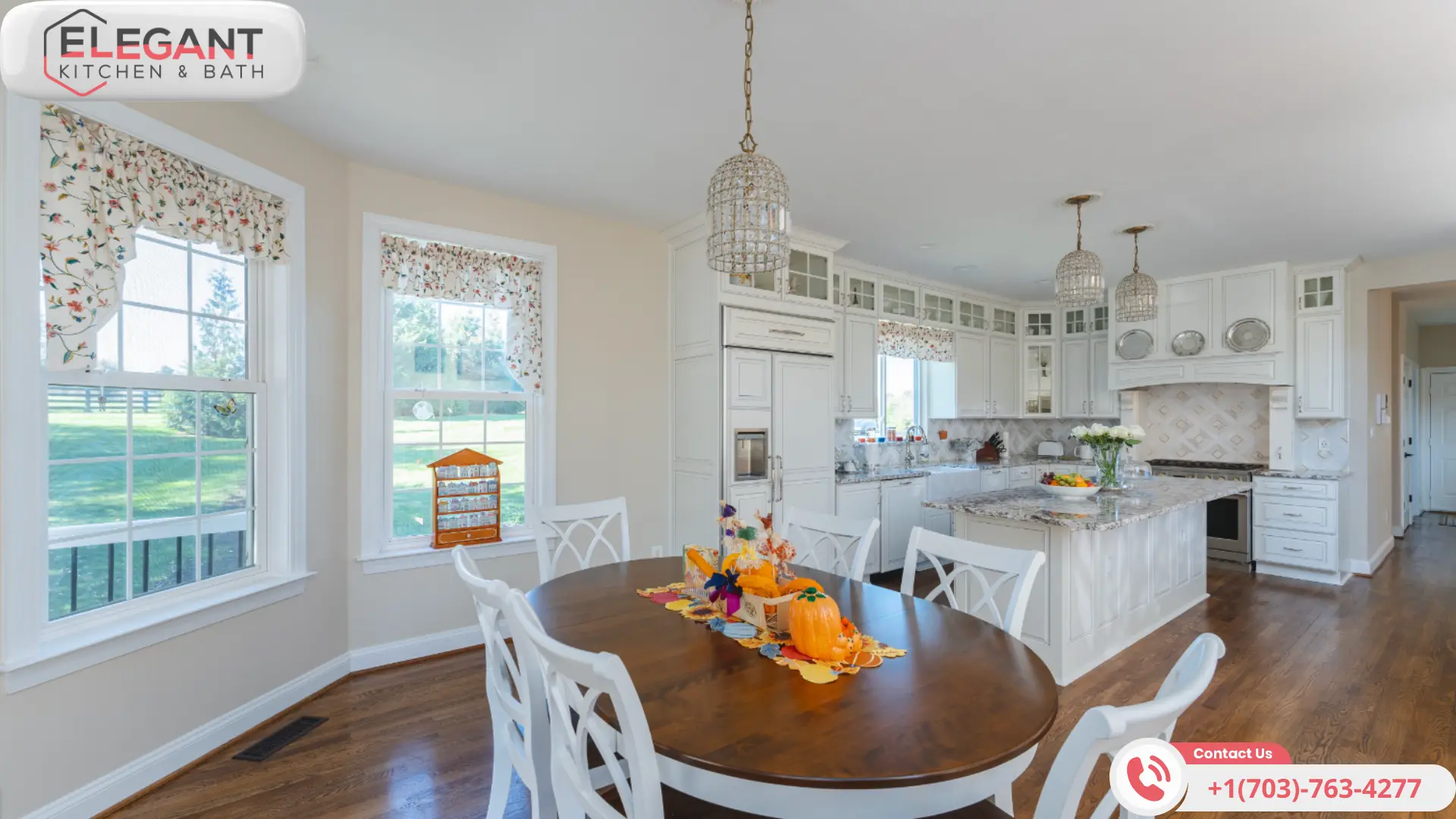
When considering an upgrade to your kitchen, the elegance of a stainless steel kitchen backsplash cannot be understated.
Elegant Kitchen and Bath recognizes the timeless appeal of this material, which complements other kitchen stalwarts such as bronze faucets and terra cotta floor tiles, creating a harmonious palette.
Not only does a stainless steel backsplash provide an impeccable gas stove backsplash that withstands heat and splatters, but it also champions eco-friendly living through its recyclable nature.
Durability converges with style in a solution that redefines the culinary space.
In this article, discover how these sleek, functional features of stainless steel backsplash can transform your kitchen into a chef’s dream.
Key Takeaways for Why Choose a Stainless Steel Kitchen Backsplash
Exceptional Durability and Maintenance Ease: Stainless steel backsplashes are renowned for their robustness, resisting heat, moisture, and stains. Regular cleaning with mild detergent and water keeps them looking new and prevents damage.
Hygienic Properties: Stainless steel’s non-porous nature prevents mold and bacteria growth, making it a highly hygienic option for kitchen environments.
Heat Resistance: Ideal for areas behind stoves, stainless steel can withstand high temperatures without damage, providing a safe and durable cooking environment.
Reflective Properties: Stainless steel’s reflective surface can enhance the lighting in your kitchen, making small spacesappear larger and more open.
Resistance to Rust and Corrosion: Stainless steel remains impervious to corrosion and rust, unlike materials like ceramic tiles, which may suffer from moisture damage over time.
customization Options: Homeowners can choose from various thicknesses, patterns, and finishes, as well as custom dimensions, to perfectly fit their kitchen layout and personal style.
Simplified Installation and Maintenance: Stainless steel backsplashes are easy for DIY enthusiasts and professional installers to install and maintain. Routine wiping and gentle cleaning agents keep the backsplash in top condition, ensuring it retains its charm and functionality.
[ez-toc]
Enhancing Your Kitchen’s Durability With Stainless Steel
In kitchen renovations, selecting a stainless steel kitchen backsplash is tantamount to bestowing a gift upon the heart of the home.
Not only does it bring a sleek and sophisticated aesthetic that seamlessly complements other kitchen essentials like the sink, but its benefits are manifold.
This durable alloy stands resilient against the wear of kitchen activities, staunchly resisting rust and corrosion to maintain its alluring sheen over time.
Capable of withstanding high temperatures without succumbing to damage, stainless steel is a steadfast guardian protecting kitchen walls from spills and splatters.
Additionally, for those valuing practicality as much as style, the ease with which one can cleanse surfaces of water spots and other blemishes significantly curtails the rigors of maintenance.
A stainless steel backsplash is not merely a decorative piece—it’s a practical investment in enduring beauty and functionality.
Resists Rust and Corrosion for Long-Term Beauty
The inherent resilience of stainless steel in the face of environmental aggressors makes it an exemplary choice for the kitchen. Unlike its counterparts, such as ceramic tiles, which might succumb to the adverse effects of moisture over time, stainless steel remains impervious to corrosion, ensuring that the area around the kitchen stove retains its lustrous appeal with minimal effort.
Carefully engineered to endure, stainless steel backsplashes require a damp sponge for cleaning, eschewing the need for harsh chemicals that might degrade other materials. Even the tiniest elements, like the tin screws often used to secure a backsplash, are chosen for their ability to withstand kitchen challenges, reinforcing the overall structure without the threat of rust compromising the composition.
Withstands High Temperatures Without Damage
A metal stove backsplash enhances the kitchen’s overall design and offers a robust shield for the wall against the high heat emitted from the cooktop. Its strong composition retains its integrity even as temperatures soar, ensuring that the wall behind your cooking space is protected from the potential ravages of heat exposure. Investing in this practical tool for your kitchen goes beyond a mere aesthetic makeover; it is a safety measure. The longevity of a stainless steel backsplash negates frequent replacements, thereby providing homeowners with peace of mind and a sound long-term payment into the value and durability of their culinary environment.
Easy to Clean, Reducing Maintenance Hassles
Maintaining a pristine kitchen becomes a seamless task with a stainless steel backsplash. Unlike materials such as marble, which require specialized cleaners to avoid damage, stainless steel resists the need for abrasive cleaning agents, thus preserving its color and finish without incurring additional costs.
The practicality of stainless steel extends to its knack for simplifying kitchen upkeep routines. Homeowners are often pleasantly surprised by the minimal effort required to wipe away splashes and stains, allowing the space to maintain its aesthetic value without the price of high maintenance or the use of harsh chemicals.
The Aesthetic Appeal of Stainless Steel Backsplashes
In the quest for kitchen refinement, incorporating a stainless steel backsplash unlocks a dimension of modern elegance—a contemporary visual that aligns sleekness with function.
Stainless steel proves versatile, amplifying the sophistication of various kitchen accouterments, from range hood backsplashes that stretch loftily to meet the height of kitchendesign aspirations to appliances that embody culinary efficiency.
Its reflective quality augments a space’s brightness, crafting the illusion of an expanded cooking area, and harmonizes effortlessly with various styles, including the textural contrasts presented by brick finishes.
Enhancing bathroom fixtures with its gleaming surfaces also elevates the culinary space, underscoring the kitchen’s role as a focal point of home hospitality and lively gatherings.
Adds a Sleek, Modern Look to Any Kitchen
A stainless steelsheet metal for backsplash introduces a clean, minimalist look currently at the forefront of kitchendesign trends. This sleek surface contrasts dramatically with natural elements like wood, creating a contemporary vibe that can enhance culinary space while being a practical choice for those looking to combine home improvement with sustainability.
As homeowners sift through options for kitchen upgrades, a stainless steel backsplash stands out as an element that can dramatically alter the perception of the space. Its reflective surface not only increases the perceived volume of a room but also triumphs as a stylish statement piece, ensuring that a kitchen’s aesthetic is as meticulously curated as the recipes that emerge from it.
Complements Various Kitchen Appliances and Styles
The seamless integration of a stainless steelmetal backsplash into a kitchen’sdesign can be credited with creating an environment that celebrates both form and function. Its reflective surface complements the sleek lines of modern appliances. It coexists harmoniously with more rustic elements, such as a copper range hood or a statement fireplace, offering a versatile backdrop that suits various design preferences.
Design Element
Contribution to Aesthetic
Functional Benefit
Stainless Steel Metal Backsplash
Reflective surface enhances other kitchen features
Easy maintenance, durable against heat and moisture
Modern Appliances
Sleek lines complement the metal’s sheen
Creates a cohesive, high-end look
Copper Range Hood/Fireplace
Textural contrast adds depth to the kitchen design
Brings warmth and a classic touch to the modernity
Designers often credit the metal backsplash with elevating a kitchen’sdesign without overpowering existing styles. Whether paired with the shiny accents of stainless steel appliances or offering a sleek counterpoint to the warm hues of a copperfireplace, the metal backsplash is a testament to the flexibility and enduring appeal of thoughtful kitchendesign.
Reflects Light to Make Your Kitchen Look Larger
The luminous surface of a stainless steel backsplash is not just durable; it ingeniously multiplies the presence of light in the kitchen, impacting the perception of space. When sunlight or artificial light bounces off the backsplash, it infuses the room with a brighter ambiance. It makes even the most compact kitchens appear larger, offering a spaciousness not limited by the square footage.
Homeowners will appreciate how stainless steel complements high-end appliances, like a whisper-quiet dishwasher, and the choice of furniture gracing their kitchen. Without the need for a significant overhaul involving lumber or a heavily laden cart, the addition of a sleek backsplash can transform a kitchen, creating a sense of expansion that is as agreeable to the eyes as it is to the owner’s credit card.
Stainless Steel Backsplashes: A Hygienic Choice
In stark contrast to porous materials that can harbor bacteria and mold, a stainless steel kitchen backsplash offers a non-porous surface that is a formidable barrier to these unwanted microorganisms.
As families navigate daily routines from meal preparation to package delivery, the importance of a hygienic kitchen environment cannot be overstated.
Unlike the grout lines found in tile or mosaic backsplashes, the seamless expanse of a metal backdrop—especially one tailored for the high-heat environment of a backsplash for a gas stove—permits effective sanitization.
With simple cleaning protocols, homeowners ensure their culinary space remains immaculately clean, safeguarding the well-being of all who gather there.
Non-Porous Surface Prevents Bacteria and Mold Growth
The superiority of stainless steel in kitcheninterior design hinges on its aesthetic allure and its non-porous nature, which staunchly guards against the proliferation of bacteria and mold. Homes that brandish these backsplashes benefit from a heightened standard of cleanliness, no small detail in spaces where health and food safety are paramount.
Resourceful homeowners treasure the ease that comes with the non-porous surfaces of their kitchen investment, as they can swiftly wipe away messes and residues. With such attributes, these stainless steel solutions ensure a hygienic kitchen that beams with light and cleanliness, further fortified by reliable information confirming their antimicrobial properties.
Easy to Sanitize for a Cleaner Kitchen Environment
A stainless steel backsplash offers more than just a shimmer of silver; it provides an uncompromising surface that is notably simple to sanitize. Without intricate textures where mold and bacteria might dwell, a stainless backsplash behind the stove ensures cleanliness beyond superficial luster.
Furthermore, the corrosion resistance allows for the regular use of gentle cleaning agents without the fear of leaving stains or fingerprint marks. This application maintains the backsplash’s pristine condition, fostering a cleaner and more inviting kitchen environment.
Feature
Hygienic Benefit
Maintenance Ease
Non-Porous Surface
Prevents mold and bacteria growth
Cleans without harsh chemicals
Corrosion Resistance
Stands strong against cleaners
Prevents etching and fingerprint residue
Stainless Backsplash Behind Stove
Withstands high temperatures and food splatters
Easy wipe-down after cooking
Customization Options for Your Kitchen Backsplash
As discerning homeowners contemplate the junction where functionality meets artistry, choosing a stainless steel kitchen backsplash becomes a pivotal decision in the design process.
This choice isn’t merely about selecting a protective surface but crafting an extension of the kitchen’s personality.
The proper thickness must be gauged for durability and to harmonize with the countertop’s weight and feel.
Exploring the realm of patterns and finishes opens a vista of unique styles, turning a simple backspace into a statement piece that could rival the elegance of a glass or granite feature.
For those with non-traditional kitchen layouts, custom dimensions offer a bespoke solution. They ensure that each metallic panel fits the allocated space as perfectly as a meticulously measured business card.
Beyond its practical benefits, the stainless steel backsplash offers an opportunity for personal expression within the culinary space.
Choosing the Right Thickness for Your Needs
When embarking on a kitchen upgrade, selecting the optimal thickness for a stainless steel backsplash hinges on balancing durability with an aesthetic finish. A thicker gauge offers robustness and a sense of solidity, ideal for those seeking extended warranty protection and an enduring impression akin to traditionalbrass fixtures.
Conversely, a thinner stainless steel plane can afford a sleeker, more delicate appearance while providing the necessary shield against kitchen mishaps. Homeowners should peruse the FAQ sections or seek coupon deals from providers like Elegant Kitchen and Bath, who often feature helpful guides and offers to assist in these tactile decisions, much like the design inspirations found on platforms such as Houzz.
Exploring Patterns and Finishes for Unique Styles
The selection of stainless backsplash tiles allows homeowners to enhance the visual harmony between the backsplash and their cabinetry, creating a cohesive look that complements the kitchenaesthetics. Whether the aim is to match the cool undertones of contemporary cabinet finishes or to introduce an eye-catching pattern behind the stove, the appropriate choice of finish can transform the feel of the entire space.
To ensure the exclusivity of each kitchen’s design, Elegant Kitchen and Bath invites clients to provide their email addresses for access to a personal consultation. This level of customization facilitates decisions about edge detailing and tile arrangements, tailoring the stainless steel backdrop to become a signature element within the kitchen’s style narrative.
Custom Dimensions to Fit Any Kitchen Layout
Each customer’skitchen layout is as unique as their taste, and a black stainless backsplash can be customized to align perfectly with their space’s specific dimensions and contours. With precision cutting tools, the stainless steel can be tailored to accommodate any area, ensuring the beauty of the backsplash is continuous and seamless down to the last millimeter.
To ensure a perfect fit around corners and appliances, a skilled installation incorporates high-grade silicone, rendering any custom-sized stainless steel backsplash impervious to the hazards of cooking splashes and paint discolorations. Such meticulous customization results in a harmonious blend of functionality and aesthetics, elevating the overall appeal of the kitchen environment.
Installation and Maintenance Simplified
The decision to embrace the contemporary finesse of a stainless steel backsplash transforms a kitchen visually and practically.
With professional input essential for accurate measuring and successful installation, homeowners can be assured that their investment perfectly complements the ceiling’s expanse and the utilitarian plane below.
For hands-on individuals, ample resources pave the way for DIY installation, offering a quick view into the process of shaping brushed metal into a culinary shield.
Moreover, maintaining this signature sheet metal’s luster requires particular know-how to prevent scratches and ensure that its diamond-like resilience against kitchen elements endures through countless family dinners and festive gatherings.
Professional Tips for Measuring and Installation
Ensuring the precise fit of a stainless steel backsplash necessitates meticulous measuring. Even the slightest deviation can lead to visible gaps that detract from the steel’s seamless, mirror-like quality. Professionals recommend employing a high-quality tape measure and checking dimensions multiple times before cutting to accommodate the unique characteristics of each kitchen space.
Upon successful installation of the stainless back splash, maintaining its lustrous appeal is straightforward—regular cleaning with a gentle soap and water mixture, followed by a wipe-down with a soft microfiber cloth, will sustain its gleaming presence. This routine helps avoid the accumulation of residues that can impair the metallic sheen, ensuring the backdrop remains an eye-catching feature in the kitchen.
Cutting and Installation Options for DIY Enthusiasts
For the tenacious DIY enthusiast, a stainless kitchen backsplash can be installed quickly, using adhesive methods requiring minimal tools and no complex training. Adhering a metal backsplash behind a stove becomes an achievable weekend project, transforming a functional necessity into an engaging personal undertaking.
The DIY approach offers room for customization when considering a stainless stove or range backsplash. By carefully measuring, cutting, and applying adhesive, homeowners can take pride in crafting while ensuring their personal touch is evident in the fit and finish of their kitchen upgrade.
Tips for Maintaining the Shine and Preventing Scratches
To ensure the stainless steel backsplash retains its sophisticated shape and sheen, regular cleaning followed by drying is imperative. A solution of mild detergent diluted in warm water acts as a gentle yet effective cleaner, which, after scrubbing with a non-abrasive pad, should then be thoroughly dried with a soft towel to prevent water spots and mineral deposits from diminishing its shine.
When it comes to protecting the backsplash from the daily onslaught of kitchen activity, particularly the intense heat that can warp inferior materials, it’s recommended to employ stainless steel cleaning products sourced from regions known for excellence in metallurgy, such as Mexico. These specially formulated cleaners preserve the luster and create a protective barrier against scratches and heat-induced discoloration.
Maintenance Aspect
Procedure
Benefit
Cleaning Routine
Gentle detergent solution and non-abrasive pad, followed by drying with a soft towel
Prevents water spots and maintains shine
Use of Specialized Cleaning Products
Apply cleaners made specifically for stainless steel
Creates a protective layer to minimize scratches and heat damage
Cost-Effective Kitchen Upgrades
When considering a kitchen makeover, savvy homeowners weigh each addition’s merit in terms of cost efficiency and enduring quality.
Opting for a stainless steel backsplash is a judicious choice. It is a paragon of durability and financial savvy in home renovation.
While assessing the durability of stainless steel against other popular backsplash materials, one must account for the long-term savings afforded by its robust nature, which gracefully withstands the trials of time and usage.
A thorough comparison of upfront and long-term costs linked with diverse backsplash options can illuminate the value of stainless steel as an economically sound investment in the pursuit of kitchen elegance and resilience.
Longevity Makes Stainless Steel a Smart Investment
Investing in a stainless steel backsplash is synonymous with investing in the future of a home’s culinary space. Its steadfast nature guarantees that its initial gleam and functionality are preserved far beyond the installation date, transcending the ebb and flow of trends and daily use.
The decision to integrate a stainless steel backsplash into a kitchendesign extends beyond immediate gratification; it is a pledge toward enduring sophistication. Stainless steel’s resilience ensures that kitchens remain stylish and stand up to the rigor of frequent cooking, making it a prudent long-term addition to any home.
Benefits
Cost-saving Factor
Practical Implications
Durability
Reduces need for replacements
Withstands frequent usage
Timelessness
Avoids costs related to trend-chasing
Maintains modern aesthetic
Comparing Costs With Other Backsplash Materials
When homeowners evaluate their kitchen upgrade options, they confront various materials, each with its price point and longevity. Stainless steel emerges as an economical contender when placed alongside popular alternatives such as ceramic tiles or glass, often outlasting these options in terms of durability and timeless appeal.
The upfront cost of a stainless steel backsplash could be higher than that of other options like traditional tile. However, stainless steel’s extended lifespan and lower maintenance costs quickly balance the scales, creating cost savings over time. Understanding the long-term value is critical for making an informed investment in kitchenaesthetics and practicality.
Material
Upfront Cost
Longevity
Maintenance Costs
Stainless Steel
Higher
Significantly longer
Lower
Ceramic Tile
Lower
Shorter
Higher (due to grouting, etc.)
Glass
Moderate
Varies
Moderate (due to cleaning)
FAQs for a Stainless Steel Kitchen Backsplash
Is stainless steel good for kitchen backsplash?
Yes, stainless steel is an excellent material for kitchen backsplashes. It is durable, easy to clean, and resistant to heat, moisture, and stains. Stainless steel backsplashes are a popular choice for their modern, sleek appearance and ability to withstand the demands of a busy kitchen.
What is the best backsplash for industrial kitchen?
The best backsplash for an industrial kitchen is a stainless steel kitchen backsplash. Stainless steel backsplashes are highly favored for industrial-style kitchens due to several key reasons:
Durability: Stainless steel is incredibly durable and can withstand the heavy use and harsh conditions typical of industrial kitchens. It resists dents, scratches, and heat, making it a practical choice.
Ease of Maintenance: Stainless steel backsplashes are effortless to clean. A simple wipe with a damp cloth and mild detergent can keep the surface spotless, essential in a high-activity environment.
Aesthetic Appeal: Stainless steel’s sleek, modern look complements the raw, utilitarian aesthetic of industrial kitchens, adding a professional and polished touch to the space.
Hygiene: Stainless steel is non-porous, meaning it does not harbor bacteria or mold, which is crucial for maintaining a hygienic cooking space.
Reflective Surface: Stainless steel’s reflective nature can help brighten the kitchen by reflecting light, making the space feel larger and more open.
Why is stainless steel good for kitchens?
Stainless steel is a popular choice for kitchens due to its numerous benefits:
Easy to Clean: Stainless steel has a smooth, non-porous surface that is easy to wipe down and clean, even in high-traffic areas like the backsplash.
Heat and moisture Resistant: Stainless steel can withstand high temperatures and moisture, making it an ideal choice for areas near the stove or sink.
Hygienic: Stainless steel does not harbor bacteria or mold, making it a hygienic choice for kitchen surfaces.
Versatile Design: Stainless steel backsplashes can complement a wide range of kitchen styles, from modern to traditional, and can be customized with different finishes and patterns.
Is a stainless steel backsplash hard to keep clean?
No, stainless steel backsplashes are generally easy to keep clean. Their smooth, non-porous surface makes them resistant to stains and easy to wipe down. Regular cleaning with a mild detergent or stainless steel cleaner can help maintain the backsplash’s shine and prevent the buildup of grease, food, and other kitchen messes.
What is the best material for kitchen splashbacks?
While there are several excellent options for kitchen backsplashes, stainless steel is often considered one of the best materials due to its durability, easy maintenance, and versatile design. Other popular materials include:
Ceramic or Porcelain Tiles Offer a wide range of colors and patterns but may require more maintenance than stainless steel.
Glass Tiles: Provide a sleek, modern look and are easy to clean, but can be more expensive than other options.
Natural Stone (e.g., Marble and Granite) Offers a luxurious, timeless look, but they may be more prone to staining and require more maintenance.
What is the most practical kitchen backsplash?
Stainless steel is often considered one of the best practical and low-maintenance kitchen backsplash options. Its durability, ease of cleaning, and resistance to heat, moisture, and stains make it a highly functional choice for busy kitchens.
What is the most timeless kitchen backsplash?
While trends come and go, classic materials like subway tiles, natural stone, and stainless steel are often considered the most timeless options for kitchen backsplashes. Stainless steel, in particular, has a timeless, modern aesthetic that can complement a wide range of kitchen styles and designs.
What is the trend in kitchen backsplash in 2024?
In 2024, industry experts predict that the trend for kitchen backsplashes will continue to favor durable, low-maintenance materials like stainless steel, natural stone, and large-format tiles. Homeowners increasingly prioritize functionality and easy maintenance over purely aesthetic considerations, making stainless steel a popular choice for its practical benefits.
What is the current trend for kitchen backsplashes?
The current trends in kitchen backsplashes include:
Stainless Steel: Sleek, modern, and highly functional
Large-Format Tiles: Provide a clean, minimalist look
Natural Stone: Offer a luxurious, timeless aesthetic
Textured or Patterned Tiles: Add visual interest and personality to the kitchen
How thick should a stainless steel backsplash be?
Stainless steel backsplashes are typically available in thicknesses ranging from 18 gauge (1.2mm) to 16 gauge (1.6mm). The thickness you choose will depend on your personal preference and the specific requirements of your kitchen. Thicker stainless steel is more durable and resistant to dents but may be more expensive. Many homeowners opt for a 16-gauge or 18-gauge stainless steel backsplash, which balances strength and affordability.
How do you clean a stainless steel backsplash?
Cleaning a stainless steel backsplash is generally easy:
Wipe down the surface with a microfiber cloth or soft sponge and a mild detergent or stainless steel cleaner.
Rinse the backsplash with clean water and dry it thoroughly with a clean cloth.
For tougher stains or buildup, use a small amount of baking soda or white vinegar on a damp cloth, then rinse and dry.
Avoid using abrasive cleaners or scrubbing pads, which can scratch the stainless steel surface.
Are stainless steel splashbacks hard to clean?
No, stainless steel splashbacks are generally easy to clean and maintain. The smooth, non-porous surface resists stains and buildup, making it simple to wipe down with a mild detergent or stainless steel cleaner. Regular cleaning and drying can keep a stainless steel backsplash looking its best.
How to get scratches out of a stainless steel backsplash?
To remove minor scratches from a stainless steel backsplash, you can try the following:
Clean the area thoroughly with a mild detergent or stainless steel cleaner, then dry it thoroughly.
Apply a small amount of toothpaste (non-gel) to the scratched area and gently rub it in with a soft cloth or sponge.
Rinse the area with clean water and dry it thoroughly.
For deeper scratches, follow the manufacturer’s instructions. You may need to use a stainless steel polish or scratch-removal product.
Does toothpaste really remove scratches on stainless steel?
Yes, toothpaste can effectively and inexpensively remove minor scratches from stainless steel surfaces, including backsplashes. The mild abrasives in toothpaste can help buff out minor scratches without damaging the stainless steel. However, you may need a dedicated stainless steel polish or scratch-removal product for deeper or more significant scratches for best results.
How do you remove marks from stainless steel splashback?
To remove marks, stains, or buildup from a stainless steel splashback, try the following:
Mix a solution of warm water and a mild detergent or stainless steel cleaner.
Dip a soft cloth or sponge into the solution and gently wipe down the affected area.
Rinse the area with clean water and dry it thoroughly with a clean cloth.
For tougher stains, apply a small amount of white vinegar or baking soda to a damp cloth, rinse, and dry.
Avoid using abrasive cleaners or scrubbing pads, which can scratch the stainless steel surface.
How to stop stainless steel from scratching?
To help prevent scratches on a stainless steel backsplash, consider the following tips:
Use soft, non-abrasive cleaning tools like microfiber cloths or sponges.
Avoid harsh chemicals, abrasive cleaners, or steel wool, as these can scratch the surface.
Wipe up spills and splatters promptly to prevent them from drying and becoming more challenging to remove.
Place felt or rubber bumpers on the edges of the backsplash to protect it from impacts.
Be careful when handling heavy or sharp objects near the backsplash to avoid accidental scratches.
Will vinegar remove stains from stainless steel?
Yes, white vinegar can be an effective and gentle way to remove stains and buildup from stainless steel surfaces, including backsplashes. The acidity in vinegar helps break down and lift away stubborn stains and residue. To use vinegar for stain removal:
Mix equal parts white vinegar and water in a spray bottle.
Spray the solution onto the affected area and let it sit for a few minutes.
Wipe the area clean with a soft cloth or sponge, then rinse with clean water and dry thoroughly.
How to remove burn marks from stainless steel backsplash?
To remove burn marks or discoloration from a stainless steel backsplash, try the following:
Make a paste with baking soda and water, then gently rub it onto the affected area using a soft cloth or sponge.
Let the paste sit for a few minutes, then rinse the area with clean water and dry it thoroughly.
For more stubborn burn marks, follow the same process, but add a small amount of white vinegar or a stainless steel cleaner.
Avoid using abrasive cleaners or scrubbing pads, which can further damage the stainless steel surface.
Always test any cleaning method on a small, inconspicuous area first to ensure it doesn’t damage the stainless steel further.
Hear From Our Delighted Clients About Stainless Steel Kitchen Backsplash
Carrie Dellinger is more than satisfied with the kitchen remodel completed by Elegant Kitchen and Bath. She is especially pleased with the new, functional space, which they now thoroughly enjoy for cooking. Tayfun was crucial in selecting cabinets and colors, ensuring the final design perfectly matched their vision. The team’s overall performance was remarkable, and Carrie looks forward to partnering with Elegant Kitchen and Bath for future projects.
After a meticulous comparison of eight different companies, Darlene Lesser chose Elegant Kitchens for her kitchen remodel. Emre was attentive, listening carefully to her requirements and designing a stunning L-shaped kitchen from the previous U-shaped layout, complete with a 10-foot island. His commitment extended to accompanying her to the stone distributor, ensuring the chosen stone complemented the two-tone cabinets beautifully. The professionalism and punctuality of the crews stood out, as they meticulously handled every detail from design through to execution. Darlene expressed profound gratitude and strongly recommended Elegant Kitchens for their exceptional service and craftsmanship.
Mark Mazur expresses excellent satisfaction with the kitchen renovation handled by Elegant Kitchen and Bath. The project involved installing new cabinets, partially removing a wall, and laying new flooring. From the beginning, Omer was instrumental in understanding their vision and exploring various layout options, which resulted in a more open space and significantly more storage. The team, led by Enes, was diligent in addressing the challenge of the uneven existing floor, ensuring it was perfectly leveled and looked great. Their communication was clear, and any questions were promptly addressed, keeping the project on track and leading to a successful completion. Mark is highly pleased with the outcome and appreciates the team’s dedication.
Experience the same level of satisfaction as Carrie, Darlene, and Mark by entrusting your kitchen renovation to Elegant Kitchen and Bath. Our dedicated designers, project managers, and skilled artisans work together to bring your dream kitchen to life, delivering exceptional results that exceed your expectations.
Conclusion
A stainless steel kitchen backsplash is an astute fusion of enduring elegance and unparalleled practicality, resisting rust, high temperatures, and bacterial growth with effortless cleanup.
Its reflective surface amplifies light to visually expand the kitchen while complementing varied design elements and appliances for a customizable, modern aesthetic.
Stainless steel’s longevity and low maintenance offer a cost-effective solution, significantly reducing the need for replacements and maintaining its allure over time.
Choosing this material means investing in a hygienic, durable, and timeless feature that uplifts the heart of the home with both style and substance.
Elegant Kitchen and Bath taps into various subway tile backsplash designs, transforming any kitchen into a mosaic of modernity and sophistication.
The simple addition of these brick-shaped beauties can elevate the room’s aesthetic, lending an air of crafted elegance to the heart of your home.
With a wide range of colors, textures, and patterns available, the design possibilities are limitless.
These subway tile ideas promise to re-involve your kitchen’s ambiance, from creating a sanctuary of serene blues to infusing a dynamic flair with a herringbone pattern.
Keep reading to discover how to master the art of subway tile backsplashes for a kitchen that captivates with every detail.
Key Takeaways for Exploring Subway Tile Backsplash Design Variations
Subway Tile Choices Impact Kitchen Aesthetics: Selecting colors and finishes for subway tiles plays a crucial role in harmonizing and enhancing the overall aesthetics of the kitchen. Different hues and textures offer unique ambiance possibilities, from serene blues to vibrant patterns.
Reflective Tiles Enhance Kitchen Lighting: Using reflective subway tiles can significantly enhance the lighting in the kitchen, both natural and artificial, by playing with light reflections and creating a bright, airy atmosphere.
Grout Selection Matters: The color and width of grout can either emphasize or soften the subway tile patterns, playing a key role in the visual impact of the backsplash. Careful selection of grout helps unify the kitchen space’s tile design.
Mixing Tile Sizes Adds Visual Interest: Incorporating various subway tile sizes can create dynamic visual effects, define different kitchen zones, and add depth and texture. This technique can make smaller spaces appear larger and more intricate.
Bold Tiles Bring Life to Neutral Kitchens: Introducing bold-colored subway tiles can energize a kitchen when balanced with neutral elements like wood or stone. This combination adds a striking focal point without overwhelming the overall design harmony.
Subway Tile Adapts to Various Design Styles: The versatility of subway tiles makes them suitable for different design aesthetics, from modern and sleek to traditional and classic. They are a timeless choice that adapts well to evolving styles.
Strategic Color Placement Transforms Spaces: Planning the placement of colors and patterns within the subway tiles can significantly alter the kitchen’s ambiance. Techniques such as gradient transitions or herringbone patterns add a sophisticated touch.
The transformative allure of subway tiles, an homage to the iconic New York City subwayaesthetics, has made them a revered choice for kitchen backsplashes.
Deciding on the perfect hue that complements the character of your space is vital; whether it’s understated porcelain tile offering a timeless touch or vibrant glass tile bestowing a modern flare,elegant kitchen and bath color choice is critical.
Harmonizing these tiles with the sleek surfaces of kitchen appliances presents a cohesive design narrative. In contrast, integrating reflective ceramic tiles can amplify the natural or artificial lighting within the culinary enclave – an approach that marries functionality with visual appeal.
Choosing the Right Color for Your Space
When orchestrating a kitchen’s aesthetic transformation, the selection of a porcelain tile can act as a defining element, seamlessly fusing with the texture of wood cabinets to foster an ambiance of warmth and sophistication. With attention paid to complementary shades, this duo works in concert to outline the kitchen’s architectural nuance, enhancing the cabinetry’s natural beauty and introducing a new dimension to the space.
Color selection is a pivotal factor in kitchen harmony, with the hue of subway tile playing a crucial role in uniting or delineating the elements within the kitchen’sdesign milieu. For instance, a deep, earthy porcelain tone can augment the richness of wood grain, making cabinetry command attention amidst the broader canvas. Lighter shades foster an aura of expansiveness, adding a sense of dimension and open airiness to the kitchen space.
Matching Tiles With Kitchen Appliances
A harmonious symphony of design elements is essential in any kitchenrenovation, and the choice of subway tile can significantly influence the relationship with kitchen appliances. Opting for a grout that echoes the shade of stainless-steel appliances can create a fluid transition from tile to tech. In contrast, a glossy finish on the tiles can reflect light to underscore sleekness, giving the kitchen a sophisticated flair that befits modern culinary spaces.
Integrating subway tiles in shades that complement or contrast kitchen appliances can dramatically alter the interaction of space and form. If the intention is to craft an ambiance of continuity, one might choose a rectangletile in a hue that blends with the paint of the cabinetry, perfectly framing the sink and creating a visually seamless kitchen workspace with an undercurrent of thoughtful design.
Element
Choice
Impact
Subway Tile Finish
Glossy
Reflects light, enhances appliance sleekness
Grout Shade
Stainless-steel Echo
Creates seamless transition with appliances
Tile Hue & Cabinetry Paint
Complementary/Contrasting
Frames sink, unifies or distinguishes spaces
Accentuating Lighting With Reflective Tiles
Advances in tile technology have propelled the humble subwaytile to a level where it not only serves as a practical backsplash material but also plays a pivotal role in manipulating the illumination within a kitchen. The use of reflective ceramic or glass subway tiles can create an enthralling dance of light across the room, magnifying the comforting glow descending from the ceiling and showcasing the rich textures of wood flooring below.
Material
Reflection
Interaction with Light
Glass Subway Tiles
High
Maximizes brightness, enlarges space perception
Ceramic Subway Tiles
Moderate
Softly diffuses light, adds warmth
Matte Subway Tiles
Low
Minimizes glare, offers subdued ambiance
During a kitchenrenovation, homeowners seek to upgrade functionality and inject a spark of New York City flair. Incorporating glossy subway tiles that capture and redistribute light contributes to a sense of spaciousness, echoing the expansive vistas of the city’s sky. This clever interplay with artificial and natural light sources transforms a kitchen from merely a cooking space into a vibrant home hub reminiscent of the city that never sleeps.
Use Medium Blue Tiles to Create a Serene Backsplash
In the pursuit of tranquility and elegance in the kitchen, medium blue subway tiles as a backsplash can evoke the calming essence of an ocean breeze.
This choice delicately coordinates with a vast spectrum of countertop materials, offering a peaceful counterpart to natural stone or a striking juxtaposition against industrial concrete.
Homeowners are enticed to select the ideal shade of blue that resonates with their aesthetic sensibilities and pays subtle tribute to the storied tiles of New York City subway stations.
Moreover, the interplay of blue tiles with elements such as brass fixtures and green botanical accents in the kitchen or pantry creates a tableau reminiscent of a serene bathroom oasis.
Grout selection becomes a delicate balance – it should highlight the blue tones without overwhelming them, completing the transformative vision of the backsplash with finesse.
Coordinating Blue Tiles With Countertops
The seemingly effortless sophistication of marble countertops offers a sublime canvas upon which medium blue subway tiles can weave their magic, creating a sanctuary-like ambiance analogous to a peaceful shower retreat. As the veined patterns of marble intersect with the uniformity of the subway tiles, they command a serene yet dynamic visual password to the kitchen’s identity.
The combination pivots towards contemporary elegance when medium blue tiles meet the sleek edges of glass countertops in juxtaposition. This pairing crafts an optical harmony with a light resembling water gently cascading over a glass barrier in a modern showerdesign, infusing the kitchen with a fluid and airy charm.
Selecting the Perfect Shade of Blue
Selecting the ideal shade of blue for your kitchen’s subway tile can be an enriching process that marries aesthetics with individuality. The chosen hue should act as both a canvas and an accent, enhancing the interplay of light with the floor’s material and complementing the overall shape and flow of the space. Picking the right tone requires a careful examination of how the tile will interact with both natural and interior lighting, ensuring the color remains accurate at all hours of the day.
The aesthetics of a serene kitchen often draw on the psychological effects of color, with blue evoking calmness and focus. When logging into their personal space, homeowners should feel an immediate sense of tranquility. Therefore, selecting a blue that not only aligns with the kitchen’sdesign but also serves as a restful backdrop is crucial. The tiles must resonate with the existing decor and the desired ambiance, setting a peaceful tone for every culinary login.
Tile Factor
Consideration
Impact on Selection
Light Interaction
Natural and Interior Lighting
Ensures chosen hue is accurate throughout the day
Space Harmony
Overall Shape and Flow
Complements spatial dynamics and design elements
Psychological Influence
Color’s Effect on Mood
Evokes tranquility for a peaceful cooking environment
Tips for Grout Selection
In interior design, the art of grout selection for subway tile is akin to choosing the right frame for a piece of art. For a medium blue tile backsplash posted on a kitchenwall, one might consider a lighter groutcolor to accentuate the herringbone pattern, reminiscent of the intricacies of a finely crafted fireplace mantel.
Groutcolor can elevate or subdue the visual impact of a tiled surface. When medium blue tiles grace the walls of a kitchen, selecting a darker grout shade can parallel the bold lines that define a contemporary fireplace, creating a striking contrast that anchors the room’s aesthetic.
Elevate Your Kitchen With Gradient Subway Tiles
Revolutionizing the ambiance of a kitchen through the ingenious use of gradient subway tiles is a trend at the forefront of moderninterior design.
The strategic planning of color progression from shade to shade entails meticulous attention, creating an enchanting visual narrative that flows effortlessly across the backsplash.
Designers often deliberate between vertical and horizontal tile arrangements, bringing unique structural perception and stylish edge to the culinary space.
Interspersing accent colors within the gradient can introduce a captivating sense of depth, breaking the monochromatic scheme and endowing the kitchen with a bespoke, designer quality that is sophisticated and rich in visual texture.
Planning a Seamless Color Transition
Orchestrating a smooth color transition in subway tile backsplashes requires a meticulous blend of hues that mimic the subtle gradation seen in natural phenomena such as dusk or dawn. Designers often recommend a gentle shift from lighter tones at the top, which can make the ceilings feel higher, cascading down to darker shades that ground the space and draw the eye through the kitchen landscape.
The designer’s vision for seamless color transition in subway tile installations is realized by carefully selecting and placing each tile, ensuring that adjacent colors flow without stark delineation. This approach creates a backsplash and a centerpiece that conveys movement and depth, transforming the backsplash into an artful tapestry that commands attention and conversation.
Ideas for Vertical vs. Horizontal Arrangements
Designers are pushing the boundaries of tradition with the strategic orientation of subway tiles. A vertical arrangement ascends majestically, stretching the perception of height and bringing an unexpected twist to the classic subway pattern, lending a touch of modernity and visual interest that guides the gaze upward in a rhythmic fashion.
Conversely, a horizontal layout offers a more traditional approach with the potential for innovation through gradient hues. This timeless configuration can create a broadening effect, visually expanding the kitchen’s horizon and providing a tranquil continuity that complements the linear nature of countertops and cabinets, anchoring the space with a sense of grounded elegance.
Incorporating Accent Colors for Depth
The strategic injection of accent colors into a gradient subway tile backdrop offers a splash of vibrancy and a layered effect that gives the illusion of depth. These dashes of unexpected color play a subtle yet transformative role, drawing the eye and infusing the kitchen with a dynamic aesthetic that transcends the ordinary backsplash.
Design experts often recommend selecting accent hues that resonate with key elements in the kitchen, such as cookware, seating, or decorative objects, to foster an interconnectedness within the space. This artful coordination establishes a dialogue between the backsplash and the room’s accessories, culminating in a cohesive and inviting kitchen environment.
Experimenting With a Herringbone Tile Pattern
Veering from the customary alignments, a herringbone tile pattern offers an infusion of dimensionality and architectural interest to any kitchen backsplash.
This intricate layout, reminiscent of a chevron’s elegance, introduces a dynamic rhythm into the kitchen’sdesign, interplaying with light and shadow to bring the wall to life.
In the upcoming sections, homeowners and design enthusiasts will receive a comprehensive guide on how to lay the foundation for this classic pattern, the nuances in tile selection to complement the angular display, and expert advice on selecting wall colors that harmonize with the zigzag motif of a herringbone arrangement. This guide aims to elevate the kitchen’s character to a symphony of style and sophistication.
Step-by-Step Guide to Laying Herringbone
Beguiling enthusiasts and professionals alike, the herringbone pattern requires a keen eye for detail and a steady hand. Embarking on this tiling adventure calls for the tiles to be angled at 45 degrees, ensuring the point of each tile is aligned with the end of the adjacent one, which cultivates the characteristic zigzag motif that herringbone is celebrated for.
After meticulously measuring and marking the wall’s center point as a reference, the first few tiles are laid without adhesive to confirm the pattern’s trajectory across the backsplash. This dry layout is a critical stride, allowing adjustments to the alignment before the permanent application of thin-set mortar, the binding agent that secures the tiles in their elegant dance across the kitchenwall.
Choosing Tiles for a Herringbone Backsplash
Choosing the ideal tiles for a herringbone backsplash is an exercise in balance and elegance, where both the size and color of the tiles become focal points. Rectangular tiles, traditionally twice as long as they are wide, are favored to achieve the herringbone’s signature zigzag pattern, allowing for a visually fluid transition that adds sophistication to the culinary space.
When selecting tiles for the herringbone design, homeowners often gravitate towards materials that offer subtle texture or a slight variation in hue. These nuances can highlight the intricate layout without overwhelming the senses. Porcelain and ceramic remain popular for their many finishes and shades, ensuring that the backsplash functions as a visual centerpiece and complements the kitchen’s overall aesthetic.
Complementing Wall Colors With Herringbone Patterns
Integrating a herringbone tile pattern into a kitchen’s decor introduces a striking visual statement, necessitating thoughtful consideration of the surrounding wallcolor. To amplify herringbone’s architectural depth, walls painted in muted tones like soft grey or warm beiges can serve as a serene backdrop, allowing the pattern to stand as the focal point without competing for attention.
Selecting wall colors that are subtle contrasts with the tilecolor can also enrich the dynamic texture of a herringbone backsplash. By choosing a slightly darker or lighter wall hue, homeowners can create a delicate interplay of shades that accentuates the weaving angles of the tiles, resulting in an elevated aesthetic cohesion that enhances the overall kitchenspace.
Mixing and Matching Subway Tile Sizes for Impact
The creative application of subway tile in kitchen backsplashes has evolved. Designers now advocate for blending various tile sizes to construct a unique and engaging visual narrative.
This mixed-size approach serves not merely as a design statement but also employs clever visual tricks that can transform the perception of space within the kitchen.
Large tiles can foster a sense of grandeur and openness, while smaller tiles can add intricate detail and texture.
The ingenious placement and combination of these tiles and the strategic grout use enhance the kitchen ambiance.
This technique lets homeowners personalize their environment while achieving harmonious balance and striking impact.
Balancing Large and Small Tiles
Infusing a kitchendesign with large and small subway tiles can establish a striking visual dialogue within the space. Large tiles can accentuate spaciousness and bring a bold, contemporary touch, while smaller tiles introduce texture and detail that captivate the observer and draw them into the kitchen’s unique narrative.
The deft juxtaposition of tile sizes demands a discerning choice where scale creates not chaos but a deliberate artistic expression. Designers often deploy larger tiles as a foundation, setting an expansive stage upon which the smaller tiles can perform, articulating nuances of light and shadow that enliven the kitchen’s atmosphere.
Visual Tricks to Enhance Space With Tile Sizes
Understanding the optical illusions created by various subway tile sizes allows homeowners to manipulate the perception of space within their kitchens masterfully. Significantly, skilled designers utilize large-format tiles to convey a sense of expansiveness, their broad surfaces diminishing visible seams and creating an uninterrupted canvas that visually stretches the walls.
Conversely, incorporating smaller tiles can generate depth and intricacy, enticing the eye with their detailed patterns and the subtle play of light and shadow they invite. Strategically pairing these smaller tiles in proximity to larger ones can delineate cooking zones or highlight architectural features, thereby optimizing the kitchen’s spatial dynamics:
Tile Size
Effect on Space
Application
Large-Format Tiles
Enhances perceived openness
Wall expanses, minimalist styles
Small Tiles
Adds texture and depth
Accent areas, detailed patterning
Mixed Sizes
Defines areas, offers visual interest
–
The Role of Grout in Mixed Tile Designs
In the tapestry of kitchendesign, grout serves as an unsung hero, seamlessly binding together the varied elements of mixed-size subwaytile installations. Its role becomes dramatically magnified when different tile sizes converge, as the grout lines act as subtle guides that navigate the eye across the varied landscape, maintaining a coherent visual thread throughout the design.
The strategic selection of groutcolor and width cannot be overstated in mixed tile designs: it melds the diverse tile dimensions into a unified structure. When pairing large-scale tiles with their miniature counterparts, a contrasting grout shade can accentuate the bold geometry; simultaneously, a grout hue that closely matches the tiles can create an illusion of continuity that softens the transition between sizes:
Tile Combination
Grout Color
Visual Outcome
Large & Small Tiles
Contrasting Shade
Highlights geometric pattern
Large & Small Tiles
Matching Shade
Softens transition, enhances unity
Adding a Pop of Color With Bold Subway Tiles
The modern kitchen, a hub of family activity and entertainment, is the perfect canvas for injecting a vibrant personality through the strategic use of bold subway tiles.
Judicious color selection is key to achieving a balance between audacity and harmony. Ensure the chosen shades resonate with the kitchen’s existing décor and enhance its character.
As we navigate through strategies for threading vibrant hues into kitchendesign, we’ll explore how bold tiles can be tempered with natural elements to maintain a refined yet impactful aesthetic, inspiring those looking to revitalize their culinary space without succumbing to visual overload.
Selecting Bold Colors That Complement Your Decor
Revitalizing a kitchen with bold subway tiles requires a delicate alchemy of shade selection that enhances the kitchen’s existing materials and hues. Design experts underscore the importance of choosing a tilecolor that sets off the natural beauty of stone countertops or the warm tones of woodcabinetry, thereby creating a harmonious yet striking visual landscape within the culinary space.
Integrating vibrant subway tiles into the kitchen’s backdrop calls for a discerning eye that distills the space’s essence and injects life with carefully chosen, vivid hues. The aim is to achieve a balance that anchors the room while allowing the tiles to serve as a dynamic focal point, complementing fixtures and furnishings and imbuing the area with an artful exuberance.
Strategies for Introducing Color Without Overwhelming
Injecting lively subway tiles into a kitchendesign without creating a sensory overload requires a nuanced strategy. Carefully curating areas of color that act as deliberate focal points enables the rest of the kitchen to maintain a neutral palette, fostering a dynamic yet balanced ambiance. Choosing one or two walls for a color infusion, rather than blanketing the entire kitchen with vibrancy, offers a controlled splash of personality that uplifts without dominating.
To temper the boldness of vibrant tiles, designers often balance them with subdued fixtures and natural finishes: matte black faucets or wooden cutting boards. Strategic color blocking with bold subway tiles can also delineate specific areas or functions within the kitchen, such as highlighting a breakfast nook or beverage station, thus integrating color with a purposeful design intention:
Design Element
Color Strategy
Intended Effect
Bold Subway Tiles
Color Blocking
Defines areas, adds functional vibrancy
Neutral Fixtures
Matte, Subdued Finishes
Counterbalances tile boldness
Natural Accents
Wood, Stone Textures
Softens color impact, adds warmth
Pairing Bold Tiles With Neutral Elements
Careful curation of neutral elements ensures that bold subway tiles blend harmoniously into the kitchen milieu. Incorporating organic materials such as unstained wooden shelves and sleek stone countertops provides a balanced backdrop. At the same time, the vivid hues of the tiles infuse the space with a dash of playful sophistication.
Designers recommend offsetting the drama of richly colored tiles with understated wallpaint and minimalist cabinetry. This contrast ensures that the kitchen retains a refined tranquility, allowing the statement-making backsplash to take center stage without overwhelming the senses.
FAQs for Subway Tile Backsplash Design Variations
1. What is the best pattern for subway tile?
The best subway tile pattern depends on your style and the overall aesthetic you want to achieve. Staggered patterns are more traditional and timeless, while stacked patterns are more modern and trendy. Staggered patterns can add texture and character to your backsplash, while stacked patterns create a clean, streamlined look.
2. Are subway tile backsplashes still in style?
Yes, subway tile backsplashes are still in style. They are a classic choice that can be adapted to various design styles, from modern to traditional. They are versatile and can be paired with different colors, patterns, and materials to create a unique look.
3. What is the most popular way to lay subway tile?
The most popular way to lay subway tile is in a staggered pattern. This timeless pattern can be used in modern and traditional kitchens. Staggered patterns can also help to hide any imperfections in the tile installation.
4. What backsplash tile never goes out of style?
Subway tile is a timeless choice that never goes out of style. It is a classic design element that can be used in various modern and traditional settings. Subway tile can be paired with different colors, patterns, and materials to create a unique look that suits your style.
5. What is the trend in backsplash in 2024?
In 2024, the trend in backsplash design is towards bold colors and patterns. Subway tile backsplashes can be paired with bold colors and patterns to create a modern and trendy look. Neutral elements such as white or gray can also make a clean and timeless look.
6. What backsplashes are outdated?
Outdated backsplash designs include overly ornate or busy patterns. Simple and clean designs are more popular and timeless. Subway tile backsplashes are a classic choice that can be adapted to various design styles and never go out of style.
7. Should backsplash be lighter or darker than countertop?
The choice between a lighter or darker backsplash depends on your style and the overall aesthetic you want to achieve. A lighter backsplash can create a clean and bright look, while a darker backsplash can create a dramatic and bold look. Subway tile backsplashes can be paired with different colors to create a unique look that suits your style.
8. What should you avoid backsplash?
Avoid using overly ornate or busy patterns for your backsplash. Simple and clean designs are more popular and timeless. Subway tile backsplashes are a classic choice that can be adapted to various design styles and never go out of style.
9. What is the most timeless backsplash?
The most timeless backsplash is a simple and clean design. Subway tile backsplashes are a classic choice that can be adapted to various design styles and always stay in style. They can be paired with different colors, patterns, and materials to create a unique look that suits your style.
10. Is subway tile trendy or timeless?
Subway tile is timeless. It is a classic design element that can be used in various modern and traditional settings. Subway tile can be paired with different colors, patterns, and materials to create a unique look that suits your style.
11. Are four backsplashes out of style?
No, four backsplashes are not out of style. Subway tile backsplashes can be used in various modern and traditional settings. They are versatile and can be paired with different colors, patterns, and materials to create a unique look that suits your style.
12. Is marble subway tile timeless?
Yes, marble subway tile is timeless. Marble is a classic material used in various modern and traditional settings. Marble subway tile can be paired with different colors, patterns, and materials to create a unique look that suits your style.
13. What is the trend in tile in 2024?
In 2024, the trend in tile is towards bold colors and patterns. Subway tile backsplashes can be paired with bold colors and patterns to create a modern and trendy look. Neutral elements such as white or gray can also make a clean and timeless look.
14. What size subway tile is trending?
The size of trending subway tiles varies depending on personal style and design preferences. However, smaller subway tiles (e.g., 2.5″ x 5″) are popular for creating a more modern and sleek look, while larger tiles (e.g., 4″ x 12″) are popular for creating a more traditional and classic look.
Hear From Our Delighted Clients About Subway Tile Backsplash Design Variations
Ramya and her family recently completed a kitchen renovation with Elegant Kitchen and Bath and couldn’t be happier with the results. Their designer, Emri, patiently worked with them to incorporate their ideas and customizations into the kitchen design.
The project was expertly managed by Tayfun, who paid close attention to every detail and ensured all necessary follow-ups were completed on time. Ramya appreciated that the owner, Arif, personally visited to address their concerns about removing a load-bearing wall. Overall, Ramya is thrilled with the work and highly recommends Elegant Kitchen and Bath.
Amrita Prasad is delighted with Elegant Kitchen and Bath’s kitchen remodeling work, which includes new cabinets, countertops, partial wall removal, and new flooring. She found the entire team to be professional, courteous, and customer-friendly. Omer took the time to understand their goals and designed a spacious kitchen that met their needs without being pushy.
The on-site manager, Enes, was always available to answer questions and quickly address concerns. The crew was punctual and finished the project in just three weeks, earlier than the promised 4-week timeline. Amrita appreciated that the crew cleaned up daily, removing all project debris and leaving their driveway clean. She highly recommends EKB for any remodeling project and thanks the entire team for their seamless work.
Leonard Smith is thrilled with the beautiful kitchen transformation by Elegant Kitchen and Bath. Tayfun provided outstanding guidance on cabinets and colors, while the project manager, Enes, was highly attentive and communicated superbly.
The entire team delivered outstanding work, completing the kitchen in just one week, surpassing the initial 2-week estimate. Leonard and his family love their new kitchen and look forward to cooking in it for many years. They would gladly choose Elegant Kitchen and Bath for future projects.
Experience the same level of satisfaction as Ramya, Amrita, and Leonard by entrusting your kitchen renovation to Elegant Kitchen and Bath. Our dedicated team of designers, project managers, and skilled artisans work together to bring your dream kitchen to life, delivering exceptional results that exceed your expectations.
Conclusion
Innovative subway tile backsplash ideas are transformative, introducing visual depth and character to the kitchen while enriching the existing decor from sophisticated to serene atmospheres.
Incorporating various colors, sizes, and patterns, from the herringbone arrangement to bold color pops, offers a personalized touch that can define the kitchenspace.
Through strategic design choices, homeowners can manipulate light, space perception, and mood, ensuring the backsplash is functional and a central feature.
When selecting the perfect backsplash tile for your kitchen, choosing between herringbone and chevron patterns can be exciting and challenging.
These two timeless designs can transform your kitchen, adding visual interest, texture, and a touch of sophistication.
While both patterns share similarities, they possess distinct characteristics that can significantly impact the overall aesthetic of your space.
In this article, we’ll explore the key differences between herringbone and chevron tiles, helping you make an informed decision for your kitchen backsplash.
Key Takeaways for Herringbone vs. Chevron: Right Backsplash Tile for Your Kitchen
Definition and Differences: Herringbone tiles are arranged in a zigzag pattern where each tile intersects in a broken zigzag, resembling the bones of a fish. Chevron tiles form a continuous ‘V’ pattern, with each end cut at an angle to create precise points.
Timeless Appeal of Herringbone: Herringbone tile patterns have a classic and timeless look, often found in historical architecture, making them a versatile choice for various kitchen styles.
Contemporary Edge of Chevron: Chevron tiles offer a bold, modern statement that is ideal for contemporary kitchens that seek a striking visual impact.
Cut and Arrangement: Herringbone requires rectangular tiles and is easier to align without cutting specific angles. Chevron necessitates tiles cut at precise angles (usually 45 degrees) to achieve the seamless ‘V’ pattern.
Design Versatility: Herringbone suits traditional, rustic, or more subtle contemporary designs. Chevron fits well in ultra-modern, eclectic, or minimalist settings.
Installation Considerations: Herringbone is generally easier to install and more forgiving with minor misalignments. Chevron requires precision in cutting and aligning, making professional installation preferable.
Visual Effects: Herringbone patterns can make a kitchen appear more texturally rich and dynamic. Chevron patterns command attention and can serve as the focal point in akitchen space.
Practicality and Maintenance: Both patterns provide similar durability and ease of maintenance, making them practical choices for kitchen backsplash. Grout lines in both patterns can accumulate dirt, so choosing stain-resistant grout is advisable.
Timelessness and Trends: Despite fluctuating trends, herringbone is often considered more timeless due to its historical usage. Chevron, while trendy, may be more susceptible to changing design preferences over time.
Personal Style and Kitchen Dynamics: When choosing between herringbone and chevron, consider your personal style, kitchen layout, and existing décor elements to ensure a cohesive look.
Herringbone tiles are arranged in a broken zigzag pattern, with each rectangular tile placed at a 45-degree angle to the next. This creates a staggered, interlocking pattern resembling a herringfish’s skeleton, hence the name “herringbone.” The pattern offers a classic and timeless look that complements various kitchen styles.
Chevron tiles, on the other hand, are arranged in a continuous zigzag pattern, with each tile meeting the next at a point. This creates a more uniform and linear appearance compared to the herringbone pattern. Chevron tiles are often more modern and contemporary, making them famous for trendy kitchen designs.
Herringbone tile has been a timeless classic in kitchen backsplash design for decades. Its staggered, interlocking pattern creates a sense of depth and movement, adding visual interest to any kitchen. The herringbone pattern’s versatility complements various kitchen styles, from traditional to contemporary.
The history of herringbone tile dates back centuries, with its origins in ancient Roman architecture. The pattern gained popularity in Europe during the 16th century and has become a staple in interior design. Its enduring appeal lies in its ability to create a sophisticated and timeless look.
When considering herringbone tile for a kitchen backsplash, homeowners have a wide range of options in terms of material, color, and size. The following table illustrates some popular choices:
Material
Color
Size
Porcelain
White
2″ x 8″
Ceramic
Gray
3″ x 6″
Marble
Carrara
1″ x 4″
By selecting the right combination of material, color, and size, homeowners can create a herringbone backsplash that perfectly complements their kitchen’s overall design aesthetic. Whether paired with classic white cabinets or modern stainless steel appliances, a herringbone tile backsplash is sure to make a lasting impression.
Chevron Tile: A Bold and Contemporary Choice
In recent years, chevron tile has emerged as a bold and contemporary choice for kitchen backsplashes. Its continuous zigzag pattern creates a striking visual impact, instantly updating the look of any kitchen. Chevron tile is an excellent option for homeowners seeking a modern and trendy design element.
The chevron tile’s clean lines and uniform appearance make it a perfect fit for minimalist and contemporary kitchen styles. When paired with sleek cabinetry and modern appliances, a chevron backsplash can create a cohesive and stylish look. The pattern’s dynamic nature adds energy and movement to the space, making it a focal point in the kitchen.
Chevron tile is available in various materials, colors, and sizes, allowing homeowners to customize their backsplash to suit their tastes. Popular materials include porcelain, ceramic, and glass, while color options range from classic white and gray to bold hues like blue and green. The size of the tiles can also vary, with larger tiles creating a more dramatic effect and smaller tiles offering a more subtle look.
When installing a chevron tile backsplash, it is essential to work with experienced professionals to ensure precise cuts and alignment. The continuous zigzag pattern requires careful planning and execution to achieve a seamless and visually appealing result. With proper installation, a chevron tile backsplash can elevate the style of any kitchen, creating a bold and contemporary statement that will impress guests and homeowners alike.
Key Differences: Cutting and Arrangement
The critical differences between herringbone and chevron tile patterns lie in their cutting and arrangement. Herringbone tiles are cut into rectangles and arranged in a staggered, interlocking pattern, with each tile placed at a 45-degree angle to the next. This creates a broken zigzag effect that adds depth and visual interest to the backsplash.
In contrast, chevron tiles are cut at a 45-degree angle on both ends, resulting in a point at one end and an inverted point at the other. These tiles are arranged in a continuous zigzag pattern, with each tile meeting the next at a point, creating a more uniform and linear appearance.
The cutting and arrangement of herringbone tiles require less precision compared to chevron tiles. The staggered pattern allows for some flexibility in the layout, making it more forgiving for slight variations in tile size or placement.
Chevron tiles, on the other hand, demand precise cutting and arrangement to maintain the continuous zigzag pattern. Any irregularities in the tiles or layout can disrupt the overall look of the backsplash, making it crucial to work with experienced professionals for installation.
Design Considerations: Which Pattern for Your Kitchen?
When choosing between herringbone and chevron tile patterns for your kitchen backsplash, consider the overall design style of your space. Herringbone tiles offer a classic and timeless look that complements traditional, transitional, and even contemporary kitchen styles. Chevron tiles, with their bold and linear appearance, are better suited for modern and minimalist kitchen designs.
The size of your kitchen and the scale of the backsplash area also play a role in selecting the correct pattern. Herringbone tiles create a sense of depth and movement, making them ideal for smaller kitchens or limited backsplash areas. Chevron tiles, with their continuous zigzag pattern, can make a bold statement in larger kitchens or expansive backsplash areas.
Consider the following factors when deciding between herringbone and chevron tile patterns:
Overall kitchen design style (traditional, transitional, contemporary, or modern)
Size of the kitchen and scale of the backsplash area
Desired visual impact (subtle depth or bold statement)
Ease of installation and maintenance
Ultimately, the choice between herringbone and chevron tile patterns for your kitchen backsplash comes down to personal preference and the desired aesthetic for your space. Both patterns offer unique visual appeal and can elevate the look of your kitchen when paired with suitable materials, colors, and overall design elements.
Herringbone Tile Ideas for Your Kitchen Backsplash
Herringbone tile offers a wide range of design possibilities for your kitchen backsplash. Here are some inspiring ideas to consider:
Classic white porcelain herringbone tiles create a timeless and elegant look. Pair them with white cabinets and marble countertops for a sophisticated and cohesive design.
Create a luxurious and high-end look with a Carrara marble herringbone backsplash. The natural veining and subtle gray tones of the marble add visual interest and texture to the space.
Chevron Tile Ideas for Your Kitchen Backsplash
Chevron tile offers a striking and modern look for kitchen backsplashes. Using matte porcelain tiles, homeowners can create a bold statement with a black-and-white chevron pattern. The high contrast and clean lines of this design add a dramatic and sophisticated touch to any kitchen.
For a more subtle yet stylish approach, consider using glass chevron tiles in a soft gray or blue hue. The glass’s reflective surface adds depth and luminosity to the backsplash, while the muted colors complement a variety of kitchen styles and color schemes.
Metallic chevron tiles, such as stainless steel or brushed brass, can add a luxurious and industrial-chic vibe to a kitchen. These tiles work particularly well in modern or contemporary spaces, and they pair beautifully with stainless steel appliances and sleek cabinetry.
Homeowners seeking a unique and artisanal look can opt for handcrafted ceramic chevron tiles in a mix of earthy tones, such as terracotta, olive green, and mustard yellow. This eclectic design adds warmth and character to the kitchen, creating a cozy and inviting atmosphere.
Final Thoughts: Choosing the Right Backsplash Tile for Your Kitchen
Herringbone and chevron tile patterns offer unique visual appeal and design versatility for kitchen backsplashes. When choosing between these two popular options, homeowners should consider their kitchen’soverall style, the desired visual impact, and the scale of the backsplash area. Both patterns can be customized with various materials, colors, and sizes to suit individual preferences and create a personalized look.
Herringbone tiles provide a classic and timeless appearance that complements a wide range of kitchen styles, from traditional to contemporary. The staggered, interlocking pattern adds depth and movement to the backsplash, making it an ideal choice for smaller kitchens or limited backsplash areas. Homeowners can opt for classic white porcelain, bold ceramic colors, or luxurious Carrara marble to create a stunning herringbone backsplash.
Chevron tiles offer a bold and modern look that instantly updates the appearance of any kitchen. The continuous zigzag pattern creates a striking visual impact and works particularly well in minimalist and contemporary kitchen designs. Homeowners can choose from a variety of materials, such as matte porcelain, glass, or metallic tiles, and experiment with high-contrast color schemes or subtle hues to achieve their desired aesthetic.
Ultimately, the choice between herringbone and chevron tile for a kitchen backsplash depends on personal preference and the overall design goals for the space. By carefully considering the style, scale, and desired visual impact, homeowners can select the perfect backsplash tile pattern to elevate the look of their kitchen and create a stunning focal point that will impress guests and inspire culinary creativity.
FAQs for Herringbone vs. Chevron: Right Backsplash Tile for Your Kitchen
Is Chevron or herringbone better for a kitchen backsplash?
Both chevron and herringbone patterns can create stunning backsplashes, but the choice ultimately depends on your style and the overall aesthetic of your kitchen. Herringbone offers a classic, timeless look that complements both traditional and modern designs, while chevron, with its clean, angular lines, provides a bold, contemporary feel.
Does the Chevron tile need to be updated?
The Chevron tile is still relevant. It has gained popularity recently as homeowners seek fresh, modern designs for their kitchen remodels. The chevron pattern’s clean lines and geometric appeal make it a trendy choice for backsplashes, adding visual interest and a contemporary touch to any kitchen.
What is the difference between chevron and herringbone backsplash?
While chevron and herringbone patterns are rectangular tiles arranged in a zigzag formation, the two have fundamental differences. Chevron tiles are cut at a 45-degree angle and meet in perfect points, creating a continuous “V” shape. On the other hand, herringbone tiles are cut at 90-degree angles and interlock to form a broken zigzag pattern.
Is the herringbone backsplash out of style in 2024?
No, the herringbone backsplash is not expected to go out of style in 2024 or soon. As a classic pattern with a long history in design, herringbone has proven its staying power and adaptability to evolving trends. Its ability to blend with various kitchen styles and color palettes ensures that a herringbone backsplash will remain popular for years.
What is the most timeless kitchen backsplash?
Classic subway tiles are often considered the most timeless kitchen backsplash option. Their simple, rectangular shape and clean lines have been a staple in kitchen design for decades. When arranged in a traditional offset pattern or a herringbone layout, subway tiles create a backsplash that is both elegant and enduring.
What backsplash will always stay in style?
Neutral-colored backsplashes in classic patterns, such as subway tiles in a herringbone or offset arrangement, are unlikely to go out of style. These timeless designs can adapt to changing kitchen trends and color schemes, ensuring a lasting, elegant look for your backsplash.
What is the most practical kitchen backsplash?
Porcelain or ceramic tiles are among the most practical choices for kitchen backsplashes. These materials are durable, water-resistant, and easy to clean, making them ideal for the kitchen environment. Opting for a tile backsplash in neutral colors and classic patterns, such as herringbone or subway tiles, ensures practicality and timeless style.
What is the most popular backsplash right now?
Herringbone and chevron patterns have recently gained significant popularity as backsplash choices. These eye-catching designs add depth, texture, and visual interest to kitchen walls, making them trendy for homeowners seeking a fresh, modern look.
What are the kitchen backsplashes for 2024?
Predictions for popular kitchen backsplashes in 2024 include large-format tiles, bold geometric patterns, and textured finishes. Herringbone and chevron patterns are expected to maintain their popularity, with homeowners opting for larger tile sizes and unique color combinations to create striking, contemporary backsplashes.
Should the backsplash be lighter or darker?
Choosing between a lighter or darker backsplash depends on your kitchen’s overall design and the ambiance you want to create. Lighter backsplashes can make a kitchen feel brighter, more spacious, and airy, while darker backsplashes add depth, drama, and sophistication. Consider your kitchen’s color scheme, countertop material, and cabinetry to determine the best backsplash shade for your space.
What kind of backsplash makes a kitchen look bigger?
Light-colored backsplashes, particularly those with a glossy or reflective finish, can help make a kitchen appear more prominent. Opting for a herringbone or chevron pattern in a light, neutral color can add visual interest without overwhelming the space, creating the illusion of a more expansive kitchen.
How to make a kitchen look expensive?
Incorporating high-end materials, such as natural stone or handcrafted tiles, in your kitchen backsplash can instantly elevate the space and give it a luxurious feel. Opting for a herringbone or chevron pattern in a sophisticated neutral color or a rich, bold hue can add depth and drama, creating an elegant, expensive look.
How do I find the perfect backsplash for my kitchen?
To find the perfect backsplash for your kitchen:
Consider your style, the overall design aesthetic of your home, and your kitchen’s color scheme.
Collect inspirational images from magazines, online resources, and social media to help you narrow down your preferences.
Feel free to mix patterns, colors, and textures to create a unique, personalized look.
When in doubt, consult a professional kitchen designer, like those at Elegant Kitchen and Bath, to help you select the ideal backsplash for your space.
What is the best backsplash to brighten a kitchen?
Light-colored, glossy tiles in a herringbone or chevron pattern can help brighten a kitchen by reflecting light and creating a sense of openness. Opt for white, ivory, or pale neutral shades to maximize the brightening effect. Glass tiles or tiles with a metallic finish can also contribute to a brighter, more luminous kitchen backsplash.
Hear From Our Delighted Clients About Herringbone vs. Chevron: Right Backsplash Tile for Your Kitchen
Maria’s kitchen remodel, done by Elegant Kitchen, resulted in a stunning final product. She highly recommends visiting their showroom and speaking with Tayfun, who is very professional. Maria particularly appreciated the installation of her new chevron backsplash, which added a modern and sophisticated touch to her kitchen. Although a few items needed attention, Tayfun promptly sent his crew to address them. Maria is now in the process of obtaining a quote for her basement bathroom remodel.
Elegant Kitchen and Bath, with their unmatched expertise, transformed Leonard’s kitchen into a beautiful space with a stunning herringbone backsplash. He is now filled with anticipation to cook in his new kitchen for many years to come. Tayfun’s invaluable guidance on cabinets, colors, and the perfect backsplash pattern, tailored to Leonard’s style, was a testament to the team’s dedication.
The project manager, Enes, was extremely attentive and communicated superbly throughout the installation, making Leonard feel secure and valued. The entire team, with their outstanding work, completed the kitchen in just a week, surpassing the initial 2-week estimate. Leonard is now a loyal customer, ready to choose Elegant Kitchen and Bath for future projects.
Elegant Kitchen and Bath did a great job remodeling Amrita’s kitchen, which included new cabinets, countertops, partial wall removal, new flooring, and a stunning white herringbone backsplash. Everyone Amrita worked with was professional, courteous, and customer-friendly. Omer took the time to understand her goals and spent several sessions designing her new spacious kitchen while keeping her needs in mind.
The on-site manager, Enes, was always available to quickly answer questions and address concerns. Their crew was always on time and finished the project in 3 weeks, ahead of the promised 4-week timeline. Amrita appreciated that they cleaned up daily, removing all project debris and leaving her driveway clean. She highly recommends EKB for any remodeling project and thanks the team for their excellent work.
Choose Elegant Kitchen and Bath for your next kitchen backsplash project and experience the same level of satisfaction as Maria, Leonard, and Amrita. Our team is dedicated to delivering exceptional results that exceed your expectations.
Unleash the full potential of your kitchen’s style and functionality with Elegant Kitchen and Bath’s expertise in designing beautiful herringbone and chevron backsplash solutions. Our team’s deep knowledge of materials, patterns, and trends ensures you’ll receive personalized recommendations that bring your dream kitchen to life. Join our satisfied clients in experiencing the transformative power of an elegant backsplash tailored to your unique needs, and get inspired for your own potential project.
Herringbone tiles provide a classic and timeless appearance that complements various kitchen styles. In contrast, chevron tiles offer a bold and modern look that instantly updates the appearance of any kitchen.
The choice between herringbone and chevron tile for a kitchen backsplash depends on personal preference and the space’s overall design goals.
By carefully considering the style, scale, and desired visual impact, homeowners can select the perfect backsplash tile pattern to elevate the look of their kitchen and create a stunning focal point.