
Quartz countertops are one of the most requested surfaces in Northern Virginia kitchen remodels because they combine a polished look with practical everyday performance. Homeowners want a countertop that looks refined, handles busy family routines, supports cooking and entertaining, and does not require the sealing schedule that natural stone often needs. Quartz fits that need well when the color, slab layout, edge profile, sink detail and installation plan are chosen carefully.
That last part matters. Quartz is not just a product selection. It is part of the whole kitchen plan. Cabinet layout affects seam placement. Sink choice affects fabrication. Island size affects slab use. Backsplash decisions affect the finished look. Lighting changes how the veining appears. A quartz countertop can look simple in a showroom sample and very different once it spans a large island under real kitchen lighting.
This guide explains how to plan quartz countertops in Northern Virginia, including cost factors, colors, edge profiles, sink and faucet decisions, care tips, and the design details homeowners should review before ordering slabs.
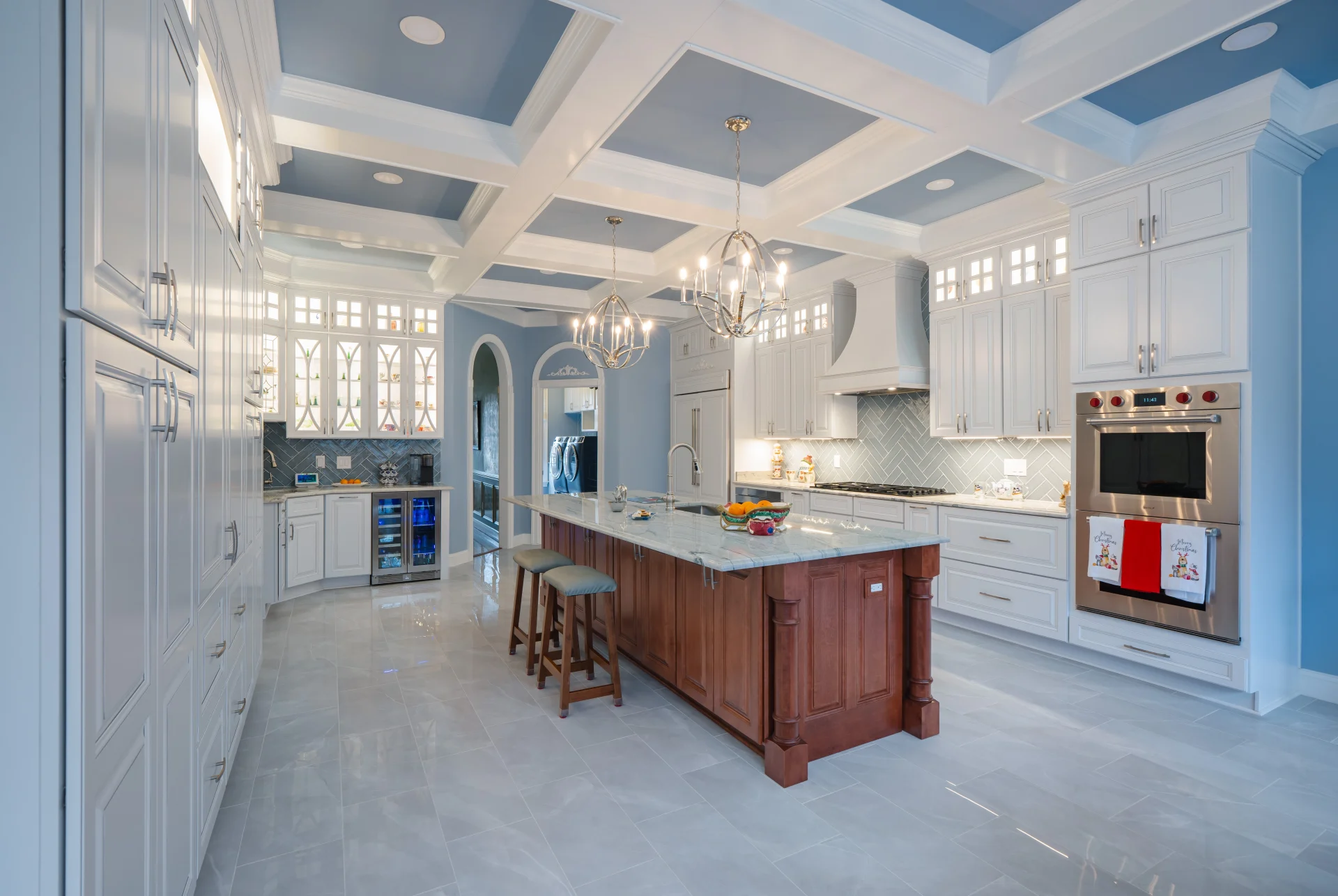
Why Quartz Works Well for Busy Kitchens
Quartz is an engineered surface made with mineral content, pigments and resin binders. The result is a nonporous countertop material that offers consistent performance and a wide range of design options. For many homeowners, quartz is appealing because it can deliver the look of light stone, marble-inspired veining, warm neutrals, dramatic dark surfaces or quiet solid colors without the maintenance expectations of many natural stones.
In Northern Virginia homes, quartz often works especially well in kitchens that need a balance of beauty and function. Families cook, host, work from the island, prepare school lunches and use the kitchen as a central living space. A countertop has to support all of that. Quartz is not indestructible, but it is durable, stain resistant and easier to maintain than many high-end surfaces.
The best quartz countertop projects start with lifestyle. A household that cooks daily may prioritize durability and easy cleanup. A homeowner designing a showpiece island may focus on dramatic veining and bookmatched movement. A compact kitchen may need a light quartz that keeps the room bright. A large open kitchen may need a surface that coordinates with flooring, cabinets, backsplash and adjacent living spaces.
Quartz Countertop Cost Factors
Quartz countertop pricing varies because the material is only one part of the project. Slab quality, brand, color group, thickness, edge profile, number of slabs, sink cutouts, cooktop cutouts, backsplash details, removal of existing counters, template complexity and installation access all affect the final cost. A simple perimeter countertop with a standard edge is very different from a large waterfall island with premium veining and multiple cutouts.
Homeowners should avoid comparing quartz only by square foot. A lower material price may not include fabrication, templating, sink cutouts, edge upgrades or installation details. It is better to compare complete scopes. The right question is not only “What does this quartz cost?” but “What does the installed countertop package include?”
| Cost factor | What it affects | Planning tip |
|---|---|---|
| Quartz color and pattern | Premium veining, rare looks and designer collections can cost more | Compare large samples, not only small chips. |
| Number of slabs | Large islands, long runs and seam planning may require extra material | Review slab layout before approval. |
| Edge profile | Decorative edges add fabrication time | Keep edges simple for modern kitchens. |
| Sink and cooktop cutouts | Cutouts require precise fabrication | Select fixtures before templating. |
| Waterfall panels | Island sides use additional slab material | Confirm pattern direction and seam visibility. |
| Removal and access | Existing countertop removal and site conditions affect labor | Discuss elevator, stairs, parking and protection needs. |
Choosing Quartz Colors
Quartz color should be chosen in the context of the whole room. Cabinet color, flooring, backsplash, wall color, hardware and lighting all change how the countertop appears. A bright white quartz can look crisp in a showroom and cooler in a north-facing kitchen. A warm gray can look balanced with wood cabinets and flat next to cool tile. A dramatic veined slab can be beautiful, but it needs enough visual breathing room.
Light quartz is popular because it can make kitchens feel larger and cleaner. White and off-white quartz pair well with many cabinet colors, from classic white to navy, green, walnut and black. Subtle veining gives the surface depth without overwhelming the room. For homeowners who want a timeless kitchen, a soft white or warm neutral quartz is often a strong choice.
Darker quartz can create contrast, especially on islands, wet bars or modern kitchens. Black, charcoal and deep gray surfaces can look sophisticated with lighter cabinets or warm wood tones. The tradeoff is that dust, crumbs and water marks may be more visible depending on the finish and lighting. Dark quartz should be sampled in the actual room whenever possible.
Marble-look quartz remains popular because it offers visual elegance with easier care. The key is scale. Some veining looks beautiful on a sample but too busy across a large island. Other patterns look quiet in a sample but perfect at full slab size. Homeowners should ask to see full slabs or large format images before final approval.
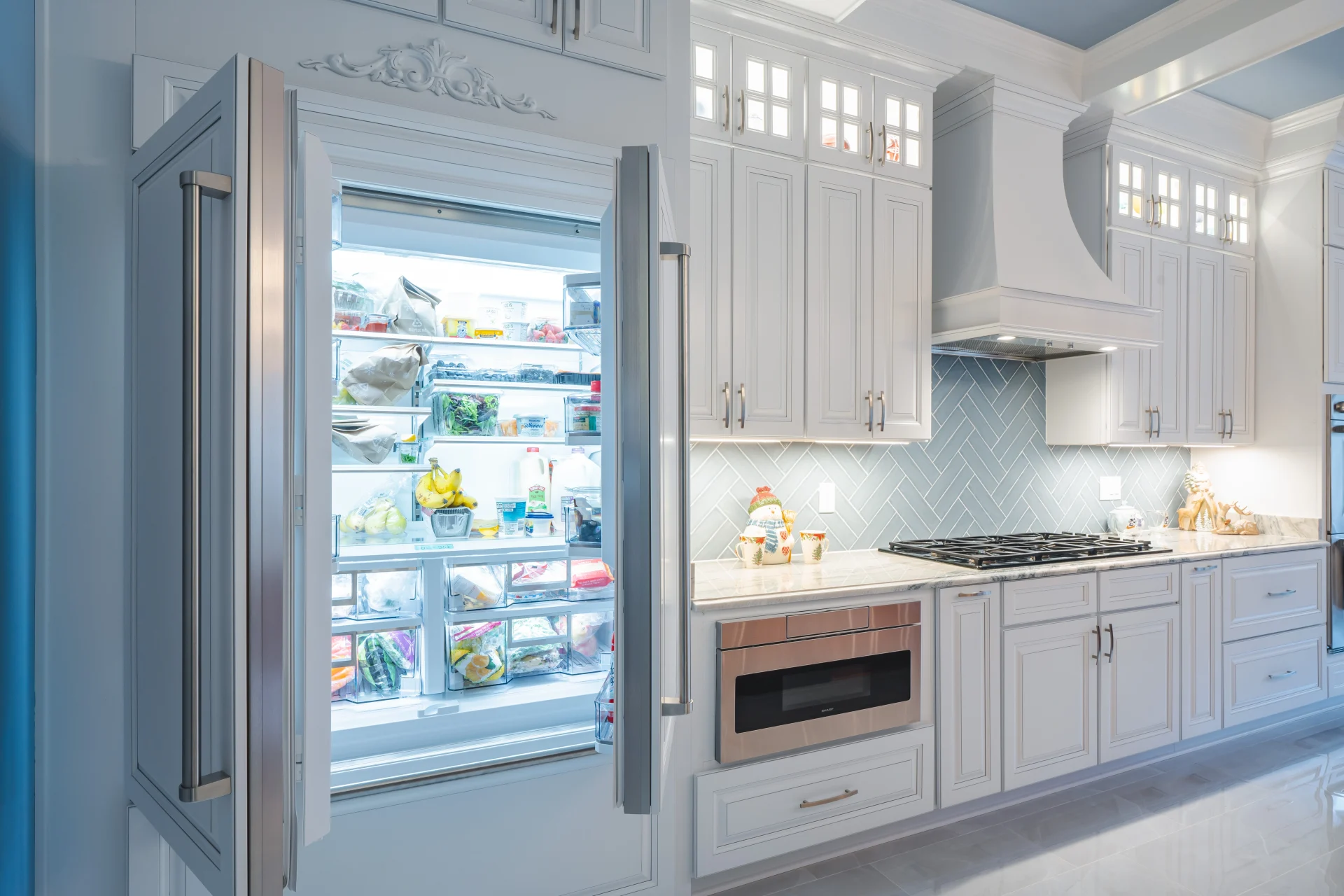
Edge Profiles: Simple Details That Change the Room
The edge profile is the finished shape along the countertop perimeter. It may seem like a small detail, but it affects the style of the kitchen. A simple eased edge feels clean and contemporary. A bevel adds a little definition. A rounded edge can feel softer and more traditional. More decorative profiles may suit classic kitchens but can feel heavy in a modern design.
For most quartz kitchens, simple edges are the safest and most versatile. They keep the focus on the countertop color, cabinets and backsplash. They are also easier to live with visually over time. Highly ornate edges can date a kitchen faster unless they are part of a deliberate traditional design.
Edge decisions should also consider safety and use. Families with children may prefer softened edges on islands and seating areas. Busy cooks may want edges that are easy to wipe. Large islands with seating should feel comfortable where people rest their arms. The edge profile is both a design detail and a daily touchpoint.
Sink, Faucet and Seam Planning
Quartz countertop planning should happen after major fixture choices are clear. Undermount sinks are common because they create a clean transition and make countertop cleanup easier. Farmhouse sinks, workstation sinks and large single-bowl sinks all require coordination before templating. Faucet holes, soap dispensers, filtered water taps and air switches also need to be planned in advance.
Seam placement is another important topic. Some kitchens can avoid obvious seams, while others need seams because of slab size, layout or access. A good seam plan considers visibility, support, pattern movement and installation realities. Homeowners should ask where seams are likely to fall before approving material. This is especially important with quartz patterns that have strong veining.
Large islands deserve extra attention. If the island requires more than one slab or includes a waterfall side, the veining direction and seam location should be reviewed carefully. The goal is a finished surface that looks intentional, not patched together.

Quartz vs. Quartzite: Avoid the Common Confusion
Quartz and quartzite sound similar, but they are different materials. Quartz is engineered. Quartzite is natural stone. Quartzite can be extremely beautiful and durable, but it usually has different maintenance expectations and may need sealing depending on the stone. Quartz is typically chosen for consistency, nonporous performance and easier daily care. Quartzite is chosen for natural variation and stone character.
Neither material is automatically better for every project. The right choice depends on design goals, maintenance comfort, budget and the specific slab. Homeowners should confirm which material they are viewing and what care it requires. A showroom label or casual conversation can create confusion if the distinction is not clear.
Care Tips for Quartz Countertops
Quartz is low maintenance, but it still deserves proper care. Use mild soap and water for daily cleaning. Wipe spills promptly. Avoid harsh abrasive pads. Use cutting boards instead of cutting directly on the surface. Use trivets for hot pans, slow cookers, electric griddles and other heat sources. Quartz is durable, but extreme heat can damage resin binders or cause discoloration.
Homeowners should also be careful with strong chemicals. Oven cleaner, paint remover, drain cleaner and some aggressive degreasers can damage the finish. A quartz countertop should not be treated like an outdoor workbench. With normal kitchen care, it can stay beautiful for years.
Matte and honed finishes may show fingerprints or smudges differently than polished finishes. Dark quartz may show dust and water marks more than light quartz. That does not make those choices wrong, but it does mean homeowners should test samples under real lighting and think about cleaning expectations.
How Quartz Connects With Cabinets and Backsplash
Countertops rarely succeed alone. They need to coordinate with cabinets and backsplash. If the quartz has dramatic veining, the backsplash may need to be quieter. If the cabinets are simple and the backsplash is subtle, a more expressive quartz can become the feature. If the cabinets already have strong wood grain, a calmer quartz may keep the kitchen balanced.
Cabinet hardware also affects the countertop story. Warm brass, matte black, polished nickel and stainless finishes can all change the mood. Flooring matters too. A cool gray floor, warm wood-look tile or natural hardwood can shift the countertop’s undertone. This is why samples should be reviewed together, not one at a time.
For homeowners planning a broader kitchen remodel, Elegant Kitchen and Bath’s kitchen remodeling services, countertop services, quartz countertop options, cabinet products and project gallery are useful next steps.
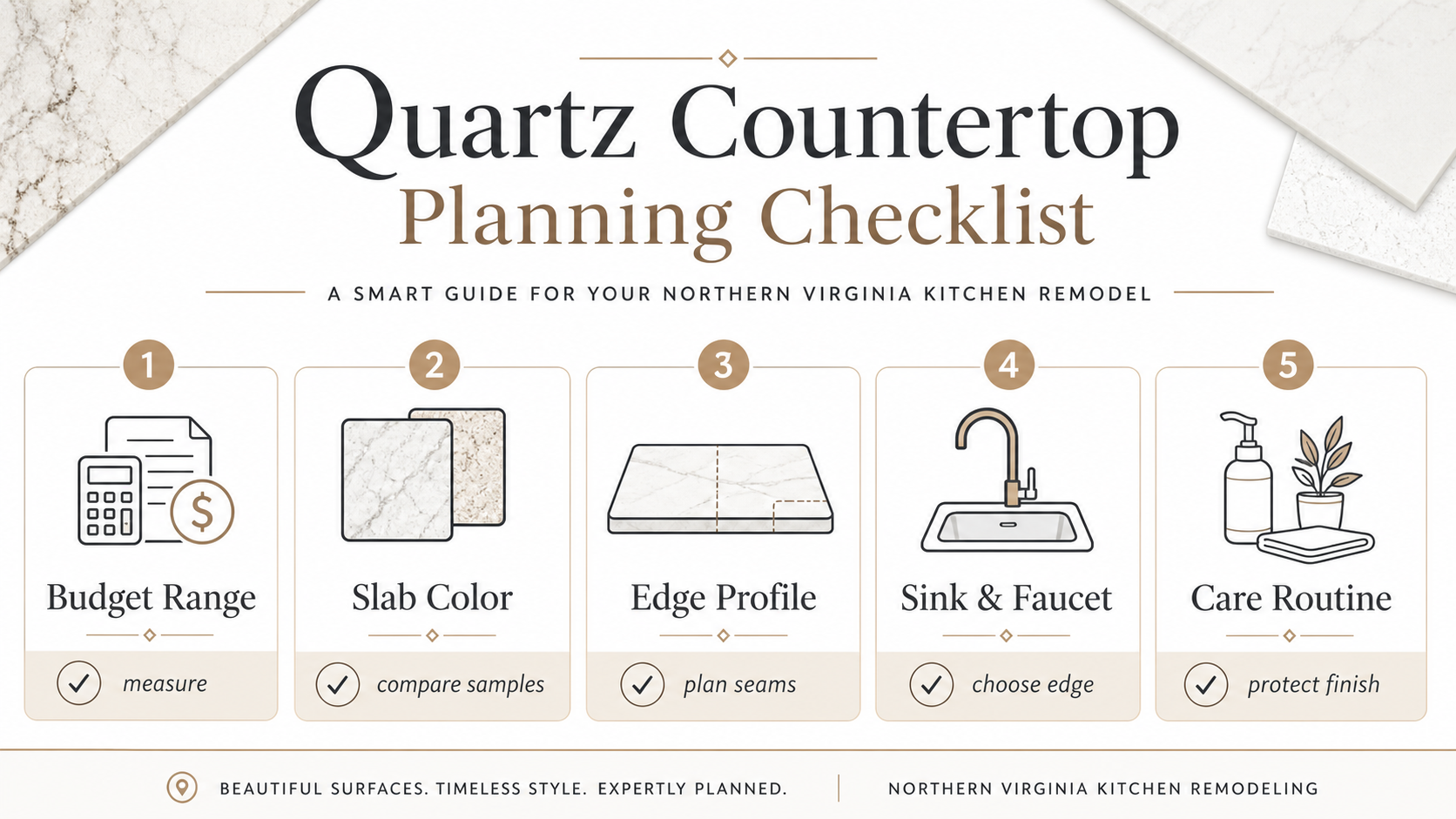
Quartz Countertop Planning Checklist
- Choose cabinet, flooring and backsplash direction before final quartz approval.
- Review full slabs or large samples when possible.
- Ask where seams are likely to be placed.
- Finalize sink, faucet and accessory holes before templating.
- Compare edge profiles with the style of the kitchen.
- Plan overhangs for seating and island use.
- Use trivets for heat-producing appliances and hot pans.
- Confirm what is included in the installed countertop scope.
Frequently Asked Questions
Is quartz a good countertop for busy kitchens?
Yes. Quartz is popular for busy kitchens because it is nonporous, stain resistant, durable and easier to maintain than many natural stones. It still needs normal care, including protection from high heat.
Does quartz need to be sealed?
Quartz usually does not need sealing because it is an engineered nonporous surface. Homeowners should follow the manufacturer’s care instructions for cleaning and heat protection.
What quartz color is best for resale?
Soft white, warm neutral and subtle marble-look quartz options are usually the most broadly appealing because they coordinate with many cabinet and backsplash styles.
Can quartz be used for a waterfall island?
Yes. Quartz can work well for waterfall islands, but slab size, veining direction, seam placement and edge details should be reviewed carefully before fabrication.
What should be selected before countertop templating?
Sink model, faucet location, cooktop details, accessory holes, overhangs and edge profile should be decided before templating so the countertop can be fabricated correctly.