
Bathroom remodeling in Arlington VA is rarely just a simple style update. Many Arlington homes, condos and townhomes have compact bathrooms, older plumbing paths, tight hallways, shared walls and building rules that shape the remodel before tile or fixtures are even selected. A beautiful bathroom still matters, but the strongest projects begin with layout, access, approvals, storage, ventilation and daily use.
For homeowners in Arlington, the bathroom often has to work harder than its square footage suggests. A hall bath may serve guests and children. A primary bath may be narrow but expected to feel calm and refined. A condo bathroom may need to be updated without disturbing neighbors or violating association rules. A townhome bathroom may have enough style potential, but limited space for moving fixtures. These are practical design problems, not just decorating questions.
This guide explains how to plan a bathroom remodel in Arlington VA with small bathroom layouts, condo and building considerations, cost factors, permit notes, storage ideas and finish choices. It is written for homeowners who want a bathroom that looks elevated, works every morning and avoids avoidable surprises during construction.
Why Arlington Bathrooms Need a Different Planning Approach
Arlington has a wide mix of housing: older single-family homes, brick colonials, townhomes, high-rise condos, garden-style buildings and newer infill properties. That variety is part of the appeal, but it also means bathroom remodeling conditions can change dramatically from one address to another. A bathroom in a detached home may allow more flexibility for plumbing or ventilation. A condo bathroom may have strict work-hour rules, riser locations and shared building systems.
Small bathrooms are also common. A narrow five-by-eight hall bathroom, a compact powder room, a tight primary bath or a condo bathroom with limited storage can still become more comfortable, but every inch has to be assigned a purpose. A large vanity may look good in a showroom but crowd the toilet clearance. A swinging shower door may interfere with the entry. A beautiful tile may be too busy for a small room. These decisions need to be made together.
Arlington homeowners also tend to care about long-term value. A well-planned bathroom remodel can improve comfort and resale appeal, especially when the design feels clean, durable and appropriate for the home. The mistake is chasing luxury features without solving the room’s actual limits. The better approach is to identify the constraints first, then choose the finishes that make the space feel intentional.
Arlington Bathroom Remodel Planning Table
| Planning area | What to review | Why it matters |
|---|---|---|
| Layout | Existing toilet, vanity, shower, tub, doorway and ventilation locations | Moving fixtures can affect cost, schedule, permits and building coordination. |
| Building type | Condo, townhome, detached home, older home or newer construction | Rules, access, wall conditions and plumbing flexibility can vary widely. |
| Approvals | County permits, condo board rules, HOA requirements and contractor insurance | Approvals can affect start dates, work hours, elevator use and inspection timing. |
| Storage | Vanity drawers, medicine cabinets, linen storage, niches and shelves | Small bathrooms need organized storage to avoid daily counter clutter. |
| Finishes | Tile scale, grout, lighting, hardware, glass and vanity material | Finishes should make the room feel larger while staying easy to maintain. |
| Ventilation | Fan quality, duct route and moisture control | Good ventilation protects paint, tile, cabinetry and indoor comfort. |
Start With the Existing Layout Before Choosing Tile
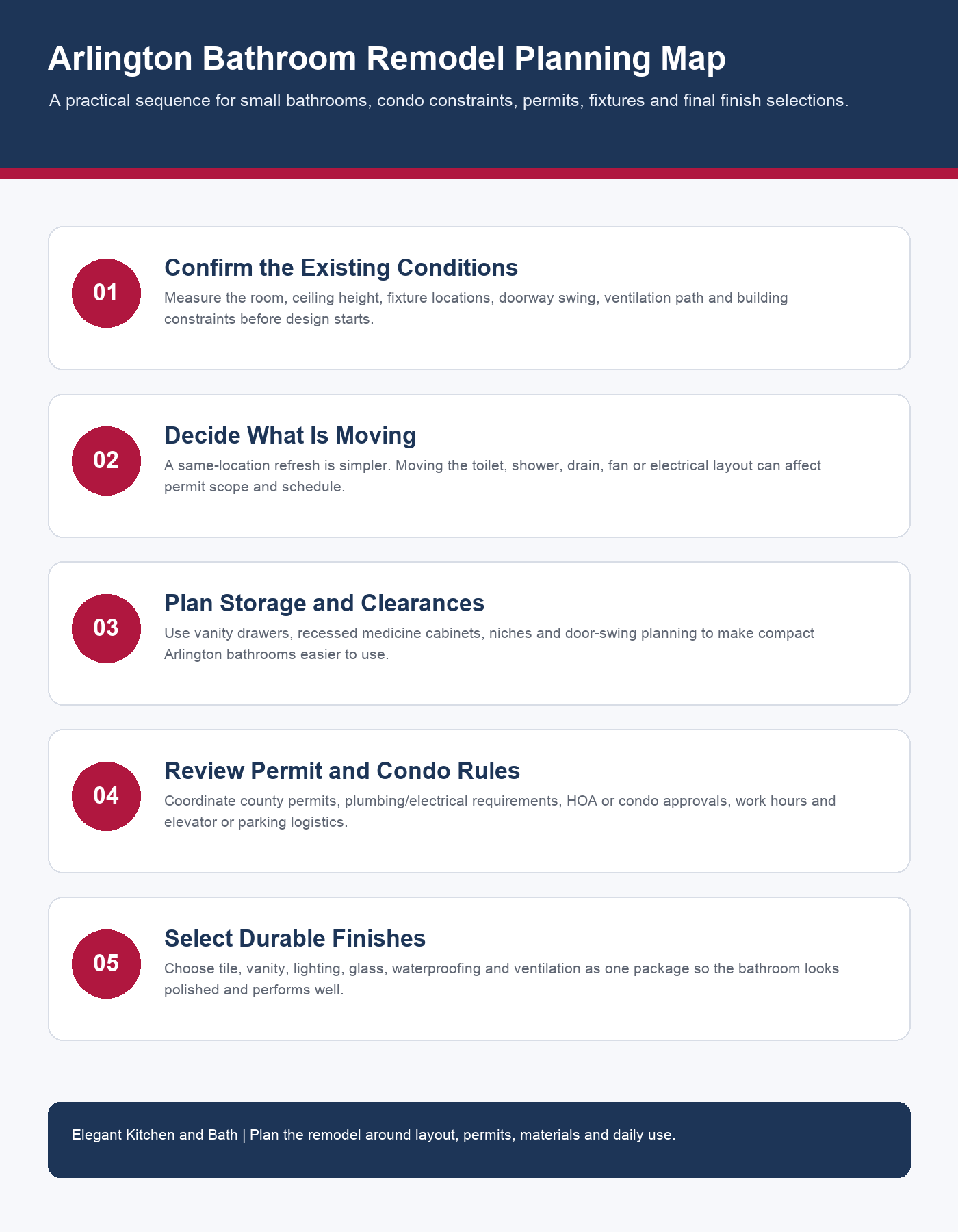
The first planning step is not picking a tile. It is understanding the current bathroom. Measure the room, ceiling height, door swing, vanity width, toilet location, tub or shower footprint, window position and fan location. Photograph the plumbing wall, electrical switches, outlets, medicine cabinet and any visible signs of moisture. A good design decision depends on knowing what the room is already doing well and what it is fighting.
In many Arlington bathrooms, keeping the toilet in the same location can simplify the remodel. Moving a toilet can be possible, but it is usually more involved than changing a vanity or replacing a tub with a shower. Shower conversions, drain relocation, new lighting, added outlets, heated floors or ventilation changes can also affect scope. That does not mean those upgrades should be avoided. It means they should be planned with cost, permits and schedule in mind.
Homeowners often ask whether the bathroom should keep a tub or switch to a shower. The answer depends on the home. A hall bath in a family home may benefit from keeping at least one tub in the house. A primary bathroom in a condo or townhome may work better as a spacious shower with a bench, niche and glass enclosure. A guest bath may need durability more than drama. The right layout is the one that supports the household and the home’s future market.
Small Bathroom Layout Ideas for Arlington Homes
A small bathroom remodel succeeds when it improves movement, storage and light. Replacing a bulky vanity with a furniture-style vanity may look appealing, but a drawer-based vanity can often be more useful. A recessed medicine cabinet adds storage without taking floor space. A shower niche removes bottles from the floor. A frameless or semi-frameless glass door can make the room feel more open than a shower curtain or heavy framed enclosure.
Large-format tile is often useful in compact bathrooms because it reduces grout lines and makes the room feel calmer. That does not mean every small bathroom needs huge tile. The scale should fit the wall, floor and shower dimensions. A vertical tile layout can add height. A continuous floor tone can make the room feel less chopped up. A simple shower wall paired with a more textured floor can add interest without making the room feel crowded.
Lighting is another space-making tool. A single ceiling light is rarely enough. Vanity lighting, recessed ceiling lighting and a properly selected mirror can make the room feel wider and brighter. If the bathroom has no window, lighting temperature becomes even more important. Too cool and the room feels clinical. Too warm and finishes can look yellow. Balanced lighting helps tile, vanity color and countertop tones read correctly.
Condo and HOA Rules: What to Check Early
Many Arlington remodels happen in condos or townhome communities. Before construction is scheduled, homeowners should review association rules. The association may require contractor insurance documents, work-hour limits, elevator reservations, floor protection, parking instructions, debris removal rules and advance notice for water shutoffs. These details may sound administrative, but they can affect the project schedule as much as material lead times.
Condo bathrooms can also involve shared plumbing walls, stacked drain lines and limited access behind walls. A contractor should understand what can be changed and what should remain. If the building requires approval for plumbing shutoffs or noisy work, that coordination should happen before demolition. The goal is to avoid a project that looks simple on paper but stalls because the building process was not respected.
Townhomes may have their own constraints. Narrow stairs, limited parking, shared walls and HOA exterior rules can affect deliveries and work flow. Even when the remodel is entirely inside, exterior venting, trash staging or parking may still need coordination. A professional plan treats these details as part of the remodel, not as last-minute obstacles.
Permit Notes for Arlington Bathroom Remodeling
Arlington County explains that residential building permit applications are submitted online through Permit Arlington, and the county’s residential permit guidance notes that plumbing fixture layouts must be shown as part of architectural plans for projects that require that review. Arlington County also states that plumbing/gas permits are required when adding, removing or relocating fixtures, appliances or piping for plumbing and gas work. Homeowners should confirm the exact requirement for their project scope before work begins.
A simple cosmetic refresh may be different from a remodel that moves a shower, changes a drain, adds outlets, modifies ventilation or alters walls. The practical rule is this: when a project changes plumbing, electrical, mechanical or structural conditions, assume the permit conversation matters. A qualified contractor can help identify which parts of the project require permits and inspections.
Permit planning should not be treated as a negative. It protects the homeowner, creates a record of work and helps confirm that the project meets safety requirements. It can also matter later during resale or insurance conversations. The best time to discuss permit scope is before final pricing, because permit needs can affect drawings, timing and trade coordination.
Useful official resources include Arlington County’s Residential Building Permit guidance and Plumbing / Gas Permit page. These should be checked alongside the contractor’s project-specific recommendations.
Cost Factors in an Arlington Bathroom Remodel
Bathroom remodel cost is shaped by scope more than style alone. A same-footprint bathroom with a new vanity, tile, lighting and fixtures is usually more predictable than a remodel that moves plumbing, changes the shower footprint, opens walls or upgrades electrical and ventilation. Premium tile, custom glass, high-end plumbing fixtures, specialty waterproofing, heated floors and custom cabinetry can also raise investment.
Labor conditions matter in Arlington because many homes have access constraints. Condo elevator rules, parking limitations, debris handling, old framing, plaster walls, uneven floors and narrow hallways can add complexity. These details do not always appear in inspiration photos, but they influence the real project. A thorough site review helps the budget reflect the home, not a generic bathroom remodel average.
Homeowners should also budget for the invisible parts of a bathroom: waterproofing, ventilation, subfloor repair, plumbing valves, electrical safety, wall prep and proper tile installation. These details are not as exciting as a vanity or shower glass, but they determine how well the bathroom performs. A bathroom that looks beautiful but fails behind the wall is not a successful remodel.
Cost and Scope Comparison
| Remodel type | Typical scope | Best fit | Budget sensitivity |
|---|---|---|---|
| Cosmetic refresh | Paint, mirror, hardware, lighting, simple fixture swaps | Bathrooms in good condition that need a visual update | Lower, if plumbing and tile remain mostly unchanged |
| Same-footprint remodel | New vanity, tile, shower/tub, toilet, lighting and finishes | Most small Arlington bathrooms where layout works but materials are dated | Medium, with predictable planning when walls are sound |
| Shower conversion | Tub-to-shower conversion, glass, niche, waterproofing and drain planning | Primary bathrooms or homes where a larger shower adds daily value | Medium to high depending on plumbing and tile scope |
| Layout change | Moving fixtures, changing walls, new electrical or ventilation routes | Bathrooms where the existing layout truly does not function | Higher because trades, permits and inspections are more involved |
| Condo remodel | Bathroom update with building approvals, water shutoffs and access rules | High-rise or multifamily Arlington homes | Variable because building logistics can affect schedule |
Vanity and Storage Choices for Small Bathrooms
The vanity is usually the hardest-working piece of cabinetry in a bathroom. In a small Arlington bathroom, a vanity should not be selected by width alone. Drawer layout, plumbing cutouts, door swing, countertop space and cleaning clearance all matter. A two-drawer vanity may store more usable items than a larger cabinet with deep open space under the sink. If the room is extremely tight, a floating vanity can show more floor and make cleaning easier, but it may reduce hidden storage.
Medicine cabinets are underrated. A recessed mirrored cabinet can hold daily items at eye level without consuming counter space. Linen towers, over-toilet cabinets and built-in niches can help, but they should be used carefully. Too many storage pieces can make a small bathroom feel heavy. The best storage plan combines hidden daily storage with one or two open or decorative moments.
For shared bathrooms, think in zones. Each user may need a drawer or shelf. Towels need a predictable home. Cleaning supplies should not compete with toiletries. Extra toilet paper, hair tools and first-aid items should be easy to reach but visually controlled. Storage planning is one of the biggest differences between a bathroom that photographs well and one that works well every morning.
Tile, Shower Glass and Waterproofing
Tile is the visual language of the bathroom, but waterproofing is the performance system behind it. Shower walls, curbs, pans, benches and niches must be planned carefully. A niche should be placed where it is useful and where the wall can support it. A bench should be proportioned for the shower, not squeezed in because it appears in luxury photos. Shower glass should work with the door swing and the way water moves in the space.
In small bathrooms, large-format tile can make a shower feel less busy. A mosaic shower floor may still be useful for slope and grip. Porcelain tile is often practical because it is durable and available in stone-look, concrete-look and warm neutral designs. Natural stone can be beautiful, but it usually requires more maintenance and careful sealing. Grout color also matters; high-contrast grout can make a small room feel busier.
Curbless showers are popular, but they require proper floor slope, waterproofing and space planning. They may be easier in some conditions than others. In condos or older homes, existing structure and drain location can affect feasibility. If a curbless shower is important, it should be discussed early rather than after tile has been selected.
Design Ideas That Fit Arlington Homes
A good Arlington bathroom remodel usually feels clean, bright and tailored. Warm whites, soft grays, wood vanities, brushed nickel, polished chrome, matte black or champagne bronze can all work depending on the home. The key is consistency. A modern condo bathroom may look best with flat-panel cabinetry, slab-look tile and simple glass. A classic Arlington colonial may call for a shaker vanity, marble-look porcelain, polished chrome and a more traditional mirror.
Powder rooms can handle more personality. Wallpaper, dramatic mirrors, sconces, bold vanity color or textured tile may work because the room is smaller and not exposed to shower moisture. Full bathrooms need more durability. The finishes should resist moisture, clean easily and age well. When resale matters, avoid choices that are too specific unless the homeowner truly loves them.
Accessibility can also be part of the design without making the room look institutional. A comfort-height toilet, blocking for future grab bars, a low-threshold shower, better lighting and slip-resistant flooring can make the bathroom safer for long-term use. These upgrades are especially useful in primary bathrooms and homes where owners plan to stay.
How Elegant Kitchen and Bath Helps Arlington Homeowners
Elegant Kitchen and Bath helps homeowners connect design decisions with construction realities. That means looking at bathroom layout, plumbing scope, ventilation, tile selections, vanity storage, shower glass, lighting and permit questions together. For Arlington projects, this coordination matters because small rooms and building rules leave less room for improvisation.
If you are comparing options, review Elegant Kitchen and Bath’s bathroom remodeling services, Arlington kitchen and bathroom remodeling page, kitchen remodeling services, countertop services and project gallery. These pages help connect the article’s planning guidance with the company’s service areas and completed work.
Questions to Ask Before Starting
- Will any plumbing fixtures move, or will the bathroom stay in the same footprint?
- Does the building, condo board or HOA require written approval before work begins?
- Will the project need plumbing, electrical, mechanical or building permits?
- Can the current ventilation route support the new bathroom plan?
- Is the vanity selected for real storage or only for appearance?
- Where will towels, daily products, cleaning supplies and extra paper goods live?
- Will the shower door, bathroom entry door and vanity drawers conflict?
- Are tile, grout, glass and hardware selections easy to maintain?
Frequently Asked Questions
Do bathroom remodels in Arlington VA need permits?
Many Arlington bathroom remodels need permits when plumbing, gas, electrical, mechanical or structural work is involved. Cosmetic updates may be simpler, but homeowners should verify scope through Arlington County and their contractor before work begins.
What makes Arlington bathroom remodels different from other Northern Virginia projects?
Arlington homes often include compact bathrooms, condos, townhomes, older plumbing paths, shared walls, parking limits and building rules. These details make layout planning, material delivery and approval timing especially important.
How can a small Arlington bathroom feel larger?
A small bathroom can feel larger with a better vanity, improved lighting, glass shower doors, large-format tile, recessed storage, lighter finishes, wall niches and a layout that keeps clear floor space open.
Should condo owners talk to their association before remodeling?
Yes. Condo owners should review association rules for work hours, elevator protection, insurance certificates, plumbing shutoffs, debris removal, parking and approval documents before scheduling a bathroom remodel.
Final Thoughts
Bathroom remodeling in Arlington VA works best when the design respects the home’s real conditions. Small layouts, condo rules, permit scope, plumbing paths and storage needs should guide the project before finishes are finalized. When those details are handled early, the bathroom can become brighter, more useful and more valuable without creating unnecessary stress during construction.