
Flooring can quietly make or break a kitchen or bathroom remodel. It affects comfort, cleanup, water resistance, sound, resale appeal and the way the whole room feels underfoot. Cabinets, countertops and fixtures often get the most attention, but flooring is the surface homeowners live on every day. It also has to coordinate with adjacent rooms, especially in open Northern Virginia homes where kitchens connect to family rooms, dining areas, hallways and basements.
The best flooring choice depends on the room, moisture level, household routine, design style and budget. Porcelain tile, luxury vinyl plank, hardwood and heated flooring systems can all be good choices, but they solve different problems. A bathroom may need maximum water resistance. A kitchen may need comfort and easy cleaning. A basement may need moisture-aware materials. A main-level remodel may need flooring that flows through multiple spaces.
This guide compares popular flooring options for kitchen and bathroom remodels, including LVP, porcelain tile, hardwood and heated floors. It also explains where each material works best and what homeowners should decide before installation begins.

How to Choose Flooring for a Remodel
Flooring should be chosen after the remodel goals are clear. Is the room a high-traffic family kitchen? A guest bathroom? A primary bathroom with a curbless shower? A basement laundry area? A kitchen that opens into hardwood living spaces? Each situation points toward different priorities.
Water exposure is the first question. Bathrooms, laundry areas, mudrooms and basements need materials that handle moisture well. Kitchens do not usually have standing water, but they do face spills, sink splashes, pet bowls and frequent cleaning. Comfort is the second question. Some homeowners love the solid feel of tile. Others prefer the warmer feel of wood or luxury vinyl plank. Maintenance is the third question. A beautiful floor that requires care the household will not do can become frustrating quickly.
Design continuity matters too. In many Northern Virginia homes, the kitchen is not a closed room. Flooring may need to connect to an entry, hallway, family room or dining space. A floor that looks great in one room but clashes with the rest of the level can make the remodel feel disconnected.
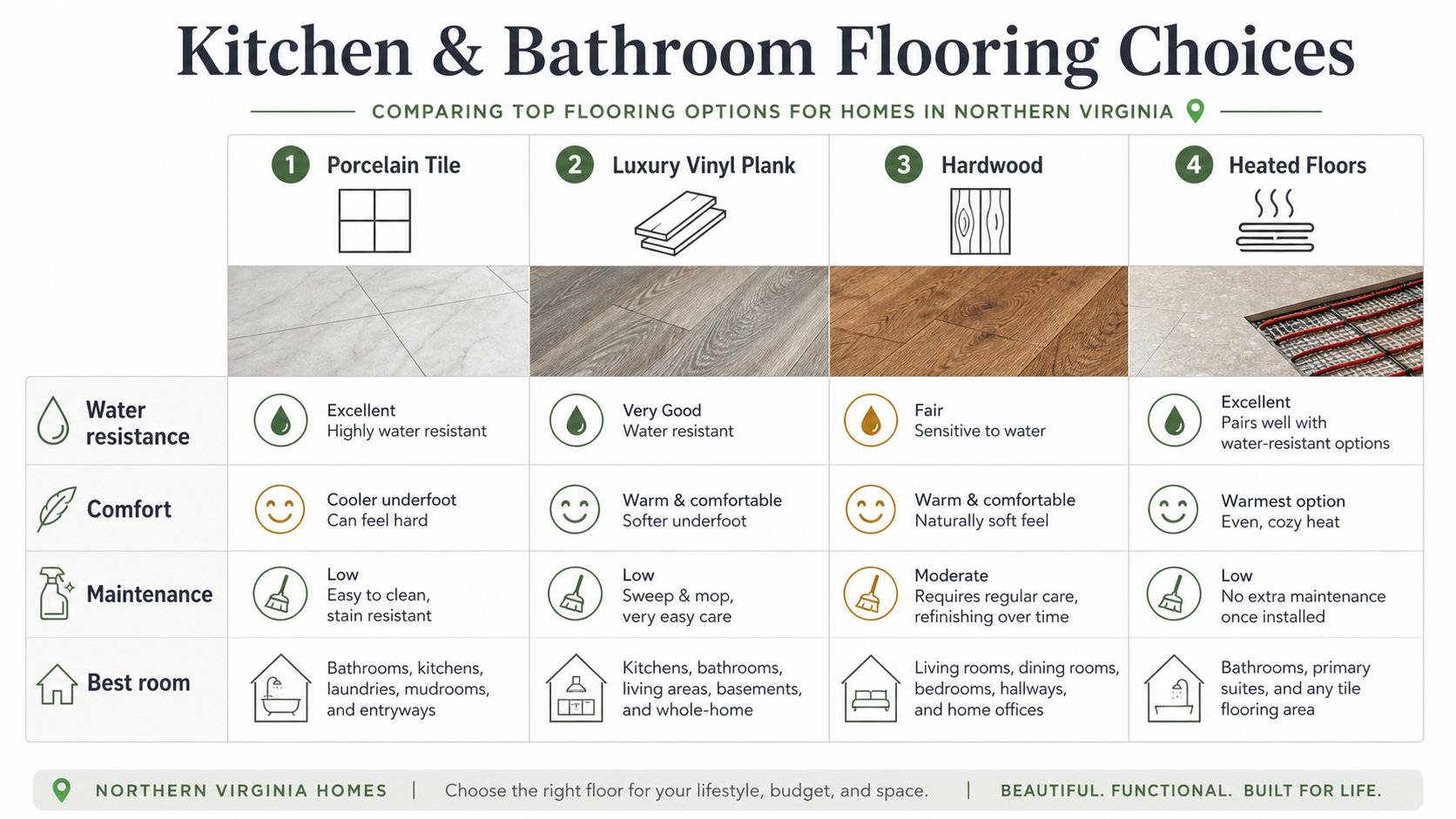
Flooring Options Compared
| Flooring type | Best rooms | Strengths | Watch-outs |
|---|---|---|---|
| Porcelain tile | Bathrooms, kitchens, laundry rooms, mudrooms | Excellent water resistance, durable, many styles | Can feel hard or cool underfoot. |
| Luxury vinyl plank | Kitchens, basements, bathrooms, busy family areas | Comfortable, water resistant, easy to clean | Quality varies; subfloor prep still matters. |
| Hardwood | Kitchens, dining rooms, living spaces, hallways | Warm, timeless, strong resale appeal | Not ideal for wet bathrooms or moisture-prone areas. |
| Heated flooring | Primary bathrooms, tile bathrooms, luxury suites | Adds comfort and a premium feel | Requires planning before tile installation. |
Porcelain Tile: Durable and Water Resistant
Porcelain tile is one of the strongest choices for bathrooms because it handles moisture well and comes in a wide range of styles. It can look like stone, concrete, marble, terrazzo or wood. It works for bathroom floors, shower floors, laundry rooms, mudrooms and kitchens where durability is the top priority.
For bathrooms, tile selection should consider slip resistance, grout lines, maintenance and scale. A large-format tile can make a bathroom feel cleaner and more open, but shower floors often need smaller tiles or mosaics to follow the slope to the drain. A polished tile may look elegant but can be slippery when wet. A matte or textured tile may be safer and easier to live with.
Tile can feel cold underfoot, especially in winter. That is why many homeowners pair bathroom tile with radiant heat. Tile is also hard, which can matter in kitchens where people stand for long periods. Area rugs, anti-fatigue mats and good layout planning can help, but homeowners should be honest about comfort expectations.
Luxury Vinyl Plank: Practical for Busy Homes
Luxury vinyl plank, often called LVP, has become popular because it offers water resistance, comfort and wood-look style at a practical price point. It can be a strong option for kitchens, basements, laundry rooms and family spaces. It is softer and warmer than tile, easier to clean than many natural materials and often more forgiving in busy households.
The key is quality. Not all LVP products perform the same. Wear layer, core construction, locking system, texture, plank thickness and installation method all affect the final result. A higher-quality product with good subfloor preparation can look much better than a low-cost product installed quickly over uneven surfaces.
LVP can work in bathrooms, but installation details matter. Edges, transitions, toilets, tubs and vanities should be handled carefully. For primary bathrooms with large showers or heavy water exposure, porcelain tile may still be the better long-term choice. For powder rooms, basement bathrooms and family spaces, LVP can be very practical.
Hardwood: Warm, Timeless and Best in the Right Rooms
Hardwood remains a favorite for main-level living spaces because it feels warm and timeless. In kitchens that open into family rooms or dining areas, continuing hardwood can create a seamless look. It can also support resale appeal because many buyers like real wood flooring in living areas.
The challenge is moisture. Hardwood can work in kitchens when homeowners accept normal care, wipe spills quickly and use rugs near sinks or dishwashers. It is usually not the best choice for full bathrooms, wet rooms, laundry areas or basements with moisture concerns. Engineered hardwood may offer more dimensional stability than solid hardwood in some conditions, but it still needs respect around water.
Hardwood also needs finish planning. Color, plank width, sheen and species affect the style. Very dark floors can show dust and scratches. Very light floors can feel modern and airy. Medium warm tones often age well. If the remodel is only replacing kitchen flooring, matching existing hardwood can be more complicated than choosing a completely new floor for a larger area.
Heated Floors: Comfort Upgrade for Bathrooms
Radiant heated flooring is one of the most appreciated bathroom comfort upgrades. It works especially well under tile because tile conducts heat and otherwise can feel cold. Heated floors are common in primary bathrooms, spa-style bathrooms and luxury remodels where comfort matters as much as appearance.
Heated floors should be planned before installation begins. The system, thermostat location, electrical requirements, floor buildup and tile layout all need coordination. It is much easier to include radiant heat during a remodel than to add it later. Homeowners should also think about where heat is useful. Heating under vanities or built-ins may not be necessary, while open standing areas near the vanity and shower can make a big difference.
Heated floors do not replace good ventilation, waterproofing or tile installation. They are a comfort feature, not a moisture solution. In a well-planned bathroom, though, they can make the room feel noticeably more comfortable every morning.
Bathroom Flooring Priorities
Bathroom flooring needs to handle moisture first. That means material selection, waterproofing, transitions and installation details all matter. Porcelain tile is usually the safest premium choice for full bathrooms because it pairs well with waterproofing systems and shower design. LVP can work in many bathrooms, especially powder rooms and lower-water-use spaces, but the installation must be appropriate for the room.
Slip resistance is also important. A floor can look beautiful and still be a poor fit if it becomes slick when wet. Homeowners should ask about finish texture and consider how the room will be used by children, older adults or guests. For aging-in-place bathrooms, flooring should be part of the safety plan along with lighting, shower entry, grab bar blocking and layout.
For more bathroom planning, homeowners can review Elegant Kitchen and Bath’s bathroom remodeling services, the guide to aging-in-place bathroom remodeling and the article on wet room bathroom remodels.
Kitchen Flooring Priorities
Kitchen flooring needs to survive traffic, food spills, chair movement, pets, appliance work and frequent cleaning. It also needs to connect visually with cabinets, countertops and adjacent rooms. In open layouts, kitchen flooring often becomes part of the whole main-level design. A material that stops abruptly at the kitchen edge may feel less refined unless the transition is intentional.
Hardwood can be beautiful in kitchens when it continues from nearby rooms. LVP can be a practical choice for families that want water resistance and comfort. Porcelain tile can be excellent for durability, especially in kitchens with outdoor access or heavy traffic. The best choice depends on how the kitchen is used, not only how it photographs.
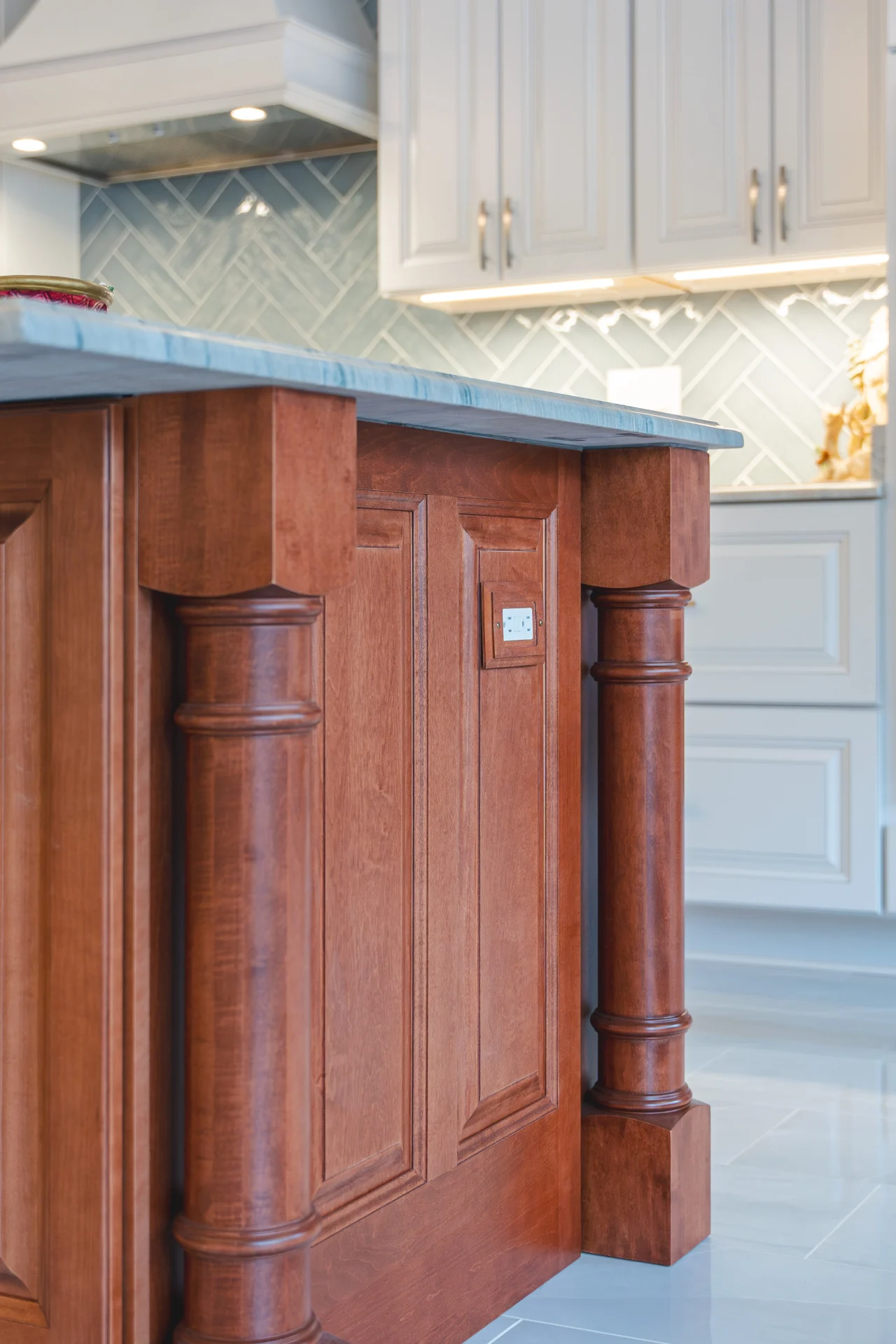
Floor color should be tested with cabinet samples and countertop samples. A warm wood-look floor can change the appearance of white cabinets. A gray tile can make a warm countertop look different. A patterned floor can compete with a dramatic backsplash. Flooring is a major surface, so it should be chosen with the whole palette in mind.

Subfloor and Installation Details
Even the best flooring can fail if the subfloor is not prepared correctly. Uneven surfaces, moisture problems, weak framing, old adhesive, damaged underlayment and poor transitions can affect the final installation. Tile needs proper substrate and movement planning. LVP needs a clean, flat surface. Hardwood needs moisture awareness and expansion planning. Heated floors need electrical and layout coordination.
Transitions deserve attention. Where does the kitchen floor meet the hallway? How does the bathroom floor meet the bedroom? Will a height change create a trip point? Are there existing floors that need to be matched? These details are not exciting, but they make the finished remodel feel professional.
For basement remodels, moisture planning is especially important. Flooring should be chosen for below-grade conditions. Materials that perform well upstairs may not be the best fit downstairs. Homeowners planning lower-level projects can also review Elegant Kitchen and Bath’s basement remodeling services.
Which Flooring Should You Choose?
Choose porcelain tile if the room needs maximum water resistance, long-term durability and a premium bathroom feel. Choose luxury vinyl plank if comfort, water resistance, family practicality and budget control are important. Choose hardwood if the kitchen connects to living spaces and a warm continuous look matters. Choose heated floors as an upgrade when tile comfort is a priority, especially in primary bathrooms.
The best remodels do not choose flooring in isolation. Flooring should connect with layout, cabinets, countertops, lighting, plumbing fixtures and long-term maintenance expectations. Elegant Kitchen and Bath can help homeowners compare flooring options as part of a complete kitchen remodel, bathroom remodel, basement remodel or broader home addition remodeling plan. The flooring products page and project gallery are useful next steps for inspiration.
Flooring Planning Checklist
- Identify the room’s water exposure and traffic level.
- Compare comfort underfoot, not only appearance.
- Review slip resistance for bathrooms and wet areas.
- Check subfloor condition before final material selection.
- Coordinate flooring color with cabinets, countertops and wall color.
- Plan transitions between rooms and floor heights.
- Decide whether heated floors should be included before installation.
- Choose materials based on real maintenance habits.
Frequently Asked Questions
What is the best flooring for bathroom remodels?
Porcelain tile is often the best all-around choice for full bathrooms because it is durable, water resistant and compatible with waterproofing systems. LVP can work in some bathrooms, especially powder rooms, when installed properly.
Is luxury vinyl plank good for kitchens?
Yes. Quality luxury vinyl plank can be a practical kitchen flooring choice because it is water resistant, comfortable, easy to clean and available in many wood-look styles.
Can hardwood be used in a kitchen?
Hardwood can be used in kitchens, especially when it continues from adjacent living spaces. Homeowners should wipe spills quickly and understand that hardwood is less water resistant than tile or LVP.
Are heated bathroom floors worth it?
Heated floors can be worth it in primary bathrooms and tile bathrooms where comfort is a priority. They should be planned before tile installation begins.
What flooring is best for a basement remodel?
Moisture-aware materials such as quality LVP or appropriate tile are often strong basement choices. The best option depends on slab condition, moisture risk, room use and comfort goals.