
Design-build remodeling services are especially valuable for Northern Virginia homeowners who want a beautiful remodel without managing a long chain of disconnected designers, cabinet suppliers, tile vendors, countertop fabricators, plumbers, electricians and installers. A kitchen remodel can affect flooring, lighting, walls, appliance locations and daily family routines. A bathroom remodel can involve waterproofing, ventilation, tile layout, plumbing rough-ins and storage. A basement remodel can touch egress, moisture control, ceiling height, electrical planning and entertainment zones. When those pieces are planned separately, details can fall through the cracks. When they are coordinated by one remodeling team, the project is easier to understand, easier to schedule and easier to finish with a consistent design vision.
Elegant Kitchen and Bath works in a category where homeowners usually need more than a single trade. The company’s service mix includes kitchen remodeling, bathroom remodeling, basement remodeling, home addition remodeling, cabinetry, countertops, tile, flooring, lighting, layout planning and project coordination. That matters because most real homes do not remodel in perfect isolated boxes. A kitchen may need a better pantry, a wider opening to the family room and new flooring that continues through the main level. A primary bathroom may need a closet adjustment, a linen cabinet and a shower design that fits the architecture of the home. A basement may need a guest bath, wet bar, bedroom conversion and storage plan in one project. Design-build thinking gives those decisions a single roadmap.
This guide explains what design-build remodeling means, how it applies to kitchen, bathroom, basement and whole-home projects, and why Northern Virginia homeowners often benefit from one coordinated remodeling partner. It also includes planning tables, service comparisons, questions to ask before scheduling a consultation and practical examples of how different remodeling services fit together.
What Design-Build Remodeling Means for a Homeowner
Design-build remodeling means the planning and construction sides of a project are connected from the beginning. Instead of hiring a designer to create a concept, then searching for a contractor to price it, then finding suppliers to make the selections work, the homeowner works with a team that understands both the look and the build. The design is not just a pretty drawing. It is shaped by measurements, product availability, construction sequence, utility locations, cabinet sizing, tile transitions, countertop fabrication, inspection requirements and the way the family will actually use the room.
In a kitchen, design-build thinking can prevent a common problem: choosing beautiful cabinets before confirming appliance clearances, island walking space, ventilation needs and countertop seams. In a bathroom, it can prevent a homeowner from falling in love with a shower layout that does not leave enough room for glass, niches, valves or waterproofing details. In a basement, it can catch practical constraints early, such as low duct runs, sump pump access, structural posts, drain locations or a bedroom egress requirement. The result is a plan that is more realistic from day one.
The approach also reduces decision fatigue. A remodel requires hundreds of choices: cabinet door style, finish, hardware, counter material, backsplash, grout color, fixture finish, lighting temperature, shower glass, vanity sizing, flooring, trim, paint, storage accessories and more. When those choices are guided by one team, the homeowner does not have to constantly translate decisions between separate parties. The remodel starts to feel like one project instead of a series of unrelated purchases.
For Northern Virginia homes, this is particularly useful because houses vary widely by age, neighborhood and layout. A Herndon colonial, a Vienna split-level, an Arlington condo, an Ashburn townhome and a McLean luxury property can all have different constraints. A design-build remodeler looks at those constraints alongside the homeowner’s goals and turns them into a practical scope of work.

Why One Coordinated Remodeling Team Matters
The biggest benefit of a coordinated remodeling team is accountability. When the cabinet plan, countertop template, tile layout and construction schedule are handled through disconnected vendors, it can be hard for a homeowner to know who owns a problem. If the faucet is too close to the backsplash, is that the designer, plumber, countertop fabricator or cabinet installer? If the pantry cabinet blocks a light switch, who should have caught it? If the shower niche lands awkwardly in the tile pattern, who should adjust the layout? Design-build reduces those gray areas because the team responsible for the plan also understands the installation.
Another benefit is sequence control. Remodeling is not only about what gets installed; it is about when each trade arrives. Cabinets cannot be installed before walls are ready. Countertops cannot be templated before cabinets are set. Glass cannot be measured before tile is finished. Flooring transitions need to be coordinated before trim returns. If one step is missed, the next step can stall. A design-build team is thinking about that chain from the beginning, which helps reduce avoidable delays.
Homeowners also get a better design conversation. Instead of asking, “What do you like?” in isolation, the team can ask, “How do you cook, how much storage do you need, what is the existing structure doing, where are the mechanical systems, what are the budget priorities and which details will make the biggest difference?” That creates a remodel that is personal, but not impractical.
Elegant Kitchen and Bath’s remodeling process is built around this kind of coordination. The goal is not simply to sell cabinets or tile; it is to guide the homeowner from idea to finished space with a clear plan, realistic selections and a team that understands the full scope.
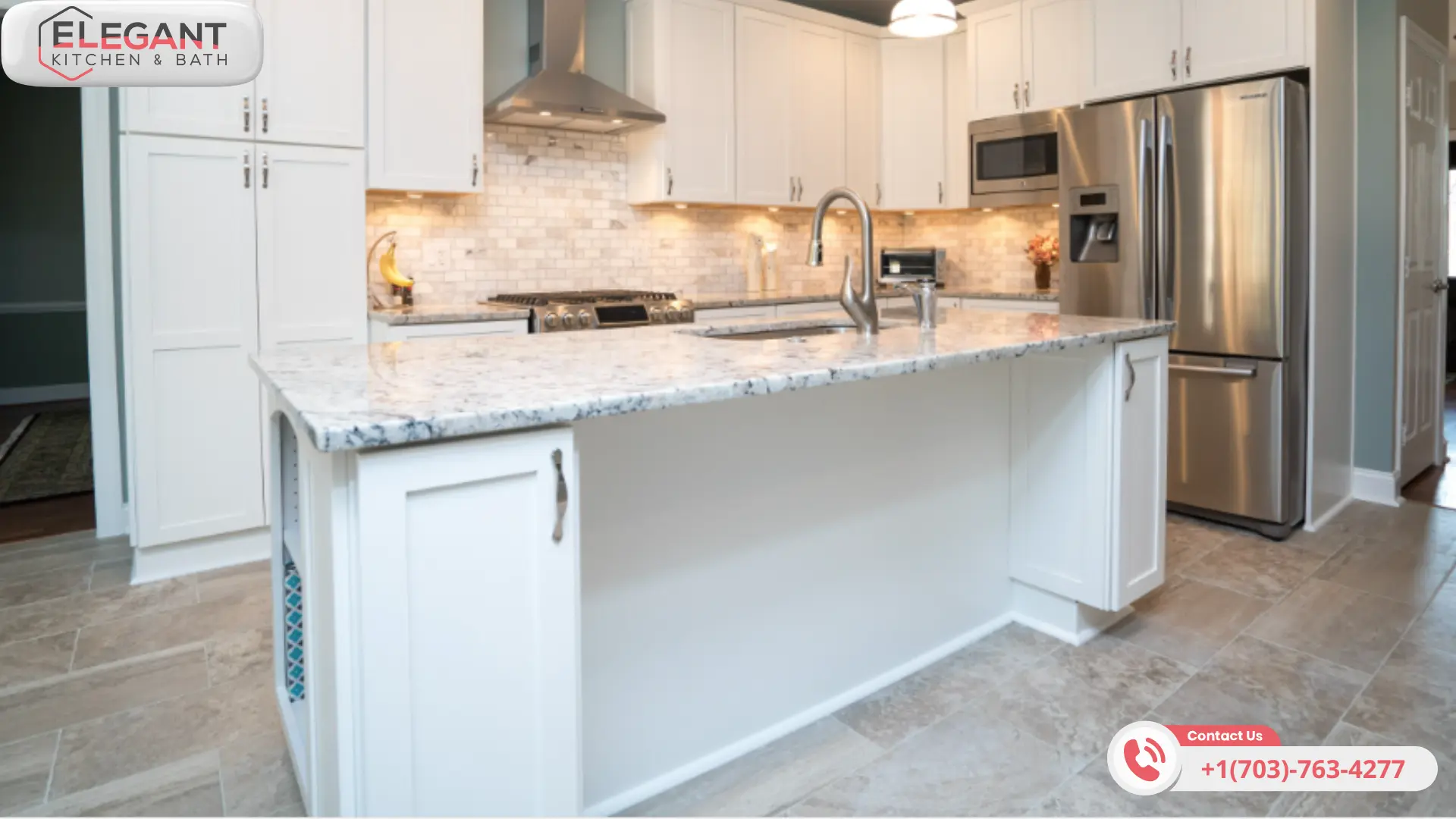
Kitchen Remodeling Services: Layout, Cabinets, Countertops and Daily Function
The kitchen is often the most complex room in a home remodel because it combines design, utilities, storage, traffic flow and heavy daily use. A kitchen remodeling service should do more than replace cabinets. It should study how the household cooks, cleans, stores food, hosts guests and moves between rooms. A beautiful kitchen that does not function well will frustrate the homeowner every day.
Key kitchen remodeling decisions include the work triangle, appliance placement, island size, cabinet storage, pantry capacity, lighting layers, countertop material, backsplash layout, ventilation, flooring and sightlines into nearby rooms. In Northern Virginia, many homeowners also want to open older kitchens to family rooms, create larger islands, add beverage centers, improve mudroom connections or update builder-grade cabinetry with custom or semi-custom storage.
A coordinated kitchen remodel also connects product selections with installation realities. A heavy countertop may need the right cabinet support. A waterfall island changes countertop fabrication. A large-format backsplash tile changes outlet placement and edge detailing. A panel-ready appliance affects cabinet ordering. Under-cabinet lighting needs power planning before walls close. When the design-build team is involved early, these details are planned instead of discovered late.
For homeowners comparing options, the kitchen remodeling service page is the natural next step after reading this guide. It explains the service more directly, while this blog article helps homeowners understand why coordination matters before they start.
Bathroom Remodeling Services: Waterproofing, Comfort and Long-Term Usability
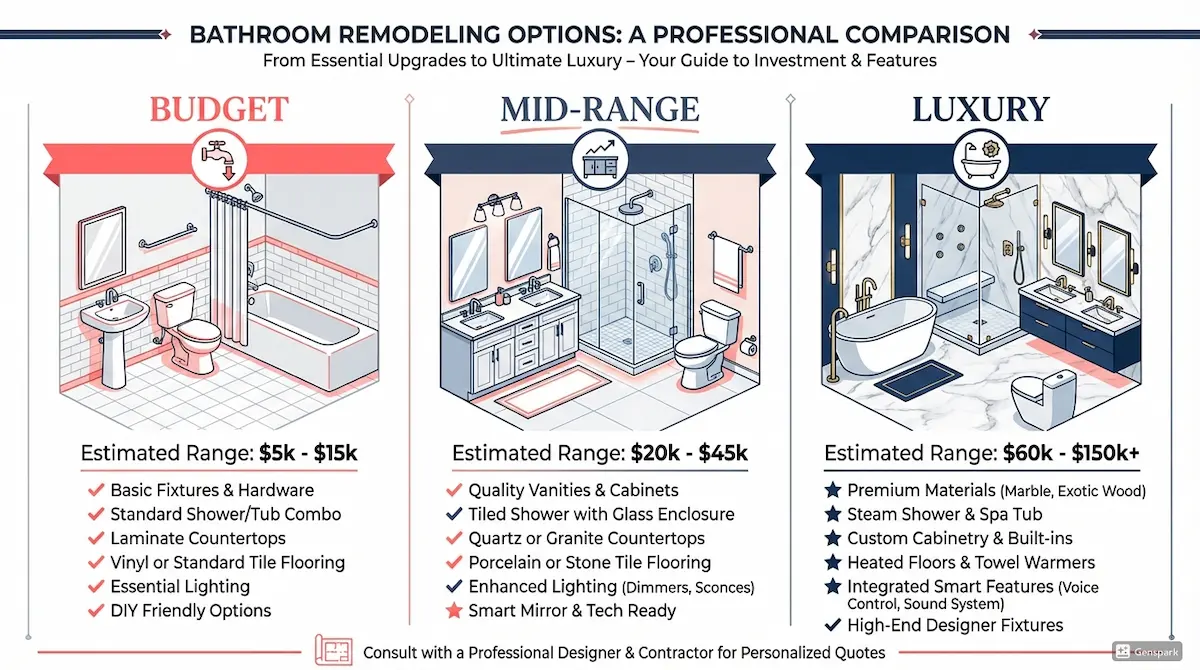
Bathroom remodeling has a different kind of complexity. It may be a smaller room than the kitchen, but the details are unforgiving. Water management, ventilation, tile slope, shower curbs, plumbing access, glass measurements and vanity clearances all matter. A bathroom can look good on the surface and still fail if waterproofing or layout planning is weak.
A strong bathroom remodeling service starts by identifying the type of bathroom: powder room, hall bath, guest bath, primary bath, aging-in-place bath or luxury spa bath. Each has different priorities. A powder room may need impact and efficient fixture placement. A hall bath may need durable surfaces and shared storage. A primary bath may need a larger shower, better lighting, double vanity, private toilet zone, freestanding tub or heated floor. An aging-in-place bath may need a curbless shower, blocking for grab bars, improved lighting and non-slip surface planning.
Design-build coordination is especially valuable in bathrooms because every inch matters. Moving a toilet may affect plumbing cost. Enlarging a shower may reduce vanity space. Choosing a niche location depends on framing. Selecting a large tile affects slope, cuts and drain placement. Choosing a floating vanity affects wall blocking. A coordinated team can explain tradeoffs before the homeowner commits to a design.
Elegant Kitchen and Bath’s bathroom remodeling service connects layout, product selection and installation details so the finished room feels polished and performs well over time. That is the difference between a cosmetic update and a thoughtful remodel.
Basement Remodeling Services: Turning Unused Square Footage Into Real Living Space
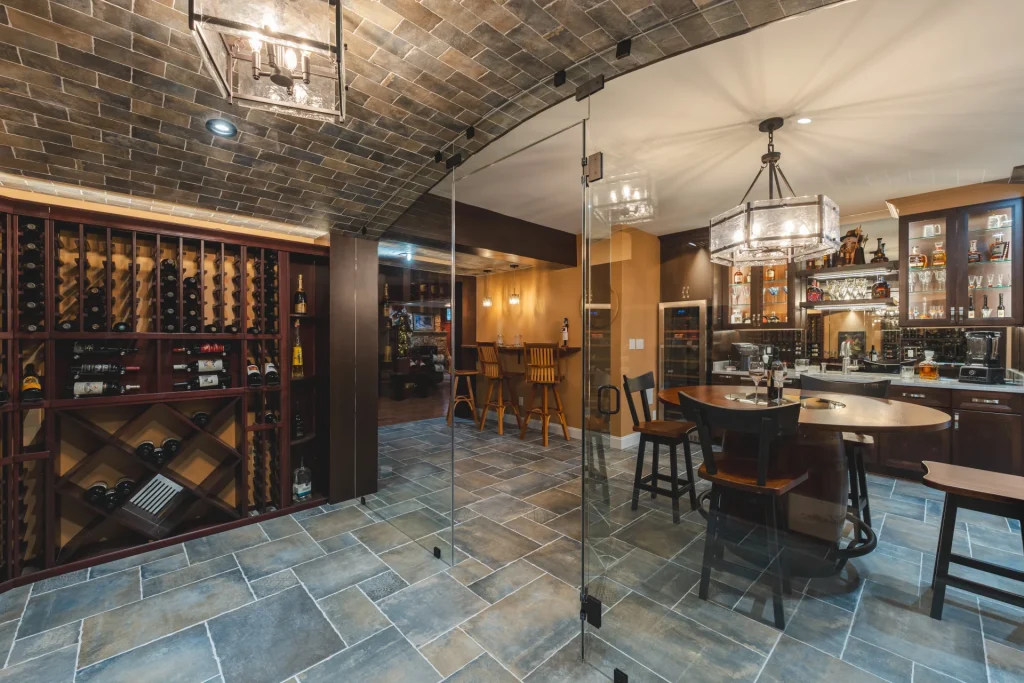
Basement remodeling is one of the best examples of why service coordination matters. A basement is rarely just one room. It may include a family room, wet bar, guest bedroom, bathroom, gym, office, storage area, laundry zone, mechanical room and media space. Each part of the basement affects the others. If a bedroom is added, egress needs to be considered. If a bathroom is added, plumbing and drainage matter. If a wet bar is added, electrical, countertop and cabinetry details enter the plan. If a theater area is added, lighting and acoustic choices become important.
Many Northern Virginia basements also have practical constraints that need early attention. Low ductwork, structural posts, foundation walls, moisture concerns, uneven slabs, utility access and stair placement can all shape the design. A homeowner may imagine a wide-open entertainment space, but the best plan may use posts as part of a bar, define zones with lighting, create storage behind finished walls or place a bathroom where plumbing makes the most sense.
A design-build basement remodel is valuable because it turns constraints into design decisions. Instead of treating mechanical systems as obstacles, the team works them into the plan. Instead of waiting until construction to discover framing issues, the team evaluates them during planning. Instead of adding random finishes, the design connects the basement to the rest of the home.
The basement remodeling service is a useful internal link for homeowners who want to turn lower-level space into a finished area that supports guests, work, hobbies or entertaining.
Service Comparison: Which Remodeling Service Fits the Goal?
Most homeowners begin with a room name: kitchen, bathroom, basement or addition. A better first question is what the remodel needs to solve. Is the problem storage, layout, resale value, aging-in-place comfort, entertaining space, outdated finishes or unused square footage? The answer helps define the right service and scope.
| Homeowner Goal | Best-Fit Service | Key Planning Focus | Common Add-On Decisions |
|---|---|---|---|
| Improve daily cooking, storage and entertaining | Kitchen remodeling | Cabinet layout, island size, appliance placement, lighting and countertops | Pantry cabinets, beverage center, flooring continuation, backsplash upgrade |
| Create a safer or more comfortable bathroom | Bathroom remodeling | Shower design, vanity storage, waterproofing, ventilation and lighting | Curbless shower, heated floor, linen cabinet, grab bar blocking |
| Finish unused lower-level space | Basement remodeling | Moisture control, ceiling plan, egress, room zones and mechanical access | Wet bar, guest bath, bedroom, gym, office, media room |
| Add more living area or improve the home footprint | Home addition remodeling | Structure, exterior integration, interior flow and permit planning | Mudroom, primary suite, expanded kitchen, sunroom, porch connection |
| Update multiple rooms with one consistent look | Design-build remodeling | Whole-home finish palette, schedule coordination and phased planning | Flooring, trim, lighting package, paint, hardware and doors |
This comparison is helpful because the most efficient remodel is not always the smallest remodel. Sometimes replacing cabinets alone will not solve a kitchen if the layout is the real problem. Sometimes a bathroom needs better lighting and storage more than a larger shower. Sometimes a basement should be planned with a future bathroom rough-in even if the homeowner does not build it immediately. The right service conversation starts with the goal, not just the room label.
How Design, Products and Construction Work Together
A remodeling project has three major layers: design, products and construction. Design defines the layout and feel. Products define the materials and fixtures. Construction turns the plan into a built space. If one layer moves without the others, the project can become confusing. A design may call for a cabinet size that is not available. A product may require installation clearances that were not drawn. A construction change may affect the finished look. Design-build remodeling keeps these layers in conversation.
For example, a kitchen island is not just an island. It is cabinet sizing, aisle clearance, seating overhang, countertop support, pendant light placement, outlet code, dishwasher clearance, trash pull-out location and sightline from the adjacent room. A shower is not just tile. It is drain placement, slope, waterproofing method, valve height, niche location, curb or curbless entry, glass swing, towel access and lighting. A basement wet bar is not just cabinets. It is plumbing, electrical, refrigeration, countertop seams, backsplash protection, flooring and entertainment flow.
When a homeowner works with separate parties, these connections may be discussed late. When one remodeling team coordinates them, they are part of the early planning conversation. That makes the homeowner’s decisions more informed and reduces surprises during construction.
Planning Table: What to Decide Before the Estimate
Homeowners do not need to know every finish before scheduling a remodeling consultation, but they should think through the major priorities. The table below shows the decisions that help a design-build team prepare a more useful first conversation.
| Planning Question | Why It Matters | Helpful Homeowner Notes |
|---|---|---|
| Which room or rooms are included? | The scope affects design time, trade scheduling, material selection and budget range. | List must-have rooms and optional rooms separately. |
| What is not working today? | The pain point guides the design more than inspiration photos alone. | Storage, lighting, traffic flow, outdated finishes, safety, resale or entertaining. |
| Will walls, plumbing or electrical move? | Structural and utility changes can change cost and timeline. | Mark what you hope to move, then let the team evaluate feasibility. |
| What finish level feels right? | Cabinet, countertop, tile and fixture choices drive the budget. | Think good, better, best rather than one exact number at the start. |
| Is there a deadline? | Events, moves, holidays and family schedules can influence planning. | Share hard deadlines early, but leave room for design and material lead times. |
| Will the family live in the home during work? | Construction logistics affect dust control, temporary access and sequencing. | Discuss pets, children, work-from-home needs and parking constraints. |
The strongest consultations happen when the homeowner brings priorities, not a perfect solution. A design-build team can help turn those priorities into a scope, layout, selection path and construction plan.
When Multiple Services Should Be Planned Together
Not every homeowner needs a large remodel. Many excellent projects focus on one room. However, there are times when planning multiple services together is smarter. If the kitchen flooring runs into the foyer and family room, the floor decision should be planned beyond the kitchen. If the main-level powder room sits beside the kitchen, it may make sense to update it during the same project. If a basement remodel includes a bathroom and wet bar, plumbing and cabinetry should be coordinated together. If a home addition expands the kitchen, the kitchen design and addition structure must be planned as one project.
Planning together does not always mean building everything at the same time. It can also mean creating a phased roadmap. A homeowner may remodel the kitchen this year, the primary bathroom next year and the basement later. If the finish palette, flooring strategy, electrical plan and cabinetry style are considered early, each phase can feel connected. This is especially important in open-concept homes, townhomes and luxury properties where one room is visible from another.
Elegant Kitchen and Bath’s broader service mix helps with this kind of planning. Homeowners can start with a kitchen, then discuss how it connects to flooring, lighting, nearby bathrooms, basement entertaining space or future additions. The more connected the home feels, the more intentional the remodel looks.
Budget Clarity Without Guesswork
Budget is one of the hardest parts of remodeling because early online numbers are often too broad to be useful. A kitchen remodel can vary based on cabinet line, layout changes, countertop material, appliance package, flooring, electrical work and finish level. A bathroom can vary based on shower size, tile selection, waterproofing method, vanity style, plumbing changes and glass. A basement can vary based on square footage, bathroom additions, egress, wet bar, ceiling work and moisture control. A design-build process helps narrow the conversation by connecting the desired outcome to real scope decisions.
That does not mean every detail is fixed in the first meeting. It means the homeowner gets a more honest framework. Instead of guessing from a generic national average, the team can explain which decisions are likely to move the budget most. Moving plumbing usually matters. Cabinet construction matters. Countertop material matters. Tile labor matters. Basement bathrooms matter. Structural changes matter. Finish level matters. A coordinated team can show where to invest and where to simplify without weakening the design.
Good budget planning also protects the homeowner from mismatched selections. A homeowner might choose a premium countertop but overlook lighting, or choose luxury tile but underfund storage, or spend heavily on appliances while leaving the layout unchanged. Design-build planning helps balance the whole room so the finished project feels complete.
Questions to Ask a Remodeling Company Before You Start
Before choosing a remodeling partner, homeowners should ask questions that reveal how the company works, not just what it sells. A beautiful portfolio is important, but process matters just as much. Ask who handles design. Ask who coordinates selections. Ask how measurements are verified. Ask how cabinet orders are checked. Ask how schedule updates are communicated. Ask how change decisions are documented. Ask who manages trade sequencing. Ask how the team protects the home during construction.
It is also wise to ask whether the company has experience with the specific project type. Kitchen remodeling, bathroom remodeling, basement remodeling and home additions each require different knowledge. A company that understands multiple services can often anticipate how one decision affects another. That is a major advantage when a project includes more than one room.
Homeowners can also review recent remodeling projects and explore service areas to understand how the company presents its work locally. The right partner should make the process feel clearer, not more confusing.
Why This Matters for Northern Virginia Homes
Northern Virginia remodeling has a unique mix of property types and homeowner expectations. Many homes have strong resale pressure because the region is competitive. Many families need better use of existing square footage because moving can be expensive. Many older homes need layout improvements, while newer homes may need personalization beyond builder-grade finishes. Condos, townhomes and single-family homes all require different planning conversations.
Local remodeling also involves practical realities such as permitting, HOA expectations, parking, delivery access, material lead times and the age of existing systems. A design-build team that regularly works in the region can help homeowners think through those details earlier. The remodel is not just designed for a photo; it is designed for the neighborhood, the home type and the way the homeowner lives.
This is why a service-based blog topic matters. Homeowners searching for remodeling help are often not ready to choose a cabinet color yet. They are trying to understand the process, compare service types and decide whether one coordinated company can handle the project. This article answers that question while guiding them toward the main Elegant Kitchen and Bath services.
FAQ: Design-Build Remodeling Services
What is the difference between design-build remodeling and hiring separate contractors?
Design-build remodeling connects design planning, product selection and construction coordination through one team. Hiring separate contractors can work, but the homeowner often has to manage communication between parties. A design-build approach usually creates clearer accountability and better coordination.
Can one company handle a kitchen, bathroom and basement remodel?
Yes, if the company has the right service structure and trade coordination. Elegant Kitchen and Bath offers kitchen remodeling, bathroom remodeling, basement remodeling and home addition remodeling services, which makes it easier to plan multi-room projects with a consistent design direction.
Is design-build remodeling only for large projects?
No. It is useful for single-room projects too. Even a bathroom remodel benefits from coordinated planning because waterproofing, tile, plumbing, lighting and storage all affect the final result.
Should I know my full budget before the first consultation?
You should have a comfort range, but you do not need every number solved. A remodeling consultation can help connect your goals to realistic scope decisions and show which choices influence the budget most.
What should I prepare before contacting a remodeling company?
Prepare a list of goals, pain points, must-have features, preferred timeline, inspiration photos and any known constraints. Photos of the existing space are also helpful. The team can guide the rest.
Where should I start if I need help with several rooms?
Start with the room that creates the biggest daily problem, then discuss how it connects to the rest of the home. For many homeowners, that means starting with the kitchen or primary bathroom and creating a phased plan for other spaces.
Final Thoughts: A Better Remodel Starts With a Better Plan
A successful remodel is not only about choosing beautiful materials. It is about making hundreds of decisions in the right order, with the right information, and with a team that understands how design choices become construction details. That is why design-build remodeling services are so helpful for Northern Virginia homeowners. They bring layout, materials, schedule, budget and installation into one coordinated process.
Whether the goal is a new kitchen, a safer bathroom, a finished basement, a home addition or a multi-room remodel, Elegant Kitchen and Bath can help homeowners think through the project with a practical plan. The next step is to review the company’s main services, explore completed projects and schedule a conversation about the home’s goals. A remodel becomes much easier when the path from idea to finished space is clear.
Homeowners ready to discuss a project can start with the kitchen remodeling, bathroom remodeling, basement remodeling or home addition remodeling service pages, then contact the team for a more specific plan.
2026 Design-Build Remodeling Service Fit Checklist
Design-build remodeling is most useful when the project has multiple moving parts: layout changes, cabinet ordering, countertop fabrication, bathroom waterproofing, basement planning, or home addition coordination. A single coordinated process can reduce handoff gaps between design decisions and field installation.
| Project Scope | Why Design-Build Helps | Planning Link |
|---|---|---|
| Kitchen remodel | Aligns layout, cabinets, counters, lighting, and trades | Kitchen remodeling |
| Bathroom remodel | Coordinates design, waterproofing, fixtures, and finishing | Bathroom remodeling |
| Home addition | Connects structure, permits, layout, and finishes | Home addition remodeling |