
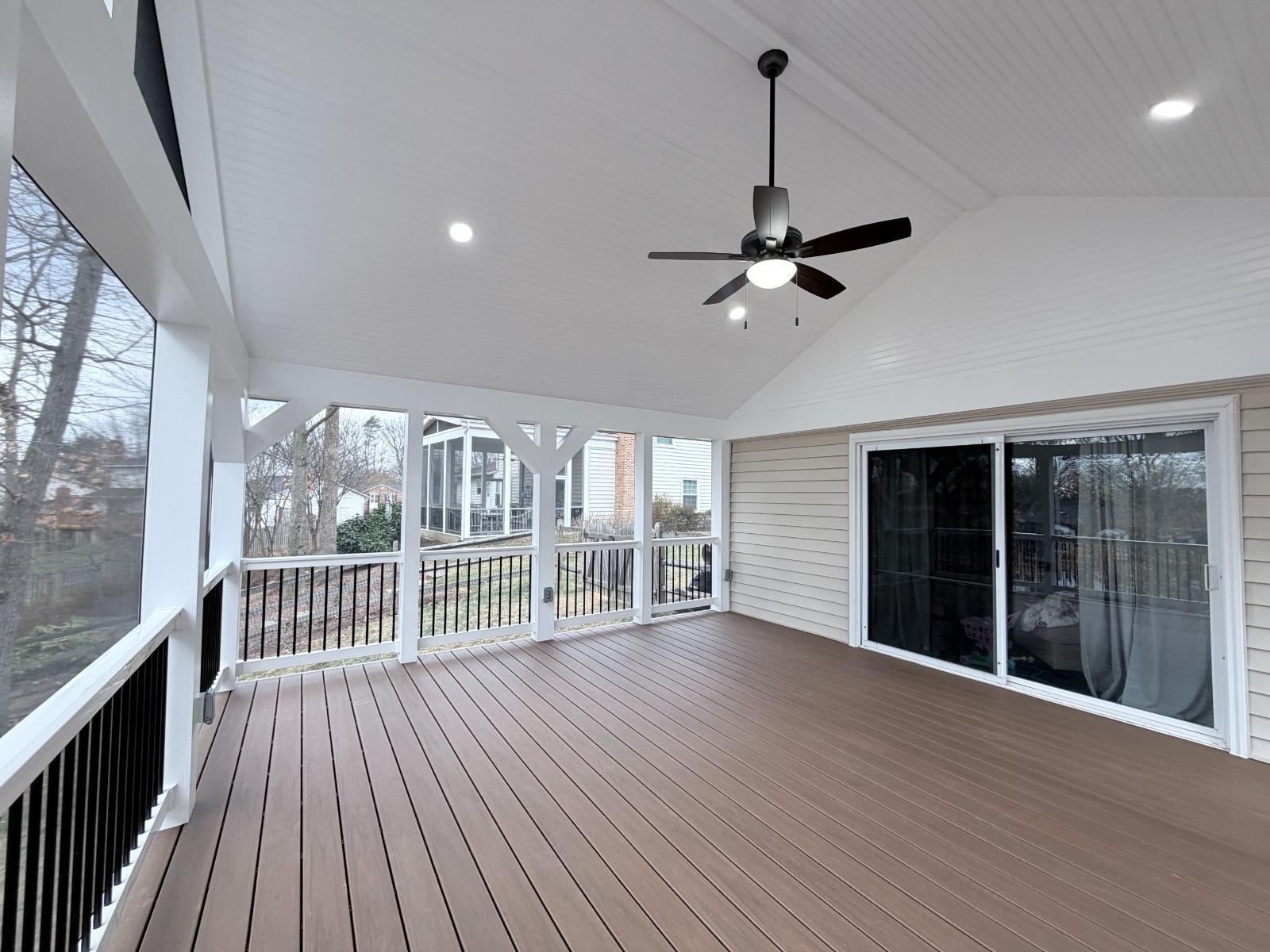
A deck can change how a Northern Virginia home feels in everyday life. It can create a dining area, grilling zone, covered porch, screened retreat, outdoor lounge, or transition between the house and yard. For homeowners in Herndon, Reston, Ashburn, Sterling, Chantilly, Centreville, Fairfax, Vienna, McLean, Great Falls, Leesburg, and nearby communities, good decking can make outdoor living easier for much of the year.
But decking is not just a surface upgrade. A safe, comfortable deck depends on structure, footings, framing, flashing, drainage, stairs, railings, fasteners, material selection, permits, and long-term maintenance. If those decisions are rushed, the deck may look finished on day one but become uncomfortable, costly, or unsafe later.

Decking Planning Snapshot
Before choosing composite boards, rail colors, or furniture, homeowners should understand the decisions that shape the entire project. Deck design, safety, permitting, and material performance are all connected.
| Planning Area | Why It Matters | Common Mistake |
|---|---|---|
| Structure and framing | Determines long-term safety, load capacity, and deck lifespan. | Replacing boards while ignoring damaged framing below. |
| Permits and code | Affects footings, stairs, railing height, guardrails, ledger attachment, and inspections. | Assuming a replacement deck does not need review. |
| Material selection | Controls maintenance, heat, slip resistance, color fading, and durability. | Choosing decking only by color or upfront cost. |
| Water management | Protects the house, ledger area, stairs, framing, and nearby landscaping. | Forgetting flashing, drainage, and slope conditions. |
| Outdoor function | Determines size, traffic flow, lighting, shade, and furniture layout. | Building a deck that looks good but feels cramped. |
Deck Project Decision Flow
Use this sequence before selecting board color or railing style. It keeps the project safe, practical, and easier to price accurately.
Mistake 1: Looking Only at the Deck Boards
Many homeowners focus on the visible surface first: color, texture, board width, and railing style. Those choices matter, but they are not the whole deck. The framing below the boards is what carries the structure. If posts, beams, joists, ledger connections, hangers, or fasteners are weak, replacing the top boards does not solve the real problem.
Before a deck is repaired, resurfaced, or replaced, the structure should be reviewed. Signs such as soft spots, loose rails, rusted hardware, movement, sagging, rot, cracked posts, or poor ledger flashing should be taken seriously.
If the existing structure is in good condition, resurfacing may make sense. If the framing is compromised, a full replacement may be the safer long-term decision. This is the difference between making a deck look better and making it perform better.
Mistake 2: Skipping Permit and Code Review
Deck projects often involve permit and code requirements. These can affect footing depth, ledger attachment, guardrails, stair geometry, landing areas, post sizing, joist spans, beam sizing, and inspection steps. Requirements can vary depending on local jurisdiction, deck height, project scope, and whether the work is a repair, replacement, expansion, or new build.
Skipping permit review can create problems later, especially when selling the home or making future improvements. More importantly, code requirements exist because decks carry people, furniture, grills, snow loads, and movement over time.
Homeowners planning a larger outdoor living project may also want to review how decking connects with home addition remodeling, screened porches, and covered outdoor spaces.
Mistake 3: Choosing Decking Material Only by Price
Decking material should be selected for the home, budget, sun exposure, maintenance expectations, and how the deck will be used. The cheapest option is not always the best value if it requires frequent staining, sealing, repair, or replacement.
| Material Type | Best For | Watch For |
|---|---|---|
| Pressure-treated wood | Budget-conscious projects and traditional wood appearance. | Ongoing sealing, staining, checking, splinters, and maintenance. |
| Cedar or premium wood | Natural warmth and upgraded appearance. | Higher maintenance, weathering, and material movement. |
| Composite decking | Lower maintenance, consistent boards, and long-term durability. | Heat under direct sun, color choice, expansion, and installation specs. |
| PVC decking | Moisture resistance and low maintenance in exposed conditions. | Cost, feel underfoot, and color/texture preference. |
| Aluminum or specialty systems | Specific performance needs, drainage systems, or modern designs. | Budget, availability, and design compatibility. |
The right material depends on the project. A shaded deck near mature trees has different needs than a full-sun deck used for grilling. A pool-adjacent deck has different safety needs than a small second-story balcony. Material choice should match real conditions.
Mistake 4: Underplanning Stairs, Railings, and Traffic Flow
Deck stairs and railings shape how safe and comfortable the space feels. A deck may have enough square footage, but if the stairs land in the wrong place or the railings interrupt furniture placement, the outdoor area can feel awkward.
Traffic flow should be planned before framing. Where will people walk from the kitchen? Where will the grill go? Will guests move from the deck to the yard? Does the stair location work with landscaping, patios, doors, and driveway access? Is there enough landing space?
Railings also affect sightlines. Some homeowners want more privacy. Others want open views into the yard. Railing material, height, color, and spacing should fit the home and the way the deck will be used.
Mistake 5: Forgetting Shade, Privacy, and Weather Exposure
A deck that is beautiful but too hot, too exposed, or too visible may not be used as often as expected. Northern Virginia summers can make full-sun decking uncomfortable during peak hours. Nearby homes, roads, and yards can also affect privacy.
For more outdoor planning ideas, see our guide to outdoor living remodels in Northern Virginia.
Mistake 6: Ignoring the Ledger and House Connection
The ledger is one of the most important parts of an attached deck. It connects the deck to the house. If ledger attachment, flashing, or water protection is wrong, the deck and the home can both be affected.
Water intrusion at the house connection can damage framing over time. A deck project should include proper flashing details, fasteners, and inspection of the existing connection. This is especially important when replacing an older deck or expanding an existing one.
Mistake 7: Treating Deck Lighting as an Afterthought
Deck lighting improves safety and atmosphere. It helps people use stairs, move around railings, grill after sunset, and enjoy the outdoor space in the evening. But lighting is easiest to plan before the deck is built.
Options may include stair lights, post cap lights, under-rail lighting, wall sconces, recessed porch lighting, path lighting, and low-voltage landscape lighting. Electrical planning should be coordinated with outlets, switches, fans, heaters, audio, and any covered porch features.

Mistake 8: Building Too Small for Real Furniture
A deck may look large on paper but feel crowded once furniture, grills, planters, doors, stairs, and traffic paths are added. Dining tables need room for chairs to pull out. Grills need clearance. Lounge furniture needs circulation space. Doors need swing or sliding access.
Before finalizing deck size, homeowners should map furniture and walking paths. A few extra feet can make a major difference in comfort. On the other hand, a larger deck should still feel proportionate to the home and yard.
Mistake 9: Not Comparing Repair, Resurface, and Replacement
Not every deck needs full replacement. Not every deck should be repaired. The right choice depends on condition, age, structure, safety, material goals, and future plans.
| Option | When It May Make Sense | When to Be Careful |
|---|---|---|
| Repair | Localized damage, a few boards, isolated railing issues, or small hardware fixes. | If structural framing, ledger, posts, or stairs show broader problems. |
| Resurface | Framing is solid, layout works, and the homeowner wants upgraded boards/rails. | If the frame is old, undersized, rotted, or poorly flashed. |
| Replace | Deck is unsafe, poorly planned, too small, outdated, or structurally compromised. | If the homeowner has not yet planned size, material, stairs, and permits. |
| Expand or cover | Homeowners want a larger outdoor living area, screened porch, or covered space. | If zoning, footings, roof tie-in, drainage, and budget are not reviewed early. |
If you are comparing options, our earlier guide on whether it is cheaper to repair or replace a deck can help frame the decision.
Mistake 10: Forgetting Long-Term Maintenance
Every decking material needs some level of care. Wood may need cleaning, sealing, staining, and board replacement. Composite and PVC require cleaning, proper fastener installation, and attention to manufacturer requirements. Railings, stairs, lighting, drainage, and hardware should also be maintained.
A smart deck design should be realistic about maintenance. If a homeowner does not want to stain or seal regularly, that should influence material selection. If the deck sits under trees, cleaning needs may be different. If the deck gets strong afternoon sun, heat and color choice matter.
Decking Readiness Checklist
How Decking Connects With Larger Remodeling Plans
Decking is often part of a larger home improvement plan. A deck may connect to a kitchen, dining area, family room, screened porch, patio, outdoor kitchen, or home addition. If the indoor layout is also changing, it can help to coordinate decking with kitchen remodeling, home addition remodeling, or a broader whole-home remodeling plan.
For homeowners exploring project examples, see this deck and screened porch home addition project.
Decking in Northern Virginia
Elegant Kitchen and Bath helps Northern Virginia homeowners plan decking and outdoor living projects that balance structure, comfort, code requirements, material performance, and design. Whether the goal is a replacement deck, a safer stair layout, a larger entertainment area, or a covered porch connection, the details matter.
Homeowners can visit the showroom at 2445 Centreville Rd STE 46, Herndon, VA 20171 to discuss materials, project scope, layout ideas, and the best next step for a decking project.
A well-planned deck should feel safe, comfortable, and connected to the way the home is used. Avoiding the common mistakes early can help the finished space last longer and serve the family better.
Frequently Asked Questions About Decking
Should I repair or replace my deck?
It depends on the condition of the framing, ledger, posts, stairs, railings, and fasteners. Small surface issues may be repairable, but structural damage, rot, movement, or unsafe stairs may make replacement the better choice.
Does a deck project need a permit in Northern Virginia?
Many deck projects require permits, especially new decks, replacements, expansions, elevated decks, structural changes, stairs, and guardrails. Requirements vary by jurisdiction and project scope.
What decking material is best for low maintenance?
Composite and PVC decking are common low-maintenance options compared with traditional wood. The best choice depends on budget, sun exposure, color preference, heat concerns, moisture exposure, and the desired appearance.
What should be inspected before resurfacing a deck?
Before resurfacing, the framing, joists, beams, posts, ledger, flashing, stairs, fasteners, and rail connections should be checked. New boards should not be installed over an unsafe frame.
Can a deck be converted into a screened porch?
Sometimes, but the existing structure must be reviewed. A screened porch adds roof loads, posts, framing, electrical planning, drainage considerations, and code requirements that may exceed what the original deck was designed to support.