Category: Blog

Best Flooring for Kitchen and Bathroom Remodels: LVP, Tile, Hardwood and Heated Floors Compared

Flooring can quietly make or break a kitchen or bathroom remodel. It affects comfort, cleanup, water resistance, sound, resale appeal and the way the whole room feels underfoot. Cabinets, countertops and fixtures often get the most attention, but flooring is the surface homeowners live on every day. It also has to coordinate with adjacent rooms, especially in open Northern Virginia homes where kitchens connect to family rooms, dining areas, hallways and basements.

The best flooring choice depends on the room, moisture level, household routine, design style and budget. Porcelain tile, luxury vinyl plank, hardwood and heated flooring systems can all be good choices, but they solve different problems. A bathroom may need maximum water resistance. A kitchen may need comfort and easy cleaning. A basement may need moisture-aware materials. A main-level remodel may need flooring that flows through multiple spaces.

This guide compares popular flooring options for kitchen and bathroom remodels, including LVP, porcelain tile, hardwood and heated floors. It also explains where each material works best and what homeowners should decide before installation begins.

Flooring options for a home renovation and kitchen remodel
The best flooring choice balances water resistance, comfort, maintenance, style and room use.

How to Choose Flooring for a Remodel

Flooring should be chosen after the remodel goals are clear. Is the room a high-traffic family kitchen? A guest bathroom? A primary bathroom with a curbless shower? A basement laundry area? A kitchen that opens into hardwood living spaces? Each situation points toward different priorities.

Water exposure is the first question. Bathrooms, laundry areas, mudrooms and basements need materials that handle moisture well. Kitchens do not usually have standing water, but they do face spills, sink splashes, pet bowls and frequent cleaning. Comfort is the second question. Some homeowners love the solid feel of tile. Others prefer the warmer feel of wood or luxury vinyl plank. Maintenance is the third question. A beautiful floor that requires care the household will not do can become frustrating quickly.

Design continuity matters too. In many Northern Virginia homes, the kitchen is not a closed room. Flooring may need to connect to an entry, hallway, family room or dining space. A floor that looks great in one room but clashes with the rest of the level can make the remodel feel disconnected.

Flooring Options Compared

Flooring type Best rooms Strengths Watch-outs
Porcelain tile Bathrooms, kitchens, laundry rooms, mudrooms Excellent water resistance, durable, many styles Can feel hard or cool underfoot.
Luxury vinyl plank Kitchens, basements, bathrooms, busy family areas Comfortable, water resistant, easy to clean Quality varies; subfloor prep still matters.
Hardwood Kitchens, dining rooms, living spaces, hallways Warm, timeless, strong resale appeal Not ideal for wet bathrooms or moisture-prone areas.
Heated flooring Primary bathrooms, tile bathrooms, luxury suites Adds comfort and a premium feel Requires planning before tile installation.
Kitchen and bathroom flooring choices infographic comparing tile luxury vinyl plank hardwood and heated floors
Infographic: compare water resistance, comfort, maintenance and best room fit before choosing flooring.

Porcelain Tile: Durable and Water Resistant

Porcelain tile is one of the strongest choices for bathrooms because it handles moisture well and comes in a wide range of styles. It can look like stone, concrete, marble, terrazzo or wood. It works for bathroom floors, shower floors, laundry rooms, mudrooms and kitchens where durability is the top priority.

For bathrooms, tile selection should consider slip resistance, grout lines, maintenance and scale. A large-format tile can make a bathroom feel cleaner and more open, but shower floors often need smaller tiles or mosaics to follow the slope to the drain. A polished tile may look elegant but can be slippery when wet. A matte or textured tile may be safer and easier to live with.

Tile can feel cold underfoot, especially in winter. That is why many homeowners pair bathroom tile with radiant heat. Tile is also hard, which can matter in kitchens where people stand for long periods. Area rugs, anti-fatigue mats and good layout planning can help, but homeowners should be honest about comfort expectations.

Luxury Vinyl Plank: Practical for Busy Homes

Luxury vinyl plank, often called LVP, has become popular because it offers water resistance, comfort and wood-look style at a practical price point. It can be a strong option for kitchens, basements, laundry rooms and family spaces. It is softer and warmer than tile, easier to clean than many natural materials and often more forgiving in busy households.

The key is quality. Not all LVP products perform the same. Wear layer, core construction, locking system, texture, plank thickness and installation method all affect the final result. A higher-quality product with good subfloor preparation can look much better than a low-cost product installed quickly over uneven surfaces.

LVP can work in bathrooms, but installation details matter. Edges, transitions, toilets, tubs and vanities should be handled carefully. For primary bathrooms with large showers or heavy water exposure, porcelain tile may still be the better long-term choice. For powder rooms, basement bathrooms and family spaces, LVP can be very practical.

Kitchen flooring installation process in a Northern Virginia remodel
Installation quality and subfloor preparation are just as important as the flooring material.

Hardwood: Warm, Timeless and Best in the Right Rooms

Hardwood remains a favorite for main-level living spaces because it feels warm and timeless. In kitchens that open into family rooms or dining areas, continuing hardwood can create a seamless look. It can also support resale appeal because many buyers like real wood flooring in living areas.

The challenge is moisture. Hardwood can work in kitchens when homeowners accept normal care, wipe spills quickly and use rugs near sinks or dishwashers. It is usually not the best choice for full bathrooms, wet rooms, laundry areas or basements with moisture concerns. Engineered hardwood may offer more dimensional stability than solid hardwood in some conditions, but it still needs respect around water.

Hardwood also needs finish planning. Color, plank width, sheen and species affect the style. Very dark floors can show dust and scratches. Very light floors can feel modern and airy. Medium warm tones often age well. If the remodel is only replacing kitchen flooring, matching existing hardwood can be more complicated than choosing a completely new floor for a larger area.

Heated Floors: Comfort Upgrade for Bathrooms

Radiant heated flooring is one of the most appreciated bathroom comfort upgrades. It works especially well under tile because tile conducts heat and otherwise can feel cold. Heated floors are common in primary bathrooms, spa-style bathrooms and luxury remodels where comfort matters as much as appearance.

Heated floors should be planned before installation begins. The system, thermostat location, electrical requirements, floor buildup and tile layout all need coordination. It is much easier to include radiant heat during a remodel than to add it later. Homeowners should also think about where heat is useful. Heating under vanities or built-ins may not be necessary, while open standing areas near the vanity and shower can make a big difference.

Heated floors do not replace good ventilation, waterproofing or tile installation. They are a comfort feature, not a moisture solution. In a well-planned bathroom, though, they can make the room feel noticeably more comfortable every morning.

Bathroom Flooring Priorities

Bathroom flooring needs to handle moisture first. That means material selection, waterproofing, transitions and installation details all matter. Porcelain tile is usually the safest premium choice for full bathrooms because it pairs well with waterproofing systems and shower design. LVP can work in many bathrooms, especially powder rooms and lower-water-use spaces, but the installation must be appropriate for the room.

Slip resistance is also important. A floor can look beautiful and still be a poor fit if it becomes slick when wet. Homeowners should ask about finish texture and consider how the room will be used by children, older adults or guests. For aging-in-place bathrooms, flooring should be part of the safety plan along with lighting, shower entry, grab bar blocking and layout.

For more bathroom planning, homeowners can review Elegant Kitchen and Bath’s bathroom remodeling services, the guide to aging-in-place bathroom remodeling and the article on wet room bathroom remodels.

Kitchen Flooring Priorities

Kitchen flooring needs to survive traffic, food spills, chair movement, pets, appliance work and frequent cleaning. It also needs to connect visually with cabinets, countertops and adjacent rooms. In open layouts, kitchen flooring often becomes part of the whole main-level design. A material that stops abruptly at the kitchen edge may feel less refined unless the transition is intentional.

Hardwood can be beautiful in kitchens when it continues from nearby rooms. LVP can be a practical choice for families that want water resistance and comfort. Porcelain tile can be excellent for durability, especially in kitchens with outdoor access or heavy traffic. The best choice depends on how the kitchen is used, not only how it photographs.

Floor color should be tested with cabinet samples and countertop samples. A warm wood-look floor can change the appearance of white cabinets. A gray tile can make a warm countertop look different. A patterned floor can compete with a dramatic backsplash. Flooring is a major surface, so it should be chosen with the whole palette in mind.

Flooring installation by Elegant Kitchen and Bath
Flooring should be coordinated with cabinets, countertops, transitions and the rooms nearby.

Subfloor and Installation Details

Even the best flooring can fail if the subfloor is not prepared correctly. Uneven surfaces, moisture problems, weak framing, old adhesive, damaged underlayment and poor transitions can affect the final installation. Tile needs proper substrate and movement planning. LVP needs a clean, flat surface. Hardwood needs moisture awareness and expansion planning. Heated floors need electrical and layout coordination.

Transitions deserve attention. Where does the kitchen floor meet the hallway? How does the bathroom floor meet the bedroom? Will a height change create a trip point? Are there existing floors that need to be matched? These details are not exciting, but they make the finished remodel feel professional.

For basement remodels, moisture planning is especially important. Flooring should be chosen for below-grade conditions. Materials that perform well upstairs may not be the best fit downstairs. Homeowners planning lower-level projects can also review Elegant Kitchen and Bath’s basement remodeling services.

Which Flooring Should You Choose?

Choose porcelain tile if the room needs maximum water resistance, long-term durability and a premium bathroom feel. Choose luxury vinyl plank if comfort, water resistance, family practicality and budget control are important. Choose hardwood if the kitchen connects to living spaces and a warm continuous look matters. Choose heated floors as an upgrade when tile comfort is a priority, especially in primary bathrooms.

The best remodels do not choose flooring in isolation. Flooring should connect with layout, cabinets, countertops, lighting, plumbing fixtures and long-term maintenance expectations. Elegant Kitchen and Bath can help homeowners compare flooring options as part of a complete kitchen remodel, bathroom remodel, basement remodel or broader home addition remodeling plan. The flooring products page and project gallery are useful next steps for inspiration.

Flooring Planning Checklist

  • Identify the room’s water exposure and traffic level.
  • Compare comfort underfoot, not only appearance.
  • Review slip resistance for bathrooms and wet areas.
  • Check subfloor condition before final material selection.
  • Coordinate flooring color with cabinets, countertops and wall color.
  • Plan transitions between rooms and floor heights.
  • Decide whether heated floors should be included before installation.
  • Choose materials based on real maintenance habits.

Frequently Asked Questions

What is the best flooring for bathroom remodels?

Porcelain tile is often the best all-around choice for full bathrooms because it is durable, water resistant and compatible with waterproofing systems. LVP can work in some bathrooms, especially powder rooms, when installed properly.

Is luxury vinyl plank good for kitchens?

Yes. Quality luxury vinyl plank can be a practical kitchen flooring choice because it is water resistant, comfortable, easy to clean and available in many wood-look styles.

Can hardwood be used in a kitchen?

Hardwood can be used in kitchens, especially when it continues from adjacent living spaces. Homeowners should wipe spills quickly and understand that hardwood is less water resistant than tile or LVP.

Are heated bathroom floors worth it?

Heated floors can be worth it in primary bathrooms and tile bathrooms where comfort is a priority. They should be planned before tile installation begins.

What flooring is best for a basement remodel?

Moisture-aware materials such as quality LVP or appropriate tile are often strong basement choices. The best option depends on slab condition, moisture risk, room use and comfort goals.

Quartz Countertops in Northern Virginia: Costs, Colors, Edge Profiles and Care Tips for 2026

Quartz countertops are one of the most requested surfaces in Northern Virginia kitchen remodels because they combine a polished look with practical everyday performance. Homeowners want a countertop that looks refined, handles busy family routines, supports cooking and entertaining, and does not require the sealing schedule that natural stone often needs. Quartz fits that need well when the color, slab layout, edge profile, sink detail and installation plan are chosen carefully.

That last part matters. Quartz is not just a product selection. It is part of the whole kitchen plan. Cabinet layout affects seam placement. Sink choice affects fabrication. Island size affects slab use. Backsplash decisions affect the finished look. Lighting changes how the veining appears. A quartz countertop can look simple in a showroom sample and very different once it spans a large island under real kitchen lighting.

This guide explains how to plan quartz countertops in Northern Virginia, including cost factors, colors, edge profiles, sink and faucet decisions, care tips, and the design details homeowners should review before ordering slabs.

Quartz countertop installation for a Northern Virginia kitchen remodel
Countertop planning should connect slab choice, cabinet layout, sink details and daily kitchen routines.

Why Quartz Works Well for Busy Kitchens

Quartz is an engineered surface made with mineral content, pigments and resin binders. The result is a nonporous countertop material that offers consistent performance and a wide range of design options. For many homeowners, quartz is appealing because it can deliver the look of light stone, marble-inspired veining, warm neutrals, dramatic dark surfaces or quiet solid colors without the maintenance expectations of many natural stones.

In Northern Virginia homes, quartz often works especially well in kitchens that need a balance of beauty and function. Families cook, host, work from the island, prepare school lunches and use the kitchen as a central living space. A countertop has to support all of that. Quartz is not indestructible, but it is durable, stain resistant and easier to maintain than many high-end surfaces.

The best quartz countertop projects start with lifestyle. A household that cooks daily may prioritize durability and easy cleanup. A homeowner designing a showpiece island may focus on dramatic veining and bookmatched movement. A compact kitchen may need a light quartz that keeps the room bright. A large open kitchen may need a surface that coordinates with flooring, cabinets, backsplash and adjacent living spaces.

Quartz Countertop Cost Factors

Quartz countertop pricing varies because the material is only one part of the project. Slab quality, brand, color group, thickness, edge profile, number of slabs, sink cutouts, cooktop cutouts, backsplash details, removal of existing counters, template complexity and installation access all affect the final cost. A simple perimeter countertop with a standard edge is very different from a large waterfall island with premium veining and multiple cutouts.

Homeowners should avoid comparing quartz only by square foot. A lower material price may not include fabrication, templating, sink cutouts, edge upgrades or installation details. It is better to compare complete scopes. The right question is not only “What does this quartz cost?” but “What does the installed countertop package include?”

Cost factor What it affects Planning tip
Quartz color and pattern Premium veining, rare looks and designer collections can cost more Compare large samples, not only small chips.
Number of slabs Large islands, long runs and seam planning may require extra material Review slab layout before approval.
Edge profile Decorative edges add fabrication time Keep edges simple for modern kitchens.
Sink and cooktop cutouts Cutouts require precise fabrication Select fixtures before templating.
Waterfall panels Island sides use additional slab material Confirm pattern direction and seam visibility.
Removal and access Existing countertop removal and site conditions affect labor Discuss elevator, stairs, parking and protection needs.

Choosing Quartz Colors

Quartz color should be chosen in the context of the whole room. Cabinet color, flooring, backsplash, wall color, hardware and lighting all change how the countertop appears. A bright white quartz can look crisp in a showroom and cooler in a north-facing kitchen. A warm gray can look balanced with wood cabinets and flat next to cool tile. A dramatic veined slab can be beautiful, but it needs enough visual breathing room.

Light quartz is popular because it can make kitchens feel larger and cleaner. White and off-white quartz pair well with many cabinet colors, from classic white to navy, green, walnut and black. Subtle veining gives the surface depth without overwhelming the room. For homeowners who want a timeless kitchen, a soft white or warm neutral quartz is often a strong choice.

Darker quartz can create contrast, especially on islands, wet bars or modern kitchens. Black, charcoal and deep gray surfaces can look sophisticated with lighter cabinets or warm wood tones. The tradeoff is that dust, crumbs and water marks may be more visible depending on the finish and lighting. Dark quartz should be sampled in the actual room whenever possible.

Marble-look quartz remains popular because it offers visual elegance with easier care. The key is scale. Some veining looks beautiful on a sample but too busy across a large island. Other patterns look quiet in a sample but perfect at full slab size. Homeowners should ask to see full slabs or large format images before final approval.

Light countertop veining detail for kitchen design planning
Veining should be reviewed at slab scale because movement can look very different from a small sample.

Edge Profiles: Simple Details That Change the Room

The edge profile is the finished shape along the countertop perimeter. It may seem like a small detail, but it affects the style of the kitchen. A simple eased edge feels clean and contemporary. A bevel adds a little definition. A rounded edge can feel softer and more traditional. More decorative profiles may suit classic kitchens but can feel heavy in a modern design.

For most quartz kitchens, simple edges are the safest and most versatile. They keep the focus on the countertop color, cabinets and backsplash. They are also easier to live with visually over time. Highly ornate edges can date a kitchen faster unless they are part of a deliberate traditional design.

Edge decisions should also consider safety and use. Families with children may prefer softened edges on islands and seating areas. Busy cooks may want edges that are easy to wipe. Large islands with seating should feel comfortable where people rest their arms. The edge profile is both a design detail and a daily touchpoint.

Sink, Faucet and Seam Planning

Quartz countertop planning should happen after major fixture choices are clear. Undermount sinks are common because they create a clean transition and make countertop cleanup easier. Farmhouse sinks, workstation sinks and large single-bowl sinks all require coordination before templating. Faucet holes, soap dispensers, filtered water taps and air switches also need to be planned in advance.

Seam placement is another important topic. Some kitchens can avoid obvious seams, while others need seams because of slab size, layout or access. A good seam plan considers visibility, support, pattern movement and installation realities. Homeowners should ask where seams are likely to fall before approving material. This is especially important with quartz patterns that have strong veining.

Large islands deserve extra attention. If the island requires more than one slab or includes a waterfall side, the veining direction and seam location should be reviewed carefully. The goal is a finished surface that looks intentional, not patched together.

Kitchen sink with quartz countertop and faucet planning details
Sink and faucet selections should be finalized before countertop templating.
Quartz countertop planning checklist infographic for Northern Virginia kitchen remodeling
Infographic: review budget, slab color, edge profile, sink details and care routine before ordering quartz countertops.

Quartz vs. Quartzite: Avoid the Common Confusion

Quartz and quartzite sound similar, but they are different materials. Quartz is engineered. Quartzite is natural stone. Quartzite can be extremely beautiful and durable, but it usually has different maintenance expectations and may need sealing depending on the stone. Quartz is typically chosen for consistency, nonporous performance and easier daily care. Quartzite is chosen for natural variation and stone character.

Neither material is automatically better for every project. The right choice depends on design goals, maintenance comfort, budget and the specific slab. Homeowners should confirm which material they are viewing and what care it requires. A showroom label or casual conversation can create confusion if the distinction is not clear.

Care Tips for Quartz Countertops

Quartz is low maintenance, but it still deserves proper care. Use mild soap and water for daily cleaning. Wipe spills promptly. Avoid harsh abrasive pads. Use cutting boards instead of cutting directly on the surface. Use trivets for hot pans, slow cookers, electric griddles and other heat sources. Quartz is durable, but extreme heat can damage resin binders or cause discoloration.

Homeowners should also be careful with strong chemicals. Oven cleaner, paint remover, drain cleaner and some aggressive degreasers can damage the finish. A quartz countertop should not be treated like an outdoor workbench. With normal kitchen care, it can stay beautiful for years.

Matte and honed finishes may show fingerprints or smudges differently than polished finishes. Dark quartz may show dust and water marks more than light quartz. That does not make those choices wrong, but it does mean homeowners should test samples under real lighting and think about cleaning expectations.

How Quartz Connects With Cabinets and Backsplash

Countertops rarely succeed alone. They need to coordinate with cabinets and backsplash. If the quartz has dramatic veining, the backsplash may need to be quieter. If the cabinets are simple and the backsplash is subtle, a more expressive quartz can become the feature. If the cabinets already have strong wood grain, a calmer quartz may keep the kitchen balanced.

Cabinet hardware also affects the countertop story. Warm brass, matte black, polished nickel and stainless finishes can all change the mood. Flooring matters too. A cool gray floor, warm wood-look tile or natural hardwood can shift the countertop’s undertone. This is why samples should be reviewed together, not one at a time.

For homeowners planning a broader kitchen remodel, Elegant Kitchen and Bath’s kitchen remodeling services, countertop services, quartz countertop options, cabinet products and project gallery are useful next steps.

Quartz Countertop Planning Checklist

  • Choose cabinet, flooring and backsplash direction before final quartz approval.
  • Review full slabs or large samples when possible.
  • Ask where seams are likely to be placed.
  • Finalize sink, faucet and accessory holes before templating.
  • Compare edge profiles with the style of the kitchen.
  • Plan overhangs for seating and island use.
  • Use trivets for heat-producing appliances and hot pans.
  • Confirm what is included in the installed countertop scope.

Frequently Asked Questions

Is quartz a good countertop for busy kitchens?

Yes. Quartz is popular for busy kitchens because it is nonporous, stain resistant, durable and easier to maintain than many natural stones. It still needs normal care, including protection from high heat.

Does quartz need to be sealed?

Quartz usually does not need sealing because it is an engineered nonporous surface. Homeowners should follow the manufacturer’s care instructions for cleaning and heat protection.

What quartz color is best for resale?

Soft white, warm neutral and subtle marble-look quartz options are usually the most broadly appealing because they coordinate with many cabinet and backsplash styles.

Can quartz be used for a waterfall island?

Yes. Quartz can work well for waterfall islands, but slab size, veining direction, seam placement and edge details should be reviewed carefully before fabrication.

What should be selected before countertop templating?

Sink model, faucet location, cooktop details, accessory holes, overhangs and edge profile should be decided before templating so the countertop can be fabricated correctly.

Design-Build Remodeling Services in Northern Virginia: How One Coordinated Team Makes Kitchen, Bathroom and Basement Projects Easier

Design-build remodeling services are especially valuable for Northern Virginia homeowners who want a beautiful remodel without managing a long chain of disconnected designers, cabinet suppliers, tile vendors, countertop fabricators, plumbers, electricians and installers. A kitchen remodel can affect flooring, lighting, walls, appliance locations and daily family routines. A bathroom remodel can involve waterproofing, ventilation, tile layout, plumbing rough-ins and storage. A basement remodel can touch egress, moisture control, ceiling height, electrical planning and entertainment zones. When those pieces are planned separately, details can fall through the cracks. When they are coordinated by one remodeling team, the project is easier to understand, easier to schedule and easier to finish with a consistent design vision.

Elegant Kitchen and Bath works in a category where homeowners usually need more than a single trade. The company’s service mix includes kitchen remodeling, bathroom remodeling, basement remodeling, home addition remodeling, cabinetry, countertops, tile, flooring, lighting, layout planning and project coordination. That matters because most real homes do not remodel in perfect isolated boxes. A kitchen may need a better pantry, a wider opening to the family room and new flooring that continues through the main level. A primary bathroom may need a closet adjustment, a linen cabinet and a shower design that fits the architecture of the home. A basement may need a guest bath, wet bar, bedroom conversion and storage plan in one project. Design-build thinking gives those decisions a single roadmap.

This guide explains what design-build remodeling means, how it applies to kitchen, bathroom, basement and whole-home projects, and why Northern Virginia homeowners often benefit from one coordinated remodeling partner. It also includes planning tables, service comparisons, questions to ask before scheduling a consultation and practical examples of how different remodeling services fit together.

What Design-Build Remodeling Means for a Homeowner

Design-build remodeling means the planning and construction sides of a project are connected from the beginning. Instead of hiring a designer to create a concept, then searching for a contractor to price it, then finding suppliers to make the selections work, the homeowner works with a team that understands both the look and the build. The design is not just a pretty drawing. It is shaped by measurements, product availability, construction sequence, utility locations, cabinet sizing, tile transitions, countertop fabrication, inspection requirements and the way the family will actually use the room.

In a kitchen, design-build thinking can prevent a common problem: choosing beautiful cabinets before confirming appliance clearances, island walking space, ventilation needs and countertop seams. In a bathroom, it can prevent a homeowner from falling in love with a shower layout that does not leave enough room for glass, niches, valves or waterproofing details. In a basement, it can catch practical constraints early, such as low duct runs, sump pump access, structural posts, drain locations or a bedroom egress requirement. The result is a plan that is more realistic from day one.

The approach also reduces decision fatigue. A remodel requires hundreds of choices: cabinet door style, finish, hardware, counter material, backsplash, grout color, fixture finish, lighting temperature, shower glass, vanity sizing, flooring, trim, paint, storage accessories and more. When those choices are guided by one team, the homeowner does not have to constantly translate decisions between separate parties. The remodel starts to feel like one project instead of a series of unrelated purchases.

For Northern Virginia homes, this is particularly useful because houses vary widely by age, neighborhood and layout. A Herndon colonial, a Vienna split-level, an Arlington condo, an Ashburn townhome and a McLean luxury property can all have different constraints. A design-build remodeler looks at those constraints alongside the homeowner’s goals and turns them into a practical scope of work.

Home remodeling project by Elegant Kitchen and Bath
Coordinated remodeling helps kitchens, bathrooms, basements and living areas feel connected instead of pieced together.

Why One Coordinated Remodeling Team Matters

The biggest benefit of a coordinated remodeling team is accountability. When the cabinet plan, countertop template, tile layout and construction schedule are handled through disconnected vendors, it can be hard for a homeowner to know who owns a problem. If the faucet is too close to the backsplash, is that the designer, plumber, countertop fabricator or cabinet installer? If the pantry cabinet blocks a light switch, who should have caught it? If the shower niche lands awkwardly in the tile pattern, who should adjust the layout? Design-build reduces those gray areas because the team responsible for the plan also understands the installation.

Another benefit is sequence control. Remodeling is not only about what gets installed; it is about when each trade arrives. Cabinets cannot be installed before walls are ready. Countertops cannot be templated before cabinets are set. Glass cannot be measured before tile is finished. Flooring transitions need to be coordinated before trim returns. If one step is missed, the next step can stall. A design-build team is thinking about that chain from the beginning, which helps reduce avoidable delays.

Homeowners also get a better design conversation. Instead of asking, “What do you like?” in isolation, the team can ask, “How do you cook, how much storage do you need, what is the existing structure doing, where are the mechanical systems, what are the budget priorities and which details will make the biggest difference?” That creates a remodel that is personal, but not impractical.

Elegant Kitchen and Bath’s remodeling process is built around this kind of coordination. The goal is not simply to sell cabinets or tile; it is to guide the homeowner from idea to finished space with a clear plan, realistic selections and a team that understands the full scope.

Kitchen Remodeling Services: Layout, Cabinets, Countertops and Daily Function

The kitchen is often the most complex room in a home remodel because it combines design, utilities, storage, traffic flow and heavy daily use. A kitchen remodeling service should do more than replace cabinets. It should study how the household cooks, cleans, stores food, hosts guests and moves between rooms. A beautiful kitchen that does not function well will frustrate the homeowner every day.

Key kitchen remodeling decisions include the work triangle, appliance placement, island size, cabinet storage, pantry capacity, lighting layers, countertop material, backsplash layout, ventilation, flooring and sightlines into nearby rooms. In Northern Virginia, many homeowners also want to open older kitchens to family rooms, create larger islands, add beverage centers, improve mudroom connections or update builder-grade cabinetry with custom or semi-custom storage.

A coordinated kitchen remodel also connects product selections with installation realities. A heavy countertop may need the right cabinet support. A waterfall island changes countertop fabrication. A large-format backsplash tile changes outlet placement and edge detailing. A panel-ready appliance affects cabinet ordering. Under-cabinet lighting needs power planning before walls close. When the design-build team is involved early, these details are planned instead of discovered late.

For homeowners comparing options, the kitchen remodeling service page is the natural next step after reading this guide. It explains the service more directly, while this blog article helps homeowners understand why coordination matters before they start.

Custom cabinetry and countertops for a kitchen remodeling service
Kitchen remodeling works best when cabinet storage, appliance clearances, countertop details and lighting are planned together.

Bathroom Remodeling Services: Waterproofing, Comfort and Long-Term Usability

Bathroom remodeling has a different kind of complexity. It may be a smaller room than the kitchen, but the details are unforgiving. Water management, ventilation, tile slope, shower curbs, plumbing access, glass measurements and vanity clearances all matter. A bathroom can look good on the surface and still fail if waterproofing or layout planning is weak.

A strong bathroom remodeling service starts by identifying the type of bathroom: powder room, hall bath, guest bath, primary bath, aging-in-place bath or luxury spa bath. Each has different priorities. A powder room may need impact and efficient fixture placement. A hall bath may need durable surfaces and shared storage. A primary bath may need a larger shower, better lighting, double vanity, private toilet zone, freestanding tub or heated floor. An aging-in-place bath may need a curbless shower, blocking for grab bars, improved lighting and non-slip surface planning.

Design-build coordination is especially valuable in bathrooms because every inch matters. Moving a toilet may affect plumbing cost. Enlarging a shower may reduce vanity space. Choosing a niche location depends on framing. Selecting a large tile affects slope, cuts and drain placement. Choosing a floating vanity affects wall blocking. A coordinated team can explain tradeoffs before the homeowner commits to a design.

Elegant Kitchen and Bath’s bathroom remodeling service connects layout, product selection and installation details so the finished room feels polished and performs well over time. That is the difference between a cosmetic update and a thoughtful remodel.

Bathroom remodeling options for Northern Virginia homeowners
Bathroom remodeling should coordinate layout, waterproofing, storage, lighting and finish selections from the start.

Basement Remodeling Services: Turning Unused Square Footage Into Real Living Space

Basement remodeling is one of the best examples of why service coordination matters. A basement is rarely just one room. It may include a family room, wet bar, guest bedroom, bathroom, gym, office, storage area, laundry zone, mechanical room and media space. Each part of the basement affects the others. If a bedroom is added, egress needs to be considered. If a bathroom is added, plumbing and drainage matter. If a wet bar is added, electrical, countertop and cabinetry details enter the plan. If a theater area is added, lighting and acoustic choices become important.

Many Northern Virginia basements also have practical constraints that need early attention. Low ductwork, structural posts, foundation walls, moisture concerns, uneven slabs, utility access and stair placement can all shape the design. A homeowner may imagine a wide-open entertainment space, but the best plan may use posts as part of a bar, define zones with lighting, create storage behind finished walls or place a bathroom where plumbing makes the most sense.

A design-build basement remodel is valuable because it turns constraints into design decisions. Instead of treating mechanical systems as obstacles, the team works them into the plan. Instead of waiting until construction to discover framing issues, the team evaluates them during planning. Instead of adding random finishes, the design connects the basement to the rest of the home.

The basement remodeling service is a useful internal link for homeowners who want to turn lower-level space into a finished area that supports guests, work, hobbies or entertaining.

Basement remodeling service with finished lower-level living space
Basement remodeling often combines living space, storage, bathrooms, bars, bedrooms and mechanical planning in one scope.

Service Comparison: Which Remodeling Service Fits the Goal?

Most homeowners begin with a room name: kitchen, bathroom, basement or addition. A better first question is what the remodel needs to solve. Is the problem storage, layout, resale value, aging-in-place comfort, entertaining space, outdated finishes or unused square footage? The answer helps define the right service and scope.

Homeowner Goal Best-Fit Service Key Planning Focus Common Add-On Decisions
Improve daily cooking, storage and entertaining Kitchen remodeling Cabinet layout, island size, appliance placement, lighting and countertops Pantry cabinets, beverage center, flooring continuation, backsplash upgrade
Create a safer or more comfortable bathroom Bathroom remodeling Shower design, vanity storage, waterproofing, ventilation and lighting Curbless shower, heated floor, linen cabinet, grab bar blocking
Finish unused lower-level space Basement remodeling Moisture control, ceiling plan, egress, room zones and mechanical access Wet bar, guest bath, bedroom, gym, office, media room
Add more living area or improve the home footprint Home addition remodeling Structure, exterior integration, interior flow and permit planning Mudroom, primary suite, expanded kitchen, sunroom, porch connection
Update multiple rooms with one consistent look Design-build remodeling Whole-home finish palette, schedule coordination and phased planning Flooring, trim, lighting package, paint, hardware and doors

This comparison is helpful because the most efficient remodel is not always the smallest remodel. Sometimes replacing cabinets alone will not solve a kitchen if the layout is the real problem. Sometimes a bathroom needs better lighting and storage more than a larger shower. Sometimes a basement should be planned with a future bathroom rough-in even if the homeowner does not build it immediately. The right service conversation starts with the goal, not just the room label.

How Design, Products and Construction Work Together

A remodeling project has three major layers: design, products and construction. Design defines the layout and feel. Products define the materials and fixtures. Construction turns the plan into a built space. If one layer moves without the others, the project can become confusing. A design may call for a cabinet size that is not available. A product may require installation clearances that were not drawn. A construction change may affect the finished look. Design-build remodeling keeps these layers in conversation.

For example, a kitchen island is not just an island. It is cabinet sizing, aisle clearance, seating overhang, countertop support, pendant light placement, outlet code, dishwasher clearance, trash pull-out location and sightline from the adjacent room. A shower is not just tile. It is drain placement, slope, waterproofing method, valve height, niche location, curb or curbless entry, glass swing, towel access and lighting. A basement wet bar is not just cabinets. It is plumbing, electrical, refrigeration, countertop seams, backsplash protection, flooring and entertainment flow.

When a homeowner works with separate parties, these connections may be discussed late. When one remodeling team coordinates them, they are part of the early planning conversation. That makes the homeowner’s decisions more informed and reduces surprises during construction.

Planning Table: What to Decide Before the Estimate

Homeowners do not need to know every finish before scheduling a remodeling consultation, but they should think through the major priorities. The table below shows the decisions that help a design-build team prepare a more useful first conversation.

Planning Question Why It Matters Helpful Homeowner Notes
Which room or rooms are included? The scope affects design time, trade scheduling, material selection and budget range. List must-have rooms and optional rooms separately.
What is not working today? The pain point guides the design more than inspiration photos alone. Storage, lighting, traffic flow, outdated finishes, safety, resale or entertaining.
Will walls, plumbing or electrical move? Structural and utility changes can change cost and timeline. Mark what you hope to move, then let the team evaluate feasibility.
What finish level feels right? Cabinet, countertop, tile and fixture choices drive the budget. Think good, better, best rather than one exact number at the start.
Is there a deadline? Events, moves, holidays and family schedules can influence planning. Share hard deadlines early, but leave room for design and material lead times.
Will the family live in the home during work? Construction logistics affect dust control, temporary access and sequencing. Discuss pets, children, work-from-home needs and parking constraints.

The strongest consultations happen when the homeowner brings priorities, not a perfect solution. A design-build team can help turn those priorities into a scope, layout, selection path and construction plan.

When Multiple Services Should Be Planned Together

Not every homeowner needs a large remodel. Many excellent projects focus on one room. However, there are times when planning multiple services together is smarter. If the kitchen flooring runs into the foyer and family room, the floor decision should be planned beyond the kitchen. If the main-level powder room sits beside the kitchen, it may make sense to update it during the same project. If a basement remodel includes a bathroom and wet bar, plumbing and cabinetry should be coordinated together. If a home addition expands the kitchen, the kitchen design and addition structure must be planned as one project.

Planning together does not always mean building everything at the same time. It can also mean creating a phased roadmap. A homeowner may remodel the kitchen this year, the primary bathroom next year and the basement later. If the finish palette, flooring strategy, electrical plan and cabinetry style are considered early, each phase can feel connected. This is especially important in open-concept homes, townhomes and luxury properties where one room is visible from another.

Elegant Kitchen and Bath’s broader service mix helps with this kind of planning. Homeowners can start with a kitchen, then discuss how it connects to flooring, lighting, nearby bathrooms, basement entertaining space or future additions. The more connected the home feels, the more intentional the remodel looks.

Budget Clarity Without Guesswork

Budget is one of the hardest parts of remodeling because early online numbers are often too broad to be useful. A kitchen remodel can vary based on cabinet line, layout changes, countertop material, appliance package, flooring, electrical work and finish level. A bathroom can vary based on shower size, tile selection, waterproofing method, vanity style, plumbing changes and glass. A basement can vary based on square footage, bathroom additions, egress, wet bar, ceiling work and moisture control. A design-build process helps narrow the conversation by connecting the desired outcome to real scope decisions.

That does not mean every detail is fixed in the first meeting. It means the homeowner gets a more honest framework. Instead of guessing from a generic national average, the team can explain which decisions are likely to move the budget most. Moving plumbing usually matters. Cabinet construction matters. Countertop material matters. Tile labor matters. Basement bathrooms matter. Structural changes matter. Finish level matters. A coordinated team can show where to invest and where to simplify without weakening the design.

Good budget planning also protects the homeowner from mismatched selections. A homeowner might choose a premium countertop but overlook lighting, or choose luxury tile but underfund storage, or spend heavily on appliances while leaving the layout unchanged. Design-build planning helps balance the whole room so the finished project feels complete.

Questions to Ask a Remodeling Company Before You Start

Before choosing a remodeling partner, homeowners should ask questions that reveal how the company works, not just what it sells. A beautiful portfolio is important, but process matters just as much. Ask who handles design. Ask who coordinates selections. Ask how measurements are verified. Ask how cabinet orders are checked. Ask how schedule updates are communicated. Ask how change decisions are documented. Ask who manages trade sequencing. Ask how the team protects the home during construction.

It is also wise to ask whether the company has experience with the specific project type. Kitchen remodeling, bathroom remodeling, basement remodeling and home additions each require different knowledge. A company that understands multiple services can often anticipate how one decision affects another. That is a major advantage when a project includes more than one room.

Homeowners can also review recent remodeling projects and explore service areas to understand how the company presents its work locally. The right partner should make the process feel clearer, not more confusing.

Why This Matters for Northern Virginia Homes

Northern Virginia remodeling has a unique mix of property types and homeowner expectations. Many homes have strong resale pressure because the region is competitive. Many families need better use of existing square footage because moving can be expensive. Many older homes need layout improvements, while newer homes may need personalization beyond builder-grade finishes. Condos, townhomes and single-family homes all require different planning conversations.

Local remodeling also involves practical realities such as permitting, HOA expectations, parking, delivery access, material lead times and the age of existing systems. A design-build team that regularly works in the region can help homeowners think through those details earlier. The remodel is not just designed for a photo; it is designed for the neighborhood, the home type and the way the homeowner lives.

This is why a service-based blog topic matters. Homeowners searching for remodeling help are often not ready to choose a cabinet color yet. They are trying to understand the process, compare service types and decide whether one coordinated company can handle the project. This article answers that question while guiding them toward the main Elegant Kitchen and Bath services.

FAQ: Design-Build Remodeling Services

What is the difference between design-build remodeling and hiring separate contractors?

Design-build remodeling connects design planning, product selection and construction coordination through one team. Hiring separate contractors can work, but the homeowner often has to manage communication between parties. A design-build approach usually creates clearer accountability and better coordination.

Can one company handle a kitchen, bathroom and basement remodel?

Yes, if the company has the right service structure and trade coordination. Elegant Kitchen and Bath offers kitchen remodeling, bathroom remodeling, basement remodeling and home addition remodeling services, which makes it easier to plan multi-room projects with a consistent design direction.

Is design-build remodeling only for large projects?

No. It is useful for single-room projects too. Even a bathroom remodel benefits from coordinated planning because waterproofing, tile, plumbing, lighting and storage all affect the final result.

Should I know my full budget before the first consultation?

You should have a comfort range, but you do not need every number solved. A remodeling consultation can help connect your goals to realistic scope decisions and show which choices influence the budget most.

What should I prepare before contacting a remodeling company?

Prepare a list of goals, pain points, must-have features, preferred timeline, inspiration photos and any known constraints. Photos of the existing space are also helpful. The team can guide the rest.

Where should I start if I need help with several rooms?

Start with the room that creates the biggest daily problem, then discuss how it connects to the rest of the home. For many homeowners, that means starting with the kitchen or primary bathroom and creating a phased plan for other spaces.

Final Thoughts: A Better Remodel Starts With a Better Plan

A successful remodel is not only about choosing beautiful materials. It is about making hundreds of decisions in the right order, with the right information, and with a team that understands how design choices become construction details. That is why design-build remodeling services are so helpful for Northern Virginia homeowners. They bring layout, materials, schedule, budget and installation into one coordinated process.

Whether the goal is a new kitchen, a safer bathroom, a finished basement, a home addition or a multi-room remodel, Elegant Kitchen and Bath can help homeowners think through the project with a practical plan. The next step is to review the company’s main services, explore completed projects and schedule a conversation about the home’s goals. A remodel becomes much easier when the path from idea to finished space is clear.

Homeowners ready to discuss a project can start with the kitchen remodeling, bathroom remodeling, basement remodeling or home addition remodeling service pages, then contact the team for a more specific plan.

Kitchen Cabinet Storage Ideas: Pull-Outs, Pantry Cabinets and Smart Organization for a Better Remodel

Kitchen cabinet storage ideas should be part of the remodel from the beginning, not added after the cabinets are ordered. A kitchen can have beautiful doors, premium countertops and perfect lighting, but if the storage plan is weak, the room will still feel frustrating. The best kitchens make everyday routines easier: unloading the dishwasher, cooking dinner, packing lunches, making coffee, storing pans, finding spices and clearing the countertop at night.

Many homeowners start a kitchen remodel by thinking about color, door style and countertop material. Those choices matter, but storage determines how the kitchen feels after the first month of real life. Pull-outs, pantry cabinets, deep drawers, tray dividers, corner solutions, trash pull-outs and appliance storage can change the way the whole room works. Good storage makes the kitchen calmer because every item has a logical home.

This guide explains kitchen cabinet storage ideas for a better remodel, including pull-outs, pantry cabinets, drawer organizers, vertical dividers, blind-corner solutions, appliance garages, island storage and planning tips for Northern Virginia homes. It also includes tables and a storage planning infographic to help homeowners think through the design before construction begins.

Vertical kitchen cabinet storage solutions for a smart remodel
Storage should be planned around daily routines, not only cabinet door style.

Why Storage Planning Should Come Before Cabinet Ordering

Cabinets are not just boxes on a wall. They are the operating system of the kitchen. If the storage plan is thoughtful, the kitchen feels easier to use even when multiple people are cooking. If the storage plan is generic, clutter returns quickly. A remodel is the best time to fix the problems that have been bothering the household for years: deep shelves that hide items, corners that waste space, crowded counters, hard-to-reach pans and pantry shelves that never stay organized.

Storage planning should start with inventory. What do you own? What do you use daily? What should be stored near the range, sink, dishwasher, refrigerator, island or coffee maker? Which appliances deserve counter space and which should be hidden? Which items are heavy, fragile, tall, awkward or seasonal? A cabinet plan becomes much smarter when it starts with real items instead of a generic layout.

The second step is zoning. A kitchen needs prep, cooking, cleanup, pantry, serving and utility zones. Each zone should have storage that supports the task. For example, knives, cutting boards and mixing bowls belong near prep space. Pots, pans, oils and utensils belong near the cooking area. Plates and containers may belong near the dishwasher. Coffee supplies may deserve their own cabinet or drawer. When zones are clear, daily movement becomes easier.

Kitchen Cabinet Storage Options Compared

Storage idea Best use Why it works Planning note
Deep drawer bases Pots, pans, dishes, bowls and containers Drawers bring heavy items forward instead of hiding them on fixed shelves Add peg systems or dividers to prevent sliding.
Pull-out trays Lower cabinets, pantry cabinets and appliance storage They improve access to items stored in the back Check door clearance and hardware quality.
Trash and recycling pull-out Cleanup zone near sink or prep area Keeps bins hidden and clears floor space Place near prep and dishwasher when possible.
Vertical tray dividers Sheet pans, cutting boards, lids and serving trays Flat items stay upright and easy to grab Works well near ovens and prep zones.
Tall pantry cabinet Dry goods, snacks, baking items and small appliances Creates high-capacity storage in a compact footprint Roll-outs make tall cabinets more usable.
Blind-corner organizer Hard-to-reach corner cabinets Turns corner space into accessible storage Measure carefully before selecting a system.
Spice pull-out Cooking zone beside range or prep area Keeps oils, spices and small bottles organized Avoid heat-sensitive storage directly beside very hot appliances.

Deep Drawers: The Storage Upgrade Many Kitchens Need

Deep drawers are one of the most useful kitchen cabinet storage upgrades. Traditional lower cabinets with doors can hold a lot, but they often require bending, reaching and moving items out of the way. A deep drawer brings everything forward. Pots, pans, bowls, dishes, food containers and even small appliances can be easier to reach in drawers than on fixed shelves.

The key is organization inside the drawer. A deep drawer without dividers can become a heavy junk drawer. Peg systems can hold plates and bowls. Adjustable dividers can separate containers and lids. A dedicated pot-and-pan drawer can keep cookware near the range. A drawer near the dishwasher can make unloading faster. The best drawer is not just deep; it is assigned to a specific routine.

Drawer hardware matters. Soft-close glides, weight capacity and construction quality affect long-term performance. Heavy cookware can strain weak hardware. If the remodel includes premium countertops and appliances, the cabinet interiors should be built to match the level of use. Storage is touched every day, so durability is not optional.

Pull-Out Shelves and Roll-Out Trays

Pull-out shelves are especially useful when homeowners like the look of doors but want better access inside the cabinet. They can be installed in lower cabinets, tall pantry cabinets and some specialty storage areas. Instead of crouching to find a pot in the back, the homeowner slides the tray forward. This makes storage easier for busy families, older homeowners and anyone who wants less bending.

Roll-out trays are also valuable in pantry cabinets. Dry goods can get lost on deep shelves. A roll-out brings cans, jars, snacks and baking items into view. The best pantry roll-outs are not too tall; if items are stacked too high, the tray becomes messy. Shorter, category-based roll-outs are easier to maintain.

Not every cabinet needs a pull-out. Some items store well on standard shelves, especially larger or less frequently used pieces. The goal is to use pull-outs where access matters most. A good designer will ask which cabinets frustrate the homeowner now and then solve those specific pain points.

Pantry Cabinets: Tall, Narrow and Highly Organized

A walk-in pantry is not always possible, especially in older Northern Virginia homes. A tall pantry cabinet can still create excellent storage when planned well. The interior is the difference. Fixed shelves can work, but roll-outs, adjustable shelves and divided zones usually perform better. A pantry cabinet can hold food, snacks, small appliances, baking items, paper goods and overflow storage.

Pantry storage should follow shopping habits. A household that buys bulk items needs different storage than a household that shops every few days. Families with children may need snack drawers at reachable heights. A homeowner who bakes may need flour, sugar, pans and mixing tools in one zone. A coffee-focused household may need a beverage station near mugs, filters and sweeteners.

Tall pantry cabinets also need good lighting and hardware. A dark pantry becomes disorganized quickly. Interior lighting, nearby task lighting or a lighter cabinet interior can help. Door swing should be checked so the pantry does not block a walkway or collide with an island.

Pantry Planning Table

Pantry category Best cabinet feature Design tip
Everyday dry goods Roll-out trays or shallow adjustable shelves Keep frequently used items between waist and eye level.
Snacks and lunch items Lower drawers or pull-outs Make them easy to reach without disrupting cooking zones.
Baking supplies Grouped shelves with containers and tray dividers Store measuring tools, mixers and pans nearby.
Small appliances Deep roll-outs or appliance garage Plan outlet needs if appliances will be used inside a cabinet area.
Bulk storage Tall shelves or less accessible upper storage Use upper zones for overflow, not everyday items.
Cleaning overflow Separate cabinet away from food when possible Avoid mixing chemicals with pantry items.

Corner Cabinets: Stop Wasting the Hardest Space

Corners are where many kitchens lose storage. A basic blind corner can become a dark cave. Items disappear, and the homeowner stops using the space well. Modern corner solutions can help: lazy susans, blind-corner pull-outs, magic corner systems, kidney shelves or drawers designed for corner access. The right choice depends on cabinet dimensions and adjacent door clearances.

A corner system should be selected during design, not after installation. These accessories need specific cabinet sizes and opening widths. If a range, dishwasher or refrigerator handle is too close, the accessory may not function properly. Measurements matter, and the cabinet line must support the chosen solution.

Sometimes the best solution is not to force storage into a bad corner. A designer may choose drawers on one side and a more useful cabinet on the other, or shift the layout to reduce dead space. The goal is not to use every cubic inch; it is to create storage that the homeowner will actually use.

Vertical Dividers for Trays, Boards and Lids

Flat items are hard to store when they are stacked. Cutting boards, sheet pans, cooling racks, muffin tins, serving trays and pot lids become frustrating when the homeowner has to remove five items to get one. Vertical dividers solve this. They turn narrow spaces into organized storage and work especially well near the oven, range or prep area.

Vertical storage can be built into a base cabinet, tall pantry, island end or upper cabinet. It can also be used for lids if cookware is stored in deep drawers. The key is location. Sheet pans should live near the oven. Cutting boards should live near prep space. Serving trays can live closer to dining or island storage.

This is a small upgrade with a big daily payoff. It does not require a large footprint, but it prevents one of the most common kitchen annoyances: the collapsing stack of flat items.

Trash, Recycling and Cleanup Storage

Trash and recycling pull-outs are now expected in many kitchen remodels. They keep bins off the floor and support a cleaner workflow. The best location is usually near the sink, dishwasher and prep area. If the kitchen has a large island where most prep happens, a trash pull-out in the island may be more useful than one at the perimeter.

Cleanup storage should include more than trash. Dish soap, dishwasher pods, sponges, towels, cleaning sprays and extra bags all need a home. Sink-base organizers can help use the awkward space around plumbing. A tilt-out tray may hold small cleaning tools. A pull-out under the sink can keep supplies from becoming a messy pile.

For families, cleanup storage should be intuitive. If the trash pull-out is too far from prep, scraps end up on the counter. If towels are not near the sink, they migrate to appliance handles. If cleaning supplies are hard to reach, the area under the sink becomes chaotic. Good storage reduces these tiny daily frictions.

Appliance Garages and Countertop Clutter

Small appliances are one of the biggest causes of countertop clutter. Coffee makers, toasters, blenders, mixers, air fryers and pressure cookers all need space. Some deserve permanent counter locations. Others should be stored but easy to access. Appliance garages, deep drawers and pantry roll-outs can help keep counters clearer.

An appliance garage should be planned with electrical needs and ventilation in mind. If the homeowner wants to use an appliance inside the garage, outlets and heat clearance matter. If the garage is only for storage, the door style and depth are the main concerns. Tambour doors, lift-up doors and pocket doors can all work depending on the design.

A coffee station is another strong storage idea. Mugs, filters, beans, sweeteners and small spoons can live together. If the station is near water or the refrigerator, the routine becomes easier. These lifestyle details make a remodel feel custom because the kitchen supports habits instead of forcing the homeowner to adapt.

Kitchen cabinet storage planning infographic for pull-outs pantry cabinets and smart zones
Infographic: map storage around kitchen zones, deep drawers, corner solutions, pantry access and hardware.

Island Storage Ideas

Kitchen islands can add valuable storage, but only when designed intentionally. An island can hold deep drawers, a microwave drawer, tray dividers, trash pull-outs, serving storage, cookbooks, outlets, seating support or a beverage zone. It should not become an oversized block that interrupts movement. Walkway clearance is just as important as storage capacity.

If the island is the main prep area, it should hold prep tools. Cutting boards, mixing bowls, knives, trash and towels may belong there. If the island is mainly for serving and entertaining, drawers for plates, napkins, serving utensils and chargers may make more sense. If children use the island for homework, charging and school supplies may need a nearby drawer.

Island end panels can also become storage. Narrow shelves, tray storage or display areas may work, but they should not create clutter. The best island storage looks integrated and supports the kitchen’s main purpose.

Cabinet Accessories Worth Considering

  • Spice pull-outs near the range or prep area
  • Knife drawer inserts for safer storage
  • Peg systems for plate and bowl drawers
  • Mixer lift shelves for heavy stand mixers
  • Drawer dividers for utensils and cooking tools
  • Roll-out shelves for pantry and lower cabinets
  • Tray dividers for sheet pans and cutting boards
  • Pull-out towel storage near the sink
  • Charging drawers for devices and small electronics
  • Under-sink organizers around plumbing

How to Avoid Over-Organizing

There is such a thing as too many accessories. A kitchen can become expensive and overly specific if every cabinet is assigned a specialty insert. The best plan balances flexibility with function. Some drawers should be highly organized. Others should be adaptable. Adjustable dividers and roll-outs often age better than fixed inserts that only fit one item.

Homeowners should prioritize daily pain points. If pots are hard to reach, solve cookware storage. If pantry items are chaotic, improve pantry access. If counters are crowded, plan appliance storage. If the trash is in the way, add a pull-out. Storage upgrades should solve real problems rather than fill a checklist.

Future flexibility matters too. Families change. Cooking habits change. Appliances change. A good cabinet plan should work today and still make sense several years from now. That is why adjustable interiors, quality hardware and clear zones are often more valuable than trendy accessories.

Storage Ideas by Kitchen Type

A compact kitchen needs storage that creates calm. Deep drawers, vertical dividers, a narrow pantry pull-out and a hidden trash solution can make a small footprint feel more capable. Light finishes and fewer counter items help the room feel larger. In a compact kitchen, every cabinet should earn its place.

A family kitchen needs durable, easy-to-reset storage. Snack drawers, lunch storage, dish drawers near the dishwasher, trash near prep and a strong pantry plan can reduce daily stress. Children can help more when storage is reachable and intuitive. The kitchen stays cleaner when the system is easy to follow.

A luxury kitchen needs storage that disappears into the design. Appliance garages, paneled pantry cabinets, integrated lighting, custom inserts and wide drawer banks can support a refined look. The goal is not to show every organizer. The goal is to make the kitchen feel effortless.

An entertainer’s kitchen needs serving and beverage storage. Glassware, trays, bar tools, napkins, serving utensils and beverage appliances should be easy to access without crowding the cooking zone. A secondary pantry, butler’s pantry or beverage cabinet can be useful if space allows.

How Cabinet Storage Connects With Countertops and Lighting

Storage planning affects countertop use. When appliances and daily items have homes, the countertop can stay clearer. That makes the countertop material more visible and easier to maintain. A quartz or granite surface looks better when it is not covered with mail, small appliances and pantry overflow.

Lighting also supports storage. Under-cabinet lighting helps prep areas. Interior cabinet lighting can help tall pantry storage. Drawer lighting may be useful in premium designs. Even simple task lighting makes it easier to use the storage plan. A dark kitchen often feels more cluttered because items are harder to see.

Hardware is the final touch. Pull size, finish and placement affect comfort. Large drawers need pulls that feel good in the hand. Tall pantry doors need hardware that supports the scale. A beautiful cabinet design can feel awkward if hardware is undersized or poorly located.

How Elegant Kitchen and Bath Plans Cabinet Storage

Elegant Kitchen and Bath helps homeowners think beyond cabinet color. A strong kitchen remodel connects layout, storage zones, cabinet construction, countertop selections, lighting, hardware and installation. The design process should ask how the household cooks, shops, cleans, entertains and stores everyday items. That information leads to a better cabinet plan.

If you are planning a kitchen remodel, review Elegant Kitchen and Bath’s kitchen remodeling services, cabinet products, countertop services, quartz countertops, project gallery and appointment page. These links help homeowners move from ideas to a real design conversation.

Cabinet Storage Planning Checklist

  • List the items that frustrate you in the current kitchen.
  • Decide which appliances stay on the counter and which need hidden storage.
  • Group items by prep, cooking, cleanup, pantry, serving and coffee zones.
  • Use drawers for heavy everyday items when possible.
  • Plan trash and recycling near the main prep or cleanup area.
  • Add vertical dividers for trays, boards and lids.
  • Choose pantry interiors based on shopping and cooking habits.
  • Measure corner cabinet clearances before selecting accessories.
  • Coordinate storage with lighting, outlets and countertop space.
  • Leave some flexible storage for future changes.

Frequently Asked Questions

What kitchen cabinet storage upgrade is most useful?

Deep drawer bases, pull-out trays, pantry roll-outs, trash pull-outs and vertical dividers are among the most useful upgrades because they make everyday items easier to see, reach and put away.

Are pull-out shelves worth it in a kitchen remodel?

Pull-out shelves are often worth it for lower cabinets and pantry cabinets because they reduce bending, prevent items from getting lost in the back and improve daily access.

How do I plan pantry storage in a cabinet remodel?

Start by grouping food, small appliances, snacks, baking items and bulk goods. Then choose tall pantry cabinets, roll-outs, adjustable shelves or drawer storage based on how the household cooks and shops.

Should I choose more cabinets or better cabinet organizers?

Better organizers often matter more than simply adding cabinets. A well-designed drawer, pull-out or pantry can store more usable items than a larger cabinet with poor access.

Final Thoughts

Kitchen cabinet storage ideas are most powerful when they are planned as part of the remodel, not treated as extras. Pull-outs, pantry cabinets, deep drawers, corner solutions, trash storage, appliance garages and organizers can make the kitchen easier to use every day. The right storage plan reduces clutter, protects the investment in new cabinets and countertops, and makes the remodel feel truly custom.


Bathroom Remodeling in Arlington VA: Small Bathroom Layouts, Condo Rules, Costs and Design Ideas

Bathroom remodeling in Arlington VA is rarely just a simple style update. Many Arlington homes, condos and townhomes have compact bathrooms, older plumbing paths, tight hallways, shared walls and building rules that shape the remodel before tile or fixtures are even selected. A beautiful bathroom still matters, but the strongest projects begin with layout, access, approvals, storage, ventilation and daily use.

For homeowners in Arlington, the bathroom often has to work harder than its square footage suggests. A hall bath may serve guests and children. A primary bath may be narrow but expected to feel calm and refined. A condo bathroom may need to be updated without disturbing neighbors or violating association rules. A townhome bathroom may have enough style potential, but limited space for moving fixtures. These are practical design problems, not just decorating questions.

This guide explains how to plan a bathroom remodel in Arlington VA with small bathroom layouts, condo and building considerations, cost factors, permit notes, storage ideas and finish choices. It is written for homeowners who want a bathroom that looks elevated, works every morning and avoids avoidable surprises during construction.

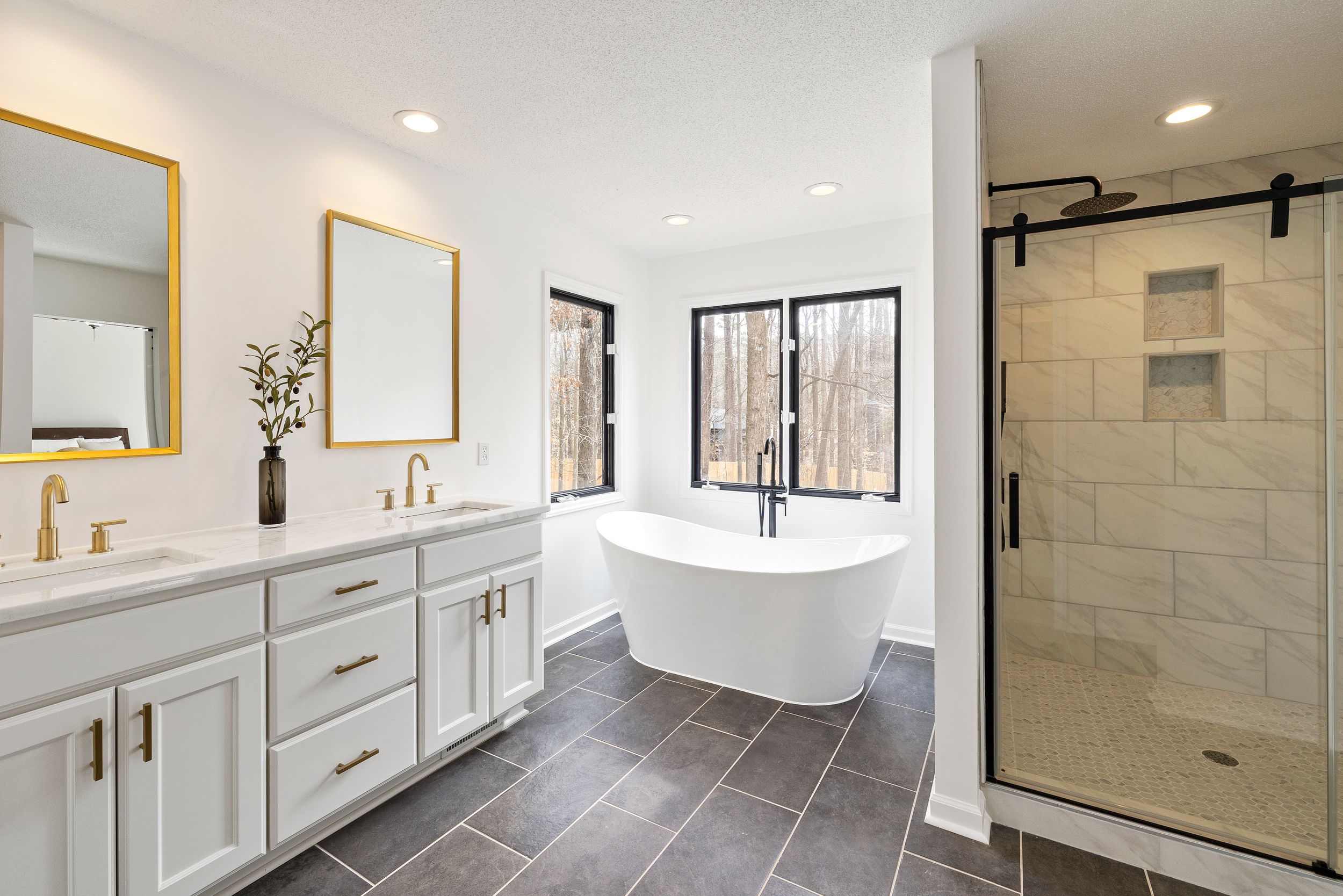
Stylish bathroom design in Virginia with vanity, tile and lighting
A successful Arlington bathroom remodel starts with layout, fixture planning and finishes that match the way the room is used every day.

Why Arlington Bathrooms Need a Different Planning Approach

Arlington has a wide mix of housing: older single-family homes, brick colonials, townhomes, high-rise condos, garden-style buildings and newer infill properties. That variety is part of the appeal, but it also means bathroom remodeling conditions can change dramatically from one address to another. A bathroom in a detached home may allow more flexibility for plumbing or ventilation. A condo bathroom may have strict work-hour rules, riser locations and shared building systems.

Small bathrooms are also common. A narrow five-by-eight hall bathroom, a compact powder room, a tight primary bath or a condo bathroom with limited storage can still become more comfortable, but every inch has to be assigned a purpose. A large vanity may look good in a showroom but crowd the toilet clearance. A swinging shower door may interfere with the entry. A beautiful tile may be too busy for a small room. These decisions need to be made together.

Arlington homeowners also tend to care about long-term value. A well-planned bathroom remodel can improve comfort and resale appeal, especially when the design feels clean, durable and appropriate for the home. The mistake is chasing luxury features without solving the room’s actual limits. The better approach is to identify the constraints first, then choose the finishes that make the space feel intentional.

Arlington Bathroom Remodel Planning Table

Planning area What to review Why it matters
Layout Existing toilet, vanity, shower, tub, doorway and ventilation locations Moving fixtures can affect cost, schedule, permits and building coordination.
Building type Condo, townhome, detached home, older home or newer construction Rules, access, wall conditions and plumbing flexibility can vary widely.
Approvals County permits, condo board rules, HOA requirements and contractor insurance Approvals can affect start dates, work hours, elevator use and inspection timing.
Storage Vanity drawers, medicine cabinets, linen storage, niches and shelves Small bathrooms need organized storage to avoid daily counter clutter.
Finishes Tile scale, grout, lighting, hardware, glass and vanity material Finishes should make the room feel larger while staying easy to maintain.
Ventilation Fan quality, duct route and moisture control Good ventilation protects paint, tile, cabinetry and indoor comfort.

Start With the Existing Layout Before Choosing Tile

The first planning step is not picking a tile. It is understanding the current bathroom. Measure the room, ceiling height, door swing, vanity width, toilet location, tub or shower footprint, window position and fan location. Photograph the plumbing wall, electrical switches, outlets, medicine cabinet and any visible signs of moisture. A good design decision depends on knowing what the room is already doing well and what it is fighting.

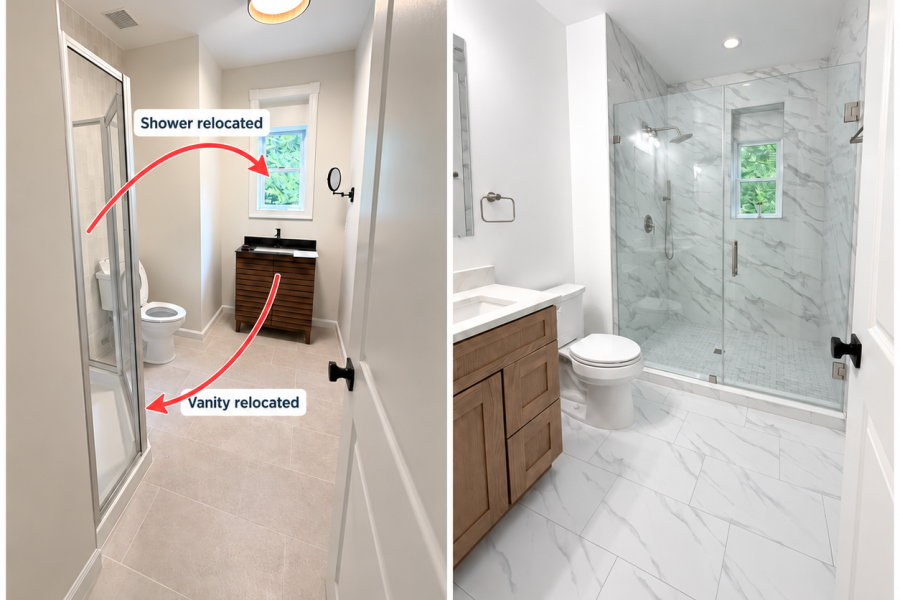
In many Arlington bathrooms, keeping the toilet in the same location can simplify the remodel. Moving a toilet can be possible, but it is usually more involved than changing a vanity or replacing a tub with a shower. Shower conversions, drain relocation, new lighting, added outlets, heated floors or ventilation changes can also affect scope. That does not mean those upgrades should be avoided. It means they should be planned with cost, permits and schedule in mind.

Homeowners often ask whether the bathroom should keep a tub or switch to a shower. The answer depends on the home. A hall bath in a family home may benefit from keeping at least one tub in the house. A primary bathroom in a condo or townhome may work better as a spacious shower with a bench, niche and glass enclosure. A guest bath may need durability more than drama. The right layout is the one that supports the household and the home’s future market.

Small Bathroom Layout Ideas for Arlington Homes

A small bathroom remodel succeeds when it improves movement, storage and light. Replacing a bulky vanity with a furniture-style vanity may look appealing, but a drawer-based vanity can often be more useful. A recessed medicine cabinet adds storage without taking floor space. A shower niche removes bottles from the floor. A frameless or semi-frameless glass door can make the room feel more open than a shower curtain or heavy framed enclosure.

Large-format tile is often useful in compact bathrooms because it reduces grout lines and makes the room feel calmer. That does not mean every small bathroom needs huge tile. The scale should fit the wall, floor and shower dimensions. A vertical tile layout can add height. A continuous floor tone can make the room feel less chopped up. A simple shower wall paired with a more textured floor can add interest without making the room feel crowded.

Lighting is another space-making tool. A single ceiling light is rarely enough. Vanity lighting, recessed ceiling lighting and a properly selected mirror can make the room feel wider and brighter. If the bathroom has no window, lighting temperature becomes even more important. Too cool and the room feels clinical. Too warm and finishes can look yellow. Balanced lighting helps tile, vanity color and countertop tones read correctly.

Condo and HOA Rules: What to Check Early

Many Arlington remodels happen in condos or townhome communities. Before construction is scheduled, homeowners should review association rules. The association may require contractor insurance documents, work-hour limits, elevator reservations, floor protection, parking instructions, debris removal rules and advance notice for water shutoffs. These details may sound administrative, but they can affect the project schedule as much as material lead times.

Condo bathrooms can also involve shared plumbing walls, stacked drain lines and limited access behind walls. A contractor should understand what can be changed and what should remain. If the building requires approval for plumbing shutoffs or noisy work, that coordination should happen before demolition. The goal is to avoid a project that looks simple on paper but stalls because the building process was not respected.

Townhomes may have their own constraints. Narrow stairs, limited parking, shared walls and HOA exterior rules can affect deliveries and work flow. Even when the remodel is entirely inside, exterior venting, trash staging or parking may still need coordination. A professional plan treats these details as part of the remodel, not as last-minute obstacles.

Permit Notes for Arlington Bathroom Remodeling

Arlington County explains that residential building permit applications are submitted online through Permit Arlington, and the county’s residential permit guidance notes that plumbing fixture layouts must be shown as part of architectural plans for projects that require that review. Arlington County also states that plumbing/gas permits are required when adding, removing or relocating fixtures, appliances or piping for plumbing and gas work. Homeowners should confirm the exact requirement for their project scope before work begins.

A simple cosmetic refresh may be different from a remodel that moves a shower, changes a drain, adds outlets, modifies ventilation or alters walls. The practical rule is this: when a project changes plumbing, electrical, mechanical or structural conditions, assume the permit conversation matters. A qualified contractor can help identify which parts of the project require permits and inspections.

Permit planning should not be treated as a negative. It protects the homeowner, creates a record of work and helps confirm that the project meets safety requirements. It can also matter later during resale or insurance conversations. The best time to discuss permit scope is before final pricing, because permit needs can affect drawings, timing and trade coordination.

Useful official resources include Arlington County’s Residential Building Permit guidance and Plumbing / Gas Permit page. These should be checked alongside the contractor’s project-specific recommendations.

Arlington bathroom remodel permit and layout planning infographic
Infographic: a practical planning sequence for Arlington bathroom remodels, including layout, permits, condo rules and finish selections.

Cost Factors in an Arlington Bathroom Remodel

Bathroom remodel cost is shaped by scope more than style alone. A same-footprint bathroom with a new vanity, tile, lighting and fixtures is usually more predictable than a remodel that moves plumbing, changes the shower footprint, opens walls or upgrades electrical and ventilation. Premium tile, custom glass, high-end plumbing fixtures, specialty waterproofing, heated floors and custom cabinetry can also raise investment.

Labor conditions matter in Arlington because many homes have access constraints. Condo elevator rules, parking limitations, debris handling, old framing, plaster walls, uneven floors and narrow hallways can add complexity. These details do not always appear in inspiration photos, but they influence the real project. A thorough site review helps the budget reflect the home, not a generic bathroom remodel average.

Homeowners should also budget for the invisible parts of a bathroom: waterproofing, ventilation, subfloor repair, plumbing valves, electrical safety, wall prep and proper tile installation. These details are not as exciting as a vanity or shower glass, but they determine how well the bathroom performs. A bathroom that looks beautiful but fails behind the wall is not a successful remodel.

Cost and Scope Comparison

Remodel type Typical scope Best fit Budget sensitivity
Cosmetic refresh Paint, mirror, hardware, lighting, simple fixture swaps Bathrooms in good condition that need a visual update Lower, if plumbing and tile remain mostly unchanged
Same-footprint remodel New vanity, tile, shower/tub, toilet, lighting and finishes Most small Arlington bathrooms where layout works but materials are dated Medium, with predictable planning when walls are sound
Shower conversion Tub-to-shower conversion, glass, niche, waterproofing and drain planning Primary bathrooms or homes where a larger shower adds daily value Medium to high depending on plumbing and tile scope
Layout change Moving fixtures, changing walls, new electrical or ventilation routes Bathrooms where the existing layout truly does not function Higher because trades, permits and inspections are more involved
Condo remodel Bathroom update with building approvals, water shutoffs and access rules High-rise or multifamily Arlington homes Variable because building logistics can affect schedule

Vanity and Storage Choices for Small Bathrooms

The vanity is usually the hardest-working piece of cabinetry in a bathroom. In a small Arlington bathroom, a vanity should not be selected by width alone. Drawer layout, plumbing cutouts, door swing, countertop space and cleaning clearance all matter. A two-drawer vanity may store more usable items than a larger cabinet with deep open space under the sink. If the room is extremely tight, a floating vanity can show more floor and make cleaning easier, but it may reduce hidden storage.

Medicine cabinets are underrated. A recessed mirrored cabinet can hold daily items at eye level without consuming counter space. Linen towers, over-toilet cabinets and built-in niches can help, but they should be used carefully. Too many storage pieces can make a small bathroom feel heavy. The best storage plan combines hidden daily storage with one or two open or decorative moments.

For shared bathrooms, think in zones. Each user may need a drawer or shelf. Towels need a predictable home. Cleaning supplies should not compete with toiletries. Extra toilet paper, hair tools and first-aid items should be easy to reach but visually controlled. Storage planning is one of the biggest differences between a bathroom that photographs well and one that works well every morning.

Tile, Shower Glass and Waterproofing

Tile is the visual language of the bathroom, but waterproofing is the performance system behind it. Shower walls, curbs, pans, benches and niches must be planned carefully. A niche should be placed where it is useful and where the wall can support it. A bench should be proportioned for the shower, not squeezed in because it appears in luxury photos. Shower glass should work with the door swing and the way water moves in the space.

In small bathrooms, large-format tile can make a shower feel less busy. A mosaic shower floor may still be useful for slope and grip. Porcelain tile is often practical because it is durable and available in stone-look, concrete-look and warm neutral designs. Natural stone can be beautiful, but it usually requires more maintenance and careful sealing. Grout color also matters; high-contrast grout can make a small room feel busier.

Curbless showers are popular, but they require proper floor slope, waterproofing and space planning. They may be easier in some conditions than others. In condos or older homes, existing structure and drain location can affect feasibility. If a curbless shower is important, it should be discussed early rather than after tile has been selected.

Design Ideas That Fit Arlington Homes

A good Arlington bathroom remodel usually feels clean, bright and tailored. Warm whites, soft grays, wood vanities, brushed nickel, polished chrome, matte black or champagne bronze can all work depending on the home. The key is consistency. A modern condo bathroom may look best with flat-panel cabinetry, slab-look tile and simple glass. A classic Arlington colonial may call for a shaker vanity, marble-look porcelain, polished chrome and a more traditional mirror.

Powder rooms can handle more personality. Wallpaper, dramatic mirrors, sconces, bold vanity color or textured tile may work because the room is smaller and not exposed to shower moisture. Full bathrooms need more durability. The finishes should resist moisture, clean easily and age well. When resale matters, avoid choices that are too specific unless the homeowner truly loves them.

Accessibility can also be part of the design without making the room look institutional. A comfort-height toilet, blocking for future grab bars, a low-threshold shower, better lighting and slip-resistant flooring can make the bathroom safer for long-term use. These upgrades are especially useful in primary bathrooms and homes where owners plan to stay.

How Elegant Kitchen and Bath Helps Arlington Homeowners

Elegant Kitchen and Bath helps homeowners connect design decisions with construction realities. That means looking at bathroom layout, plumbing scope, ventilation, tile selections, vanity storage, shower glass, lighting and permit questions together. For Arlington projects, this coordination matters because small rooms and building rules leave less room for improvisation.

If you are comparing options, review Elegant Kitchen and Bath’s bathroom remodeling services, Arlington kitchen and bathroom remodeling page, kitchen remodeling services, countertop services and project gallery. These pages help connect the article’s planning guidance with the company’s service areas and completed work.

Questions to Ask Before Starting

  • Will any plumbing fixtures move, or will the bathroom stay in the same footprint?
  • Does the building, condo board or HOA require written approval before work begins?
  • Will the project need plumbing, electrical, mechanical or building permits?
  • Can the current ventilation route support the new bathroom plan?
  • Is the vanity selected for real storage or only for appearance?
  • Where will towels, daily products, cleaning supplies and extra paper goods live?
  • Will the shower door, bathroom entry door and vanity drawers conflict?
  • Are tile, grout, glass and hardware selections easy to maintain?

Frequently Asked Questions

Do bathroom remodels in Arlington VA need permits?

Many Arlington bathroom remodels need permits when plumbing, gas, electrical, mechanical or structural work is involved. Cosmetic updates may be simpler, but homeowners should verify scope through Arlington County and their contractor before work begins.

What makes Arlington bathroom remodels different from other Northern Virginia projects?

Arlington homes often include compact bathrooms, condos, townhomes, older plumbing paths, shared walls, parking limits and building rules. These details make layout planning, material delivery and approval timing especially important.

How can a small Arlington bathroom feel larger?

A small bathroom can feel larger with a better vanity, improved lighting, glass shower doors, large-format tile, recessed storage, lighter finishes, wall niches and a layout that keeps clear floor space open.

Should condo owners talk to their association before remodeling?

Yes. Condo owners should review association rules for work hours, elevator protection, insurance certificates, plumbing shutoffs, debris removal, parking and approval documents before scheduling a bathroom remodel.

Final Thoughts

Bathroom remodeling in Arlington VA works best when the design respects the home’s real conditions. Small layouts, condo rules, permit scope, plumbing paths and storage needs should guide the project before finishes are finalized. When those details are handled early, the bathroom can become brighter, more useful and more valuable without creating unnecessary stress during construction.


Outdoor Living Remodels in Northern Virginia: Decks, Pergolas and Winter Gardens

Outdoor Living Remodels in Northern Virginia: Decks, Pergolas and Winter Gardens

Outdoor living remodels are becoming a major priority for Northern Virginia homeowners. A deck is no longer just a platform behind the house. A pergola is no longer just a decorative structure. A winter garden is no longer only a luxury feature. Together, these spaces can extend daily living, improve entertaining, connect the kitchen to the backyard, and make a home feel larger without changing every interior room.

In Herndon, Reston, Fairfax, Ashburn, Sterling, Vienna, McLean, Chantilly, Centreville, Leesburg, Arlington, Alexandria, and surrounding communities, many homes have yards, patios, or older decks that are underused. Some decks are too small for dining. Some patios lack shade. Some backyards feel disconnected from the kitchen. Some homeowners want a three-season space that can handle Northern Virginia’s hot summers, cool evenings, pollen season, rain, and changing fall weather. A thoughtful outdoor living remodel can solve those problems.

This guide explains how to plan an outdoor living remodel around decks, pergolas, and winter gardens. It covers layout, materials, shade, privacy, lighting, outdoor kitchens, permit considerations, budget drivers, and design ideas that help the outdoor space feel connected to the home rather than tacked on.

Outdoor Feature Best Use Design Priority
Deck remodel Dining, grilling, lounging, and backyard access. Size the deck around furniture, stairs, railing, lighting, and traffic flow.
Pergola Filtered shade and a defined outdoor room. Match the structure to sun direction, privacy needs, and the home’s exterior style.
Winter garden Protected three-season seating, plants, and indoor-outdoor living. Clarify comfort expectations, enclosure type, ventilation, and permit needs.
Outdoor kitchen zone Frequent grilling and entertaining. Plan safe clearances, task lighting, counter space, utilities, and weatherproof materials.
Privacy screen Close lot lines or exposed deck views. Block the specific sightline without making the outdoor space feel boxed in.

Why Outdoor Living Matters in Northern Virginia

Northern Virginia homeowners often have strong reasons to invest in outdoor space. Many people work hybrid schedules and spend more time at home. Families want places for casual meals, children’s activities, weekend hosting, and quiet evenings. Homeowners who have renovated kitchens, basements, or bathrooms may want the exterior living space to match the quality of the interior.

The region’s climate also supports outdoor living for much of the year, but only if the space is designed well. Summer sun can be intense. Spring pollen can be heavy. Rain can interrupt plans. Winter temperatures can limit use. A basic uncovered deck may be useful only when conditions are perfect. A better design adds shade, lighting, airflow, weather protection, and comfortable circulation so the space is usable more often.

Outdoor living can also support resale appeal. Buyers often respond to homes that feel ready for entertaining and everyday enjoyment. A well-built deck, pergola, or winter garden can make the backyard feel like an extension of the home. The key is to design it with the same care as an interior remodel.

Start With How You Want to Live Outside

Before choosing materials or structure types, decide what the outdoor space should do. Will it support family dinners? Weekend grilling? Large parties? Quiet morning coffee? A fire feature? A covered lounge? A hot tub? A play area? A transition from kitchen to backyard? A winter garden for year-round plants and protected seating?

Each goal suggests a different layout. A dining deck needs enough space for a table, chairs, circulation, and serving. A lounge area needs comfortable seating and shade. A grill zone needs ventilation, safe clearances, counter space, and access to the kitchen. A winter garden needs enclosure, drainage, light, and comfort planning. A multi-level deck may separate cooking, dining, and relaxing zones.

Think about daily patterns. If the kitchen is far from the outdoor dining area, meals may become inconvenient. If the grill is too exposed to rain, it may not be used often. If the seating faces the wrong view, the space may feel awkward. The best outdoor remodels are designed around real movement and habits.

Deck Remodeling: The Foundation of Outdoor Living

A deck often becomes the main platform for outdoor living. It can connect the house to the yard, create level space on a sloped lot, and support dining, lounging, grilling, and stairs. Many older decks in Northern Virginia were built for basic access rather than modern outdoor living. They may be too narrow, poorly lit, worn, or disconnected from the way the family uses the home.

Deck remodeling can mean resurfacing, expanding, rebuilding, changing stairs, adding railings, integrating lighting, or creating multiple zones. If the deck structure is aging, a professional evaluation is important. Surface boards may look like the problem, but posts, beams, footings, ledgers, fasteners, and railings determine safety. A remodel should not cover structural concerns with new boards.

The deck should be sized for furniture, not just square footage. A dining table for six may need more room than homeowners expect once chairs are pulled out. A grill needs clearance. A lounge zone needs space around seating. Stairs should land where people naturally want to go. If the deck is too small or awkward, it will not function well even with premium materials.

Composite vs. Wood Decking

Material choice affects maintenance, appearance, cost, and comfort. Wood decking has natural warmth and can be beautiful, but it requires regular maintenance. Staining, sealing, repairs, splinters, and weathering should be expected. Some homeowners love that natural character. Others prefer lower maintenance.

Composite and PVC decking are popular because they resist rot, insects, and frequent staining needs. They come in many colors and grain patterns. Higher-quality products can look refined and perform well, but they still need cleaning and proper installation. Heat retention can vary by color and product, which matters in sunny yards. Dark decking may become hot under bare feet.

The best material depends on budget, sun exposure, desired look, maintenance tolerance, and how the deck connects to the home. Railings, fascia, stairs, and lighting should be selected as part of the same design. A deck is not only the boards underfoot. It is a complete system.

Pergolas: Shade, Structure, and Style

A pergola can transform a deck or patio by adding shade, vertical interest, and a sense of room. It defines an outdoor dining or lounge area without fully enclosing it. Traditional pergolas use open rafters to filter sunlight. Modern pergolas may include adjustable louvers, integrated lighting, fans, privacy screens, or retractable canopies.

In Northern Virginia, shade is not just decorative. It can determine whether the space is usable in July and August. A pergola over a dining area can make meals more comfortable. A pergola near the kitchen can create a natural outdoor room. A pergola with screens or side panels can improve privacy in neighborhoods where homes sit close together.

Orientation matters. The sun angle changes throughout the day and year. A pergola that provides shade at noon may not help during late afternoon. Before building, observe how the sun moves across the yard. Consider whether the priority is morning coffee, afternoon shade, or evening entertaining. The structure should respond to that pattern.

Winter Gardens and Three-Season Spaces

A winter garden or enclosed outdoor room can extend the usefulness of the home. It may function as a protected lounge, plant room, dining area, or transition space between interior and exterior. Unlike a fully conditioned home addition, a winter garden may be designed for seasonal comfort rather than year-round living, depending on materials, enclosure, heating, and local requirements.

For Northern Virginia homeowners, a winter garden can be appealing because it offers shelter from wind, rain, and some temperature swings. It can create a bright space for plants, morning coffee, or quiet reading. It can also make a backyard more usable during shoulder seasons when an open deck feels too exposed.

The design should be clear about expectations. Is the space intended for three-season use or year-round conditioned living? Will it need heating, cooling, insulation, glass systems, screens, or special permits? Is it closer to a porch enclosure, sunroom, or addition? These distinctions affect cost, code requirements, comfort, and resale language.

Connecting the Kitchen to the Outdoors

Outdoor living works best when it connects naturally to the kitchen or main living area. If a homeowner has already invested in kitchen remodeling, the next opportunity may be to extend that lifestyle outside. A sliding door, French door, pass-through window, or improved deck access can make outdoor dining easier.

The route from kitchen to grill should be short and practical. Carrying food through a hallway, down awkward stairs, or across wet grass discourages use. A deck or patio near the kitchen can become an outdoor dining room. If the kitchen has an island, the outdoor space may need a serving counter or bar-height ledge to support hosting.

Visual connection matters too. When interior and exterior materials coordinate, the home feels larger. Cabinet colors, stone tones, decking colors, railing finishes, and lighting style can echo the kitchen without matching exactly. The goal is a natural transition from inside to outside.

Outdoor Kitchens and Grill Stations

Not every outdoor living remodel needs a full outdoor kitchen. Many homeowners simply need a better grill station with counter space, storage, lighting, and safe clearances. Others want a built-in grill, sink, refrigerator, trash pull-out, cabinets, and stone counters. The right choice depends on how often the household cooks outside.

A grill zone should be located for ventilation and safety. It should not trap smoke under low ceilings or too close to combustible materials. If a sink or gas line is included, plumbing and utility work must be planned correctly. Countertop material should handle weather and maintenance expectations. Storage should be designed for outdoor conditions.

For frequent entertainers, an outdoor kitchen can reduce trips inside and make hosting easier. For occasional grillers, a simpler built-in station may deliver better value. Spend on the features that will be used regularly.

Lighting for Outdoor Living

Lighting can dramatically improve an outdoor remodel. It extends use into the evening, improves safety, and creates atmosphere. Deck stair lights, post cap lights, under-rail lights, pergola lights, wall sconces, path lights, and accent lighting all serve different purposes.

Avoid relying on one harsh floodlight. Outdoor living spaces need layers just like interior rooms. Dining areas need enough light to see food. Stairs need safety lighting. Lounges need softer light. Grill areas need task lighting. Landscape edges may need path lighting. Dimmers or separate zones can help the space shift from cooking to relaxing.

Lighting should be planned before construction when possible. It is easier to integrate wiring into railings, stairs, pergolas, and structures during the build than after everything is finished. Solar lights can help in some areas, but built-in low-voltage lighting often looks more polished.

Privacy and Neighbor Views

Many Northern Virginia neighborhoods have close lot lines, visible decks, and shared sightlines. Privacy planning can make the outdoor space more comfortable. Pergola screens, privacy walls, planters, lattice, vertical slats, landscaping, and strategic furniture placement can reduce exposure without making the space feel closed in.

Privacy should be targeted. Blocking every view can make the deck feel boxed. Instead, identify the specific sightlines that matter most: a neighbor’s upper window, a street view, an adjacent patio, or a utility area. Then design screens where they solve the problem.

Materials should coordinate with the home. A privacy screen can become a design feature if it matches the railing, pergola, or siding. Built-in planters can soften the structure and add seasonal interest.

Drainage, Grading, and Yard Conditions

Outdoor living projects depend on water management. Decks, patios, pergolas, and winter gardens all interact with drainage. If water flows toward the foundation, pools under the deck, or erodes soil near footings, the remodel should address it. A beautiful outdoor space will not perform well if drainage is ignored.

Sloped yards are common in parts of Northern Virginia. A raised deck may be the best way to create level outdoor space. In other homes, a patio with retaining walls may work better. Stairs, landings, and pathways should connect safely to the yard. If the project includes a covered area, roof runoff must be directed appropriately.

Before construction, evaluate grading, downspouts, soil conditions, existing patios, and landscape drainage. These practical details affect long-term durability.

Permits and HOA Considerations

Outdoor living remodels often require permits, especially for decks, structural pergolas, covered spaces, electrical work, stairs, railings, and additions. The Town of Herndon, Fairfax County, Loudoun County, Arlington, Alexandria, and other jurisdictions may have different requirements. Homeowners should confirm local rules before work begins.

Deck permits are common because structural safety matters. Footings, ledger attachment, guardrails, stair geometry, and load requirements must be correct. Covered structures and enclosed spaces may trigger additional review. Electrical work for lighting, fans, heaters, or outlets may require permits. If a winter garden is closer to a sunroom or addition, the requirements may be more involved.

HOA approvals may also be needed. Many communities regulate deck size, railing style, colors, privacy screens, pergola height, and exterior changes. Submit drawings and materials early to avoid delays. A good remodel plan accounts for both permitting and HOA review.

Budget Drivers

Outdoor living remodel costs vary widely. A simple deck resurfacing project costs far less than a large multi-level composite deck with pergola, lighting, outdoor kitchen, privacy screens, and winter garden. The budget depends on size, structure, materials, access, stairs, railings, foundation work, utilities, and finish level.

Major cost drivers include demolition, structural repairs, footings, framing, decking material, railing type, stairs, lighting, electrical work, pergola design, roof or louver systems, screens, outdoor kitchen components, plumbing, gas lines, stonework, drainage, and permits. Site access can also affect labor. A backyard with limited access may require more hand work.

Prioritize structure and function first. Safe framing, proper footings, code-compliant railings, drainage, and usable layout should come before decorative upgrades. Premium boards and lighting are valuable, but they cannot compensate for a deck that is too small or poorly connected to the home.

Design Ideas by Home Type

Colonial homes often benefit from symmetrical deck layouts, classic railings, and defined dining zones. A pergola can soften the rear elevation and create a transition from formal interior spaces to casual outdoor living. Split-level homes may need stairs and landings that connect multiple interior levels to the yard. A multi-zone deck can make the exterior feel less fragmented.

Townhomes require careful space planning. Deck size, privacy, HOA rules, and neighbor views matter. Built-in benches, slim furniture, privacy screens, and efficient lighting can make a small deck feel more useful. Single-family homes with larger yards may support separate zones: kitchen access, dining, lounge, fire feature, and garden path.

Homes with walk-out basements can connect outdoor living to basement remodeling. A lower patio, upper deck, stairs, and basement family room can become one connected entertainment zone. This is especially useful when the basement includes a wet bar, guest suite, or media room.

Common Mistakes to Avoid

One mistake is building too small. Outdoor furniture requires more room than many homeowners expect. Measure tables, chairs, grill clearances, and circulation before finalizing deck dimensions. Another mistake is ignoring shade. A deck with no shade may be uncomfortable during the hottest months.

A third mistake is treating lighting as an afterthought. Retrofitted lighting can look messy or miss key safety areas. Plan it early. A fourth mistake is overlooking permits or HOA approvals. Exterior projects are visible and structural, so approvals matter.

Finally, avoid designing the outdoor space separately from the house. The best outdoor remodels feel connected to the kitchen, living room, basement, or yard. If the deck, pergola, and patio do not relate to daily movement, they may look nice but remain underused.

Maintenance Planning

Every outdoor space needs maintenance. Wood decks need staining and sealing. Composite decks need cleaning. Pergolas need inspection and cleaning. Screens, glass, outdoor kitchens, lights, and drainage systems all need periodic care. Choose materials based on the maintenance you are willing to do.

Leaves, pollen, snow, and summer storms are part of Northern Virginia life. The design should make cleanup reasonable. Avoid tight corners that trap debris. Choose railings and decking that can be cleaned. Plan storage for cushions and outdoor accessories. If the space includes plants, consider irrigation and drainage.

A low-maintenance design is not a no-maintenance design. It is a design where the maintenance fits the homeowner’s lifestyle.

Planning With Elegant Kitchen and Bath

Elegant Kitchen and Bath offers decking, pergolas, winter gardens, home additions, kitchen remodeling, bathroom remodeling, basement remodeling, and countertop services across Northern Virginia. Outdoor living projects often connect with interior remodeling. A kitchen remodel may lead naturally to a dining deck. A basement remodel may connect to a lower patio. A home addition may include a covered outdoor room.

A good planning process starts with the home, yard, and lifestyle. The team should review existing deck condition, access points, sun exposure, privacy, drainage, furniture needs, materials, budget, and permitting. From there, the design can create outdoor zones that feel useful and attractive.

The goal is not simply to add square footage outside. The goal is to make the home live better. When a deck, pergola, or winter garden is planned well, it becomes part of everyday life.

Frequently Asked Questions

Do I need a permit to build or remodel a deck in Northern Virginia?

Many deck projects require permits because they involve structural work, footings, railings, stairs, and attachment to the home. Requirements vary by jurisdiction, so homeowners should confirm with the local building department before work begins.

Is composite decking better than wood?

Composite decking usually requires less maintenance than wood and resists rot and insects, but it can cost more upfront. Wood offers natural character but needs regular care. The best choice depends on budget, sun exposure, desired look, and maintenance expectations.

What is the difference between a pergola and a covered porch?

A pergola usually has an open or adjustable overhead structure that provides filtered shade. A covered porch has a roof designed for more complete weather protection. The structural, permit, and comfort implications can be different.

Can a winter garden be used year-round?

It depends on the design. Some winter gardens are three-season spaces, while others are closer to conditioned sunrooms or additions. Heating, cooling, insulation, glass, and code requirements determine how the space can be used.

How do I connect an outdoor remodel with a kitchen remodel?

Plan access, serving space, grill location, lighting, and material coordination together. A door near the kitchen, a dining deck, and a practical grill zone can make indoor-outdoor living much easier.

What outdoor living upgrade adds the most daily value?

For many homeowners, the best upgrade is a properly sized deck or patio with shade, lighting, and comfortable access from the kitchen. The exact answer depends on how the household uses the yard.

Ready to Create a Better Outdoor Living Space?

An outdoor living remodel can make a Northern Virginia home feel larger, more comfortable, and more connected to the yard. Whether you are planning a new deck, a pergola, a winter garden, an outdoor kitchen, or a full indoor-outdoor entertaining area, Elegant Kitchen and Bath can help design a space that fits the home and the way you live.

Basement Bedroom Conversion in Virginia: Egress Windows, Permits and Layout Ideas

Basement Bedroom Conversion in Virginia: Egress Windows, Permits and Layout Ideas

A basement bedroom conversion can turn underused lower-level space into one of the most valuable areas in a Northern Virginia home. For homeowners in Herndon, Reston, Fairfax, Ashburn, Sterling, Vienna, McLean, Centreville, Chantilly, Arlington, Alexandria, Leesburg, and nearby communities, a finished basement bedroom can support guests, adult children, multigenerational living, a private office suite, or future resale flexibility. It can also make the home feel larger without building a full addition.

But a basement bedroom is not the same as placing a bed in a finished room. A legal and comfortable basement bedroom needs careful planning for emergency escape and rescue openings, permits, ceiling height, smoke and carbon monoxide alarms, electrical layout, heating and cooling, moisture control, privacy, lighting, storage, and access to a bathroom. If those details are ignored, the room may look finished but fail to function as a true bedroom.

This guide explains what Northern Virginia homeowners should know before converting a basement into a bedroom or guest suite. It covers egress windows, permit expectations, layout planning, bathroom placement, lighting, materials, costs, common mistakes, and design ideas that make the lower level feel welcoming rather than leftover.

Planning Item Why It Matters What to Confirm Early
Egress opening A sleeping room needs safe emergency escape and rescue access. Window, door, well size, sill height, drainage, and clear access.
Permits Framing, electrical, plumbing, HVAC, and egress work often need review. Which local authority applies to the property and what documents are required.
Bathroom access A nearby bath turns a bedroom into a useful guest suite. Drain location, shower feasibility, ventilation, and nighttime circulation.
HVAC comfort Enclosed basement rooms can become cold, stuffy, or uneven. Supply, return, insulation, and humidity control before walls close.
Storage Finished bedrooms need closets without sacrificing mechanical access. Wardrobes, reach-in closets, under-stair storage, and service clearances.

Why Convert a Basement Into a Bedroom?

The most obvious reason is space. Many Northern Virginia homes have basements that are partially finished, used for storage, or arranged as one large open room. A bedroom conversion can create a private zone without changing the home’s exterior footprint. This is especially valuable when moving to a larger home would mean higher prices, higher interest rates, closing costs, and the disruption of leaving a preferred neighborhood.

A basement bedroom can also support multigenerational living. Parents, in-laws, college-age children, long-term guests, and visiting relatives may all benefit from a lower-level suite. If the bedroom is paired with a bathroom and sitting area, it can feel like a private retreat. For households that frequently host guests, this may be more useful than another open recreation room.

Resale is another consideration. Buyers often value flexible finished basements, especially when the space includes a legal bedroom, full bath, and good natural light. However, the word legal matters. A room that lacks required egress or does not meet local requirements may not be counted or marketed the same way. Planning correctly protects the investment.

Legal Bedroom vs. Finished Room

A finished basement room is not automatically a bedroom. A bedroom typically needs safe emergency escape, proper ceiling height, heating, electrical safety, smoke and carbon monoxide detection, and other code-related conditions. Requirements vary by jurisdiction and project scope, so homeowners should confirm details with the appropriate local authority before construction.

Emergency escape and rescue opening requirements are especially important. In many situations, a basement sleeping room needs a compliant exterior door or window that can be used in an emergency. Fairfax County guidance for emergency escape and rescue openings describes key dimensional concepts such as minimum clear opening area, minimum opening dimensions, and maximum sill height. Finished basement guidance based on the Virginia Residential Code also addresses basement construction requirements. The exact application depends on the home and project, so the design should be reviewed before walls are finalized.

This is why basement bedroom conversion should not be treated as a purely cosmetic project. Framing first and asking code questions later can create expensive rework. Egress location, room size, bathroom access, electrical layout, and mechanical systems should be considered at the beginning.

Egress Windows: The Detail That Shapes the Room

An egress window or exterior door is often the most important element in a basement bedroom conversion. It provides a way out in an emergency and a way for rescue personnel to enter. In a below-grade basement, this may require enlarging an existing window opening, adding a window well, cutting the foundation wall, or choosing a different bedroom location.

Egress planning affects layout. The bed, closet, and walls should not block access to the window. The window well must be usable, drained properly, and sized correctly. If the window is too high, too small, or difficult to open, it may not satisfy requirements. If the room already has a walk-out door to the exterior, the planning may be simpler, but it still needs review.

For many homeowners, the egress window is also a design opportunity. A larger window can bring in daylight and make the basement feel less like a basement. A well-designed window well with drainage, ladder access where required, clean materials, and landscaping outside can improve both safety and comfort. Inside, the window can become part of a reading nook, desk wall, or seating area.

Permits in Northern Virginia

Basement bedroom conversions often require permits because they may involve framing, electrical work, plumbing, HVAC adjustments, egress changes, insulation, drywall, and smoke alarm upgrades. Fairfax County’s residential addition and alteration permit information includes finished basements among residential alteration work. The Town of Herndon states that building permits are generally required for additions and alterations, along with work involving equipment regulated by code. Loudoun County, Arlington, Alexandria, and other jurisdictions have their own processes.

The permit path depends on where the property is located. A home inside the Town of Herndon may follow a different submission process than a home elsewhere in Fairfax County. A project in Loudoun County may use different portals and review steps. If the project involves cutting a foundation wall for egress, engineering or additional documentation may be required. If a bathroom is added, plumbing and mechanical permits may be part of the scope.

Permits can feel like a delay, but they are part of protecting the homeowner. They help confirm that hidden work meets safety standards. They also create documentation that can matter during resale. A future buyer may ask whether the basement bedroom and bathroom were permitted. Having a clear paper trail can reduce uncertainty.

Choosing the Best Bedroom Location

The best basement bedroom location is usually shaped by windows, exterior access, plumbing, stairs, mechanical systems, and privacy. Start by identifying fixed conditions. Where are the existing windows? Is there a walk-out door? Where are the main drains? Where are the furnace, water heater, electrical panel, sump pump, and structural columns? Where can a bathroom realistically go?

A bedroom should feel private but not isolated. It should be easy to reach from the stairs and bathroom, but it should not open directly into a noisy recreation area if guests will use it. If possible, place the bedroom where it can borrow natural light. Avoid putting the bed next to loud mechanical equipment unless sound control is part of the plan.

In walk-out basements, the bedroom can be placed near exterior doors or larger windows, creating a bright suite. In interior basements with small windows, the bedroom location may be determined by where egress can be added most reasonably. Sometimes the best design is not the most obvious one. A professional layout can turn awkward lower-level conditions into a comfortable plan.

Bedroom Size and Furniture Planning

A basement bedroom should be sized around real furniture, not just minimum dimensions. A queen bed, nightstands, dresser, closet, door swing, and egress path all need space. If the room is too tight, it may technically fit a bed but feel uncomfortable. Guests need a place for luggage. Long-term users need storage. A basement bedroom that feels cramped may not add the value the homeowner expects.

Think about circulation around the bed. Can someone walk around both sides? Can drawers open? Can the closet door function? Can the egress window be reached quickly? Can a desk or reading chair fit if the room doubles as an office? If the bedroom is part of a guest suite, consider a small sitting area nearby rather than forcing every function into the bedroom.

Closet planning is also important. Some jurisdictions and appraisers may treat closets differently when defining bedrooms, but from a practical standpoint, a bedroom without storage is less useful. Built-in wardrobes, reach-in closets, or custom cabinetry can help when framing a traditional closet would make the room too small.

Bathroom Access: Full Bath, Three-Quarter Bath, or Shared Bath?

A basement bedroom becomes much more useful when it has convenient bathroom access. A full guest suite with a shower, toilet, and vanity is ideal for long-term guests or multigenerational living. A three-quarter bath with a shower is often enough. A powder room nearby may be better than nothing, but it does not fully support overnight use.

Bathroom placement is heavily influenced by plumbing. Locating the bathroom near existing drains or rough-ins can reduce complexity. If the basement slab must be cut or a pump system is needed, costs can rise. Ventilation, ceiling height, and shower layout also matter. A basement bathroom should feel fresh, bright, and easy to clean.

The bathroom style should coordinate with the bedroom. If the bedroom is intended as a comfortable guest suite, the bathroom should not feel like an afterthought. Durable tile, good lighting, a practical vanity, and a walk-in shower can make the lower level feel like a real living space. If aging-in-place is a goal, consider a low-threshold shower, grab bar blocking, and slip-resistant flooring.

Lighting: Making the Basement Feel Like a Bedroom

Lighting is one of the biggest differences between a basement room that feels legal but gloomy and a basement bedroom that feels comfortable. Natural light is valuable, but it may be limited. Layered artificial lighting is essential. Use overhead lighting for general visibility, bedside lighting for reading, closet lighting for storage, and soft accent lighting for warmth.

Avoid relying only on recessed lights in a grid. That can make the room feel flat. Wall sconces, lamps, cove lighting, or a ceiling fixture can make the bedroom feel more finished. Dimmers are useful because bedrooms need both bright cleaning light and softer evening light. If the room has a desk area, task lighting should be included.

Color temperature matters. Very cool lighting can make a basement feel harsh. Warm or neutral lighting often feels better in a bedroom. If the basement has low ceilings, choose fixtures that do not hang too low. If there is a window, use window treatments that preserve daylight while providing privacy.

Sound Control and Privacy

Basement bedrooms often sit near recreation rooms, laundry areas, mechanical rooms, or stairs. Sound control can make the difference between a bedroom that works and one that no one wants to use. Insulated interior walls, solid-core doors, acoustic sealant, thoughtful HVAC duct planning, and soft flooring materials can reduce noise transfer.

Mechanical rooms deserve special attention. Furnaces, water heaters, sump pumps, and ductwork can create noise. A bedroom wall directly against a mechanical room may need extra insulation or a different layout. Laundry rooms can also be loud, especially if the bedroom is used by guests.

Privacy is not only about sound. The bedroom should not feel exposed to the main basement activity area. A small hallway, angled entry, or vestibule can help. If the basement is open now, adding a bedroom may require rethinking the whole lower-level circulation pattern.

Moisture Control Before Finishes

Basement bedrooms must be dry and comfortable. Before adding drywall, carpet, built-ins, or furniture, address moisture. Look for signs of water intrusion, efflorescence, musty odors, foundation cracks, sump pump issues, grading problems, or high humidity. A finished bedroom should never hide a water problem.

Material selection should reflect basement realities. Luxury vinyl plank, engineered products rated for below-grade use, tile, and moisture-conscious carpet systems may be options depending on the room. Wall assemblies should be designed to handle basement conditions. Insulation, vapor control, and air sealing should be planned correctly.

Humidity control matters for comfort and air quality. A basement that feels damp will not be a pleasant bedroom. HVAC supply and return planning, dehumidification, and ventilation should be considered as part of the remodel. If the bedroom is in a lower level that was never designed as living space, comfort systems may need upgrading.

HVAC and Comfort

A basement bedroom should have reliable heating and cooling. Many basements are cooler than upper floors, which may be comfortable in summer but chilly in winter. Adding walls can change airflow. A room that felt fine as part of an open basement may become stuffy once enclosed.

Options may include extending existing ductwork, adding dedicated supply and return paths, improving insulation, or using a separate comfort solution such as a mini-split where appropriate. The right choice depends on the home’s existing system and the project scope. Comfort should be evaluated early, not after the walls are closed.

Fresh air and ventilation are also important. Bedrooms need to feel healthy, not stale. If the basement includes a bathroom, exhaust ventilation must be planned well. If the bedroom is near a utility room, combustion safety and equipment clearances should be respected.

Storage Ideas for Basement Bedrooms

Storage makes a basement bedroom more useful. A reach-in closet is common, but it is not the only option. Built-in wardrobes, under-stair storage, wall cabinets, window-seat drawers, and custom shelving can all help. If the basement bedroom is for guests, include space for luggage and hanging clothes. If it is for an adult child or parent, plan for more permanent storage.

Avoid using the bedroom as the only storage replacement for everything that was previously in the unfinished basement. Seasonal items, tools, and household overflow need their own storage zone. If the remodel eliminates too much storage, the new bedroom may become cluttered quickly.

Storage should also protect access to mechanical systems. Electrical panels, cleanouts, shutoffs, sump pumps, and HVAC equipment need service clearance. Do not hide them behind permanent built-ins without access. A good design makes necessary access look clean while keeping it functional.

Design Style for a Welcoming Basement Bedroom

A basement bedroom should feel connected to the rest of the home. Use trim, doors, hardware, flooring, and paint colors that coordinate with the main level. This helps the lower level feel intentional rather than secondary. At the same time, choose finishes that work for basement conditions.

Warm neutrals, layered textiles, wood tones, and good lighting can make the room feel inviting. If natural light is limited, avoid heavy dark colors on every surface. A feature wall can add personality, but the room should not feel smaller. Mirrors can help reflect light, but they should be placed thoughtfully.

Ceiling treatment matters. Low basement ceilings can feel better with clean drywall, recessed lights, and minimal visual clutter. If ductwork requires soffits, align them with walls or use them to define zones. Exposed ceilings can work in some industrial-style basements, but bedrooms usually benefit from a softer, quieter finish.

Basement Bedroom Plus Office: A Flexible Plan

Many homeowners want basement rooms to serve more than one purpose. A bedroom-office combination can work well if the layout is honest. A wall bed, sleeper sofa, built-in desk, or flexible furniture arrangement can allow the room to function as an office most days and a guest bedroom when needed.

However, if the room will be counted or used as a bedroom, egress and code requirements still matter. Do not assume a room can avoid bedroom requirements because it is called an office while still being used for sleeping. Plan for the highest intended use. This protects safety and avoids confusion later.

A flexible basement suite can be especially useful for hybrid workers in Northern Virginia. The room can provide privacy during the workweek and guest comfort on weekends. Built-in cabinetry can hide office equipment when guests arrive.

Basement Bedroom Costs

Costs vary depending on whether the basement is already finished, whether egress exists, whether a bathroom is added, and how much mechanical, electrical, and plumbing work is required. A simple conversion inside an already compliant finished basement may be relatively modest. A full bedroom suite with egress window installation, bathroom, new framing, electrical, HVAC, flooring, lighting, and custom storage can be much more substantial.

Major cost drivers include egress work, foundation cutting, window wells, drainage, framing, insulation, drywall, electrical circuits, smoke and carbon monoxide alarms, HVAC changes, flooring, doors, trim, closets, bathroom construction, plumbing, waterproofing, and permits. Finish level also matters. A basic guest room costs less than a high-end suite with custom cabinetry and luxury bath finishes.

The best budgeting approach is to identify safety and compliance costs first. Egress, permits, electrical safety, moisture control, HVAC, and alarms are not optional if the room is intended as a bedroom. Decorative upgrades can be adjusted, but the bones of the room need to be correct.

Common Mistakes to Avoid

The biggest mistake is calling a room a bedroom without planning egress. This can create safety risk and resale issues. If a room will be used for sleeping, confirm requirements before construction. Another mistake is placing the bedroom wherever walls are easiest instead of where light, privacy, and access make sense.

Homeowners also sometimes underestimate the bathroom. A basement bedroom far from a bathroom is less convenient. If adding a full bath is not possible, at least plan the circulation carefully. A guest should not have to cross the entire basement recreation area at night.

Another common mistake is ignoring sound. A basement bedroom beside a loud media room or mechanical room may not be comfortable. Plan walls, doors, and room placement with noise in mind. Finally, do not skip moisture evaluation. A damp bedroom is not a finished living space.

Step-by-Step Planning Checklist

Start with the intended use. Will the room be a guest bedroom, long-term bedroom, in-law suite, office-bedroom, or resale-focused flexible room? Next, confirm egress options. Identify whether an existing exterior door or window can work or whether a new egress opening is needed. Then review permits and local requirements.

After that, plan the layout. Locate the bedroom, bathroom, closets, hallway, storage, and mechanical access. Confirm electrical, HVAC, lighting, alarms, and ventilation. Choose materials that suit basement conditions. Select finishes after the technical plan is clear. Finally, document the work and keep permit records for future reference.

This sequence keeps the project from becoming a collection of disconnected decisions. A basement bedroom conversion is successful when safety, comfort, and design all support each other.

How Elegant Kitchen and Bath Can Help

Elegant Kitchen and Bath helps Northern Virginia homeowners plan basement remodeling projects that fit real household needs. A basement bedroom conversion may connect with a broader lower-level remodel, a basement bathroom, a wet bar, a family room, storage improvements, or a home office. Looking at the whole basement helps avoid awkward layouts and missed opportunities.

During planning, the team can review the existing basement conditions, discuss egress and permit considerations, evaluate bathroom placement, and develop a layout that feels natural. The goal is not only to add a room. The goal is to create a lower level that feels like part of the home.

If you are considering a basement bedroom, guest suite, or full basement remodel, start with the basement remodeling service page and schedule a consultation. The earlier egress, code, plumbing, and layout questions are answered, the smoother the project will be.

Frequently Asked Questions

Can any basement room become a bedroom?

No. A basement room used for sleeping generally needs to meet safety and code requirements, including emergency escape and rescue opening requirements where applicable. Ceiling height, alarms, heating, electrical layout, and permits may also matter. Confirm local requirements before construction.

What is an egress window?

An egress window is an emergency escape and rescue opening that allows occupants to exit and rescue personnel to enter. In basement bedrooms, it often requires specific clear opening dimensions, sill height, window well design, and accessibility. Local guidance should be checked for the exact project.

Do I need a permit to add a basement bedroom in Virginia?

Most basement bedroom conversions require permits if they involve framing, electrical work, HVAC changes, plumbing, egress changes, or other alterations. Requirements vary by jurisdiction, so homeowners should confirm with the local building department.

Can a basement bedroom add resale value?

A properly planned legal basement bedroom can improve flexibility and appeal, especially when paired with a full bath and good lighting. A room that lacks required safety features may not provide the same value and can create resale questions.

Should I add a bathroom with a basement bedroom?

If budget and plumbing conditions allow, a nearby full or three-quarter bath makes the bedroom much more useful. It can turn the space into a guest suite or multigenerational living area rather than just an extra room.

What flooring is best for a basement bedroom?

The best flooring depends on moisture conditions and comfort goals. Luxury vinyl plank, carpet systems rated for basement use, engineered products approved for below-grade conditions, and tile may all be options. Moisture issues should be solved before flooring is installed.

Ready to Convert Your Basement Into a Real Bedroom?

A basement bedroom conversion can make a Northern Virginia home more flexible, comfortable, and valuable, but it needs to be planned correctly. Egress, permits, moisture control, lighting, HVAC, bathroom access, and storage all shape the final result. Elegant Kitchen and Bath can help turn an underused basement into a guest suite, bedroom-office, or lower-level retreat that feels safe, finished, and connected to the rest of the home.

Wet Room Bathroom Remodels: Are They Worth It for Northern Virginia Homes?

Wet Room Bathroom Remodels: Are They Worth It for Northern Virginia Homes?

Wet room bathroom remodels have moved from boutique hotels and luxury design magazines into real homes across Northern Virginia. Homeowners in Herndon, Reston, Fairfax, McLean, Vienna, Ashburn, Chantilly, Arlington, Alexandria, and surrounding communities are asking whether a wet room is a smart upgrade for a primary bathroom, guest suite, basement bathroom, or compact hall bath. The answer depends on the room, the construction details, the budget, and the way the household uses the space.

A wet room is a bathroom where the shower area is integrated into a waterproofed zone rather than separated by a traditional curb and enclosure. In some designs, the tub and shower share one large tiled area behind glass. In others, the whole bathroom floor is waterproofed and sloped toward a drain. The result can feel open, modern, and spa-like. It can also make a small bathroom feel larger because fewer visual barriers divide the room.

But wet rooms are not just a style choice. They require careful planning. Waterproofing, drainage, floor slope, tile selection, ventilation, heating, glass placement, and storage all matter. A wet room that is built correctly can be elegant and durable. A wet room that is designed only for photos can create puddles, slippery floors, cold surfaces, cleaning frustration, or moisture problems.

This guide explains what wet room bathroom remodeling really involves, when it makes sense for Northern Virginia homes, what it may cost, which mistakes to avoid, and how to decide whether the design fits your project.

Wet Room Option Best For Key Planning Detail
Curbless shower with partial glass Most primary bathrooms and many hall baths. Balance open entry with enough glass to control splash.
Shower and tub in one wet zone Larger primary suites with a spa-style layout. Confirm there is enough space around the tub for comfort and cleaning.
Full bathroom wet room Compact rooms where a separate enclosure feels too tight. Protect the vanity, toilet paper, towels, outlets, and door from regular spray.
Low-threshold shower Homes where a fully curbless floor is not practical. Keep the threshold minimal while maintaining strong drainage and waterproofing.
Basement wet room Guest suites or lower-level bathrooms with the right plumbing conditions. Plan slab, drain, ventilation, and moisture control before selecting tile.

What Is a Wet Room Bathroom?

A wet room is a bathroom designed so water can safely land beyond the exact footprint of a traditional shower enclosure. The shower area may be open, partially enclosed with glass, or combined with a freestanding tub. The floor and walls in the wet zone are waterproofed before tile is installed. The floor slopes toward one or more drains so water can move away from dry areas.

The simplest version is a curbless shower with a larger waterproofed area and a frameless glass panel. A more complete wet room may include both a shower and tub inside the same tiled enclosure. A fully open wet room may have no shower door at all, though that approach requires extra attention to splash control and room size.

Wet rooms are popular because they reduce visual clutter. Instead of a bulky shower curb, framed door, tub deck, and separate compartments, the bathroom becomes one continuous design. Large-format tile, linear drains, wall-mounted fixtures, and frameless glass can make the room feel cleaner and larger. This is especially appealing in luxury bathroom remodels where homeowners want a calm, spa-inspired look.

Why Wet Rooms Appeal to Northern Virginia Homeowners

Northern Virginia homes often have bathrooms that no longer match how homeowners live. Many older primary bathrooms include oversized deck tubs that are rarely used, small shower stalls, narrow toilet rooms, limited storage, and dated tile. A wet room remodel can reclaim that space. By replacing a large unused tub deck with a freestanding tub and open shower zone, the bathroom may gain better circulation and a more modern layout.

Wet rooms also support aging-in-place design. A curbless entry removes a trip point, and a larger shower zone can accommodate a bench, handheld shower, and future grab bars. When designed carefully, the bathroom becomes easier to enter and easier to clean. Homeowners who want long-term comfort without a clinical look often like this approach.

There is also a resale angle. Buyers in high-value markets such as McLean, Vienna, Arlington, Reston, and Fairfax often respond to bathrooms that feel updated and intentional. A well-executed wet room can make a primary suite feel more luxurious. It can also help a smaller bathroom stand out if the design is practical and not overly trendy.

The Main Benefits of a Wet Room Remodel

The first benefit is openness. Removing a shower curb and reducing enclosure hardware can make the bathroom feel larger. This matters in older homes where the footprint is fixed but the layout feels cramped. A glass panel instead of a full framed enclosure can improve sightlines and allow tile to become the visual feature.

The second benefit is accessibility. Curbless showers are easier to enter, especially for users with mobility limitations. Even if accessibility is not the main reason for the remodel, a low-barrier design is convenient. It works for children, guests, injured users, and older adults. When paired with a bench, handheld shower, and well-placed controls, the wet room can support many needs.

The third benefit is design impact. Wet rooms create a strong visual statement. Continuous tile, clean drainage, hidden niches, and coordinated fixtures can make the bathroom feel custom. A wet room is not necessarily more ornate than a standard bathroom; often, the appeal is that it feels simpler.

The fourth benefit is easier shower cleaning in some layouts. With fewer tracks, curbs, and corners, there may be fewer places for grime to collect. Large-format wall tile can reduce grout lines. However, this benefit depends on the design. A fully open wet room may require more floor wiping if water travels too far.

The Possible Drawbacks

Wet rooms are not right for every bathroom. One drawback is cost. Proper waterproofing, floor preparation, drain work, tile installation, glass, and plumbing details can cost more than a standard shower replacement. If the floor structure needs modification to create a curbless slope, the budget can rise further.

Another drawback is splash control. A wet room that looks beautiful in a rendering may be annoying if water reaches the vanity, toilet paper, towels, or doorway. Glass placement, shower head direction, room size, and drain location need to be planned carefully. Rain heads and handheld showers behave differently from body sprays or high-pressure wall heads. The design should match actual use.

A third drawback is temperature. Open showers can feel cooler because there is less enclosure to trap steam. In Northern Virginia winters, this matters. Heated floors, warm tile colors, glass placement, and good HVAC planning can help, but homeowners should understand the difference between an open wet room and a tightly enclosed shower.

Finally, wet rooms require high-quality workmanship. Waterproofing is not the place to save money. Tile is the visible layer, but the long-term performance depends on the substrate, membranes, seams, penetrations, slope, and drains. If those details fail, repairs can be expensive.

Best Bathrooms for Wet Room Designs

Primary bathrooms are the strongest candidates. They usually have enough space to separate wet and dry zones, and homeowners are often willing to invest in better finishes. A primary bathroom wet room may include a freestanding tub inside the shower zone, a large bench, dual shower heads, and a long linear drain. It can become the centerpiece of the suite.

Small bathrooms can also benefit, but the design must be realistic. In a compact hall bath, a full wet room can make the space feel larger because the shower does not need a heavy enclosure. However, splash control and storage become more challenging. Towels, toilet paper, and the vanity need protection from water. A partial glass screen may be essential.

Basement bathrooms can work well as wet rooms when the slab and drain conditions are favorable, but they require careful planning. Lower levels often have plumbing limitations, pump considerations, and moisture concerns. A wet room in a basement guest suite can feel modern and efficient, but waterproofing and ventilation must be handled correctly.

Guest bathrooms are a mixed case. A wet room can impress visitors, but it should be intuitive. Guests should not need instructions to avoid soaking the floor. If the room is used by children or multiple guests, durability and easy maintenance should guide the design.

Layout Option 1: Shower and Tub in One Wet Zone

One of the most popular luxury layouts places the freestanding tub and shower inside the same waterproofed glass area. This works best in larger primary bathrooms. The tub becomes a sculptural feature, and the shower can remain open without feeling exposed. The glass keeps water away from the vanity and toilet while preserving the open look.

This layout is ideal for homeowners who want to keep a tub but do not want the heavy built-in tub deck common in older bathrooms. A freestanding tub uses space more gracefully. It can also make cleaning easier if there is enough clearance around it. The shower can include a bench, handheld fixture, niche, and linear drain.

The challenge is space. The wet zone must be large enough that the tub does not crowd the shower. The floor slope must work without making the tub feel uneven. The glass must allow entry, cleaning access, and comfortable movement. If the room is too small, forcing a tub into the wet zone can make the design feel cramped.

Layout Option 2: Curbless Shower With Partial Glass

A curbless shower with a partial glass panel is a practical wet room style for many Northern Virginia homes. It creates the open look without turning the entire bathroom into a wet zone. The shower floor is sloped to the drain, the entry is flush or nearly flush, and a fixed glass panel controls most splash.

This layout can work in primary bathrooms, hall baths, and some basement bathrooms. It is often easier to live with than a fully open shower because water is more contained. It also supports aging-in-place design because there is no curb to step over. A bench or fold-down seat can be included if space allows.

The details matter. The glass panel must be long enough to block splash but not so long that entry becomes awkward. The shower head should be aimed away from the opening. The drain should be located where the slope can work naturally. If the bathroom floor outside the shower is also tiled, the transition can look seamless.

Layout Option 3: Full Bathroom Wet Room

A full wet room treats most or all of the bathroom as a waterproofed area. This can be effective in small bathrooms where separating the shower would make the room feel too tight. It is also common in some European-inspired designs. The shower may be open, with the floor sloped toward a central or linear drain.

This approach requires discipline. Every element in the room must tolerate moisture. The vanity should be designed for wet conditions or placed away from direct spray. Toilet paper storage, towels, outlets, wood trim, and doors must be protected. Ventilation becomes especially important.

For most Northern Virginia remodels, a partial wet room is more practical than a fully wet bathroom. It delivers the look and accessibility benefits while keeping the dry zone more comfortable. A full wet room can be beautiful, but it should be chosen for the right room and lifestyle.

Waterproofing: The Part You Cannot See

Waterproofing is the heart of a wet room. Tile and grout are not enough by themselves. A wet room needs a properly designed waterproofing system behind and beneath the tile. This may include waterproof backer board, sheet membranes, liquid-applied membranes, sealed corners, pre-sloped pans, integrated drains, and careful treatment around plumbing penetrations.

The floor slope must be planned before tile is selected. Large-format tile can look beautiful, but it may be harder to slope in multiple directions unless the drain strategy supports it. Linear drains often pair well with large tile because the slope can move in one direction. Smaller mosaic tile can follow more complex slopes and provide more traction.

Corners, seams, and transitions are common failure points. The connection between shower floor and wall, the area around the drain, and the edge where the wet zone meets the dry zone all need attention. A wet room should be built as a system, not improvised from standard bathroom materials.

Drain Choices: Linear, Center, or Hidden

Drain selection affects both performance and appearance. A center drain is familiar and can work well, especially with smaller floor tile. It may require the floor to slope from multiple directions. A linear drain is often used in modern wet rooms because it creates a cleaner look and can support larger tile. It can be placed at the back wall, near the entry, or along one side depending on the design.

Hidden or tile-in drains can reduce visual interruption, but they must still be serviceable. Homeowners should ask how the drain will be cleaned and how hair or debris will be managed. A beautiful drain that is hard to maintain can become frustrating.

Drain capacity should match the shower fixtures. Multiple shower heads or body sprays can produce more water than a simple single shower head. The plumbing system needs to handle the flow. This is especially important in luxury bathrooms where homeowners may want rain heads, handheld fixtures, and body sprays.

Tile Selection for Wet Rooms

Tile selection is more than a style decision. The shower floor needs traction. The walls need durability. The grout should be appropriate for wet conditions. Large-format porcelain tile is popular on wet room walls because it creates a clean look with fewer grout lines. For the floor, textured porcelain or mosaics are often better because they provide grip and work with slope.

Natural stone can be beautiful but may require more maintenance. Some stones are more porous, more sensitive to cleaners, or more likely to stain. If a homeowner wants a stone look with easier maintenance, porcelain tile can be a strong alternative. It can mimic marble, limestone, slate, concrete, or wood while performing well in wet conditions.

Color affects the feeling of the room. Light tile can make a small bathroom feel larger, while warmer tones can keep a wet room from feeling cold. Dark tile can be dramatic but may show water spots or soap residue more easily. The best choice balances style with real maintenance expectations.

Glass, Privacy, and Splash Control

Glass is one of the defining features of many wet rooms. Frameless panels keep the room open and allow tile to remain visible. However, glass should be placed based on water behavior, not just symmetry. The shower head direction, user movement, and entry point all affect splash.

A fixed panel is clean and simple, but some bathrooms need a hinged door or return panel. A completely open entry may feel luxurious, but it can let steam escape and water travel. Frosted or reeded glass can add privacy while maintaining light. Clear glass looks more open but requires more cleaning.

Hardware finish should coordinate with the rest of the room. Matte black, brushed nickel, polished chrome, and warm brass tones can all work depending on the design. The goal is to make the glass feel integrated rather than added at the end.

Heating and Comfort

Wet rooms can feel cooler than enclosed showers. Heated floors are one solution. They make tile more comfortable underfoot and help the room feel more luxurious. A heated towel bar can also add comfort while helping towels dry faster. These features are not mandatory, but they can make an open wet room more enjoyable in winter.

Ventilation and HVAC planning matter too. If the room is large, drafty, or poorly heated, the wet room may not feel comfortable. The remodel should consider air movement, exhaust fan placement, and heating sources. A beautiful bathroom that feels cold will not be used the way the homeowner imagined.

Comfort also comes from layout. Place towels where they can be reached without crossing a wet floor. Put controls where the water can be turned on before entering. Include a bench if the shower is large enough. These details make the room feel designed for people, not just photographs.

Wet Room Costs in Northern Virginia

Wet room costs vary widely. A modest curbless shower conversion may be significantly less than a luxury primary bathroom wet room with a freestanding tub, custom glass, premium tile, heated floors, and multiple shower fixtures. Northern Virginia labor, permitting, and material costs can be higher than national averages, especially in complex remodels.

Major cost drivers include demolition, plumbing relocation, structural floor preparation, waterproofing systems, drain type, tile size and complexity, glass, fixtures, electrical work, lighting, ventilation, heated floors, cabinetry, and design complexity. If the bathroom is on a second floor, floor structure and waterproofing details become especially important. If the bathroom is in a basement, plumbing and pump conditions may affect the scope.

The smartest way to budget is to separate the must-haves from the upgrades. Proper waterproofing, drainage, ventilation, and safe flooring are must-haves. Premium tile, specialty fixtures, heated floors, and custom glass are upgrades. Do not sacrifice the hidden performance details to buy a more dramatic visible finish.

Permits and Inspections

Wet room remodels may require permits when they involve plumbing changes, electrical changes, ventilation work, structural changes, or significant layout alterations. Requirements vary by jurisdiction. Homeowners in the Town of Herndon, Fairfax County, Loudoun County, Arlington, Alexandria, and other localities should confirm the process before work begins.

Permits are especially important when the project changes drains, shower valves, electrical circuits, lighting, fans, or framing. Inspections help verify that the work behind the walls and under the floor is safe. Because wet rooms depend so heavily on hidden details, professional documentation and inspection can protect the homeowner.

A remodeler familiar with Northern Virginia projects can help identify which approvals are needed and how to schedule work efficiently. This is not the glamorous part of the project, but it is one of the parts that keeps the bathroom durable.

Maintenance Expectations

Wet rooms can be easy to clean when designed well, but they are not maintenance-free. Glass needs wiping or regular cleaning to prevent water spots. Grout needs care. Drains need to be accessible for hair removal. Open floors may need quick drying depending on splash patterns.

Product selection can reduce maintenance. Large-format wall tile means fewer grout lines. Quality grout and sealants can improve durability. A handheld shower makes rinsing easier. Proper ventilation helps surfaces dry. A squeegee near the shower can be useful, especially with clear glass.

The homeowner’s cleaning habits should influence the design. If low maintenance is a top priority, avoid overly complex tile patterns, too much glass, or materials that need frequent sealing. A simpler wet room can still look high-end.

Common Wet Room Mistakes

One mistake is underestimating water movement. Water does not stay where a rendering suggests it will. Shower pressure, user behavior, glass length, floor slope, and drain location all matter. Test the concept during design and avoid placing vulnerable items near spray zones.

Another mistake is choosing slippery floor tile. A wet room floor must perform when wet. A glossy tile that looks beautiful in a showroom may be risky in daily use. Choose texture and scale carefully.

A third mistake is ignoring storage. Wet rooms often look minimal, but real bathrooms need shampoo, soap, razors, towels, skincare, cleaning supplies, and toilet paper. Recessed niches, drawers, medicine cabinets, and linen storage should be planned early.

A fourth mistake is making the room too open. Complete openness can reduce privacy, warmth, and splash control. Partial glass often creates a better balance between modern design and everyday comfort.

Is a Wet Room Worth It?

A wet room is worth it when it solves a real design problem and is built correctly. It can make a bathroom feel larger, more modern, more accessible, and more luxurious. It can turn an outdated primary bathroom into a spa-like retreat. It can make a small bathroom more efficient. It can support aging-in-place without sacrificing style.

A wet room may not be worth it if the budget cannot support proper waterproofing, if the room is too small for splash control, if the household strongly prefers warm enclosed showers, or if the design sacrifices storage and practicality for a trend. The decision should come from lifestyle and construction feasibility, not just photos.

For many Northern Virginia homes, the best answer is a hybrid approach: a curbless or low-threshold shower, a carefully waterproofed wet zone, partial glass, excellent ventilation, slip-resistant tile, and warm residential finishes. This delivers most of the benefits without creating unnecessary maintenance.

Planning a Wet Room With Elegant Kitchen and Bath

Elegant Kitchen and Bath works with homeowners across Northern Virginia on bathroom remodeling, kitchen remodeling, basement remodeling, home additions, countertops, decking, and related projects. A wet room remodel begins with a careful review of the existing bathroom: floor structure, plumbing, drainage, ventilation, lighting, doorways, storage, and user needs. From there, the design can determine whether a wet room, curbless shower, low-threshold shower, or traditional enclosure is the best fit.

The right remodel should feel beautiful and practical. It should look good on day one and still perform years later. That requires design attention, technical planning, and craftsmanship behind the tile. A wet room is not just a bathroom with less glass. It is a waterproofed, carefully sloped, deliberately planned space.

If the wet room is part of a larger renovation, coordinate it with nearby rooms. A primary suite remodel may involve closets, flooring, lighting, and bedroom updates. A basement wet room may connect to a guest suite. A main-level bath may support aging-in-place goals. Looking at the bigger picture helps the bathroom serve the home better.

Frequently Asked Questions

What is the difference between a wet room and a curbless shower?

A curbless shower has a flush or nearly flush entry. A wet room is a broader concept where the shower area, and sometimes more of the bathroom, is waterproofed and designed to handle water. Many wet rooms include curbless showers, but not every curbless shower is a full wet room.

Are wet rooms good for small bathrooms?

They can be, but the layout must be carefully planned. A wet room can make a small bathroom feel larger, but splash control, towel placement, vanity protection, and ventilation are critical. In many small bathrooms, a partial glass panel is more practical than a fully open shower.

Do wet rooms leak?

A properly built wet room should not leak. Leaks usually come from poor waterproofing, bad drain installation, improper slope, or failed seams. The hidden waterproofing system is more important than the visible tile.

Are wet rooms cold?

They can feel cooler than enclosed showers because steam is not trapped as tightly. Heated floors, good HVAC planning, warm finishes, and thoughtful glass placement can improve comfort.

What tile is best for a wet room floor?

Slip-resistant porcelain tile is often a strong choice. Smaller mosaics can work well with complex slopes and provide traction, while some textured larger tiles can work with linear drains. Avoid glossy, slippery floor surfaces in wet zones.

Do wet room remodels require permits?

Permit requirements depend on the scope and jurisdiction. Plumbing, electrical, ventilation, structural, or layout changes often require permits. Homeowners should confirm local requirements before construction begins.

Ready to Explore a Wet Room Bathroom Remodel?

A wet room bathroom can be one of the most impressive upgrades in a Northern Virginia home when it is designed for real life. The best projects combine style with waterproofing, drainage, ventilation, safety, storage, and comfort. If you want a bathroom that feels open, modern, and easier to use, Elegant Kitchen and Bath can help you decide whether a wet room is the right path or whether another shower layout would serve your home better.