

A kitchen remodeling in McLean VA project typically runs between $75,000 and $250,000 or more, takes 8 to 14 weeks of active construction, and requires building, electrical, mechanical, and often plumbing permits through Fairfax County. McLean homes are some of the most architecturally diverse in Northern Virginia — colonial estates in Langley Farms, contemporary builds in Salona Village, mid-century rebuilds near Tysons, and townhomes in West McLean — and that diversity is exactly why a thoughtful, design-build approach matters more here than almost anywhere else in the region.
This guide walks through every stage that actually shapes the outcome of a McLean kitchen renovation: how budgets are constructed, which design directions are dominating high-end projects, the permit and HOA realities specific to Fairfax County, what timelines look like in the real world, and how to vet a contractor without getting burned. Whether you are reimagining a traditional layout or planning a full luxury kitchen remodel McLean from the studs out, the goal is the same: a kitchen that performs every day, holds value at resale, and reflects the standard of the home it lives in.
Key Takeaways
• Cost range: Most luxury McLean kitchen remodels fall between $90,000 and $250,000+, with full-scope projects in Langley and Great Falls–adjacent neighborhoods regularly exceeding $300,000.
• Permits: Fairfax County requires building, electrical, mechanical, and (when plumbing moves) plumbing permits — submitted through the PLUS portal.
• Timeline: 8 to 14 weeks of construction is realistic; design and permitting add another 8 to 12 weeks before demo begins.
• Top design directions: Quiet luxury, warm wood tones, sculleries / hidden pantries, integrated appliances, and oversized islands.
• ROI: A well-executed mid-to-upper kitchen remodel in McLean typically recoups 70–80% at resale, with minor remodels recouping 90%+.
• Best partner: A licensed Class A design-build firm familiar with Fairfax County permitting will save weeks of friction and reduce change-order risk.
Why McLean Kitchens Are Different From the Rest of Northern Virginia
McLean is a unique kitchen remodeling market within Fairfax County. The community sits at the intersection of three forces that don’t show up in the same combination anywhere else in NOVA: a high concentration of homes valued above $1.5 million, a housing stock that ranges from 1950s ramblers to new-construction estates, and a homeowner base with sophisticated design expectations shaped by proximity to Washington, D.C. The result is that McLean kitchen renovation projects rarely fit a one-size template. A kitchen in Salona Village built in 1965 needs a fundamentally different approach than a 9,000-square-foot home in Langley Farms or a townhome near Tysons Galleria.
Three local realities should inform every project here:
- Compartmentalized layouts. Many McLean homes built before 2000 have closed-off kitchens, formal dining rooms, and limited sightlines to family spaces. The single most common scope element is removing one or more walls to create open-concept flow.
- Underused square footage. Adjacent breakfast nooks, oversized pantries, and unused service hallways are routinely absorbed into the new kitchen footprint, often with structural beam work.
- Resale-conscious design. Buyers in this segment expect cohesive design throughout the home, so kitchens are usually planned alongside adjacent powder rooms, mudrooms, and family rooms — not as standalone projects.
Understanding these patterns is half the value a local design-build firm brings to a McLean kitchen remodel. Generic kitchen renovation playbooks built around national averages miss the local cost drivers, the permit nuances, and the design language buyers in Langley, Chesterbrook, and Franklin Park actually respond to.
McLean Neighborhood Snapshot — How Location Shapes the Remodel
| Neighborhood | Typical Home Era | Common Scope | Typical Investment Range |
| Langley Farms | 1960s–2000s estates | Full gut + scullery + structural | $200K–$500K+ |
| Salona Village | 1950s–1970s ranches & colonials | Open-up + addition tie-in | $120K–$280K |
| Franklin Park | 1960s–80s colonials | Wall removal + full reno | $110K–$220K |
| Chesterbrook Woods | 1950s–60s mid-century | Full reno + island add | $95K–$200K |
| West McLean townhomes | 1980s–2000s | Galley-to-open conversion | $70K–$140K |
| New-construction (post-2015) | Move-in upgraded | Aesthetic refresh + appliance swap | $45K–$95K |
Kitchen Remodeling Cost in McLean VA: Real Numbers by Tier
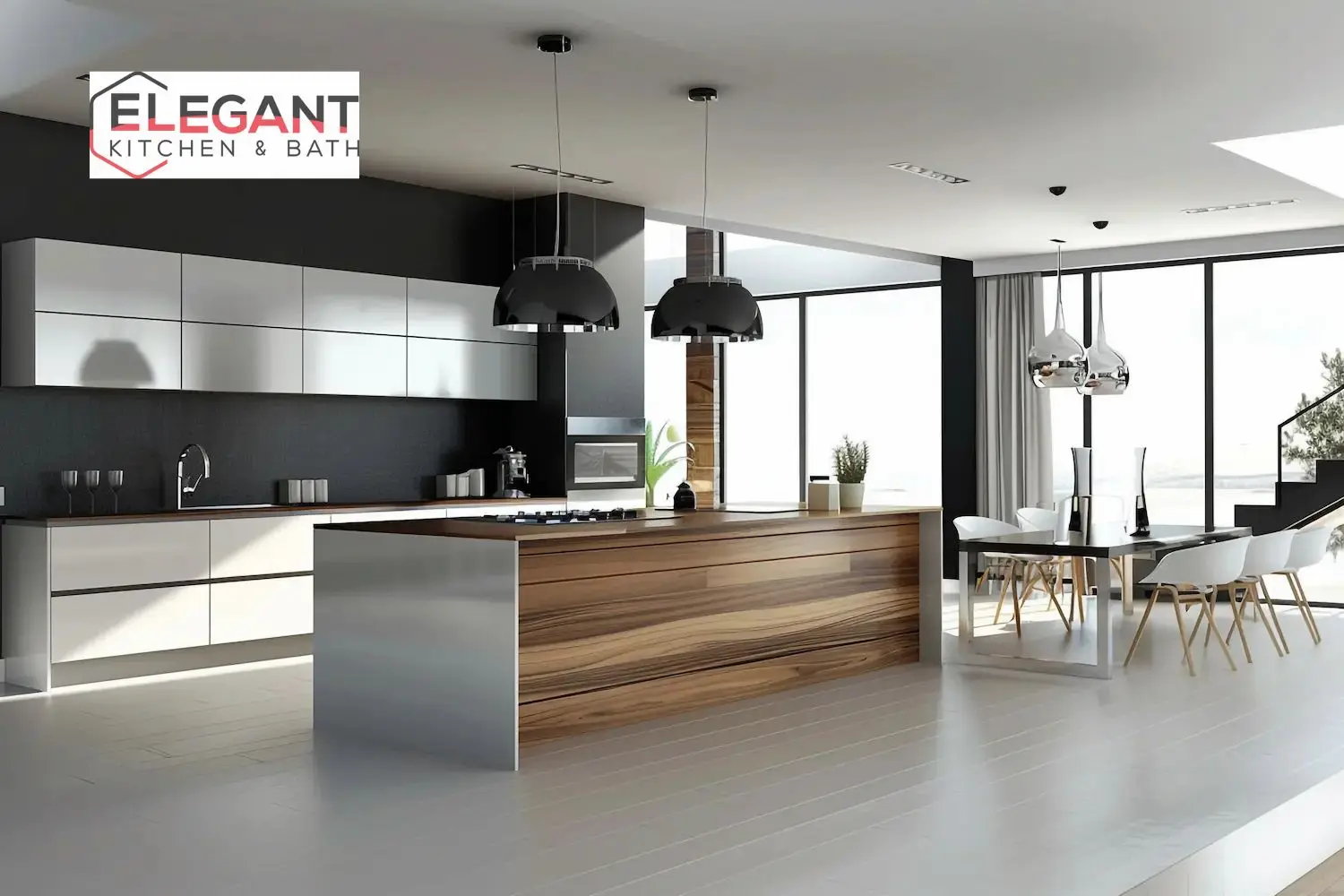 Cost is the single most-asked question in any kitchen remodeling McLean VA conversation, and McLean numbers run consistently 15–25% higher than Northern Virginia averages because of three factors: skilled-labor competition (commercial data center work in Loudoun and Fairfax keeps trades busy), homeowner preference for premium materials, and larger-than-average kitchen footprints. The breakdown below reflects real project pricing observed across McLean and adjacent Fairfax County submarkets.
If you want a deeper region-wide comparison, our breaks down pricing by NOVA submarket. The McLean numbers below are the upper end of that distribution.
Cost by Project Tier
| Tier | Scope | Investment Range | Typical Timeline |
| Cosmetic Refresh | Paint, hardware, lighting, countertop swap | $25,000–$45,000 | 3–5 weeks |
| Mid-Range Remodel | New semi-custom cabinets, quartz tops, mid-tier appliances, flooring | $60,000–$110,000 | 6–9 weeks |
| Major Remodel | Wall removal, full custom cabinetry, premium appliances, layout change | $120,000–$220,000 | 10–14 weeks |
| Luxury / Estate-Scale | Custom millwork, scullery, integrated paneled appliances, marble or quartzite | $220,000–$500,000+ | 14–20+ weeks |
Where Your Budget Actually Goes
On a typical $150,000 luxury McLean kitchen remodel, here is how spending breaks down. Cabinetry consistently dominates the budget, and labor on average accounts for 35–45% of total spend in this market.
| Category | % of Budget | Typical $ on $150K Project |
| Cabinetry & millwork | 28–35% | $42,000–$52,500 |
| Labor (general + trades) | 20–25% | $30,000–$37,500 |
| Appliances | 12–18% | $18,000–$27,000 |
| Countertops | 8–12% | $12,000–$18,000 |
| Plumbing & electrical work | 6–9% | $9,000–$13,500 |
| Flooring | 4–7% | $6,000–$10,500 |
| Lighting & fixtures | 3–5% | $4,500–$7,500 |
| Permits & design fees | 2–4% | $3,000–$6,000 |
| Contingency (always include) | 10–15% | $15,000–$22,500 |
A note on the per-square-foot figure: in McLean, expect $400–$650 per square foot of kitchen footprint for major remodels and $650–$900+ for luxury work. Per-square-foot estimates are useful for sanity-checking proposals but unreliable as a planning tool because they hide finish-level differences. Two 200-square-foot kitchens can have a 4x cost gap based purely on cabinetry and appliance specifications.
Luxury Kitchen Design Trends Driving McLean Renovations
The design language in McLean has shifted noticeably in the last 24 months. The all-white, gray-stained, builder-grade kitchen that defined the 2015–2020 era is being actively renovated out of homes — often before resale. What is replacing it leans warmer, quieter, and more architectural. The luxury kitchen remodel McLean projects coming out of top design-build firms now share several visual cues:
1. Quiet Luxury & Warm Neutrals
Cool grays and stark whites are giving way to warm whites, creams, mushroom, putty, and soft greens. The aesthetic is closer to a high-end European country home than a magazine-cover modern kitchen. Hardware is brushed brass, antique nickel, or unlacquered brass that patinas over time.
2. Hidden Pantries & Sculleries
The single biggest layout shift in luxury McLean kitchens is the addition of a back kitchen — a scullery or hidden prep pantry that handles small appliances, secondary sinks, and bulk storage so the main kitchen stays uncluttered. In 2,500+ square foot homes this has moved from luxury upgrade to standard expectation.
3. Integrated, Paneled Appliances
Refrigerators, dishwashers, and even some ranges are being concealed behind cabinet panels for a furniture-grade aesthetic. Sub-Zero, Thermador, and Miele dominate this segment in McLean. Practical implication: panel-ready appliances cost 15–30% more than freestanding equivalents and require more precise cabinet planning, so they should be specified at design stage, not selection stage.
4. Statement Range Hoods & Plaster Finishes
Custom plaster hoods, hand-formed metal hoods, and integrated wood surrounds are replacing the stainless box. The hood is increasingly the focal point, especially in transitional and modern-organic kitchens.
5. Oversized Islands With Dual Function
Islands have grown from 5–6 feet to 8–10+ feet and now routinely house prep sink, dishwasher drawer, microwave drawer, and seating for 4–6. Waterfall edges in Calacatta-look quartz or natural quartzite are common.
6. Smart & Energy-Efficient Systems
Induction cooktops are gaining ground over gas — quieter, faster boil times, easier cleanup, and better indoor air quality. Smart faucets, integrated lighting controls, and circadian-tuned undercabinet lighting are now standard in upper-tier projects.
| Trend | What It Replaces | Typical Cost Premium |
| Warm wood & creams | All-white painted cabinetry | Neutral (often same cost) |
| Scullery / back kitchen | Standard walk-in pantry | +$15K–$45K |
| Paneled integrated appliances | Stainless freestanding | +15–30% on appliances |
| Custom plaster range hood | Stock stainless hood | +$2K–$8K |
| 10-ft+ island with waterfall | Standard 6–7 ft island | +$8K–$18K |
| Induction cooktop + smart pkg | Gas range standard | +$3K–$7K |
Layout Decisions That Define a McLean Kitchen
 Layout is where a custom kitchen design McLean VA project either earns its budget or wastes it. The single most expensive mistake homeowners make is paying for premium finishes inside a flawed layout. Common McLean-specific layout decisions:
- Wall removal between kitchen and family room. Almost universal in pre-2000 colonials. Requires structural engineering review, LVL or steel beam, and often plumbing/electrical relocation in the wall being removed.
- Absorbing the breakfast nook. Many McLean kitchens have an underused breakfast bay; absorbing this space adds 60–120 square feet of usable kitchen footprint without an addition.
- Repositioning the range. Moving the range to an exterior wall (for direct vent) versus keeping it on the island affects ventilation cost, hood design, and gas-line work — a $4K–$12K decision.
- Adding a butler’s pantry transition. When the dining room is being preserved, a butler’s pantry between dining and kitchen is increasingly expected, with bar refrigerator, glass storage, and a secondary sink.
- Mudroom integration. In homes with attached garages, the mudroom-kitchen transition is often redesigned at the same time for daily-use efficiency.
Work Triangle vs. Work Zones
The classic kitchen work triangle (sink-stove-fridge) still applies in smaller layouts, but luxury McLean kitchens typically operate on a work-zones model: prep zone, cooking zone, cleanup zone, and beverage/coffee zone, often with multiple sinks and appliance pairs. This is what allows two cooks to work without colliding — a near-universal request in this market.
Cabinetry, Countertops & Appliance Choices for Luxury Kitchens
Cabinetry
Cabinetry decisions drive both the budget and the aesthetic identity of the kitchen. The three tiers homeowners actually choose between in McLean:
| Tier | Examples | Typical Cost (per linear foot, installed) | Best For |
| Stock | In-stock at big-box; limited sizes | $150–$350 | Tight cosmetic refresh budgets |
| Semi-custom | Wood-Mode, Yorktowne, KraftMaid Vantage | $400–$900 | Most mid-range McLean projects |
| Custom / Bespoke | Local cabinet shops, Bilotta, Christopher Peacock | $1,000–$2,500+ | Luxury projects, unusual layouts |
For most McLean kitchens, semi-custom hits the right balance of finish quality, lead time, and cost. Full custom is justified when ceilings exceed 9 feet, layouts are unusual, or the homeowner wants specialty species like rift-cut white oak or walnut.
Countertops
| Material | Look & Feel | Maintenance | Typical Cost (sq ft installed) |
| Quartz (engineered) | Wide range, marble-look options | Effectively maintenance-free | $70–$150 |
| Quartzite (natural) | Marble look, granite hardness | Light sealing required | $100–$220 |
| Marble (Calacatta, Carrara) | Iconic luxury look | Stains, etches with acids | $120–$300+ |
| Soapstone | Soft matte, develops patina | Periodic mineral oil | $90–$180 |
| Butcher block | Warm, natural wood | Regular oiling; not near sink | $60–$120 |
Appliances
McLean kitchens lean heavily into the Sub-Zero / Wolf / Cove ecosystem, with Thermador and Miele as the other dominant choices. The tracks appliance trend data showing that built-in column refrigeration, induction cooktops, and steam ovens are the fastest-growing segments in luxury kitchens nationally — patterns that are even more pronounced in this market.
| Category | Mid-Range Standard | Luxury Standard | Cost Delta |
| Refrigeration | Counter-depth French door (KitchenAid, Bosch) | Sub-Zero / Thermador columns | +$8K–$18K |
| Cooking | 30″ gas range (Café, KitchenAid) | 48″ Wolf or Thermador dual-fuel | +$5K–$12K |
| Dishwasher | Bosch 500/800 series | Miele G7000 or paneled Cove | +$1.5K–$3.5K |
| Ventilation | Stock stainless hood, 600 CFM | Custom hood, 1,200 CFM, make-up air | +$3K–$10K |
| Coffee / steam | Standalone counter unit | Built-in Miele or Wolf | +$3K–$6K |
Fairfax County Permits & HOA Realities
McLean is unincorporated, which means it falls under Fairfax County jurisdiction directly — no separate town permits like Herndon or Vienna. Fairfax County requires a building permit for nearly every kitchen renovation that involves more than cosmetic work, including . Permits are submitted through the county’s PLUS (Planning and Land Use System) portal.
Which Permits Apply to Your Kitchen
| Permit | Required When | Typical Fee Range |
| Building permit | Wall changes, structural work, layout reconfiguration | $300–$900 |
| Electrical permit | Any new circuits, GFCI updates, lighting reconfiguration | $100–$300 |
| Mechanical permit | Hood ventilation, gas appliance changes | $100–$250 |
| Plumbing permit | Sink relocation, dishwasher or pot-filler add | $100–$300 |
| Zoning review | Only if expanding kitchen footprint outside existing walls | Project-specific |
Cosmetic work that does not require permits includes painting, replacing cabinets in the same configuration, swapping countertops, and like-for-like appliance replacements that don’t change utility connections. Almost every McLean kitchen project of meaningful scope falls outside that exception.
For a more granular walkthrough of what each permit covers and how the application process flows, our breaks down the timeline and submission requirements step by step.
HOA & Architectural Review Considerations
McLean is largely outside the heavily-covenanted communities like Reston, but several pockets do have HOAs or architectural review committees:
- Langley Farms Citizens Association: Generally limited to exterior changes; interior kitchen work typically not reviewed.
- Newer luxury subdivisions: May require architectural review for any project that affects window or exterior wall changes.
- Townhome and condo associations: These commonly require 30–60 day review cycles for plumbing relocations, especially when wet-wall changes affect units below.
A licensed Class A contractor will identify which approvals apply at the design phase and build them into the schedule — uncovering a 60-day HOA review the day before demolition is one of the most common avoidable delays in this market.
Realistic Timeline for a McLean Kitchen Remodel
Homeowners frequently underestimate the time before construction starts. For a typical major kitchen remodeling McLean VA project, the timeline from first call to final walkthrough breaks down as follows:
| Phase | Duration | What Happens |
| Discovery & design | 3–6 weeks | Site visit, measurements, design concepts, selections |
| Permit & procurement | 4–8 weeks | Permit submittal & review, cabinet & appliance ordering |
| Demolition | 3–7 days | Cabinet removal, flooring removal, wall openings |
| Rough-in trades | 2–3 weeks | Framing, electrical, plumbing, HVAC work — rough inspection |
| Drywall, paint, flooring | 1.5–2.5 weeks | Wall finishing, floor installation |
| Cabinetry installation | 1–2 weeks | Cabinets, countertop template & install |
| Finishes & appliances | 1.5–2.5 weeks | Backsplash, fixtures, appliance hookup, tile |
| Final inspections & punch list | 1–2 weeks | Final county inspection, deficiency walkthrough |
Total elapsed time from initial design meeting to a fully finished kitchen typically runs 4 to 7 months. Cabinet lead times are the single biggest variable — semi-custom is currently 6–10 weeks, full custom 12–20 weeks, and importing European cabinetry adds another 4–6 weeks on top of that.
Design-Build vs. General Contractor: Which Works Better in McLean
There are essentially two project-delivery models for a McLean kitchen renovation: hire an architect or designer separately and then bid the work to a general contractor, or hire a single design-build firm that handles design and construction in-house. Both can produce excellent results, but they distribute risk and accountability very differently.
| Aspect | Design-Build Firm | Architect/Designer + GC |
| Single point of accountability | Yes | No (split between two firms) |
| Budget alignment with design | Built in from day one | Often discovered at bid stage |
| Timeline | Generally faster (parallel design & pre-construction) | Sequential (design → bid → build) |
| Cost transparency | Open-book or fixed-bid common | Bid-based, can vary widely |
| Best for | Kitchen, bath, basement, addition projects | Whole-house redesigns, complex architecture |
For a kitchen remodel specifically — even a luxury one — design-build is the more efficient model in 90% of cases. The exception is when the kitchen is part of a much larger architectural reimagining of the home (substantial additions, second-story changes, structural overhaul) where an architect-led process makes sense.
ROI: How a Kitchen Remodel Affects Resale Value in McLean
Kitchen remodels are consistently among the highest-ROI home improvements, but the actual percentage recovered depends heavily on tier match — meaning, the kitchen’s quality should align with the home’s overall value bracket. A $400,000 kitchen in a $1.2M home over-improves the property; a $40,000 kitchen in a $2.5M home under-delivers and may even hurt resale.
| Project Type | National Avg ROI | McLean Adjusted | Notes |
| Minor kitchen remodel | 85–96% | 90–100% | Best ROI tier |
| Mid-range major | 70–80% | 72–82% | Most common scope |
| Upscale major | 55–65% | 65–75% | Higher in tier-matched homes |
| Luxury / over-improvement | 40–55% | 45–60% | ROI weak if home value mismatched |
The non-monetary return is also worth naming. McLean homeowners frequently report that a well-designed kitchen extends how long they stay in their home by years, deferring a more disruptive move-up purchase. That alone often justifies the investment regardless of resale math.
How to Choose the Right Kitchen Remodeling Contractor
Selecting a McLean VA kitchen contractor is the highest-leverage decision in the entire project. Six non-negotiables to verify before signing:
- Class A Virginia DPOR license. Required for any project over $120,000 (Class A), $10,000–$120,000 (Class B), or under $10,000 (Class C). Verify directly on the DPOR license search portal — never just trust a contractor’s claim.
- Liability and workers’ compensation insurance. Ask for current certificates. Without workers’ comp, any injury on your property becomes your homeowner’s policy problem.
- Local permit track record. Contractors who file 20+ permits a year in Fairfax County know the inspectors, the common kickback issues, and the realistic timelines. New entrants often submit incomplete applications that bounce back.
- Showroom or completed-project access. Insist on seeing finished work in person, not just photos. McLean projects of similar scale are most informative.
- Detailed, line-itemed contract. Allowances for cabinetry, countertops, appliances, and fixtures should be specified — not lumped into round numbers.
- Defined change-order process. Even well-planned projects produce 5–15% in change orders. The contract should specify how they are documented, priced, and approved.
Questions Worth Asking
- How many kitchens have you completed in McLean or adjacent Fairfax County zip codes in the past two years?
- Who manages my project day-to-day, and how often will I see them on site?
- What is your warranty on workmanship versus the manufacturer warranties on materials and appliances?
- How are utility shutoffs and dust containment handled if we are living in the home during construction?
- What happens if my cabinetry arrives damaged or delayed?
Common McLean Kitchen Remodeling Mistakes to Avoid
- Choosing finishes before settling layout. The single most expensive ordering error. Cabinets and stone should follow layout decisions, not drive them.
- Skipping a contingency budget. Older McLean homes routinely surface surprises — knob-and-tube wiring, undocumented additions, asbestos in flooring underlayment. Budget 10–15% contingency on every project.
- Over-improving for the home’s tier. A $200K kitchen in a $900K McLean townhome will not return its investment. Match scope to home value bracket.
- Ignoring ventilation. Make-up air is required by code in many configurations once hood CFM exceeds 400. Discovering this at inspection is expensive.
- Underestimating cabinetry lead time. Ordering after demolition starts is the most common cause of timeline blowouts.
- Hiring the lowest bid. Bids that come in 20%+ below others almost always reflect missing scope, lower-grade materials, or under-experienced trades. The cost shows up later as change orders.
Working With Elegant Kitchen and Bath on Your McLean Kitchen
Elegant Kitchen and Bath is a Virginia DPOR Class A licensed design-build general contractor based in Herndon and serving homeowners across McLean, Great Falls, Vienna, Tysons, Reston, and surrounding Fairfax County communities. Our team handles design, selections, permitting, construction, and final delivery under one roof — eliminating the coordination overhead and finger-pointing that comes with split design-and-build arrangements. To start a conversation about your or to see recent , reach out through our consultation form. We also handle and projects across NOVA, often as part of larger whole-home transformations.
Frequently Asked Questions
Q1. How much does a kitchen remodel cost in McLean VA?
Most kitchen remodels in McLean fall between $75,000 and $250,000, with luxury projects in Langley, Salona Village, and Franklin Park frequently exceeding $300,000. Cosmetic refreshes start around $25,000–$45,000, mid-range projects run $60,000–$110,000, and major remodels with structural changes range from $120,000–$220,000. McLean costs run roughly 15–25% above Northern Virginia averages because of premium labor, larger kitchen footprints, and material expectations.
Q2. Do I need a permit to remodel my kitchen in Fairfax County?
Yes, in nearly every case. Fairfax County requires building, electrical, mechanical, and (when plumbing is moved) plumbing permits for kitchen renovations that go beyond cosmetic work. Permits are submitted through the county’s PLUS portal. Cosmetic-only work — paint, like-for-like cabinet swap, countertop replacement, in-place appliance replacement — typically does not require permits. Almost every meaningful kitchen project crosses the threshold.
Q3. How long does a kitchen renovation take in McLean?
Active construction typically runs 8 to 14 weeks for a major remodel and 14 to 20+ weeks for full luxury renovations. Add 3 to 6 weeks for design and 4 to 8 weeks for permitting and material procurement before demolition starts. Total elapsed time from first design meeting to final walkthrough is usually 4 to 7 months. Cabinet lead times are the most common cause of timeline variance.
Q4. What is the ROI on a McLean kitchen remodel?
Minor remodels recoup 90–100% of cost at resale in this market. Mid-range major remodels return 72–82%, upscale major projects return 65–75%, and luxury renovations recover 45–60% — though that figure improves significantly when project tier is matched to home value. The non-financial return — comfort, daily function, and home enjoyment — usually justifies the investment regardless of resale math.
Q5. Can I live in my home during a McLean kitchen remodel?
Yes, most homeowners do. Reputable contractors set up dust containment with zip walls, protect adjacent flooring, and establish a temporary kitchen — usually in a basement, dining room, or garage — with a refrigerator, microwave, sink access, and counter space. Expect 4–6 weeks without a functioning main kitchen and meaningful daily disruption during demolition and rough-in phases. Families with school-age children sometimes opt for short-term rental during the most disruptive 3–4 weeks.
Q6. What kitchen styles are popular in McLean right now?
The dominant aesthetic has shifted from gray-and-white modern to warm, quiet luxury — creams, soft greens, mushroom and putty tones, rift-cut white oak, brushed brass hardware, and natural quartzite or marble countertops. Hidden pantries (sculleries), oversized 8–10+ foot islands, paneled integrated appliances, and custom plaster range hoods are appearing in nearly every luxury project. Transitional design — a blend of traditional cabinetry with modern function — remains the safest long-term choice for resale.
Q7. Should I hire a design-build firm or an architect plus a general contractor?
For a kitchen-focused project, design-build is more efficient in roughly 90% of cases — single accountability, faster timeline, better budget alignment from day one. The architect-plus-GC model makes sense when the kitchen is part of a major architectural reimagining of the home, such as a substantial addition or whole-house redesign, where independent architectural design adds meaningful value.
Q8. What is the most expensive part of a McLean kitchen remodel?
Cabinetry, consistently. On a $150,000 luxury kitchen, cabinetry and millwork account for 28–35% of total budget — typically $42,000–$52,500. Labor is the second largest category at 20–25%, followed by appliances at 12–18%. Countertops, plumbing, electrical, flooring, lighting, and permits round out the remaining budget, with a 10–15% contingency reserve essential on any project in older McLean homes.